Prep & Assembly
Hand Mixing
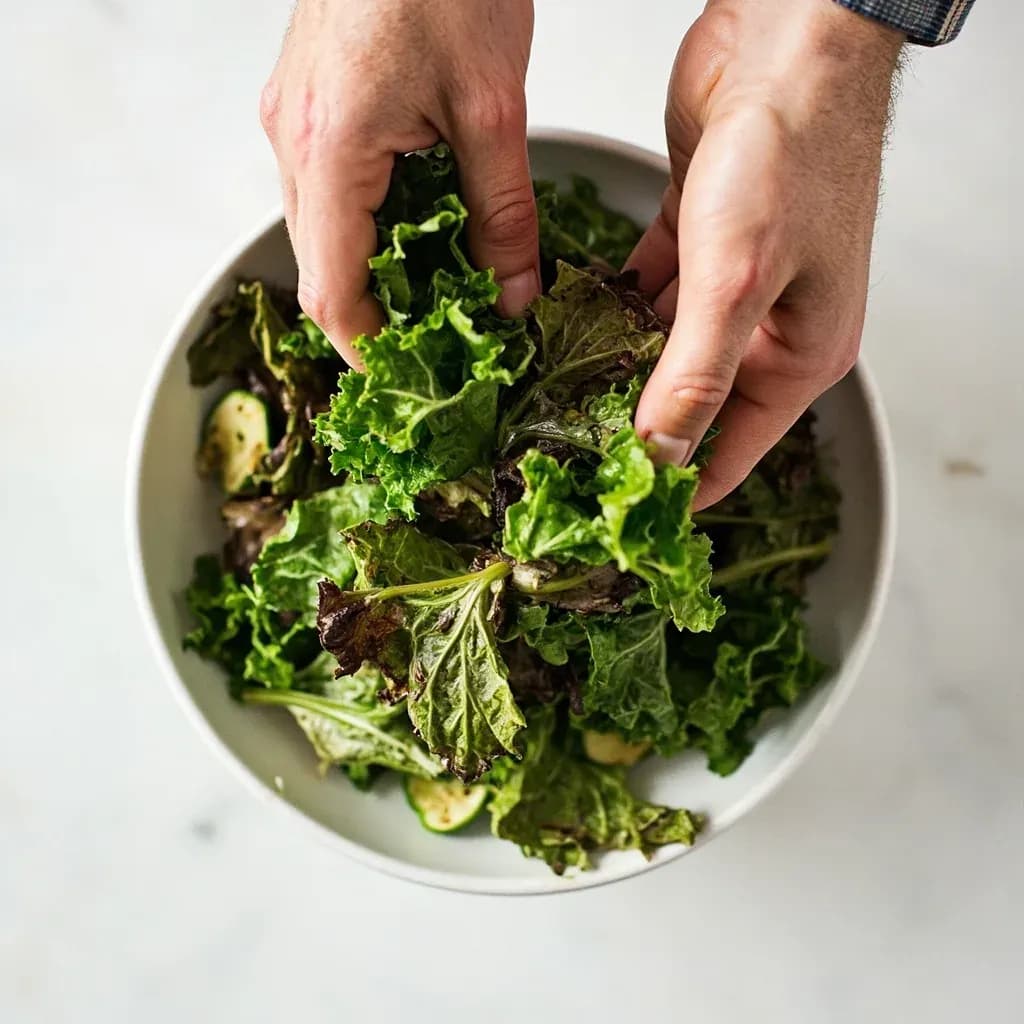
Combining and seasoning ingredients by hand for control and feel, as in salads and namul.
Hand mixing uses the fingers to combine, dress, and season ingredients, giving direct control over texture and even coating that utensils cannot match. It is essential where gentle, thorough seasoning matters, as in Korean namul muchim, Thai yam salads, and Maldivian mas huni. The hands also let the cook feel doneness and adjust seasoning by sense rather than measurement.
Hand mixing is the deliberate use of clean, bare (or gloved) hands to combine, season, and finish ingredients. Unlike whisks, spatulas, or stand mixers, the hand gives the cook a continuous stream of tactile information — the resistance of hydrated flour, the slick of fat smearing between fingers, the moment salt disappears into ground meat, the exact point at which dressed leaves yield without bruising. That feedback loop is the entire point of the technique: you can feel the moment a mixture becomes uniform, and you can stop before it goes past it.
The method is universal but unevenly taught. Korean cooks learn it as the default for banchan, working sesame oil, garlic, and salt through blanched greens with a gentle cupping motion. Italian and Levantine cooks use the same cup-and-release to season polpette and kibbeh without toughening the protein. Pastry cooks use fingertips rather than the palm to rub fat into flour for short doughs, partly because fingertips have less contact area and so transfer less body heat to the butter. In every case the hand is chosen not out of tradition alone but because no tool communicates texture as directly as skin against food.
Hand mixing also has a hygiene dimension that tools do not: the cook is in physical contact with the food and is responsible for keeping it safe. Thorough handwashing, glove use for raw poultry or strong aromatics, and clean working surfaces are not optional adjuncts to the technique; they are part of it. A cook who has mastered hand mixing has, in the same gesture, learned when to stop, how to feel, and how to keep the food safe.
- Difficulty
- Easy
Types & varieties
Lift-and-turn motion used for leafy salads and seasoned vegetables (e.g., namul) to coat evenly without crushing.
Gentle pressing of one ingredient into another with an open hand, used for delicate mixtures like ricotta fillings or whipped-egg batters.
Sustained pressing and rubbing of sturdy greens (kale, cabbage for slaw) with salt and acid to break down fibers and wilt the leaves.
Distributing salt, spices, and aromatics evenly through ground meat, sausage forcemeat, or stuffing, using a cup-and-release or claw motion.
Working a marinade into meat, poultry, or fish with the fingers so flavor penetrates surface and pockets, not just coating it.
Initial hydration of flour and water or flour and starter, rubbing between fingers to form uneven clumps before kneading or resting (autolyse).
Hand-fanning while folding a vinegar-sugar-salt mixture into hot rice in a hangiri wooden tub, to coat each grain and cool it quickly.
Brief, gentle press-fold-turn for enriched doughs, gnocchi, or fresh pasta where overworking gluten is a concern.
How to do it
- 1
1. Wash, dry, and prepare hands
Scrub hands and nails with soap under warm running water for at least 20 seconds, rinse, and dry completely. Remove rings, watches, and bracelets. Put on food-safe disposable gloves if you are working with raw poultry, raw fish, or strong-flavored aromatics (garlic, chili, turmeric), or if local hygiene rules require them.
- 2
2. Stage the ingredients (mise en place)
Weigh, chop, and measure every ingredient before you start. Hand mixing is fast and tactile, so there is no time to chop garlic once your hands are in a sticky meat or oily vegetable mixture. Place the largest-volume ingredient in a bowl that is roughly twice its volume to give your hands room to move.
- 3
3. Add seasonings and small-volume ingredients first
Distribute salt, spices, sugar, minced aromatics, and any binders (egg, panade, starch) over the surface of the main ingredient before you start mixing. Spreading these across the top lets each hand movement pull them into the mix evenly, rather than clumping them in one spot.
- 4
4. Use the right motion for the job
Match your hand action to the mixture: a lift-and-turn toss for salads and namul; a gentle cup-and-release or claw for ground meat; an open-palm fold for delicate batters; a sustained press-and-rub massage for sturdy greens. Never squeeze, ball up, or knead ground meat — that is what makes meatballs and burgers tough.
- 5
5. Stop at 'just combined'
Hand mixing tempts the cook to keep going because it feels productive. Stop the moment the mixture looks uniform and feels consistent. For ground meat, press a small patty and pan-fry a test piece to check seasoning and texture before forming the rest. For namul and salads, taste a piece and adjust salt or acid at the end, not by re-mixing the whole batch with more seasoning added early.
- 6
6. Portion, shape, or serve immediately
Use the same clean hands to portion meatballs, stuff a casing, form patties, mound namul onto a plate, or transfer dressed greens to a serving bowl. Wipe hands between batches and keep a bowl of warm soapy water nearby. If holding the mixture, chill it covered and give it a brief, gentle hand toss again before final use.
When hands beat tools
Tools are not slower than hands; they are less informed. A stand mixer can develop gluten faster than a cook can knead, but it cannot tell you that the dough has just passed peak. A pair of salad tongs can dress a Caesar, but they cannot feel whether a leaf is bruised. Hand mixing is the right choice in three situations: when the mixture is delicate and benefits from instant feedback (whipped egg whites folded into a batter, herbs through a salad), when uniformity matters more than aeration (seasoning distribution through a pound of ground pork), and when the cook is the only available sensor for a texture that cannot be measured.
- Delicate mixtures where overworking is the main risk: ricotta fillings, whipped-egg batters, cream folds.
- Ground protein mixtures where even seasoning and minimal gluten or myosin development matter: meatballs, burgers, sausage, kibbeh, dumplings.
- Sturdy raw vegetables that need fiber breakdown before dressing: kale, cabbage, chard stems.
- Hot, sticky, or high-value work where the cook's judgment of 'done' guides timing: sushi rice, shaggy bread hydration, butter-into-flour rubs.
Reading the mixture by feel
Every hand-mixed dish has a 'just right' moment, and the whole point of the technique is to recognize it. The cues below are the ones experienced cooks reach for before they reach for a thermometer or a timer.
- Ground meat for meatballs: the mix should feel tacky and hold together when pressed, but loose enough that you can see individual flecks of fat and aromatics. A tight, glossy, paste-like ball means myosin has developed and the meat will be tough after cooking.
- Namul vegetables: the pieces should feel lightly slicked, not wet, and should slip past each other in the bowl. If the sesame oil pools, the vegetables were too warm or the dose was too generous.
- Dressed leafy salad: leaves should feel like leaves, not wilted ribbons. A few drops of dressing should cling to a lifted leaf rather than running back to the bottom of the bowl.
- Shaggy dough: clumps should be uneven, ranging from pea- to walnut-size, with dry flour still visible at the bottom of the bowl. If the dough has come together into a single mass, you have passed shaggy and begun kneading.
- Sushi rice: each grain should feel distinct, not glued, and warm to the touch — close to body temperature — when folding is complete.
Common uses
Tips & pitfalls
- Wash hands with soap for at least 20 seconds, scrub under nails, and remove rings; dry thoroughly so water does not transfer to dry ingredients.
- For ground meat, keep the meat, bowl, and your hands as cold as practical — cold fat smears less and the mix stays loose, which keeps the final texture tender.
- The single biggest mistake is overmixing. Stop the moment seasonings and binders look evenly distributed; a final pinch should not show streaks of plain meat or unmixed salt.
- Use a 'cup-and-release' or claw hand for ground meat: scoop, press gently between fingers, release. Do not squeeze, knead, or throw the mixture into the bowl.
- For salads, dry greens completely in a spinner before tossing; water on the leaves is the most common reason dressings slide off or pool at the bottom of the bowl.
- Toss leafy salads by lifting from the bottom and turning the top over, repeating, rather than pressing down — this coats leaves without crushing them.
- For namul, cool the cooked vegetables to room temperature first; seasoning warm vegetables with sesame oil makes them soggy and the oil turns greasy.
- When massaging kale, sprinkle salt first, then work the leaves with both hands for 1–3 minutes; they should turn a deeper green, soften, and reduce in volume by roughly a third.
- Use disposable nitrile or vinyl gloves when handling raw poultry, raw fish, or working for long periods with chili, garlic, or turmeric to protect skin and food safety.
- Use fingertips for delicate folding (whipped whites, cream); the palm has more surface area and transfers more heat, which can deflate aerated mixtures.
- For doughs, a short rest after the hand-mix (autolyse) allows flour to fully hydrate and reduces the kneading time needed later.
- Clean as you go: hand mixing leaves residue on fingers, so keep a damp towel and a bowl of warm soapy water at the station for quick wipes between batches.
Good to know
- Category
- Prep & Assembly technique
- Equipment required
- Clean hands or food-safe disposable gloves; a mixing bowl or board as needed
- Typical time
- 30 seconds to 5 minutes per batch, depending on volume and density
- Skill level
- Beginner-friendly to learn; difficult to master gentle handling
- Primary advantage
- Tactile feedback — the cook can feel distribution, moisture, and texture in real time
- Common applications
- Salads, Korean namul, ground-meat mixtures, stuffings, marinades, light doughs, rice seasoning
- Key risk
- Overworking — particularly with ground meat, which develops myosin and becomes tough or pasty
- Hygiene note
- Hands must be thoroughly washed; cuts should be covered with a waterproof bandage and a glove; nail brushing recommended
- Temperature sensitivity
- Cold hands on cold meat; warm hands are used intentionally for working sushi rice in a hangiri or softening butter
- Cultural reach
- Universal; particularly emphasized in Korean, Chinese, Japanese, Italian, French, and Levantine home and professional cooking
Also called
Hand Mixing (Mas Huni) · Hand-Seasoning Namul (Muchim) · Spicy Salad Tossing (Yam) · Hand Tossing
Dishes that rely on it
Related

Whisk
Beat ingredients smooth and aerated with a looping wire motion

Sift
Pass dry ingredients through mesh to aerate and remove lumps

Strain
Pour through mesh to separate solids from liquid for a smooth result

Filter
Pass liquid through fine material to clarify out the smallest particles

Rice
Press cooked potatoes through small holes for fluffy, lump-free texture

Mash
Crush soft cooked food into a rustic, creamy purée

Grind
Crush food into a coarse to fine texture, from spices to meat

Grate
Shred food into fine bits against a sharp-toothed surface