Transform & Preserve
Herb Drying
Removing moisture from fresh herbs to concentrate flavor and preserve them.
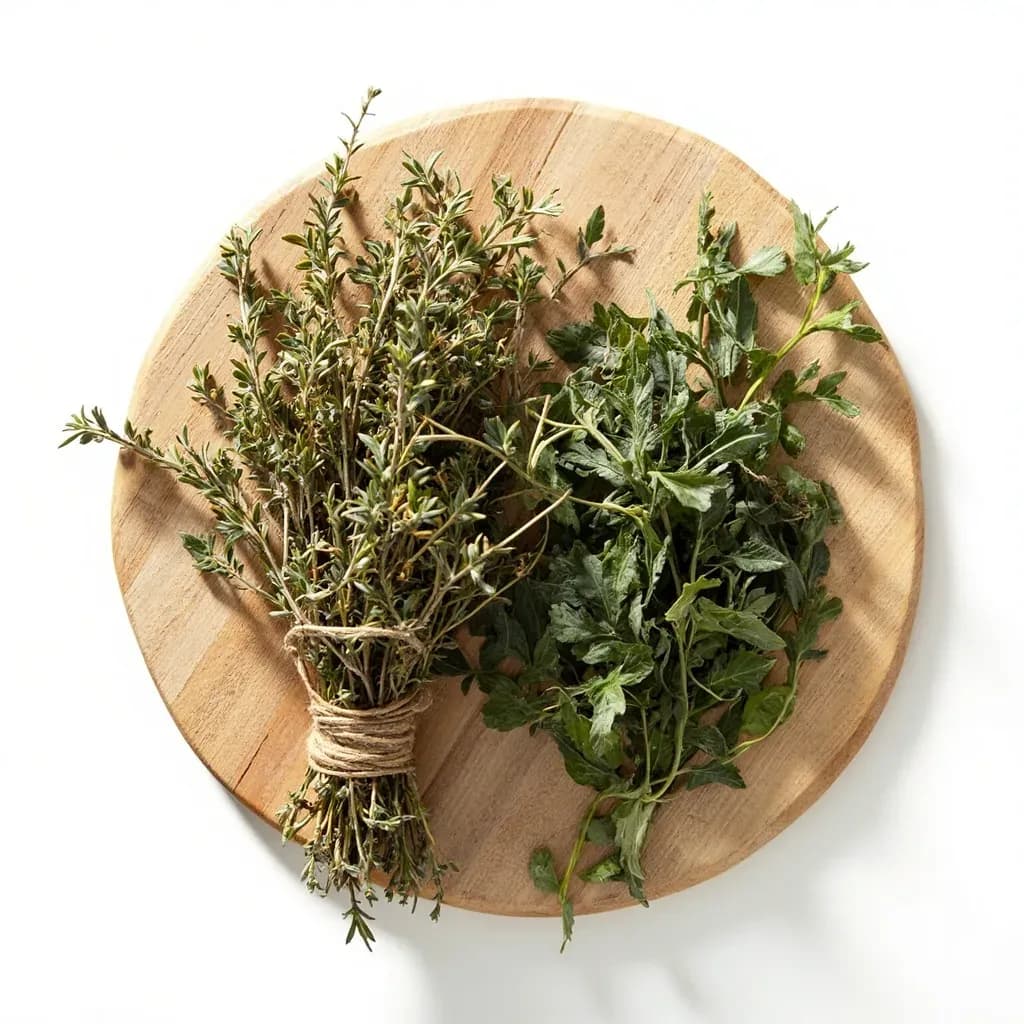
Herb drying preserves fresh herbs by slowly removing their water through air-drying in bundles, a low oven, or a dehydrator. Dried herbs become more concentrated, so less is needed, and they keep for months in airtight jars away from light. Sturdy herbs like oregano, thyme, and rosemary dry best, while delicate ones like basil lose more aroma.
Herb drying is one of the oldest and most energy-efficient ways to capture the flavor of a kitchen garden in something that fits in a jar on the pantry shelf. By driving moisture down to roughly 8–10 percent, the conditions that allow mold, bacteria, and enzymes to break the plant down are removed, leaving a shelf-stable seasoning that lasts a year or more. The loss of water also concentrates the herb's existing volatile oils, so a single dried leaf delivers a denser dose of the same aromatic compounds that make the fresh plant sing in summer cooking.
Not every herb dries gracefully. Hardy, low-moisture Mediterranean herbs — thyme, oregano, rosemary, sage, marjoram, savory, and bay — keep their essential-oil character well and are the natural candidates for drying. Tender, high-moisture herbs like basil, parsley, chives, cilantro, and dill tend to lose their bright top notes, picking up a grassy or hay-like quality instead; for these, freezing in oil or butter usually produces a far more useful pantry product.
Drying also changes how the herb should be used at the stove. Without water, the cell walls of the leaf are brittle and the flavor compounds are locked inside until they meet heat and moisture again. Briefly blooming dried herbs in hot fat, oil, or cooking liquid — the same way you would toast a spice — releases those oils back into the food, and is the difference between a braise that tastes of herbs and one that tastes of paper.
- Difficulty
- Easy
Types & varieties
Tie small bundles and hang upside down in a warm, dark, airy room. Best for woody-stemmed herbs like thyme, oregano, sage, rosemary, and marjoram. Slow but yields excellent color and aroma.
An electric dehydrator with thermostat and fan gives the most consistent, food-safe results. Best for large quantities; lay leaves on mesh trays in a single layer at 95–115°F / 35–46°C.
Spread on a sheet pan at the lowest oven temperature with the door propped open. Faster than air drying but requires careful heat control to avoid cooking the herbs — never above 170°F / 75°C.
Place herbs between paper towels and microwave in 30-second bursts. Fastest method; useful for small batches of tender leaves like parsley or basil.
Lay individual leaves or sprigs on mesh screens in a single layer, away from direct sun. Works well in hot, arid climates and for flat-leaf herbs.
Primarily for decorative or craft use. Produces the best color retention but is generally not used for culinary herbs unless food-grade silica is specified.
How to do it
- 1
1. Harvest at peak
Cut healthy stems in mid-morning, after dew has dried and before the plant flowers. Choose clean, undamaged growth and avoid any that have begun to bolt or yellow. Rinse only if necessary, then pat the herbs completely dry on a clean kitchen towel.
- 2
2. Prepare the herbs
Strip any damaged or soiled lower leaves. For air drying, leave stems long enough to tie. For dehydrator or oven drying, strip whole leaves from thick woody stems (rosemary, sage, thyme) or lay small sprigs flat. Discard thick main stems — they take too long to dry and can develop mold.
- 3
3. Choose a drying method
Air drying suits woody Mediterranean herbs and small gardens. A dehydrator is the most reliable for consistent, food-safe results. Oven drying works when no dehydrator is available, with the door propped open at the lowest possible temperature. The microwave is a quick option for small batches of tender leaves like basil or parsley.
- 4
4. Air dry in bundles
Gather 5–10 stems per bundle and tie tightly at the stem end with kitchen twine. Hang upside down in a warm (70–90°F / 21–32°C), dark, well-ventilated space. Slip a paper bag with ventilation holes over each bundle to keep dust off and catch falling leaves. Allow 7–14 days.
- 5
5. Dehydrate (machine drying)
Arrange leaves in a single layer on dehydrator trays without overlapping. Set to 95–115°F / 35–46°C. Check every hour; most leafy herbs finish in 1–4 hours. Rotate trays if your model heats unevenly.
- 6
6. Oven dry
Spread herbs on a parchment-lined sheet in a single layer. Set the oven to its lowest temperature (ideally below 170°F / 75°C) and prop the door open with a wooden spoon to allow moisture to escape. Stir or rotate every 20–30 minutes. Expect 1–2 hours.
- 7
7. Microwave dry
Place a single layer of leaves between two dry paper towels. Microwave on high for 30 seconds, check, then continue in 15–30 second bursts. Total time is usually 1–3 minutes. Leaves should feel papery and crisp when done.
- 8
8. Test for doneness
Properly dried leaves are brittle, snap cleanly, and crumble between your fingers without feeling leathery or cool to the touch (which would indicate residual moisture). Stems should snap rather than bend.
- 9
9. Condition and store
Place fully dried herbs in a clean, dry glass jar, seal loosely, and set aside for 5–7 days. Shake the jar once a day; if any condensation appears on the inside, the herbs need additional drying. Once stable, store whole in airtight containers away from light, heat, and humidity. Use within 6–12 months for best flavor.
Which herbs dry well (and which don't)
Drying is not a flavor-neutral process. As water leaves the leaf, the delicate top notes — the bright, almost floral notes that define a fresh basil leaf or a just-picked sprig of parsley — evaporate first, and what remains is the deeper, more resinous backbone of the herb. The herbs that survive this transformation well are those whose flavor lives mostly in that backbone to begin with.
- Dries beautifully: thyme, oregano, rosemary, sage, marjoram, savory, bay, and mint — all low-moisture, high in robust essential oils.
- Acceptable with caveats: parsley, dill, and tarragon lose brightness but still work in long-cooked dishes where they are bloomed in fat.
- Better frozen than dried: basil, chives, cilantro — freeze these in oil or butter to preserve their fresh character.
- Rule of thumb: if the herb is woody or has small, tough leaves, dry it. If it is tender, leafy, and high in water content, freeze it.
Blooming: the step most cooks skip
Because dried herbs have already lost their water, dropping them straight into a simmering sauce only releases a fraction of their flavor. Briefly toasting or 'blooming' them in hot fat rehydrates the cell walls, volatilizes the essential oils, and disperses them throughout the dish. It is the same principle as dry-toasting cumin or blooming saffron threads, and it is what separates a properly seasoned braise from one that tastes dusty.
- Stir dried herbs into hot oil, butter, or rendered fat for 30–60 seconds at the start of cooking, before adding liquid.
- For soups and stews, bloom the herbs in the pot after sweating the aromatics, then deglaze with wine or stock.
- For dry rubs and spice blends, bloomed herbs are not necessary — the rub itself will be toasted against the food.
- Always add delicate fresh herbs (parsley, basil, chervil) at the end of cooking, but dried herbs go in early, after blooming.
Common uses
Tips & pitfalls
- Harvest on a dry morning after dew has evaporated but before the sun peaks, when essential-oil content is at its highest.
- If you wash herbs, dry them thoroughly with a salad spinner and then on a clean towel — surface moisture invites mold during slow drying.
- Bundle no thicker than about 1 inch (2.5 cm) at the stems; thicker bundles trap moisture and spoil at the center.
- Dry in darkness, not direct sunlight — UV breaks down chlorophyll and volatile oils, leaving brown, bland herbs.
- Test for doneness by crumbling a leaf between your fingers; it should snap and shatter, not bend or feel leathery.
- Condition dried herbs by storing loosely in a glass jar for a week, shaking daily; if condensation appears, return them to further drying.
- Store whole leaves rather than pre-crumbled — surface area accelerates loss of aroma. Crush just before use.
- Never oven-dry above 170°F / 75°C; high heat bakes out the volatile oils and turns herbs musty.
- Avoid drying in kitchens, bathrooms, or anywhere steam collects — humidity stalls drying and invites spoilage.
- Label jars with the herb name and date; potency fades noticeably after a year even under good storage.
Good to know
- Best for
- Hardy, low-moisture herbs: thyme, oregano, rosemary, sage, marjoram, savory, bay, mint
- Not ideal for
- Tender herbs (basil, parsley, chives, cilantro, dill) — flavor often turns grassy or hay-like; freezing is usually better
- Target moisture
- 8–10% for safe storage; leaves should be brittle and crumble cleanly
- Yield
- About 1 part dried = 3–4 parts fresh by weight
- Ideal harvest time
- Mid-morning, after dew has evaporated, just before flowering when essential-oil content peaks
- Drying environment
- 70–90°F / 21–32°C, dark, well-ventilated, below 60% relative humidity
- Storage life
- 6–12 months in airtight containers, away from heat, light, and moisture
Also called
Herb Drying · Drying Herbs
Related

Confit
Cook slowly submerged in fat for silky tenderness and keeping

Cure
Draw out moisture with salt and time to preserve and concentrate

Pickle
Steep in acidic brine for bright, tangy, crunchy preservation

Ferment
Let friendly microbes transform food into tangy, complex flavor

Marinate
Soak in a seasoned mix to flavor and tenderize before cooking

Brine
Soak in salt water so meat stays juicy and seasoned throughout

Dehydrate
Slowly dry out moisture to concentrate flavor and extend shelf life

Cold-Smoke
Perfume cured food with smoke without cooking it through