Prep & Assembly
Laminating Dough
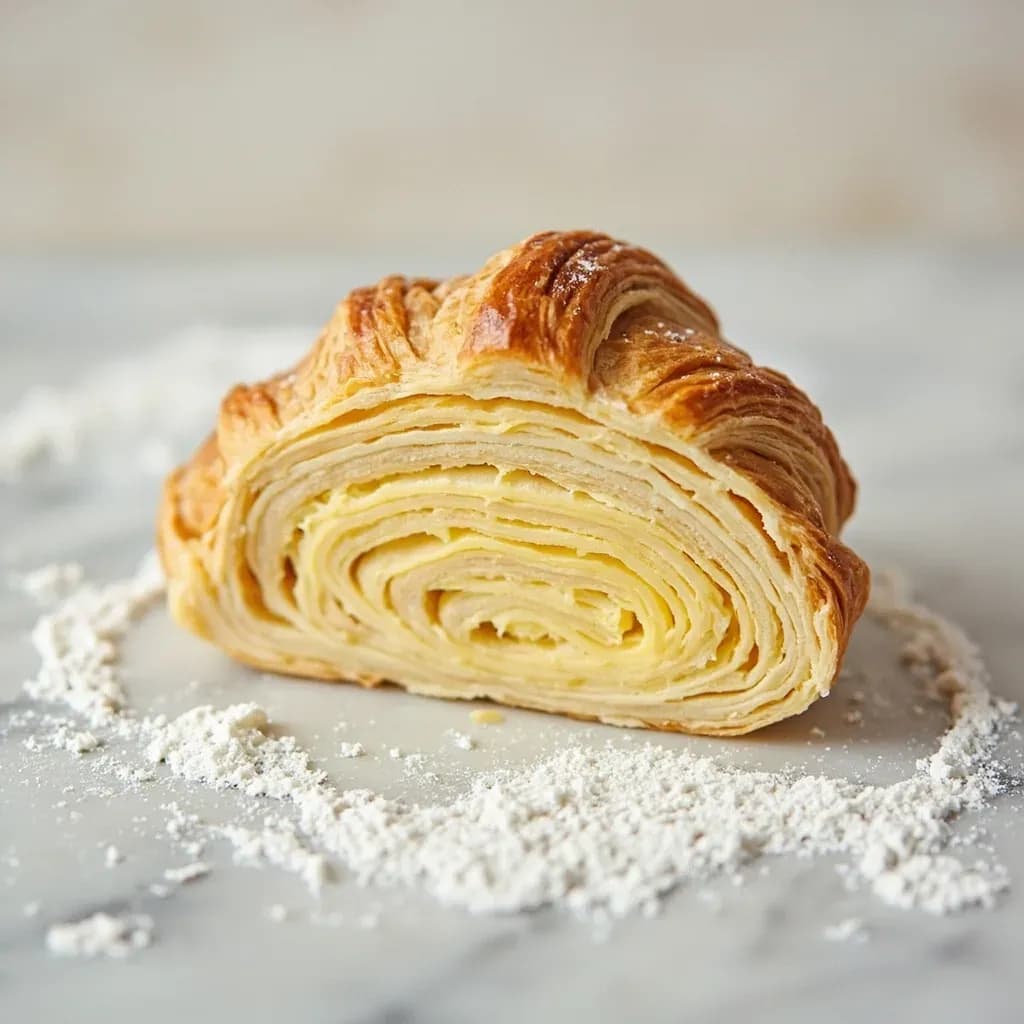
Folding and rolling butter into dough to build dozens of alternating layers for flaky pastry.
Lamination is the process of encasing a block of butter in dough, then repeatedly rolling and folding it to create many thin alternating layers of fat and dough. When baked, steam from the butter puffs the layers apart, producing the flaky, airy structure of croissants, puff pastry, and Danish. Keeping the dough and butter cold throughout is critical so the butter stays in distinct sheets rather than melting into the dough.
Lamination is the technique of encasing a block of cold butter inside a water-and-flour dough (the détrempe), then rolling and folding that package repeatedly to build dozens to hundreds of thin, alternating sheets of fat and dough. When the assembled pastry goes into a hot oven, the water in the butter flashes to steam and the butter itself melts; the trapped gases push the layers apart before the starch sets, and the pastry rises into the tall, shattering flakes that define puff pastry, croissants, and Danish. The goal is not just to incorporate butter but to keep it visibly distinct from the dough at every step — any spot where the fat melts into the flour becomes a dense, non-laminated streak in the finished bake.
Everything about the technique serves a single boss: temperature. The butter has to be pliable enough to roll flat without shattering into chunks, but cold enough that it stays separate from the dough rather than absorbing into it. The détrempe has to be relaxed — long rests between folds so gluten does not spring back and tear the layers — but also cold (back in the fridge between every turn) so the fat does not soften. Skilled laminators read the dough constantly, feeling for resistance, watching for butter sheen through the surface, and adjusting pace to the ambient temperature of the kitchen.
The technique was refined in 17th-century France, with the first printed recipe credited to an unnamed pastry cook's apprentice and recorded in François Pierre de la Varenne's Le Pâtissier françois (1653). Modern bakers work from essentially the same method, with two structural choices: encasing a butter block inside the détrempe (classic pâte feuilletée), or wrapping the détrempe inside a butter-and-flour mixture (beurrage) so the fat-rich layer ends up on the outside (inverse, or pâte feuilletée inversée). Both yield excellent pastry in skilled hands; they behave differently under stress, and the choice depends on what you are making.
- Difficulty
- Hard
Types & varieties
Détrempe encloses a butter block; the standard French puff pastry with 6 single folds yielding ~729 layers.
A butter-and-flour mixture (beurrage) wraps around the détrempe so the fat layer ends up on the outside; more forgiving, richer, and more tolerant of small tears — often used for viennoiserie.
Yeast-leavened détrempe with a small amount of butter worked in, then a butter block laminated in; usually 3 single folds (27 layers) for an open, less shattering crumb than puff.
Similar to croissant but enriched with egg and sometimes more butter; higher hydration and often more folds for an open honeycomb interior.
Butter is grated or broken into slabs and folded into the dough without a full encasement step; faster, less precise, fewer and less even layers.
Cold butter mixed roughly into flour, then folded 4–6 times; closest in spirit to rough puff and the choice when time matters more than perfection.
Enriched yeasted dough laminated with a butter block; used for pastries like kouign-amann and bostock.
How to do it
- 1
Mix the détrempe
Combine bread or all-purpose flour, cold water, salt, and a small amount of softened butter (or none, for classic puff). Mix just until a shaggy dough forms, then knead briefly until smooth. Shape into a rectangle, wrap tightly, and chill for at least 1 hour (overnight is better).
- 2
Prepare the butter block
Place 250 g of cold, European-style 82–86% butter between two sheets of parchment. Pound and shape into a flat, even square roughly 20 cm (8 in) on a side. It should bend without shattering — cold but pliable. Chill until needed.
- 3
Encase the butter
Roll the détrempe into a rectangle about 25 × 40 cm (10 × 16 in). Place the butter square in the center, oriented as a diamond. Fold the four corners of dough up over the butter and pinch the seams tightly so no butter is exposed.
- 4
First turn (single/book fold)
With the seam side down, roll the package into a long rectangle about 20 × 60 cm (8 × 24 in), keeping edges even. Fold the top third down, then the bottom third up (like folding a business letter). This is one turn — 3 layers. Wrap and chill 30–60 minutes.
- 5
Subsequent turns
Repeat rolling and folding for a total of 6 single turns (or the equivalent: 3 double turns, or a mixed schedule), rotating the dough 90° each time and resting 30–60 minutes in the fridge between every turn. Keep the working dough cold but not frozen stiff.
- 6
Final rest and shaping
After the last turn, rest the dough at least 1 hour (overnight is ideal) before rolling out. This relaxes the gluten so the dough can be rolled thin without springing back and prevents shrinkage during baking.
- 7
Roll, shape, and bake
Roll to desired thickness on a lightly floured surface (about 3 mm for mille-feuille, 4–5 mm for croissants). Cut or shape, proof if yeasted, then bake at 200–230°C / 400–450°F with steam for the first 8–10 minutes to drive rapid layer separation.
How the layers rise
When laminated dough enters a hot oven, three things happen in quick succession. The water in the butter (about 12–16% by weight in European-style butter) flashes to steam, and the butter itself melts into a liquid fat. The steam and expanding gases push the intact dough sheets apart — and because each fat layer is now a continuous film of oil, it acts as a lubricant between them, allowing the sheets to slide upward freely. Finally, the starch in the flour gelatinizes and the gluten sets, locking the layers in place. The faster the oven, the more lift before the structure sets; this is why high heat (and steam in the first minutes) produces the tallest pastry, while a slow oven lets the butter melt out before the layers can puff.
Reading the dough
The dough will tell you when something is off, if you know what to look for.
- Butter sheen visible through the surface: the dough is too warm. Stop, wrap, and chill 15–20 minutes before continuing.
- Butter cracking into chunks or breaking through the dough: the butter is too cold. Let the dough rest at room temperature for 5–10 minutes until pliable, then resume gently.
- Dough that springs back hard against the rolling pin: gluten is tight. Rest 20–30 minutes in the fridge without folding to relax it.
- Heavy flour streaks or gray bands in the finished bake: too much flour was incorporated during rolling. Use a lighter hand and brush off excess between folds.
- Pastry that rises flat and greasy: oven was too cool, or butter melted out before the structure set. Increase temperature and add steam for the first 8–10 minutes.
- Pastry that bursts at the seams: dough was under-rested or under-proofed (for yeasted versions), or the shape was not scored. A sharp blade and a confident cut direct the rise.
Common uses
Tips & pitfalls
- Chill the rolling pin and work surface (a marble slab or cold countertop is ideal) during warm weather — working at room temperature is the single most common cause of butter melting into the dough.
- Use a ruler or bench scraper markings to keep rectangles at consistent dimensions; aim for roughly 3:1 length-to-width before each fold so layers build evenly rather than bunching at the edges.
- Rotate the dough 90° between folds so gluten development stays even and the shape stays rectangular.
- If butter cracks through the dough, dust the spot with flour, fold it over, patch, and return to the fridge for 15 minutes before resuming — do not keep rolling, which smears fat into the dough.
- If the dough becomes elastic and resists rolling, it has warmed or overdeveloped; wrap and rest in the fridge for 20–30 minutes rather than forcing it, which tears the layers you have built.
- Dust lightly with flour and brush off excess before each fold — heavy flour creates streaks and gray bands that disrupt lamination in the finished bake.
- Wrap tightly in plastic at every rest to prevent the surface from drying out; a dry crust cracks during rolling and embeds in the layers.
- Bake from a hot oven (200–230°C / 400–450°F) with steam in the first 8–10 minutes; a slow oven lets the butter melt out before the structure sets, producing flat, greasy pastry.
Good to know
- Core principle
- Folding and rolling a block of cold butter into a dough (détrempe) to create dozens to hundreds of alternating fat-and-dough layers that puff apart during baking.
- Origin
- Developed in France in the 17th century; the first printed recipe appears in François Pierre de la Varenne's Le Pâtissier françois (1653), credited to an unnamed pastry cook's apprentice.
- Layer math (single/book fold)
- Each single (book/three-fold) multiplies layer count × 3; six single folds yields 729 layers (3⁶).
- Layer math (double/wallet fold)
- Each double fold multiplies layers × 4; three double folds yield 64 layers.
- Target working temperature
- Butter and dough should be pliable but cold, roughly 13–18°C / 55–65°F. Above 20°C / 68°F the butter softens and absorbs into the dough, destroying lamination.
- Rest between folds
- 30–60 minutes in the refrigerator (or 15–20 in the freezer) to relax gluten and re-chill fat.
- Preferred butter
- European-style butter with 82–86% milkfat; lower-fat (80%) American butter contains more water, which toughens dough and produces less even rise.
- Total turn range
- 6 single folds, 3 double folds, or a mixed schedule (e.g., 2 double + 2 single = 144 layers) for classic puff.
- Difficulty
- Intermediate to advanced; sensitive to temperature, even rolling, and timing.
- Yield reference
- A standard 250 g butter + 250 g flour détrempe yields roughly 500–600 g of finished puff pastry, enough for one croquant, one large tarte, or 8–10 vol-au-vents.
Also called
Laminating (Sheeting) Dough · Pastry Lamination (Flaky) · Sheeting
Dishes that rely on it

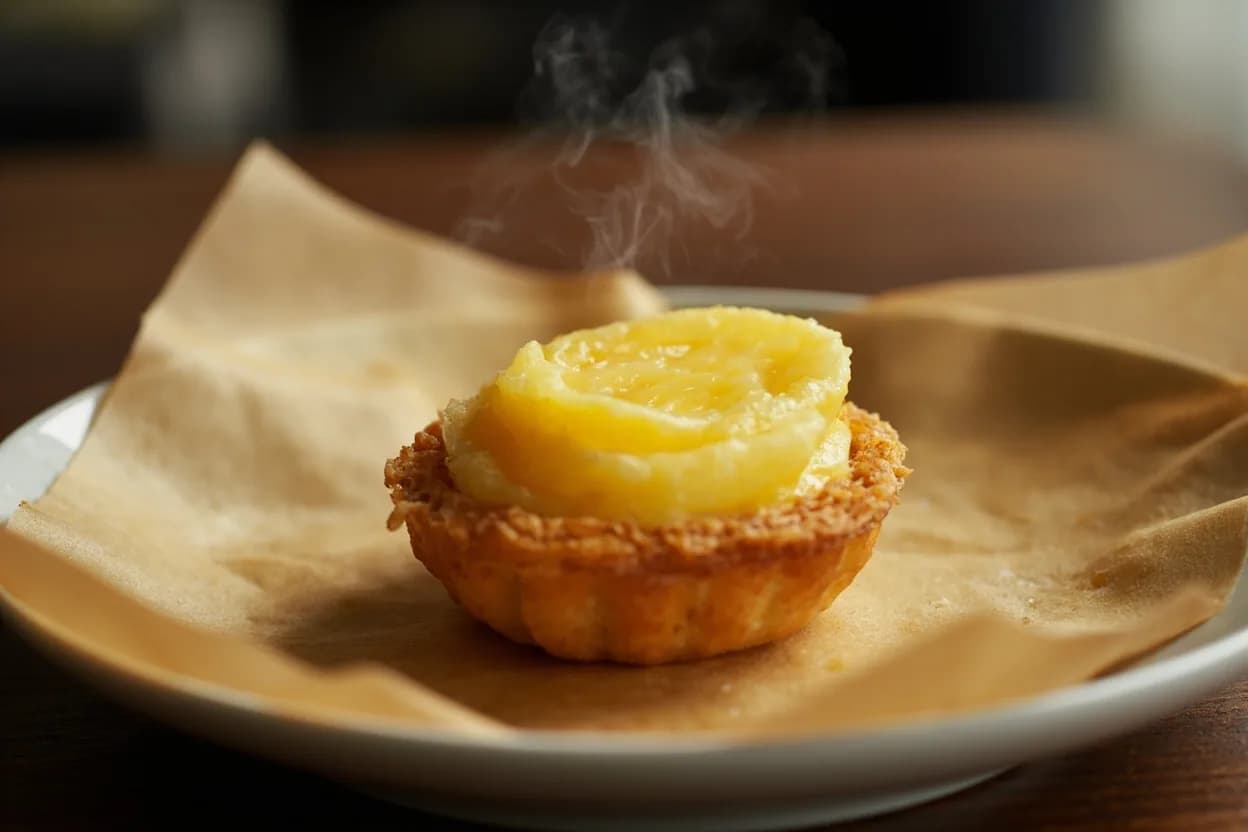
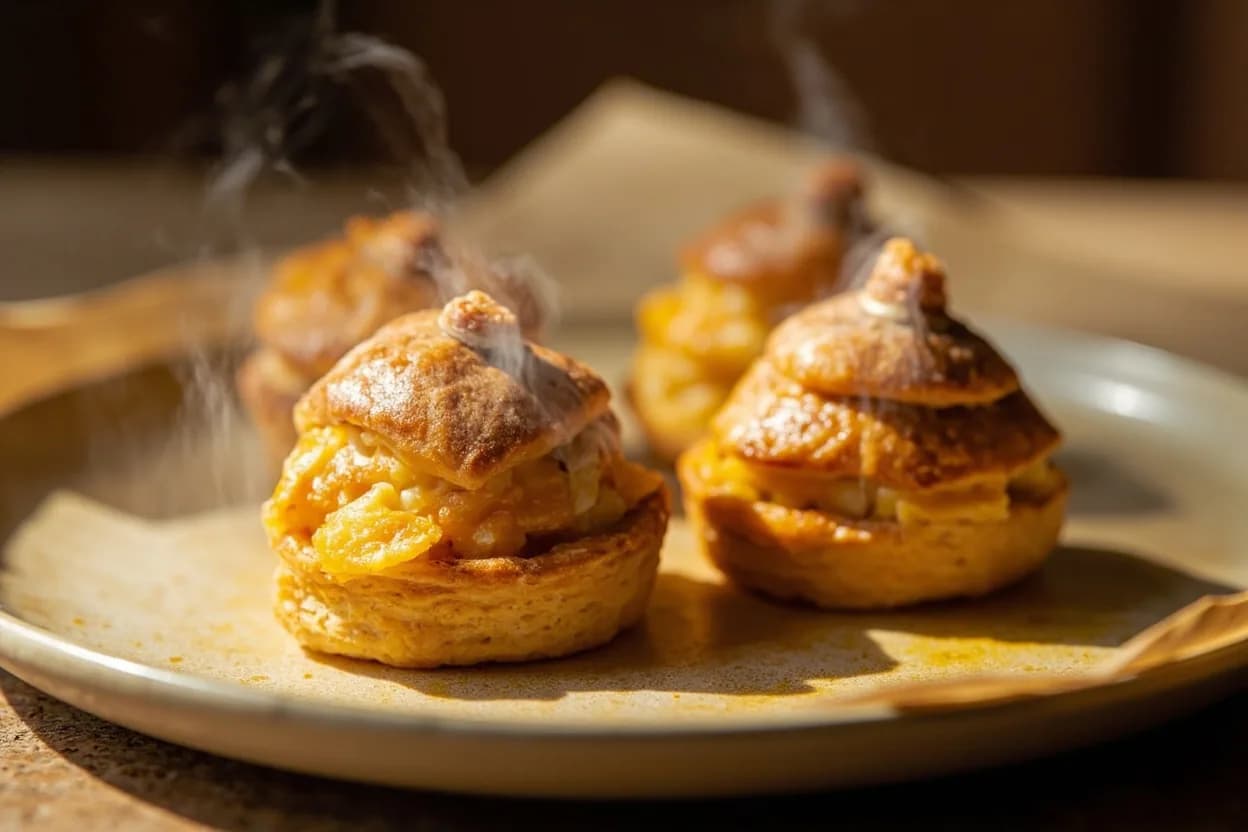
Related

Whisk
Beat ingredients smooth and aerated with a looping wire motion

Sift
Pass dry ingredients through mesh to aerate and remove lumps

Strain
Pour through mesh to separate solids from liquid for a smooth result

Filter
Pass liquid through fine material to clarify out the smallest particles

Rice
Press cooked potatoes through small holes for fluffy, lump-free texture

Mash
Crush soft cooked food into a rustic, creamy purée

Grind
Crush food into a coarse to fine texture, from spices to meat

Grate
Shred food into fine bits against a sharp-toothed surface