Water & Steam
Boiling Noodles to Order
Cooking fresh noodles in small portions on demand so each bowl is served at peak texture.
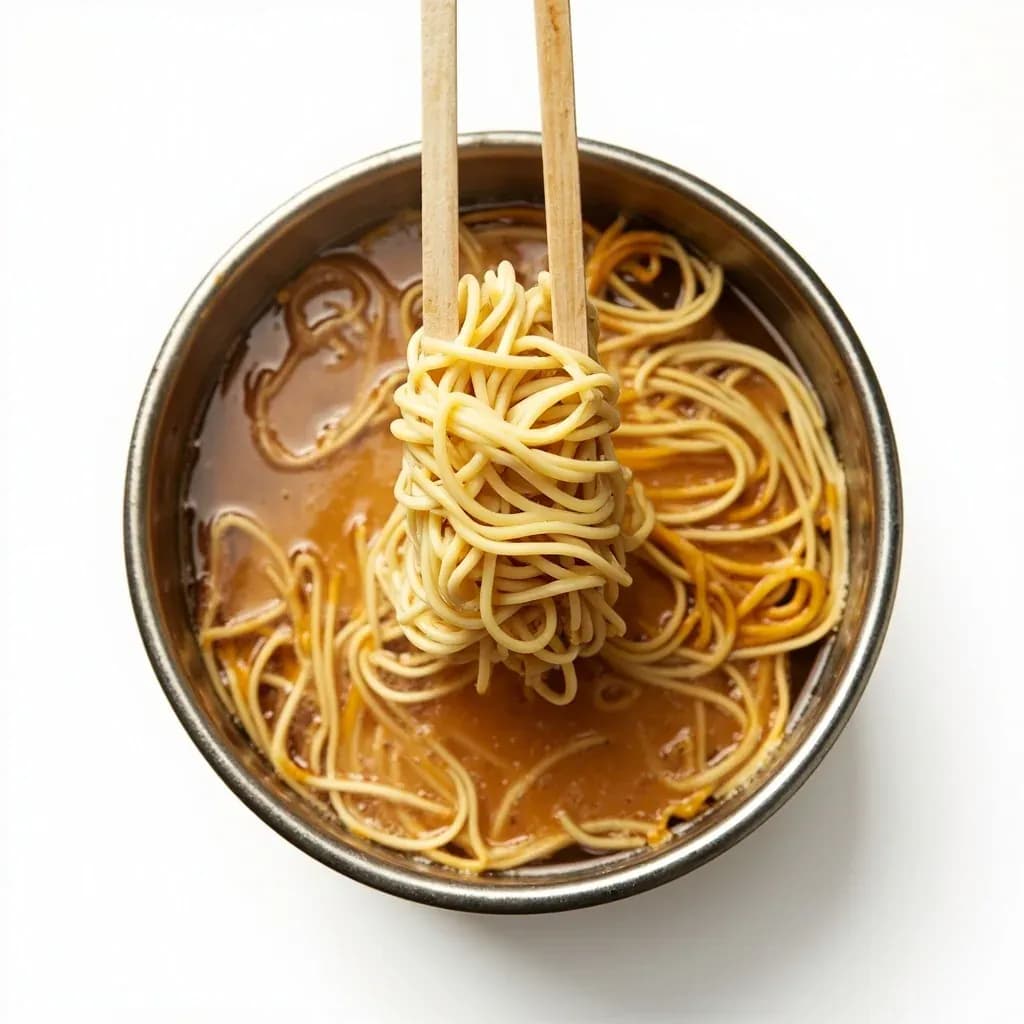
Boiling noodles to order drops individual portions of noodles into rapidly boiling water just before serving, rather than cooking a batch ahead. This keeps each serving springy and prevents the swelling and clumping that holding cooked noodles causes, which is why noodle shops use a basket strainer to time each order. The brief cook is often finished by shaking off water and combining immediately with hot broth.
Boiling noodles to order is the service discipline of cooking single portions of noodles in a full rolling boil and getting them into the bowl within seconds of doneness. It is universal across traditions — ramen counters in Fukuoka, wonton noodle houses in Hong Kong, trattorie in Bologna — because starch gelatinization does not stop the moment noodles leave the pot, and there is no way to recover springiness once it is gone. The technique is less a recipe than a rhythm: a generous pot of water held at a hard boil, single portions dropped in on demand, a precise timer, and an immediate transfer to bowl or ice bath.
What separates a great bowl from a forgettable one is almost never the broth or the sauce; it is whether the noodles arrive with bounce. Cooked-to-order noodles have a distinct chew and a clean, slightly resilient center; held noodles turn gummy, sticky, or limp within minutes, and no amount of reheating or rinsing restores the texture. The defining failure mode is the steam table, the holding basket, or the pot of hot water where noodles sit while the kitchen catches up. The defining success is a bowl that reaches the table inside ninety seconds of the noodles leaving the water.
Skill level is low — anyone can boil water — but the discipline is unforgiving. Every batch must be timed, stirred, tasted, and plated with the same care as the last, and small variables (the boil's return time, the thickness of a particular delivery of fresh noodles, the temperature of the bowl) shift the result. Cooks who internalize the rhythm can turn out bowl after bowl at pace; cooks who don't end up with a queue of softening noodles and confused tickets.
- Difficulty
- Easy
Types & varieties
Fresh alkaline wheat noodles, ~90–120 seconds; drained straight into the bowl with broth and toppings, never rinsed
Thick wheat noodles, ~3–4 minutes fresh or 8–12 minutes dried; served in hot broth or chilled with dipping sauce
Buckwheat or buckwheat-wheat blend, 4–5 minutes; often shock-cooled and rubbed under running water to strip surface starch
30 seconds for thin wonton noodles, up to 4 minutes for thicker lo mein; quick rinse for stir-fry applications
Ho fun 30–60 seconds in boiling water, mei fun 1–2 minutes; must be separated and shock-cooled for most uses
Cooked to order, drained, and either finished in sauce or plated for immediate service; salted water is standard
Often just soaked in hot water, but a true boil-to-order at 2–3 minutes works for hot applications
How to do it
- 1
Portion and stage
Pre-portion noodles into single servings in baskets, nests, or weighted bags so each order needs only one grab. Stage within arm's reach of the boiler, and confirm a clean basket or skimmer is ready to lift out.
- 2
Bring water to a full rolling boil
Fill the pot generously — at least 4–6 quarts per pound of noodles. Wait for a hard, bubbling boil across the whole surface; do not add noodles to water that is merely steaming or slowly simmering.
- 3
Season the water (if appropriate)
Salt heavily for Italian pasta service, where the pasta water contributes to the final sauce. For most Asian noodle service, skip the salt and rely on the broth, tare, or sauce for seasoning — already-salty stocks and dipping sauces will overseason the finished bowl.
- 4
Lower the noodles and stir
Drop the portion into the water and immediately stir with long chopsticks, a spider, or a wooden spoon to separate the strands. Set a timer the moment they hit the water.
- 5
Cook to the moment
Pull a strand at about two-thirds of the package time and bite — you want firm, springy resistance with no chalky center. Adjust the timer for subsequent batches. Fresh alkaline noodles finish very quickly once the water returns, so stay alert in the final thirty seconds.
- 6
Drain in one motion
Lift the basket and give it a single shake over the pot. For hot broth bowls, go straight from basket to bowl. For cold dishes or stir-fries, plunge immediately into an ice bath to stop the cooking.
- 7
Rinse only when the dish requires it
Skip the rinse for hot broth and sauced dishes — the surface starch helps the noodles carry flavor. Rinse under cold running water or in an ice bath for chilled noodle salads, stir-fries, and any application where surface starch will cause clumping.
- 8
Plate and serve within seconds
Transfer noodles to the finished bowl and serve at once. Cooked noodles lose bounce in under a minute, so the final plating step is also the final race.
- 9
Reset for the next order
Bring the water back to a rolling boil, skim heavy surface foam if needed, and confirm the next portion is ready. Repeat the cycle for every ticket.
Why holding is the real enemy
Every cooked noodle continues to absorb water and soften after it leaves the pot. The gelatinized starch on the surface keeps swelling, the interior creeps toward mush, and the strand that snapped cleanly when it left the water becomes the strand that bends limply in the bowl. A holding basket in hot water only accelerates this — the noodles cook further in a starch-clouded bath and emerge with a woolly surface. Steam tables do the same thing in dry heat, drying the outside while the inside keeps softening. There is no recovery step: a held noodle cannot be un-held. The only reliable cure is to never hold in the first place, which is the whole point of cooking to order.
Equipment notes
A dedicated pasta cooker with insert baskets is the gold standard for high-volume service because the baskets lift and drain in a single motion and the cooker holds a true rolling boil even with frequent additions. A tall stockpot with a mesh skimmer or a wire basket is the standard home and small-kitchen setup. Whatever the vessel, the pot should be tall rather than wide — a narrow column of boiling water recovers its boil faster and concentrates heat around the noodles. A reliable timer, a stack of pre-portioned nests, and a clear line of sight to the water (lid off, or a glass lid) are the only other essentials.
Common uses
Tips & pitfalls
- Drop noodles into water only after it returns to a hard rolling boil — adding them to lukewarm or barely simmering water turns them gummy before they even start to cook properly.
- Stir within the first 15 seconds to prevent sticking, especially with fresh and thin noodles that weld to each other on contact.
- Salt the water only when the dish's final seasoning depends on it (Italian pasta, broths made from unsalted stock); skip it for already-salty Asian broths and dipping sauces.
- Use a mesh basket or chinois so you can pull all the noodles at once — draining strand by strand with tongs is too slow and inconsistent for service.
- Time dried noodles from immersion, but time fresh noodles from the moment the water returns to a boil, because fresh noodles keep cooking off the heat.
- Reserve a small ladle of starchy cooking water for Italian pasta or some ramen styles where it adjusts the bowl's body and helps sauce or broth emulsify.
- Taste every batch for the first thirty seconds of service — different deliveries of 'fresh' noodles can vary in thickness and cook time by a full minute.
- For cold dishes, shock noodles in ice water the instant they are done; residual heat will overcook them in the time it takes to carry them to the sink.
- Rinse rice noodles and wheat noodles for cold applications to remove surface starch, but never rinse noodles going directly into hot broth — you want that starch on the surface.
- Never hold cooked noodles in a steam table or hot water bath — texture collapses within minutes and cannot be recovered.
- Keep the lid off the boiler so you can see the boil's return; covered pots hide a delayed reboil and silently overcook the batch.
Good to know
- Technique type
- Per-order batch cooking in boiling water
- Water-to-noodle ratio
- At least 4–6 quarts per pound; generous enough that noodles move freely and starch disperses
- Water state
- Full rolling boil before noodles enter; never simmer
- Salt
- Optional; many Asian traditions omit it because noodles and broth are already seasoned, while Italian-style service salts heavily
- Batch size
- 1–2 portions per basket, never more than the basket holds comfortably
- Fresh noodle timing
- 60–180 seconds depending on thickness — ramen ~2 minutes, udon ~3–4 minutes, thin wonton noodles 30–60 seconds
- Dried noodle timing
- 4–8 minutes typically; follow package guidance as a starting point, then adjust by taste
- Holding after cook
- Seconds only — noodles go directly into bowl or into an ice bath
- Equipment
- Pasta cooker with insert baskets, tall stockpot, mesh skimmer or chinois, timer, ice bath station for cold dishes
- Difficulty
- Low in skill, high in discipline — timing and repeatability are everything
- Service pace
- A trained cook can plate a bowl in 90–120 seconds once a rhythm is set
- Related technique
- Refreshing (sudding) and shock-cooling for cold dishes
Also called
Cooking Noodles to Order · Made-to-Order Noodles
Related

Boil
Cook in vigorously bubbling liquid at full rolling heat

Simmer
Hold liquid at a gentle shimmer for tender, unhurried cooking

Poach
Cook gently in barely-trembling liquid for silky, tender results

Steam
Cook in rising vapor to keep color, nutrients, and shape intact

Blanch
Plunge briefly in boiling water, then shock cold to lock color

Braise
Sear, then cook slow in a little liquid until fall-apart tender

Stew
Simmer bite-sized pieces fully submerged into a rich, unified pot

Sous-Vide
Seal and cook in precise warm water for edge-to-edge doneness