Heat & Fire
Pepper Roasting & Peeling
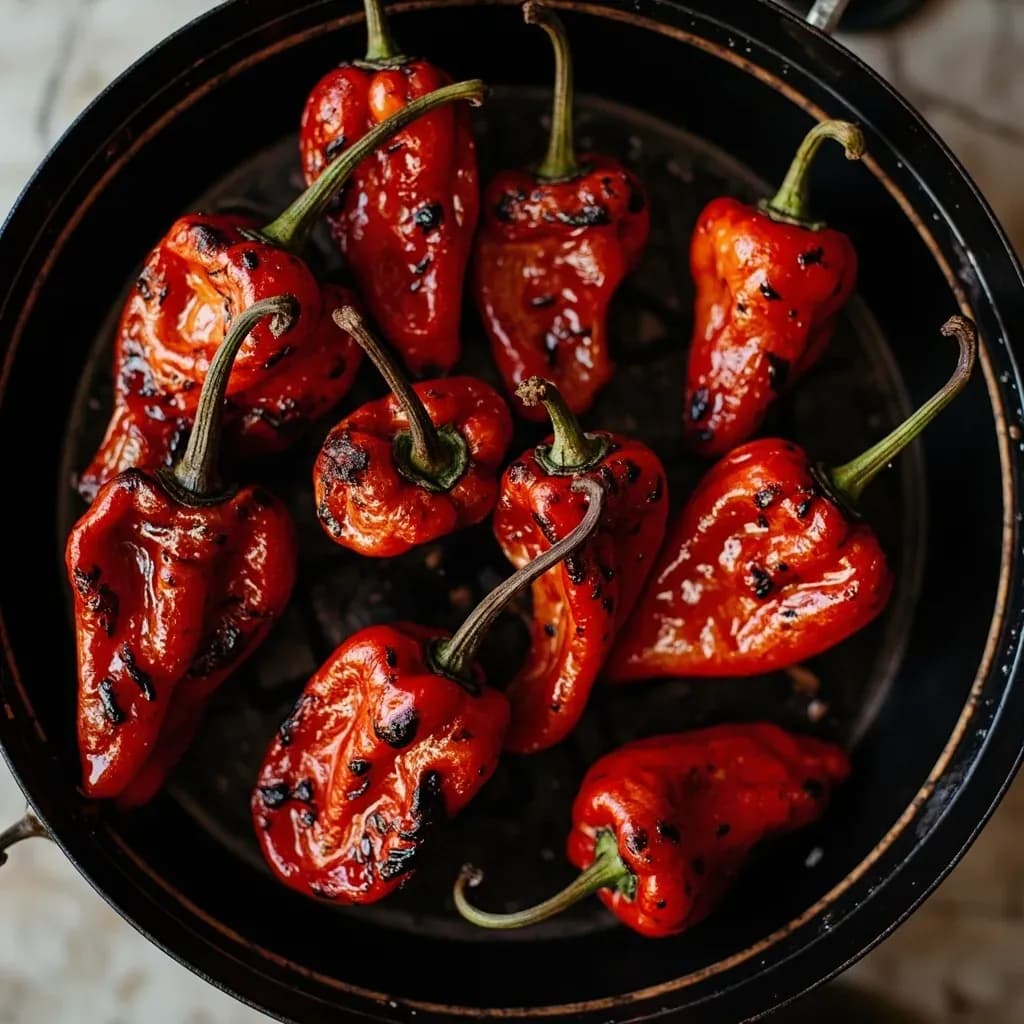
Charring peppers over flame until blistered, then steaming and slipping off the skins.
Pepper roasting and peeling chars whole peppers directly over a flame, under a broiler, or on a grill until the skins blister and blacken, deepening their sweetness with smoke. The hot peppers are then sealed in a covered bowl or bag to steam, which loosens the skins so they peel away easily, leaving silky, smoky flesh. The technique is fundamental to dishes from roasted red peppers and rajas to muhammara and escalivada.
Roasting and peeling peppers is the technique of blackening the skin of fresh chiles over direct, dry heat, then trapping the hot peppers in a covered container so the residual steam loosens the charred skin for easy removal. The point is twofold: the high heat chars the skin, driving Maillard browning and a touch of combustion that adds smoke and balances the pepper's sweetness, while moisture loss during cooking concentrates the pepper's natural sugars in the flesh, deepening its flavor. The result is a soft, pliable, smoky-sweet pepper that behaves entirely differently from its raw, crisp, sometimes-grassy self — tender enough to roll, stuff, or purée, and rich enough to carry a sauce on its own.
The technique rewards thin- to medium-walled peppers with smooth skin: bell peppers, poblanos, Anaheims and Hatch, Cubanelles, and Corno di Toro all behave beautifully. Very thick-walled peppers char on the outside before the inside softens, and very small thin-walled peppers like shishito and padron are usually just blistered and eaten skin-on as a quick tapa. The two skills that separate good roasted peppers from great ones are even charring without incinerating the flesh, and capturing the liquid that pools in the steaming bowl — that puddle carries smoke, sugar, and acidity straight into purées, rice, beans, and braising liquids.
- Difficulty
- Easy
Types & varieties
Sweet, mild; the workhorse for salads, antipasti, romesco, and roasted pepper purées
Mild to medium heat; the standard chile for rellenos, rajas, and cream-based sauces
Long green chiles with mild-to-medium heat; roasted by the bushel in the American Southwest in late summer
Thin-walled, sweet, mildly herbal; ideal for peperonata, sausage and peppers, and grilling
Small frying peppers; usually blistered and eaten skin-on as a tapa, not fully peeled
Thick flesh and moderate heat; roasted and peeled for poppers, crema de chile, and salsas
Smaller and hotter; roasted whole for table salsas, sometimes peeled for stuffing or escabeche
How to do it
- 1
Prep the peppers
Rinse and thoroughly dry the peppers. Leave the stems on for easier handling and to keep the cavity closed if you plan to stuff. Prick the thickest part of large peppers once with a knife tip to vent steam as they char.
- 2
Char over flame or under the broiler
Place peppers directly on a gas burner grate over medium-high heat, on a hot grill, or 10–15 cm (4–6 in) under a preheated broiler. Turn every minute with tongs until the skin is blackened, blistered, and flaking on all sides, and the flesh feels soft and yielding when pressed.
- 3
Steam in a covered container
Immediately transfer the hot peppers to a heatproof bowl, pot, or paper bag and seal with a lid, plate, or plastic wrap. Rest 10–15 minutes; the trapped steam loosens the charred skin. Peppers are ready when the skin slips easily under light finger pressure.
- 4
Peel the skin
When cool enough to handle, pinch and pull the skin away with your fingers, starting at a blackened patch. Use a paring knife for stubborn spots. For a cleaner result, hold briefly under running water, then pat dry. A few flecks of char left on the flesh add flavor.
- 5
Remove stems, seeds, and membranes
Pull or slice off the stem. For stuffed peppers, slit lengthwise and scrape out seeds and white ribs with a spoon or knife, keeping the body intact. For purées, sauces, and sautés, halve, seed, and roughly chop.
- 6
Use or store
Use at once, or refrigerate covered for up to a week, or submerge in olive oil in a sealed jar and refrigerate up to a week. For longer keeping, freeze in a single layer on a parchment-lined tray, then transfer to a freezer bag for up to six months.
Why the steam rest matters
The covered rest after charring is not a pause — it is the step that actually makes peeling possible. As the pepper cools, steam builds inside the sealed bowl, condenses on the skin, and works under the charred layer, separating it from the flesh below. A pepper pulled from the heat and peeled immediately will fight you; a pepper rested ten to fifteen minutes slips cleanly. The rest also continues to cook the interior gently, softens the cell walls, and lets sugars concentrate as moisture migrates out. This is also why the liquid pooling in the bowl is so flavorful: it is a concentrate of smoke, sugars, and acids that should be poured back into whatever you are making.
Regional traditions at a glance
The same underlying logic — char, steam, peel — appears across cuisines, with each tradition tuning the method to its own peppers and dishes.
- Mexico: chiles charred on a comal or open flame for rellenos, rajas, and table salsas; poblanos are often roasted a day ahead and dried uncovered in the fridge so they hold their shape when stuffed.
- Spain and Catalonia: red bell peppers and sometimes ñoras charred over open flame for escalivada and romesco; the peppers are typically peeled by hand and dressed simply with olive oil, garlic, and salt.
- Italy: long frying peppers charred on a grill or under a broiler for peperonata, sausage and peppers, and as a contorno; the skin is sometimes left on in rustic preparations for texture.
- North Africa and the Levant: peppers and chiles roasted over coals for muhammara, matbucha, salads, and other dips, where the smoky flesh is blended with walnuts, pomegranate, tomato, or olive oil.
Choosing the right pepper
Skin thickness and flesh firmness determine whether a pepper will char cleanly or collapse into mush. The ideal candidates have smooth, fairly thin skin and flesh that softens quickly but holds its shape after peeling — bell peppers, poblanos, Anaheims and Hatch, and Italian frying peppers all fit. Padrons and shishitos are too small and thin-walled to peel comfortably; they are blistered in oil and eaten whole. Overripe peppers with soft, wrinkling flesh tend to disintegrate during the steam rest and are better puréed than stuffed.
Common uses
Tips & pitfalls
- Char until the skin is uniformly blackened and blistered; uncharred patches are hard to peel cleanly.
- Keep peppers moving over the heat so the flesh softens and sweetens without collapsing into mush.
- Transfer peppers straight from the flame into a covered bowl, pot, or paper bag — the trapped steam is what loosens the skin.
- For maximum smoky sweetness, peel by hand and catch the juices to stir back into sauces; a quick rinse under running water will wash flavor and char down the drain.
- For chiles rellenos, roast poblanos a day ahead and let them dry uncovered in the fridge so they hold their shape when stuffed.
- Roast in small batches; peppers packed together on the burner steam instead of char.
- Reserve the liquid that pools in the steaming bowl — it carries smoke, sugar, and acidity into purées, rice, and beans.
- Freeze peeled peppers flat on a parchment-lined tray, then bag them; they snap off in usable pieces for sautés and sauces.
- Never crowd a broiler pan; leave space between peppers so the heat reaches the skin instead of steaming it off.
- A brief, low-temp oven finish (150°C / 300°F for 10 minutes) after peeling drives off excess surface moisture so stuffed peppers hold a batter or filling better.
Good to know
- Type
- Dry-heat charring followed by steam-assisted peeling
- Primary equipment
- Gas burner, grill, broiler, or comal; covered bowl, pot, or paper bag for steaming
- Char time
- 5–10 minutes per pepper over an open flame, turning frequently
- Steam time
- 10–15 minutes in a tightly covered container
- Best for
- Medium-walled peppers with smooth, thin skin (bell, poblano, Anaheim/Hatch, Cubanelle, Corno di Toro)
- Yield
- Roughly 60–75% of raw weight after skin, stem, and seed removal
- Storage
- Refrigerate covered up to 1 week, or submerged in olive oil up to 1 week; freeze 6+ months
- Difficulty
- Easy to intermediate; the main skill is even charring without burning the flesh
Also called
Pepper Roasting & Peeling · Charring Peppers · Roasting Peppers
Related

Sear
Blast the surface hot for a deep-browned, savory crust

Sauté
Cook quickly in a little fat over lively heat, tossing as you go

Stir-Fry
Toss bite-sized pieces over roaring heat for fast, smoky cooking

Pan-Fry
Crisp food in a shallow layer of hot fat, turning once or twice

Deep-Fry
Submerge in hot oil for an all-over crackling crust

Roast
Cook uncovered in dry oven heat for browned edges and tender centers

Bake
Cook with steady, surrounding oven heat — the soul of bread and pastry

Broil
Hit food from directly above with fierce overhead heat