Transform & Preserve
Powderizing
Turning fats or liquids into free-flowing powders using maltodextrin or fine milling.
Powderizing converts a fat or fatty liquid into a dry, dissolvable powder, classically by whisking it with tapioca maltodextrin, which coats the fat droplets so they behave as a solid. Modernist cooks use it to make olive-oil powder, bacon powder, or peanut-butter dust that melt back to liquid on the tongue. The same word also covers fine-milling dried ingredients into powders for seasoning and garnish.
Powderizing, in its modernist kitchen meaning, is the technique of turning a fat — oil, melted butter, bacon drippings, tempered chocolate, even nut butter — into a dry, free-flowing powder that liquefies the instant it meets the warmth and moisture of the mouth. The workhorse ingredient is maltodextrin, a long-chain glucose polymer that absorbs fat droplets and suspends them inside a dry starch matrix without actually dissolving them. The result behaves like a powder at room temperature but delivers a clean burst of fat flavor on the palate, with none of the greasiness or pooling that liquid fats leave behind. Chefs lean on it for plating, rimming glasses, and finishing dishes where concentrated flavor and dry texture matter more than visible fat.
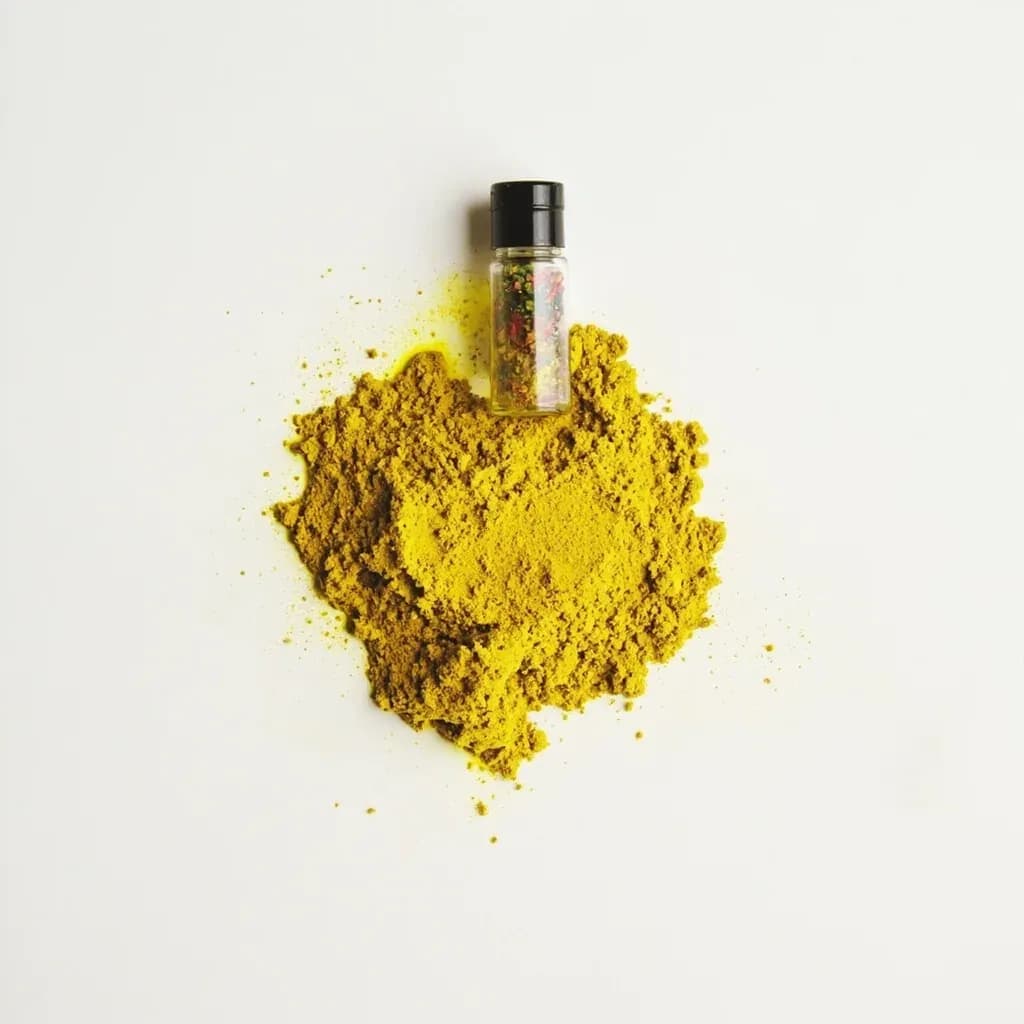
The broader meaning of the word covers something much older: the mechanical reduction of any thoroughly dried ingredient to powder. Dried mushrooms, citrus zest, hard cheese, toasted spices, dried chiles, and freeze-dried fruit all fall into this category — the work of a spice grinder or mortar rather than a fat-blending processor. Both senses share the same goal, namely concentrating flavor into a form that disperses cleanly and dissolves on contact.
The technique as it is now practiced was popularized at elBulli in the mid-2000s and codified in Modernist Cuisine (Myhrvold, Young, and Bilet, 2011). It is forgiving with a food processor but punishing once a powder gets over-oiled or exposed to humidity; a paste is not recoverable. Cooks who understand how maltodextrin behaves — its hygroscopicity, its tolerance for different fats, its low sweetness — can keep a small library of flavor powders on hand for finishing.
- Difficulty
- Medium
Types & varieties
The modernist classic: blending a fat into fine maltodextrin to form a dry powder that re-liquefies on the palate
Same procedure with tapioca-derived maltodextrin — slightly more neutral flavor, generally non-GMO, the standard in clean-label kitchens
Pure mechanical reduction of fully dried ingredients (mushrooms, citrus zest, herbs, spices, dried chiles, freeze-dried fruit, hard cheese) in a spice grinder or mortar
Flash-freezing tender or oily ingredients with dry ice (or liquid nitrogen in pro kitchens) so they shatter into powder rather than smear or heat under the blades
Industrial encapsulation of oils and extracts into powders — the technology behind instant coffee and commercial flavor powders; not a home technique
How to do it
- 1
Select and temper the fat
Choose a refined, filtered fat — extra-virgin olive oil, melted clarified butter, strained bacon fat, smooth peanut butter, or chocolate held at about 30 °C / 86 °F. Bring it to 25–30 °C so it flows easily but won't melt the starch or seize up in the bowl.
- 2
Weigh the maltodextrin
Weigh out maltodextrin at roughly 25–35% of the fat's weight — a 1:3 to 1:4 fat-to-maltodextrin ratio is a reliable starting point. Lean toward less maltodextrin for saturated fats and nut butters, more for thin oils.
- 3
Load the processor
Put the maltodextrin in a small food processor or blender cup. Decant the fat into a container with a spout, squeeze bottle, or syringe so you can add it in a thin, controlled stream.
- 4
Stream in the fat
With the machine running, drizzle the fat in slowly over 20–40 seconds. Stop once, scrape the bowl and the underside of the lid, then run a few more seconds. The mixture should move from sandy to a uniform, dry powder.
- 5
Sift and refine
Tip the powder through a fine-mesh sieve or tamis into a dry bowl. Re-pulse any retained granules with a teaspoon of fresh maltodextrin until everything passes through.
- 6
Store and use
Transfer to an airtight jar, ideally with a small silica-gel sachet, and keep cool and dry. Dust onto plates or use as a rim just before service for the brightest flavor and cleanest texture.
How maltodextrin actually works
Maltodextrin's value comes from its molecular weight. Because the glucose chains are long, the powder is barely sweet on the palate, but its surface area is enormous, so it can absorb and entrap fat droplets in a dry web. The starch does not dissolve the fat; it simply holds it. When warmth and saliva meet the powder, the matrix collapses and the fat runs free. This is why a powder built from low-DE maltodextrin tastes clean, and a powder built from high-DE maltodextrin (DE above about 20) reads sweet and cloying on a savory plate.
Choosing fats for powderizing
The fat dictates the ratio and the handling. Saturated and semi-solid fats — coconut oil, cocoa butter, clarified butter, strained bacon fat, schmaltz — coat maltodextrin particles efficiently and need only 15–20% maltodextrin by weight to go dry. Thin liquid oils such as grapeseed, walnut, or pumpkin-seed oil soak deeper into the starch and usually need closer to 25–30%. Nut butters behave like very thick fats and break up cleanly in a processor. Tempered chocolate works but must sit around 28–32 °C / 82–90 °F; hotter and you melt the starch, colder and it seizes into grit.
- Refined, filtered fats blend most cleanly
- Saturated fats: start at 5:1 fat-to-maltodextrin
- Thin oils: start at 3:1 fat-to-maltodextrin
- Temper chocolate to ~30 °C before incorporating
Storage and shelf life
Maltodextrin is hygroscopic, which means it pulls water out of the air as eagerly as it pulls it out of your tongue. A jar left open near a stove or a service line will turn to paste inside a couple of hours. Sealed jars with a small silica-gel sachet, kept cool and dark, hold their texture for one to four weeks. Older powders do not spoil the way a fat would, but they lose the bright 'pop' on the palate and read chalky.
- Use a glass jar with a tight gasket, not plastic
- Add a food-safe silica-gel sachet
- Label with the date and the source fat
- Discard if the powder smells stale, off, or rancid
Common uses
Tips & pitfalls
- Use low-DE maltodextrin — high-DE grades are noticeably sweet and will throw savory applications off balance
- Drizzle the fat in a thin, slow stream while the processor runs; dumping it in produces clumps that won't break up
- Keep the fat at 25–30 °C / 77–86 °F: too cold and it won't disperse, too hot (especially chocolate) and you'll melt or clump the starch
- Saturated fats and thick nut butters need less maltodextrin than thin oils — start near a 5:1 fat-to-maltodextrin ratio for coconut oil, around 3:1 for thin oils like grapeseed
- Sieve the finished powder through a fine tamis and re-pulse any retained granules with a teaspoon of fresh maltodextrin
- Store airtight with a silica-gel sachet — maltodextrin pulls moisture from the air and will rehydrate into paste within hours if left open or near steam
- Never try to powderize water-based liquids, vinegars, or high-proof spirits; you'll get a sticky dough, not a powder
- Apply the powder at the very last moment — it liquefies on contact with any moist surface, including condensation under a cloche
- For a drier, easier-to-dust powder, push the maltodextrin-to-fat ratio toward 1:1; for richer mouthfeel, push it toward 1:4
Good to know
- Primary carrier
- Maltodextrin, a long-chain glucose polymer usually derived from corn or tapioca starch
- Dextrose equivalent
- Low-DE maltodextrin (DE ~3–15); high-DE grades read sweet and throw savory applications off balance
- Typical ratio
- Roughly 3:1 to 4:1 fat to maltodextrin by weight (25–35% maltodextrin); saturated fats need less, thin oils more
- Works with
- Fats and oils only — olive oil, nut oils, melted butter, bacon fat, nut butters, tempered chocolate, coconut oil, foie gras fat
- Does not work with
- Water-based liquids, vinegars, stocks, or spirits above ~20% ABV — the maltodextrin hydrates into a paste
- Origin
- Modernist cuisine movement, mid-2000s; popularized at elBulli (Ferran Adrià) and codified in Modernist Cuisine (2011)
- Shelf life
- 1–4 weeks sealed airtight with desiccant; collapses into paste within hours once humidity gets in
- Texture
- Dry, free-flowing powder that liquefies on the tongue or on contact with any moist surface
Also called
Maltodextrin Powderizing · Fat Powdering
Related

Confit
Cook slowly submerged in fat for silky tenderness and keeping

Cure
Draw out moisture with salt and time to preserve and concentrate

Pickle
Steep in acidic brine for bright, tangy, crunchy preservation

Ferment
Let friendly microbes transform food into tangy, complex flavor

Marinate
Soak in a seasoned mix to flavor and tenderize before cooking

Brine
Soak in salt water so meat stays juicy and seasoned throughout

Dehydrate
Slowly dry out moisture to concentrate flavor and extend shelf life

Cold-Smoke
Perfume cured food with smoke without cooking it through