Heat & Fire
Sesame Oil Ginger Frying (Bao Xiang)
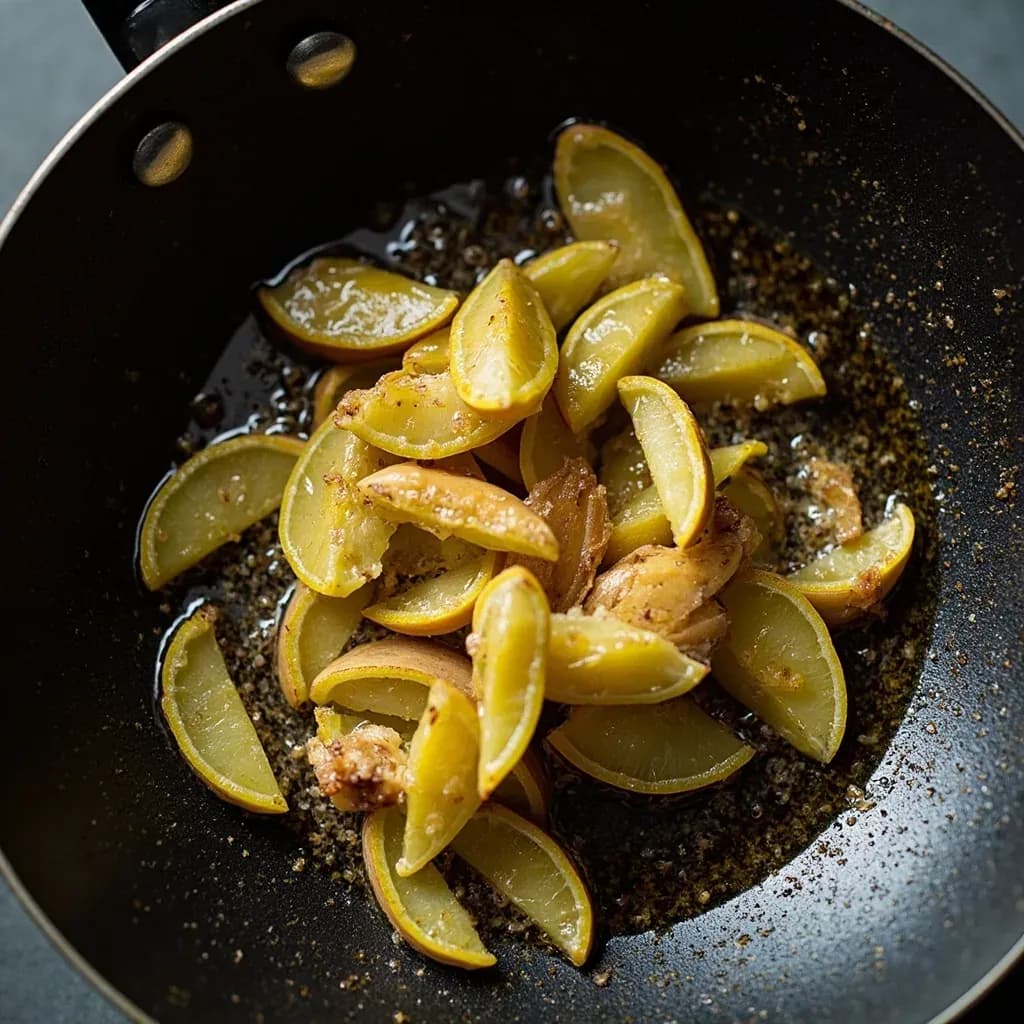
Frying ginger and aromatics in hot sesame oil to release their fragrance before stir-frying.
Bao xiang means to explode the fragrance, frying ginger, garlic, scallion, or chilies in hot oil, here sesame oil, until they sizzle and perfume the fat. This aromatic base is the first move of countless stir-fries, infusing the cooking oil so every later ingredient carries the flavor. The aromatics are cooked just to fragrant, not browned and bitter, before the main ingredients hit the wok.
Bào xiāng (爆香) — literally "burst fragrance" — is the foundational opening move of Chinese wok cooking, in which aromatics are flash-fried in hot oil for a matter of seconds until their volatile, fat-soluble flavor compounds are extracted into the fat rather than allowed to escape into the air. The technique is what converts a neutral hot pan into an aromatic foundation: from that moment on, every subsequent ingredient added to the wok is coated in oil that already carries ginger's zingerone, garlic's allicin, scallion's sulfur compounds, and the resinous notes of any whole spices in play. It is, in effect, the silent first sentence of almost every savory Chinese dish.
The sesame-oil version layers an additional, deeply nutty aroma onto the dish — but pure toasted sesame oil has a smoke point of only about 175–190 °C / 350–375 °F, so most cooks either blend it with a neutral oil for the bloom itself, or reserve the pure sesame oil for a finishing drizzle. The window between "fragrant" and "burnt" is genuinely narrow — often as little as five seconds — which is why the technique is timing-sensitive despite being mechanically simple. Get it right and the dish smells like a restaurant kitchen; get it wrong and the entire wok of food turns irredeemably bitter, because burnt sesame oil cannot be rescued.
Bào xiāng also overlaps with two related moves worth distinguishing: 炝锅 (qiàng guō), the broader northern-Chinese term for the same first-step aromatic blooming, often done with raw lard or neutral oil; and 油淋 (yóu lín), the Cantonese finishing move in which the already-bloomed hot oil is poured directly over a steamed protein to perfume and gently cook its surface with aroma.
- Difficulty
- Easy
Types & varieties
Just smashed or sliced ginger in sesame oil; the classic opening for steamed fish, soups, and clear braises
Scallion whites and ginger together; the Cantonese and Shanghainese default for steaming fish and stir-frying seafood
Standard for most Sichuan and homestyle stir-fries; garlic is added after ginger because it browns faster
Dried chilies, Sichuan peppercorns, star anise, and cassia bark bloomed first to release their fat-soluble resins and capsaicin
Lower heat, shorter contact; used as a finishing-aroma move for cold dishes, dan dan noodles, or final seasoning drizzles
Neutral oil plus a finishing splash of toasted sesame oil — the workhorse version for true wok-temperature cooking
How to do it
- 1
Prep the aromatics
Smash and slice ginger into thin coins or matchsticks; smash garlic cloves with the side of a knife; cut scallions, separating the whites from the greens; measure any dried spices. Have everything within arm's reach — the bloom itself takes seconds, and you will not have time to chop.
- 2
Heat the wok
Place a carbon-steel wok over high heat until a bead of water skitters across the surface and evaporates almost instantly, or until you see the first wisp of smoke. Heating the wok before the oil goes in is non-negotiable for true wok fragrance.
- 3
Add the oil
Pour in 2–3 tablespoons of neutral oil first, swirl to coat, then add 1 teaspoon to 1 tablespoon of toasted sesame oil. Heating pure sesame oil solo at wok temperatures will scorch it; blending extends its useful life in the pan and still leaves a clear nutty note in the finished dish.
- 4
Test the temperature
Drop a single sliver of ginger into the oil. If it sizzles actively and foams immediately, the oil is ready. If it sits still, wait a few seconds. If it browns on contact, pull the wok off the heat for a moment and try again.
- 5
Bloom the hardier aromatics
Add the ginger slices along with any dried whole spices — chilies, Sichuan peppercorns, star anise, cassia. Stir-fry 5–10 seconds, just until the spices darken half a shade and release their perfume. Hardier aromatics tolerate the heat longer and need the head start.
- 6
Add the softer aromatics
Toss in the garlic, then the scallion whites. Stir continuously for another 5–10 seconds. The goal is pale gold and intensely fragrant, never brown — garlic in particular goes from perfect to burnt in seconds.
- 7
Read the fragrance
Your nose is the timer. When the wok smells sharply nutty, toasty, and aromatic — and before it smells acrid, singed, or sharp — proceed. This window is roughly five seconds wide, so do not walk away.
- 8
Add the main ingredient immediately
Push the aromatics up the side of the wok or add proteins and vegetables straight in. Toss vigorously to coat in the fragrant oil. From this point, the dish's aromatic base is largely locked in; remaining seasoning is salt, sauce, and balance.
- 9
Optional finishing drizzle
Off the heat, splash a few drops of pure toasted sesame oil over the finished dish for a fresh, raw-nut aroma that survives the cooking process and lifts the whole plate.
The science of the bloom
Bào xiāng works because the compounds responsible for the characteristic aromas of ginger, garlic, scallion, and dried spices are largely fat-soluble — they dissolve readily into hot oil but dissipate into the air as vapor from a dry pan. When you flash-fry ginger, for example, its zingerone and β-sesquiphellandrene migrate into the oil within seconds, and that oil then carries them into every ingredient that touches it afterward. This is why a properly bloomed wok produces a depth of flavor that simply adding raw aromatics at the end cannot match. The trade-off is thermal: the same volatile compounds that smell wonderful also burn easily, especially in sesame oil, which oxidizes and turns acrid well below the temperature at which, say, peanut oil is comfortable.
- Fat-soluble aroma compounds include ginger's zingerone and β-sesquiphellandrene, garlic's allicin, scallion's sulfur compounds, and the capsaicin of dried chilies.
- Aromatics that hit cold or still oil will steam rather than bloom, producing a flat, sometimes sour note.
- The 'nutty' smell of correctly bloomed sesame oil is a reliable built-in timer — once the aroma tips toward sharp or acrid, the oil has crossed the line.
Regional variations
Bào xiāng is pan-Chinese, but the aromatics and the accompanying oil shift by region. Sichuanese cooking often leads with dried chilies and Sichuan peppercorns, blooming them in oil laced with pork fat or chili oil. Cantonese home cooks tend toward ginger and scallion in a lighter neutral oil, frequently using the bloomed oil to dress steamed fish. Shanghainese kitchens lean on ginger with a generous pour of toasted sesame oil for cold appetizers and red-braised dishes. In Taiwanese cooking, the move often opens with garlic and shallots in neutral or pork-laced oil, with an extra finishing drizzle of pure sesame oil common in home-style dishes; Taiwanese cooks are also famous for the related shallot oil (紅蔥油) — a slower, lower-heat process in which shallots are crisped until sweet and golden and reserved as a finishing condiment.
- Sichuan: dried chilies and Sichuan peppercorns in chili oil or lard, bloomed until just darkened.
- Cantonese: ginger and scallion whites in neutral or lightly sesame-oiled oil, often poured over steamed fish.
- Shanghainese: heavy on ginger with toasted sesame oil, especially for cold dishes and red-braising.
- Taiwanese: garlic and shallots in neutral or pork-laced oil, often with a final drizzle of pure sesame oil; the related shallot oil (紅蔥油) is a separate, slower condiment made by crisping shallots until golden.
Common uses
Tips & pitfalls
- Use a 1:3 or 1:4 ratio of toasted sesame oil to neutral oil if you want full wok heat without smoking or bitterness.
- Heat the wok first, then add the oil — never the reverse, or the sesame flavor will smell flat and one-dimensional.
- Smell the wok: the moment a sharp, toasted, slightly peppery aroma hits your nose, the aromatics are ready; seconds later they will scorch.
- Add ginger before garlic, and garlic before scallion whites; dried whole spices go in first of all, because they tolerate the heat longest.
- Do not crowd the wok — the oil must sizzle on contact. If the aromatics sit in still oil, they steam and turn sour rather than bloom.
- Pure toasted sesame oil added at the very end of cooking (off-heat) preserves its nutty aroma; using it for the bloom sacrifices some fragrance to gain infusion depth.
- If the oil blackens or smells acrid, discard it and start over — burnt sesame oil is irredeemably bitter and will ruin everything it touches.
- For steamed dishes, do the bào xiāng in a small pan and pour the hot oil directly over the protein to 'cook' the surface with aroma — this is the yóu lín (油淋) finish.
Good to know
- Chinese name
- 爆香 (bào xiāng), literally 'bursting fragrance'
- Related term
- 炝锅 (qiàng guō) — the broader northern-Chinese term for the same aromatic blooming move
- Primary oil
- Pure Chinese toasted sesame oil (麻油 má yóu), often blended 1:3 or 1:4 with a neutral oil such as canola, peanut, or vegetable
- Smoke point note
- Pure toasted sesame oil smokes around 175–190 °C / 350–375 °F, well below refined neutral oils, so heat control is critical
- Core aromatics
- Ginger (sliced or smashed), garlic, scallion whites, dried chilies, Sichuan peppercorns, star anise
- Time
- Roughly 10–30 seconds total; the window between fragrant and burnt is only a few seconds wide
- Equipment
- Carbon-steel wok, long-handled spatula or chuan (paddle), high-BTU burner
- Difficulty
- Beginner-level skill but timing-sensitive — the most common failure is burning
Also called
bao xiang · blooming aromatics · tempering ginger
Dishes that rely on it
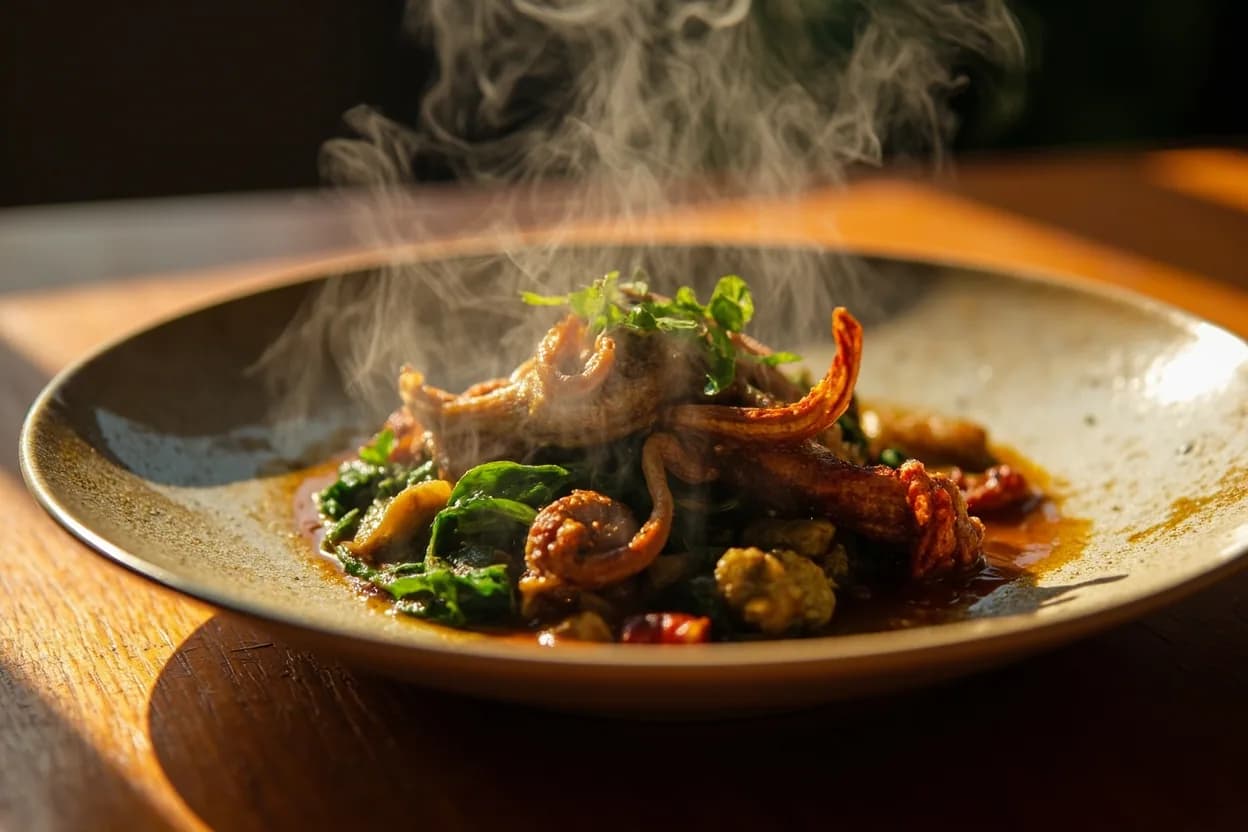
Related

Sear
Blast the surface hot for a deep-browned, savory crust

Sauté
Cook quickly in a little fat over lively heat, tossing as you go

Stir-Fry
Toss bite-sized pieces over roaring heat for fast, smoky cooking

Pan-Fry
Crisp food in a shallow layer of hot fat, turning once or twice

Deep-Fry
Submerge in hot oil for an all-over crackling crust

Roast
Cook uncovered in dry oven heat for browned edges and tender centers

Bake
Cook with steady, surrounding oven heat — the soul of bread and pastry

Broil
Hit food from directly above with fierce overhead heat