Heat & Fire
Tandoor / Tandyr / Tannour Baking
Cooking breads and skewered meats in a searing clay barrel oven.
Tandoor baking uses a deep clay oven fired by charcoal or wood to reach intense radiant heat, where flatbreads are slapped onto the inner walls and marinated meats cook on vertical skewers. The fierce heat blisters naan in seconds and gives kebabs a smoky char while keeping them juicy. Variants across Central Asia and the Levant are called tandyr and tannour.
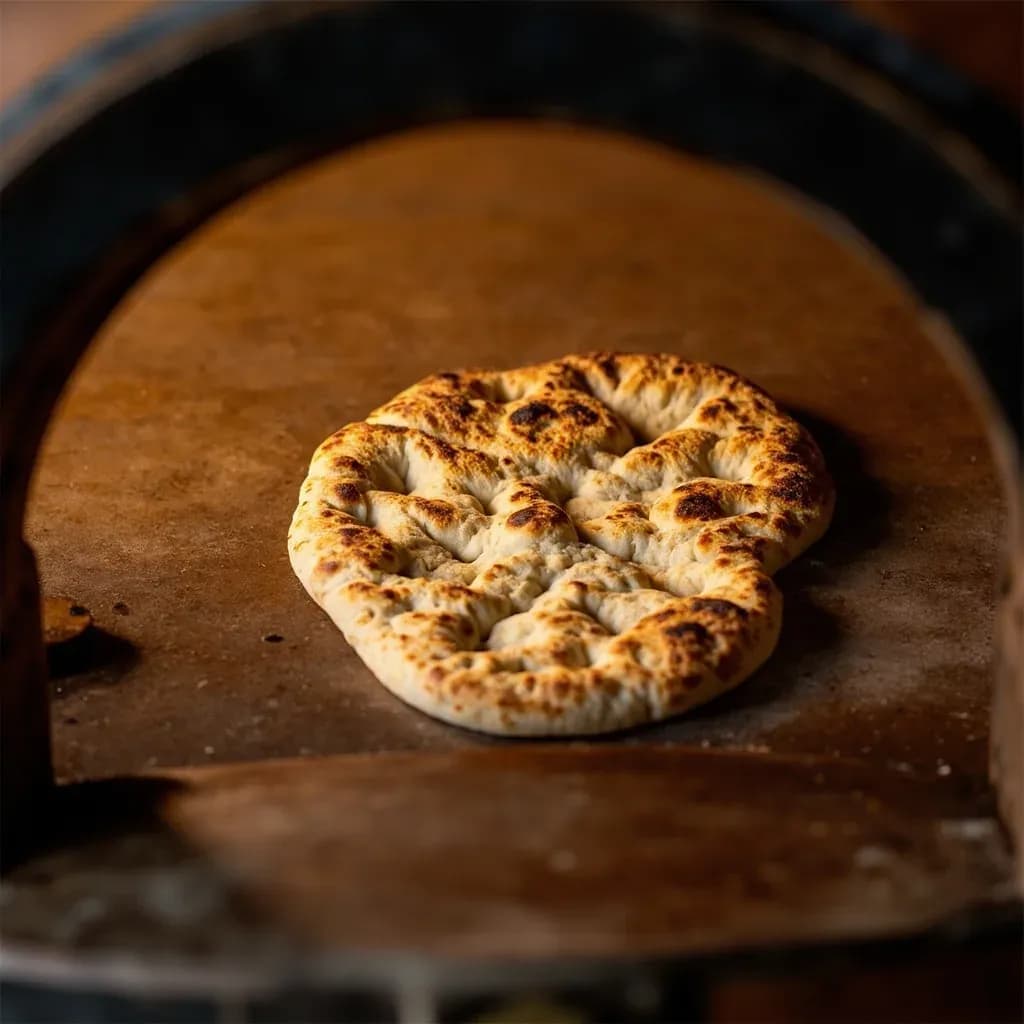
A tandoor is a cylindrical clay oven, typically 0.6–1.5 m deep and 30–80 cm across, heated by a hardwood or charcoal fire built in its base. Cooking in it is defined not by a single temperature but by three simultaneous heat sources: the live flame licking upward, the searing radiant heat of the clay walls (which exceed 500 °C once saturated), and the column of hot convection gases rising through the mouth. Dough slapped onto the walls and skewers of marinated meat lowered into the throat meet all three at once, which is why a tandoor produces results no home oven can fully mimic: the puffed, leopard-spotted char of naan, the smoky red crust of tandoori chicken, the brittle sheen of Uzbek non.
The technique is ancient — archaeological evidence from Mohenjo-daro and Harappa places tandoor-like ovens in the Indus Valley around 3000 BCE, and cylinder seals from Mesopotamia confirm the form independently. From that common ancestor, the oven radiated across Central Asia, Iran, the Caucasus, Turkey, and the Indian subcontinent, acquiring a dozen local names (tandyr, tanur, tonir, təndir, tone) and a corresponding range of breads and meats. Despite the regional variation, the principle is identical everywhere: a wall that is hotter than the air inside it, against which a cook times bread in seconds and meat in minutes.
For the modern cook, the technique translates readily to small tabletop clay or steel units and commercial gas-fired cabinets, though purists insist that real hardwood smoke is part of the flavor. A well-tended tandoor rewards patience: long preheats, careful fire management, and the discipline to cook in small, well-spaced batches.
- Difficulty
- Hard
Types & varieties
Wide-mouthed, barrel-shaped clay oven of the Indian subcontinent; used for naan slapped onto interior walls and skewered meats lowered vertically into the throat.
Narrower and deeper than the Indian form, often sunk into the ground; signature for Afghan naan and Bolani stuffed flatbreads.
Pit-style clay oven buried in the kitchen floor or yard; traditionally used for lavash and choreg, sometimes covered with a lid to trap steam.
Closely related to the tonir; produces tandır çöreği and similar round flatbreads.
Tall, narrow ceramic cylinders; the shaped dough is slapped onto the wall and the finished bread often falls away on its own when cooked.
Ancient brick or clay variant historically used for sangak (baked on a bed of hot pebbles) and barbari breads.
Pit ovens set into the ground, used both for tandır ekmeği flatbread and for tandır kebab, a slow-cooked whole lamb buried in the embers.
Indoor or outdoor clay oven used for shoti, the boat-shaped bread whose tapered form comes from being baked against the curving wall.
Modern restaurant adaptation, gas-fired, designed to meet fire codes while preserving the radiant-wall cooking concept.
Small portable clay or steel units for home cooks, typically fuelled with lump charcoal.
How to do it
- 1
Cure a new tandoor
Build a small fire of wood or charcoal inside and let it burn low for 2–4 hours. Repeat with progressively larger fires over 2–5 consecutive days, allowing the clay to dry and harden gradually. Skipping this step will crack the walls on first use.
- 2
Light and preheat
Fill the base with hardwood charcoal or split hardwood. Ignite and feed fuel steadily until the walls glow a dull orange and a hand held above the mouth feels harsh radiant heat. Allow 60–90 minutes for the walls to fully saturate — surface temperature, not just the fire, is what cooks the food.
- 3
Prepare meats and breads
Marinate proteins (chicken, lamb, fish, or paneer) in yogurt, citrus, salt, and a ginger-garlic paste for at least 4 hours, ideally overnight. Shape bread dough into rounds or ovals and let it rest so it stretches easily without springing back.
- 4
Skewer the meats
Thread marinated pieces onto long flat metal skewers, leaving gaps between pieces for airflow. Lower the skewers vertically so the meat hangs in the hottest convection zone near the mouth, with the long end resting across the rim.
- 5
Slap the breads
Wet one side of a dough ball with a damp cloth or quick dip, then with a confident motion press it onto the hot interior wall. Start near the top and work downward, pressing firmly to seal any gaps. A brief wipe of the wall with a damp cloth just before slapping helps adhesion and creates a burst of steam that blisters the surface.
- 6
Cook and watch
Rotate meat skewers every 3–5 minutes for even browning; total cook time is typically 12–20 minutes depending on size and starting temperature. Breads blister and puff in 60–120 seconds — watch for charring spots and remove the moment the dough releases from the wall.
- 7
Remove the food
Use a hooked skewer-pull or long tongs to lift out meat skewers. Detach breads with a long flat peel or metal tongs; well-baked breads often peel away on their own when the surface sets.
- 8
Maintain the fire
Add small amounts of charcoal between batches to keep wall temperature steady. Skim ash from the base periodically so airflow is not choked, and avoid letting the fire burn down completely during service.
- 9
Extinguish and clean
At the end of service, let the fire die down naturally or smother it with sand. Never douse a hot clay tandoor with water — the thermal shock will crack the walls. Once cool, scrape interior surfaces with a wire brush to remove carbon buildup before the next firing.
How the heat actually works
The single biggest mistake new tandoor cooks make is treating it like a grill. It is not. A grill radiates heat downward from above; a tandoor radiates inward from the wall. After 60–90 minutes of firing, the clay itself becomes the dominant heat source, re-radiating stored energy into anything that touches it. That is why dough sticks, blisters, and chars in under two minutes, and why a chicken thigh pressed against the wall will scorch in seconds. The hot gas column rising through the mouth is a secondary effect — it browns the upper face of meat and the inner curve of bread, while the flame itself adds the smoky flavor that defines the cuisine. Understanding this layered heat is what separates a tandoor cook from someone who simply owns a tandoor.
Breads versus meats
Bread and meat use the same oven but opposite parts of it. Breads are slapped onto the wall, usually in the upper third where radiant heat is strongest, and cook in 60–120 seconds; they are done when they puff, blister, and release on their own. Meats are lowered on long flat skewers so they hang in the convection column near the mouth, where radiant heat is gentler and the rising smoke flavors the surface; they need 12–20 minutes with regular turning. Trying to bake bread in the lower, smoky part of the oven yields a smoked flatbread; trying to cook meat against the wall yields a charred exterior and raw interior. Treat the two as separate stations sharing one fire.
Common uses
Tips & pitfalls
- Always cure a brand-new clay tandoor with successive small fires over 2–5 days to drive out moisture; an uncured oven will crack on first use
- Use only hardwood charcoal or well-seasoned hardwood — softwoods and treated lumber give acrid smoke and toxic residues
- Let the walls heat thoroughly before cooking; surface temperature, not just the fire, is what sets naan and chars meat
- Marinate meats in yogurt, lemon, and ginger-garlic paste; the lactic acid tenderizes while protecting protein from the intense dry heat
- Wet the interior wall briefly with a damp cloth before sticking dough to improve adhesion and create the steam that produces blistering
- Rotate skewers every 3–5 minutes for even cooking — the wall side browns faster than the center
- Keep long-handled tongs and a hooked skewer-pull (tandoor-grabber) ready; never reach into a live tandoor with bare hands
- Limit the number of skewers to what the oven can vent; overcrowding drops temperature and steams the food rather than charring it
- Place a small bowl of water in the base of pit-style tandoors to keep lavash pliable as it bakes
- Avoid sudden temperature drops; once lit, keep the tandoor in continuous use or relight gently — pouring water on hot clay will shatter it
Good to know
- Origin
- Bronze Age; archaeological evidence from the Indus Valley (c. 3000 BCE) and ancient Mesopotamia
- Operating temperature
- 400–480 °C (750–900 °F) at the mouth; interior walls can exceed 500 °C once saturated
- Preheat time
- 1–2 hours to fully saturate the walls after ignition
- Traditional fuel
- Hardwood charcoal or split hardwood such as mango, acacia, or coconut shell
- Heat mechanism
- Combined radiant heat from the walls, convection from rising hot gases, and direct flame contact
- First cure
- New clay tandoors must be slowly seasoned with successive small fires over 2–5 days before full use
- Shape
- Cylindrical, bell-shaped, or barrel-shaped; depth 0.6–1.5 m, diameter 30–80 cm
- Yield
- Typically 4–8 flatbreads or 6–12 skewers per batch
Also called
tandoor-grilling · tandoori-grilling · tandyr-baking · tannour-baking
Dishes that rely on it
Related

Sear
Blast the surface hot for a deep-browned, savory crust

Sauté
Cook quickly in a little fat over lively heat, tossing as you go

Stir-Fry
Toss bite-sized pieces over roaring heat for fast, smoky cooking

Pan-Fry
Crisp food in a shallow layer of hot fat, turning once or twice

Deep-Fry
Submerge in hot oil for an all-over crackling crust

Roast
Cook uncovered in dry oven heat for browned edges and tender centers

Bake
Cook with steady, surrounding oven heat — the soul of bread and pastry

Broil
Hit food from directly above with fierce overhead heat