Transform & Preserve
Straining Yogurt (Chaka)
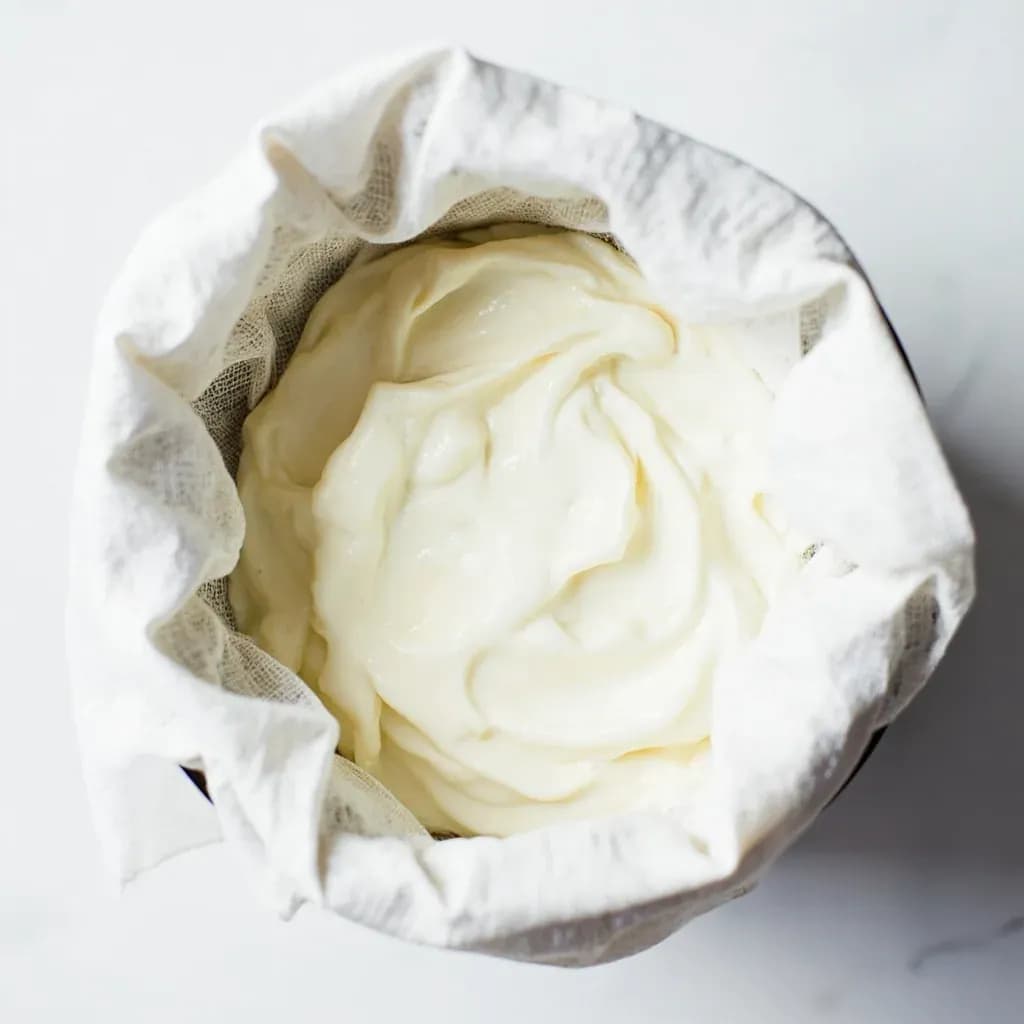
Draining yogurt through cloth to thicken it into a rich, tangy strained cheese.
Straining yogurt hangs set yogurt in muslin so the watery whey drips away, leaving a thick, creamy curd known as chaka or labneh. The longer it drains, the firmer and more concentrated the result, ranging from Greek-style yogurt to a spreadable soft cheese. Setting yogurt first by culturing warm milk, then straining, is a staple dairy technique across Central and South Asia and the Middle East.
Straining yogurt is the gentle art of letting whey drip away from cultured milk until what's left behind is dense, tangy, and spreadable. Set yogurt in a porous cloth over a sieve and gravity does the rest: water, lactose, and soluble minerals drain off, while casein proteins, milk fat, and lactic acid stay behind, concentrated into something that looks and eats like soft cheese. The method needs no heat, no special cultures, and almost no active work — a few hours of unattended draining in the refrigerator transforms an ordinary tub of plain yogurt into labneh, chaka, or the base for shrikhand.
What you end up with is fundamentally different from the yogurt you started with, not just thicker. The acidity climbs as water leaves and the remaining lactic acid concentrates; the protein and fat density roughly double, the lactose drops, and the mouthfeel shifts from pourable to spoonable to spreadable depending on how long you let it drain. That concentration is the whole point: strained yogurt stands in for cream cheese in Middle Eastern breakfasts, replaces sour cream on a soup, marinades meat without curdling, and keeps for weeks submerged in olive oil with herbs.
The technique is ancient and almost universal across dairy cultures — Levantine, Persian, Turkish, Greek, Indian, Balkan — each region giving the result a different name and a different place at the table. The equipment is humble: a bowl, a sieve, and a piece of cloth. The only real skill is choosing the right starting yogurt and having the patience to let gravity work.
- Difficulty
- Easy
Types & varieties
The Levantine standard (Lebanon, Syria, Palestine, Jordan); often salted before straining, served drizzled with olive oil and za'atar, or rolled into balls and preserved in oil.
Persian strained yogurt, eaten with sangak or barbari bread, fresh herbs, and grilled meats; kashk is a related, more dried-and-aged product.
Strained yogurt common across Turkey, used in meze, breakfast spreads, and as a base for cold sauces and dips.
The Greek tradition strains sheep's- or goat's-milk yogurt; commercial versions are often concentrated by centrifugal separation rather than gravity.
Indian dahi drained in muslin to thicken it for raitas, lassi, shrikhand desserts, and tandoori-style marinades.
Icelandic; similar in texture but not in process. Made with specific mesophilic cultures and rennet, then concentrated to a strained-style thick yogurt.
How to do it
- 1
Choose the right yogurt
Start with plain, full-fat yogurt whose label lists only milk and live cultures — no gelatin, cornstarch, pectin, modified starch, or carrageenan. Pasteurized store-bought yogurt is fine; traditionally cultured Bulgarian, Greek, or Middle Eastern styles work especially well because their dense protein networks hold together as they drain.
- 2
Set up the straining rig
Drape a double layer of cheesecloth (or a clean nut-milk bag, or a large unbleached coffee filter for small batches) over a fine-mesh sieve. Set the sieve over a deep bowl with several centimeters of clearance so the draining whey never touches the bottom of the cloth.
- 3
Season (optional)
Stir about ½ teaspoon of fine salt per kilogram (roughly 1 quart) of yogurt into the yogurt. Salt seasons the finished cheese evenly and draws out a touch more whey. Skip it for sweet preparations like shrikhand.
- 4
Load and cover
Spoon the yogurt into the cloth-lined sieve. Gather the corners of the cloth loosely over the top — do not tie tight, you want air to escape and whey to flow freely. Cover loosely with plastic wrap or a plate to keep the surface from skinning or picking up fridge odors.
- 5
Drain in the refrigerator
Place the whole setup in the refrigerator. Drain for 4–6 hours for a thick spoonable yogurt, 8–12 hours for a spreadable labneh, 18–24 hours for a firm, cream-cheese-like texture, and up to 36 hours for very dry, rollable balls. The longer it drains, the tangier and denser it becomes.
- 6
Check and adjust
Lift the cloth corners and inspect. The yogurt is ready when it holds its shape softly when spooned and looks matte rather than glossy. For a drier result, give it another 2–4 hours, or gather the cloth and gently press against the sieve for a few minutes to expel the last whey. Do not squeeze hard early on — it forces solids through the cloth and makes the texture grainy.
- 7
Transfer and store
Unmold the strained yogurt into an airtight container and press a piece of plastic wrap directly onto the surface to prevent a skin. Refrigerate and use within 7–10 days. For preserved labneh, roll teaspoons of the firm strained yogurt into balls, dry uncovered in the fridge overnight, then submerge in good olive oil with herbs, chili, or garlic; this keeps for several weeks.
- 8
Reserve the whey
Pour the drained whey into a jar and refrigerate; use within a week. It replaces buttermilk in pancakes and biscuits, adds tang to soups and braises, hydrates bread doughs, and enriches smoothies. Discard only if it smells off.
The chemistry of what is happening
Straining is a separation, not a transformation. Yogurt is roughly 85–90% water held in a delicate gel of casein proteins that have curdled around milk fat globules under the action of lactic acid bacteria. When you suspend that gel in a porous cloth, gravity pulls the watery phase (whey) out through the openings, but the casein network is too large and tangled to escape. What remains on the cloth is the same protein-and-fat structure you started with, just compressed.
That compression changes perception. The lactic acid becomes more concentrated, so the result tastes tangier even though the pH has barely shifted. The fat coats the palate more thickly because the water that thinned it is gone. The lactose drops substantially, which is why many lactose-sensitive eaters can handle strained yogurt when they cannot handle the original. A thin yellow liquid pooling on the surface of finished strained yogurt is simply more whey continuing to separate — it is normal, and you can stir it back in or pour it off depending on preference.
Scaling up and down
The technique is forgiving at any volume. For a single serving, a paper coffee filter set in a small sieve over a mug works fine. For a kilogram or more, a hotel-pan rig lined with butter muslin, with a second empty pan set below to catch the whey, is the standard restaurant method. For very large batches, a hanging cloth (a piece of muslin tied to a wooden spoon balanced across a deep pot) exposes more surface area than a sieve and drains faster, but it requires sturdy cloth and a cool kitchen to stay safe.
Common uses
Tips & pitfalls
- Read the label. Yogurts with gelatin, cornstarch, pectin, modified starch, or carrageenan do not strain cleanly — they collapse into a gummy, rubbery paste rather than a creamy spread.
- Full-fat (whole-milk) yogurt gives the richest result; low-fat strains fine but yields a thinner, less luxurious texture. Nonfat is not worth the effort.
- Salt the yogurt before straining (about ½ teaspoon per quart). It seasons the finished cheese through and slightly accelerates whey release.
- Use a deep bowl and keep the sieve well above the draining whey, otherwise the liquid re-soaks the cloth and slows the process.
- Double-layer cheesecloth if the weave looks loose, or use a nut-milk bag or unbleached coffee filter — both reduce solids loss and produce a smoother texture.
- Resist squeezing the cloth early on; let gravity do the work. Gentle pressing only at the very end, after most whey has drained, is fine.
- Always strain in the refrigerator, not on the counter. Room-temperature drainage drives off-flavor fermentation and can sour the product unevenly.
- Save the whey. Roughly half the original weight of the yogurt drains off as usable, mildly tangy liquid good for baking, soups, grains, and smoothies.
Good to know
- Also known as
- Labneh, Labni, Chaka (Persian), Süzme yoğurt (Turkish), Hung curd (Indian), yogurt cheese, Greek-style yogurt
- Core principle
- Gravity drainage of whey from yogurt through a porous cloth, concentrating casein, fat, and lactic acid
- Best yogurt to use
- Plain, full-fat (whole-milk) yogurt with no added starches, gelatin, pectin, or thickeners
- Typical draining time
- 4–8 hours for thick spoonable; 12–24 hours for spreadable; up to 36–48 hours for very firm, almost cream-cheese texture
- Temperature during draining
- Refrigerated (4 °C / 39 °F) to slow fermentation and prevent off-flavors
- Approximate yield
- Roughly 1 cup plain yogurt yields about ½ cup strained yogurt, depending on fat and time
- Storage (plain)
- Airtight container in the refrigerator, 7–10 days; press plastic wrap directly onto the surface
- Storage (preserved)
- Rolled into balls and submerged in olive oil with herbs and spices; keeps several weeks
- Common mistake
- Using commercial yogurts with added starch, gelatin, or pectin — they strain into a rubbery paste rather than a creamy spread
Also called
Straining Yogurt (Chaka) · Setting Yogurt (Dahi Jamana) · Labneh · Hung Yogurt
Dishes that rely on it



Related

Confit
Cook slowly submerged in fat for silky tenderness and keeping

Cure
Draw out moisture with salt and time to preserve and concentrate

Pickle
Steep in acidic brine for bright, tangy, crunchy preservation

Ferment
Let friendly microbes transform food into tangy, complex flavor

Marinate
Soak in a seasoned mix to flavor and tenderize before cooking

Brine
Soak in salt water so meat stays juicy and seasoned throughout

Dehydrate
Slowly dry out moisture to concentrate flavor and extend shelf life

Cold-Smoke
Perfume cured food with smoke without cooking it through