South Asia
Himachali
Also: Himachal Pradesh cuisine, Pahari cuisine
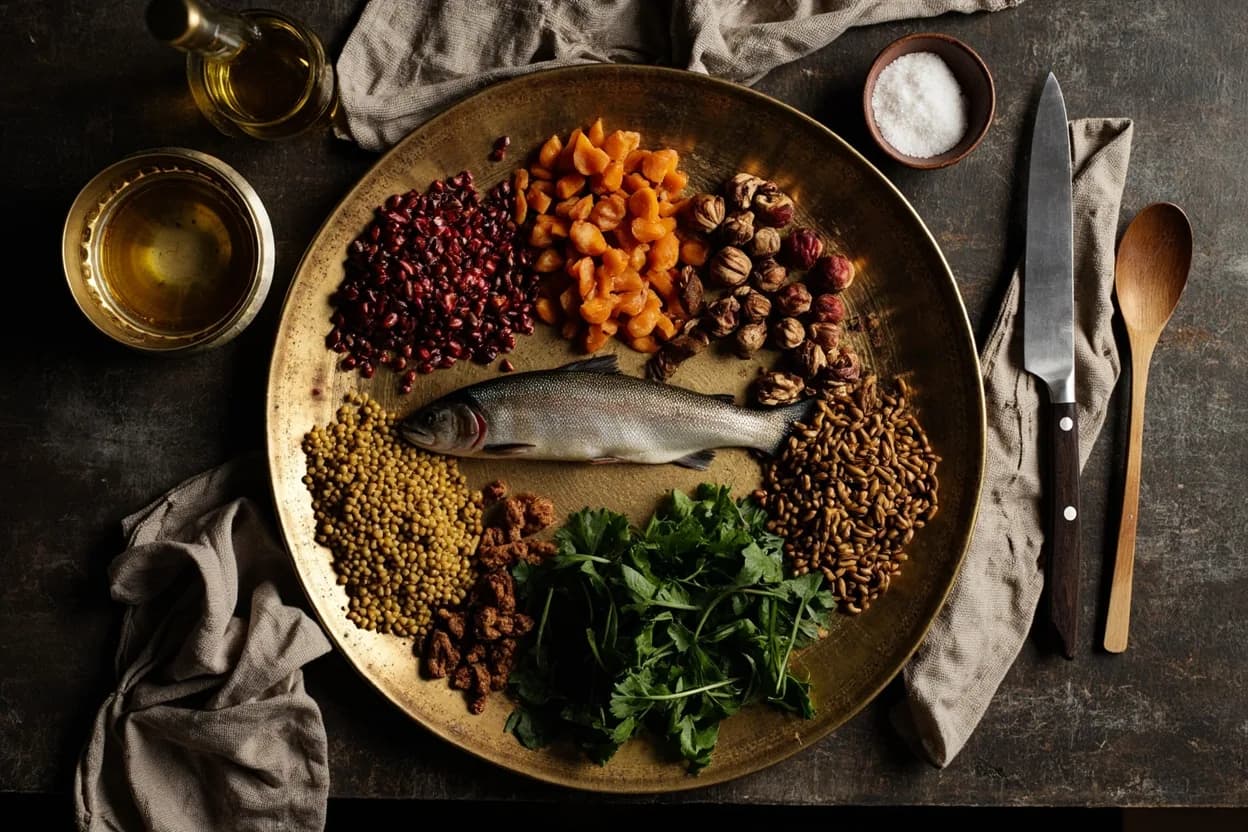
Cold-climate mountain cooking from the western Himalayas: slow-cooked dham feasts, steamed siddu bread, river trout, and a larder of dried apricots, walnuts, and buckwheat.
Himachali cuisine is the cooking of Himachal Pradesh, a state of deep river valleys, alpine meadows, and snowbound passes in the western Himalayas. Altitude and cold drive the pantry: root vegetables, dried legumes, preserved fruits, and calorie-dense grains like buckwheat and maize sustain communities through long winters. The cuisine's most distinguished expression is the dham — a ceremonial feast cooked by hereditary brahmin cooks called botis using copper and brass vessels over wood fires, served on pattal (leaf plates) in strict courses. Unlike the spice-forward cooking of the plains, Himachali food is mellow, warming, and subtly soured with anardana (dried pomegranate seeds) or dried raw mango.
The flavour base
Mustard oil base with coriander and fennel seeds; souring via dried pomegranate seeds (anardana) or dried raw mango powder; warming whole spices (clove, cardamom, cinnamon) in slow-cooked dishes.
Pantry staples
Key ingredients
Signature techniques
Signature dishes
Himachali on the table

At the table
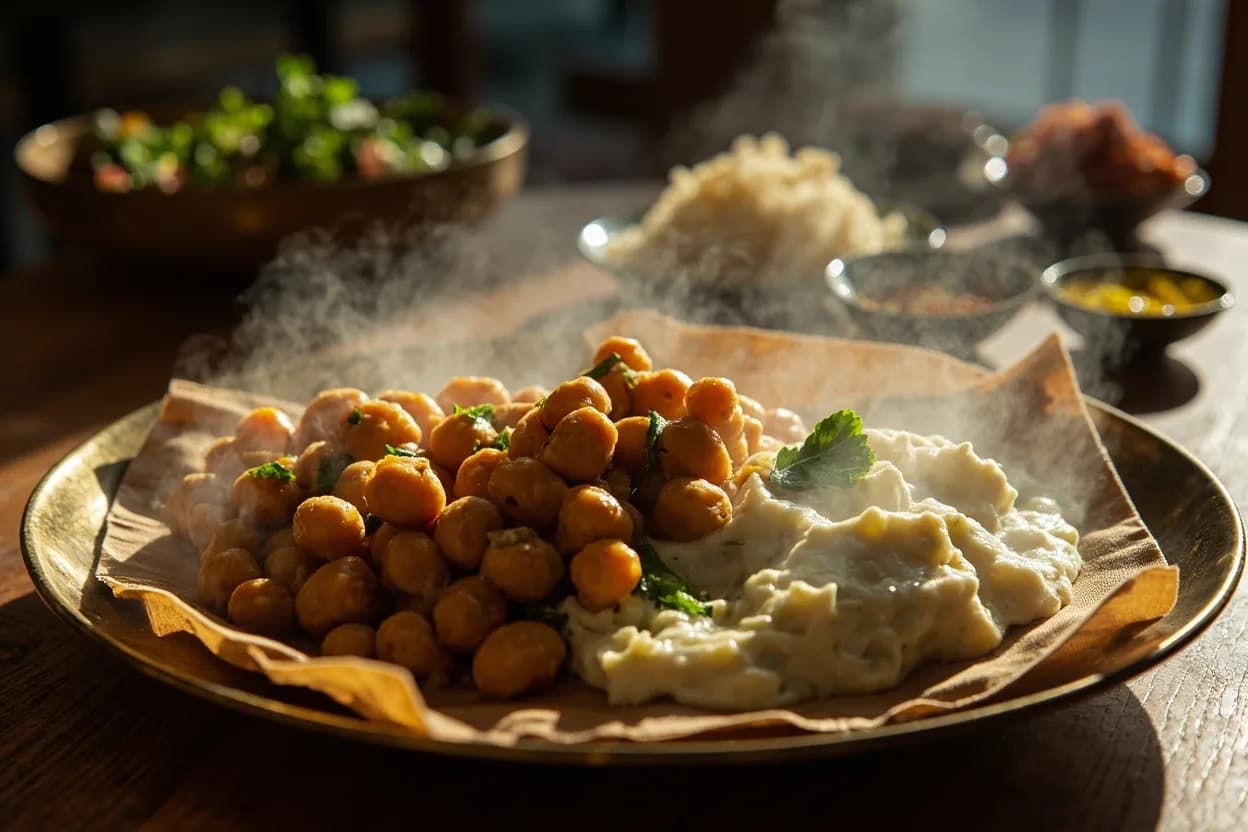
Daily meals are simple — roti or maize bread with a dal, a seasonal vegetable, and yogurt. Dham is the elaborate exception: served at weddings and religious occasions, it progresses through sweetened rice, madra, kadhi, dal mash, and rajma in a fixed ceremonial sequence, all served while seated on the ground. No onion or garlic appears in the Brahmin dham tradition.
History & context
Himachal Pradesh occupies ancient trade routes connecting the Indian plains to Central Asia via the Spiti and Kinnaur valleys. Its cuisine reflects this geography: Tibetan and Central Asian influences appear in the use of buckwheat, dried apricots, and barley, while plains influences are present in dal-rice staples and festival sweets. The dham tradition is documented as several centuries old; the hereditary boti cook caste maintains strict ritual protocols that have resisted both British colonial and post-independence homogenization. Apple cultivation, introduced in the 1920s by American missionaries, now shapes the Kullu-Manali economy and appears increasingly in local preserves and chutneys.
Regional variations
- Kinnaur and Spiti
Highest altitude zones; Tibetan influence strong — thukpa noodle soup, tingmo steamed bread, barley tsampa, and butter tea are everyday staples.
- Kullu-Manali valley
Richer in trout dishes and apple-based preparations; more accessible to tourism, so slightly more eclectic.
- Shimla and lower foothills
Closest to Punjabi influence; more use of ghee, richer gravies, and wheat flatbreads dominate over buckwheat.
- Chamba region
Distinct festival foods including chukh (fermented red chilli paste) and unique lamb preparations from semi-nomadic Gaddi herder traditions.
Related cuisines
Shares momos, thukpa, and barley staples in Spiti and Kinnaur; altitude and cold-climate pantry are identical.
- Kashmiri
Neighboring mountain state; shares slow-cooked lamb traditions and dried fruit use, but Kashmiri spicing is more intense and wazwan feasts are Muslim-majority.
- Garhwali
Adjacent Uttarakhand mountain cuisine; similar mustard oil base, buckwheat traditions, and simple dal-roti staples.
Canonical recipes
The dishes that define Himachali, documented in the Canon.
References
- 1.The Penguin Food Guide to India — Charmaine O'Brien
- 2.Feasts and Fasts: A History of Food in India — Colleen Taylor Sen
- 3.Indian Food: A Historical Companion — K.T. Achaya
Confidence: high
Notes
The dham's ritual grammar
A Himachali dham is not merely a meal but a religious event. Botis begin cooking the night before, maintain fire discipline throughout, and serve courses in a prescribed theological order: sweet before savory, legumes before dairy, the sequence reflecting both Brahminical purity codes and practical digestive logic.
Gucchi morels
Morchella esculenta, known locally as gucchi, grow wild in Himachali forests after the first spring rains and command extraordinary prices (often exceeding ₹30,000 per kg dried). They appear in prestige dishes at weddings and are among the most prized wild ingredients in Indian cooking.