Natural form
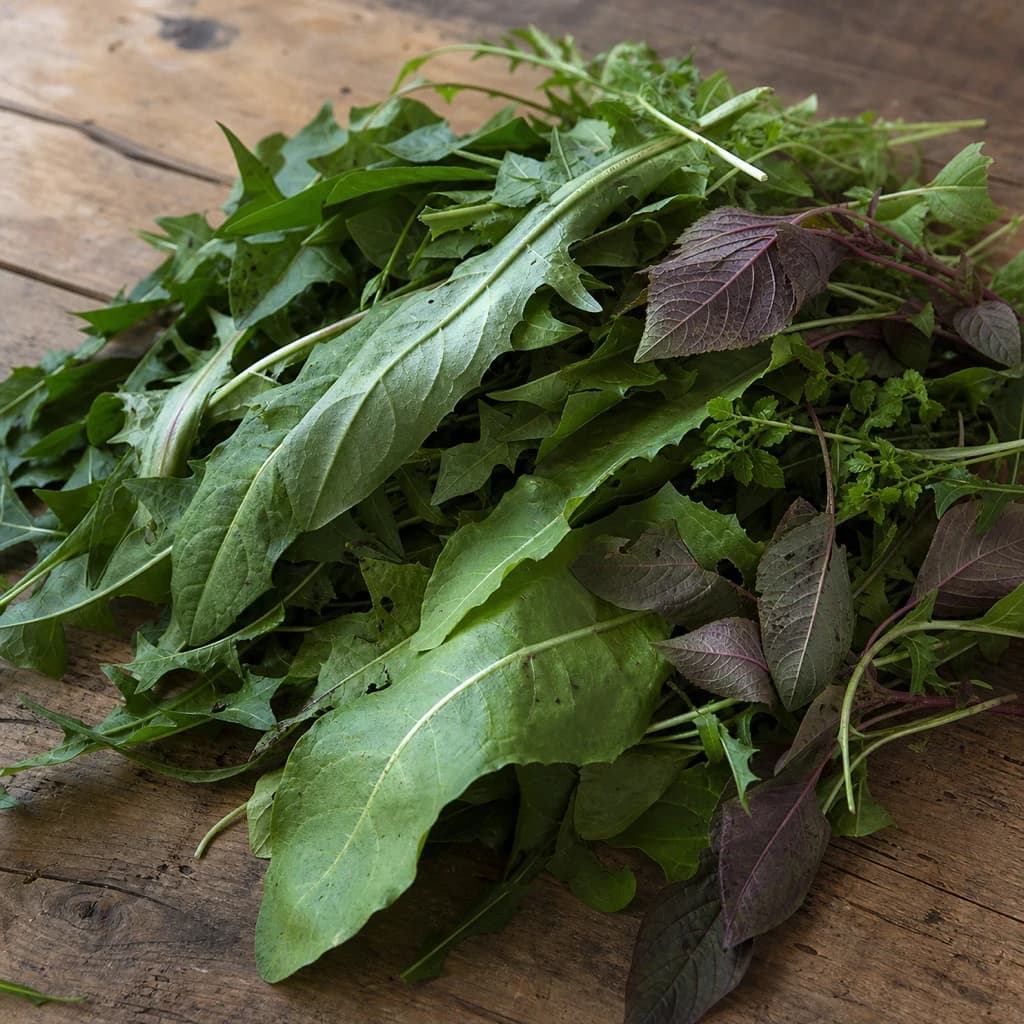
Freshly foraged wild greens — dandelion, chicory, and amaranth — unwashed and just gathered.
Shows the raw, foraged character of wild greens in their most recognizable natural state, teaching leaf shape, color variation, and texture.
Produce
Wild Greens
Foraged leafy greens (chicory, dandelion, amaranth) boiled or sautéed as a vegetable side.
Wild greens are foraged or semi-wild leafy plants such as dandelion, chicory, amaranth, and purslane, eaten as a vegetable across the Mediterranean and beyond. In Greek cooking they form horta, boiled and dressed simply with olive oil and lemon. Flavors range from mildly bitter to grassy, and they are typically blanched or sautéed to tame the bitterness.
Wild greens are foraged edible leaves gathered from uncultivated plants growing in meadows, fields, woodland edges, and other natural spaces. Unlike their domesticated cousins, wild greens have evolved without human intervention, developing more assertive flavors and higher concentrations of vitamins, minerals, and bitter compounds. The category spans multiple botanical families—Asteraceae, Amaranthaceae, Brassicaceae, and Urticaceae among them—so "wild greens" describes a foraging category rather than a coherent plant group. What unites them is their seasonal availability, their connection to place, and the earthy, sometimes bracing intensity they bring to cooking.
Their appeal lies in that intensity. Wild greens offer bitterness, mineral depth, and vegetal complexity that cultivated lettuce and spinach simply cannot match. They also represent an unbroken culinary tradition stretching across the Mediterranean basin, the Southern United States, Eastern Europe, and beyond—regions where foragers have long prized these plants as the first fresh vegetables of spring. Cooking with wild greens connects you to that tradition while delivering flavor that rewards confident handling: a willingness to use ample fat, acid, and salt to balance their natural assertiveness.
Behavior varies by variety. Tender-leaved species like young dandelion and lamb's quarters can be eaten raw when harvested small; tougher or more aggressive species (stinging nettles, mature wild mustard) require cooking. All wild greens collapse dramatically when heated—their water content is high—so a generous bunch raw will yield a modest portion cooked. Bitterness is the dominant flavor note across most varieties, though some (purslane, sorrel) offer brightness and acidity instead. Understanding and working with these characteristics separates successful wild green cookery from disappointment.
- Measured in
- g
- Storage
- Fridge
Types & varieties
Sharply bitter; young spring leaves milder. Red-stemmed variety less bitter.
Intense bitterness mellows with cooking; related to radicchio but more aggressive.
Mild, almost spinach-like; one of the most palatable wild greens.
Succulent, lemony, slightly mucilaginous; excellent raw or cooked.
Earthy, slightly beet-like flavor; tender when young.
Bright, lemony acidity distinct from bitterness; cooks down to a silky texture.
Must be blanched or wilted before use; flavor is deep and mineral-rich.
Aquatic, intensely peppery; perishes quickly after harvest.
Peppery, similar to cultivated mustard greens; can be very spicy when mature.
Foraging Responsibly
Sustainable foraging protects both plant populations and your health. Never harvest from areas that may have been treated with pesticides, herbicides, or fertilizers—this includes lawns, golf courses, agricultural fields, and roadsides where herbicide application is common. Industrial runoff, pet waste, and other contaminants can also make plants unsafe. Learn to identify plants with certainty before eating them; carry a reliable field guide and when in doubt, leave it out. Take only a small portion from any given patch, working across a larger area rather than depleting a single stand. This allows plants to regenerate and ensures that other foragers and wildlife can continue to use the resource. Begin with abundant species like dandelion, lamb's quarters, and purslane—plants that tolerate disturbance and recover quickly—before attempting to harvest less common varieties.
- Harvest at least 50 feet from roadsides and 100 feet from agricultural fields
- Learn positive identification from multiple reliable sources before eating
- Take no more than 10% of any population you find
- Return to established patches across seasons to monitor plant health
Understanding Bitterness
Bitterness in wild greens serves as the defining culinary challenge and opportunity. Plants produce bitter compounds (sesquiterpene lactones in chicory and dandelion, for example) as a defense mechanism against herbivores. These compounds are not obstacles to overcome but rather flavor elements to embrace and balance. The goal is not to eliminate bitterness but to harness it, using the other flavors in a dish to create contrast and harmony. Salt, fat, and acid are your primary tools: salt suppresses the perception of bitterness on the palate, fat coats the tongue and softens the sensation, and acid provides a bright counterpoint that keeps the greens from tasting one-dimensional. Think of bitter greens as you would a bold cheese or dark chocolate—ingredients that demand—and reward—deliberate pairing.
- Salt reduces perceived bitterness; do not skimp when seasoning
- Fat amplifies the greens' earthiness while softening bitter edges
- Acid brightens the dish and cuts through richness
- Sweet ingredients (caramelized onion, cooked potato) can balance extreme bitterness
Common uses
Tips & pitfalls
- Forage at least 50 feet from roadsides, pastures, and treated lawns to avoid pesticides and vehicle exhaust.
- Harvest in the morning when leaves are turgid; choose young growth for tenderness and milder flavor.
- Wash thoroughly through multiple changes of water—wild greens harbor grit, small insects, or soil that no amount of soaking alone will remove.
- Wear gloves when handling stinging nettles until they are wilted or blanched; the sting is real and unpleasant.
- Do not overcook—brief wilting in fat preserves color and nutrients better than prolonged boiling or simmering.
- Balance bitterness with salt, fat, and acid rather than trying to mask it; this is how these greens are meant to be eaten.
- Combine with milder cooked greens (chard, spinach) if the wild variety is overwhelmingly bitter for your palate.
- Store dry if using within hours, or damp wrapped in towels if refrigerating—excess moisture promotes rapid decay.
- Mature wild greens become fibrous and more bitter; harvest early and cook briefly to avoid tough, unpleasant results.
Nutrition
Energy
255 kJ · per 100 g
Where the calories come from
Protein
1.1g
2% DV
Carbs
14.7g
5% DV
Fat
0.5g
1% DV
Fiber
3g
11% DV
Sugars
9g
of which
Sodium
3mg
0% DV
Source · USDA FoodData Central · approx. Kiwifruit, green, raw
View on FDC →In the shops
Matched grocery products
No matched grocery products for Wild Greens yet.
Good to know
- Common Varieties
- Dandelion, wild chicory, amaranth, lamb's quarters, purslane, sorrel, stinging nettles, watercress, wild mustard
- Peak Season
- Early spring; some varieties through early summer
- Flavor Profile
- Generally bitter, earthy, or tangy—more assertive than cultivated greens
- Storage
- Refrigerate wrapped in damp towels; use within 1–2 days for best quality
- Preparation Note
- Stinging nettles must be cooked to neutralize formic acid; most others may be used raw when young
- Yield
- Foraged amount varies; 1 pound raw yields roughly 1 cup cooked
- Primary Cuisines
- Mediterranean, Southern Italian, Greek, Southern US, Eastern European foragers' traditions
Substitutes
- Arugula — Less bitter but provides similar peppery intensity; good for raw applications.
- Radicchio — Similar bitterness and structural integrity; excellent when grilled or wilted.
- Escarole — Milder bitter green that holds up well to long cooking.
- Belgian Endive — Controlled bitterness; works well both raw in salads and braised.
- Broccoli Rabe — Bitter and assertive with similar cooking behavior and flavor intent.
Pairs with
Also called
Horta · Leafy Greens · Foraged Greens
Appears in these dishes

Related
Tomato
Juicy, sun-sweet fruit for sauces, salads, and slow-cooked depth
Yellow Onion
The aromatic backbone of soups, sofritos, and braises
Garlic
Pungent cloves that perfume nearly every savory dish
Lemon
Bright, acidic citrus that wakes up almost any dish
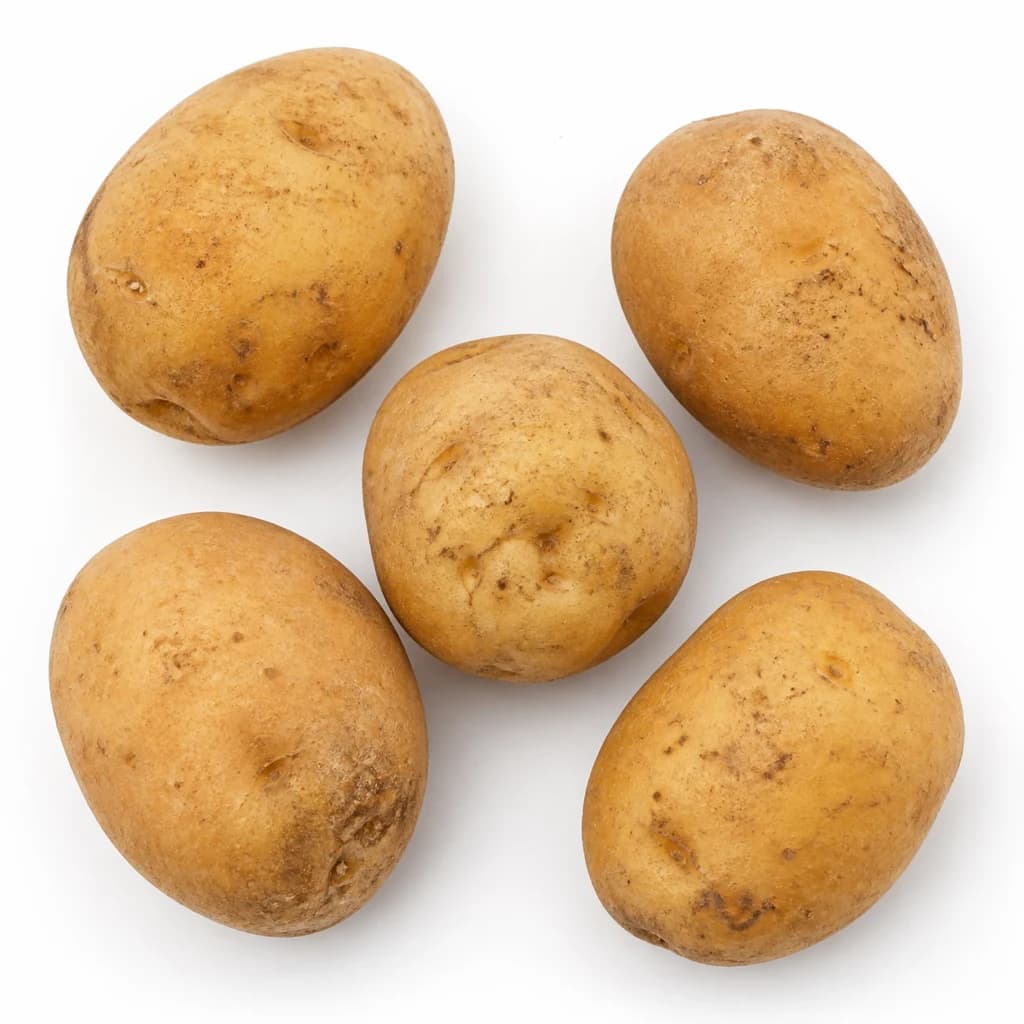
Potato
Humble, hearty staple — roast, mash, fry, or boil
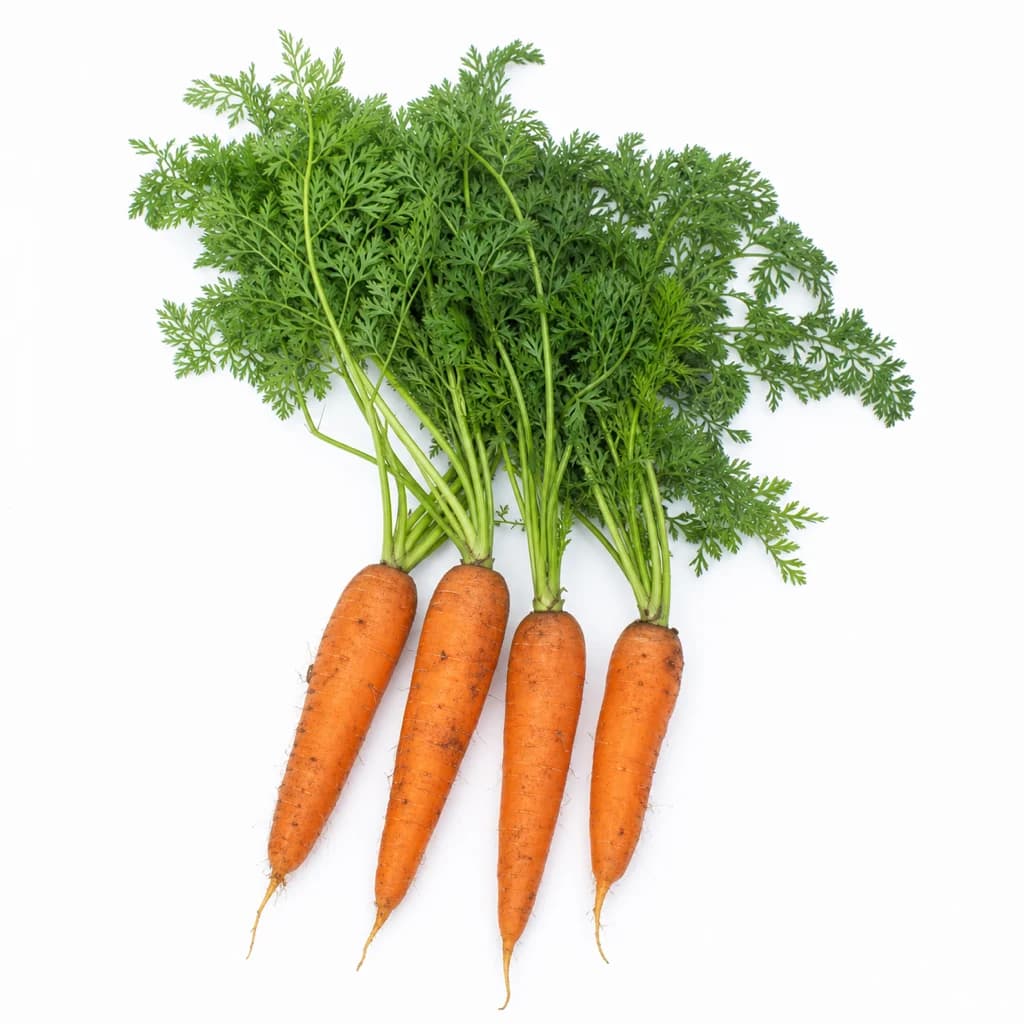
Carrot
Sweet, crunchy root — raw, roasted, or the base of a sofrito
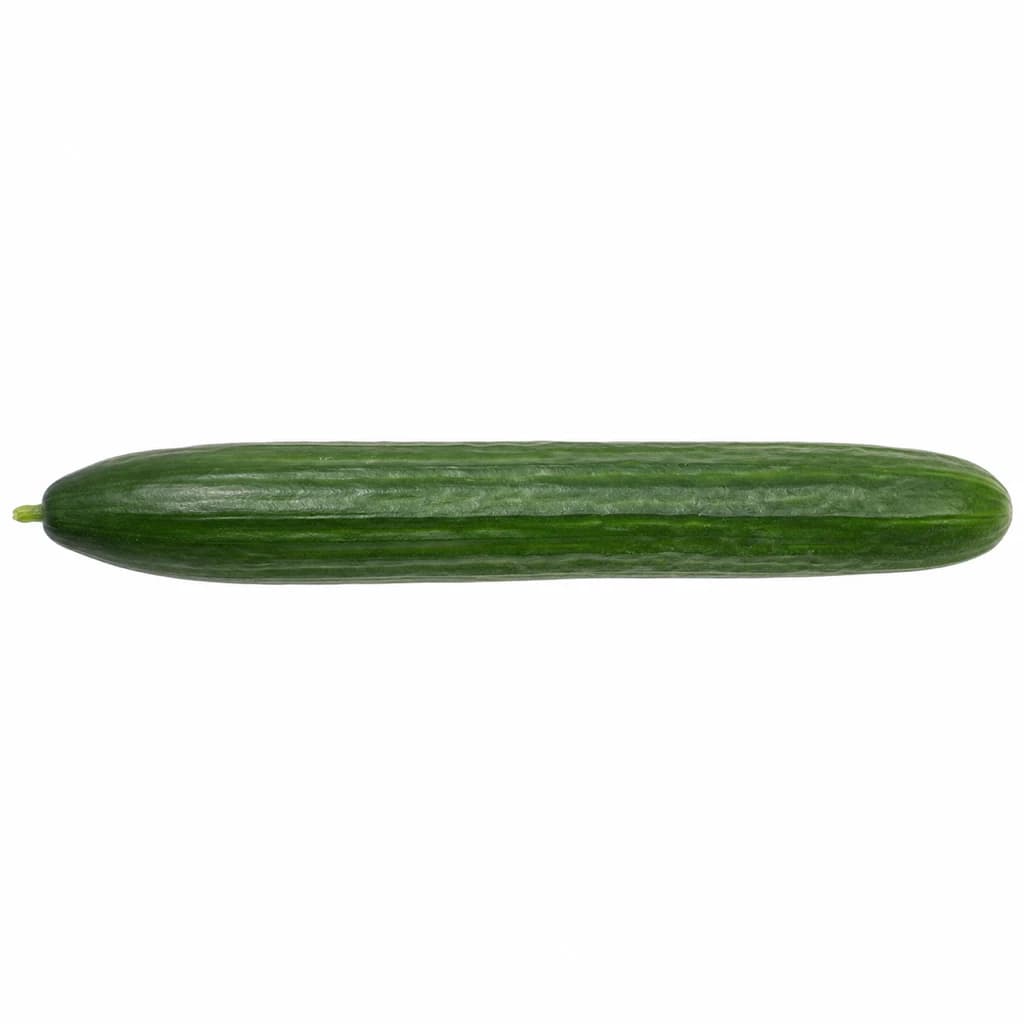
Cucumber
Cool, crisp, and watery — for salads, pickles, and tzatziki

Lettuce
Crisp leaves for salads, wraps, and a fresh crunch