Produce
Escarole
Broad-leafed chicory with mild bitterness, used raw in salads or wilted into Italian soups.
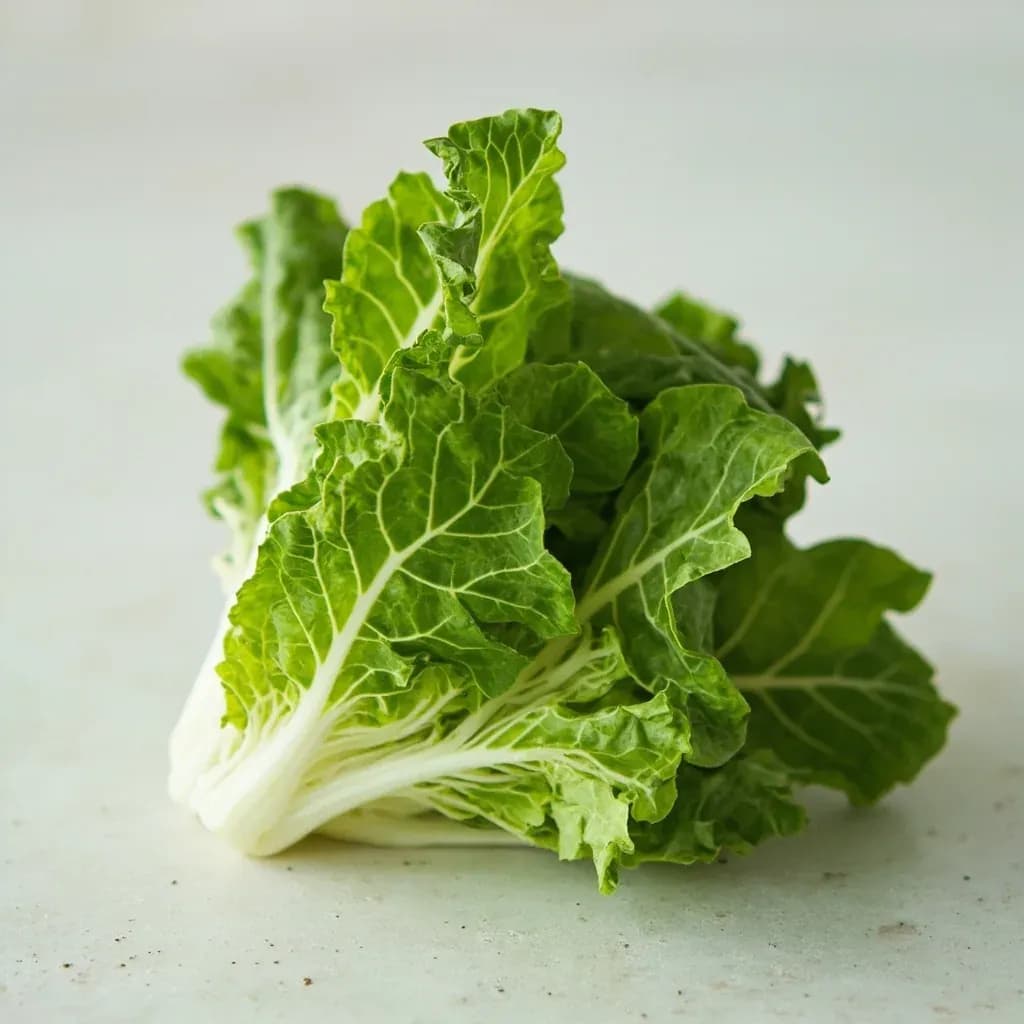
Escarole is a broad-leafed member of the chicory family, with sturdy green outer leaves and pale, tender hearts. It carries a mild bitterness, enjoyed raw in salads and especially good braised, sautéed with garlic, or wilted into Italian soups like escarole and beans. Cooking mellows its bitterness into a gentle, savory flavor.
Escarole is a broad-leafed member of the endive family, distinguished by its dark green outer leaves that frame a pale, tightly packed heart. Unlike its more bitter cousin curly endive, escarole offers a gentler, less astringent bitterness that makes it remarkably versatile in the kitchen. The outer leaves carry a more pronounced bitter edge, while the inner leaves—shielded from light—develop a sweeter, almost nutty quality. This duality is central to how escarole behaves in cooking: raw applications showcase the tender, mild heart, while cooked preparations tame the assertive bitterness of the outer leaves into something silky and deeply savory. Historically rooted in Mediterranean cuisine, escarole has long been a staple of Italian-American cooking, where its ability to hold structure in broth and absorb fat makes it indispensable in rustic soups and stews. When cooked properly—briefly for the ribs, quickly for the leaves—escarole transforms into something yielding and luxurious, with a texture that rewards patience over high heat.
- Measured in
- g
- Storage
- Fridge
Types & varieties
The botanical category to which escarole belongs; terms are used interchangeably in the U.S.
Nearly identical to escarole; the distinction is regional rather than botanical
Common uses
Tips & pitfalls
- Blanching escarole in boiling water for 30–60 seconds dramatically mellows its bitterness; squeeze dry before sautéing or adding to soup.
- Cook only the thick white ribs briefly—the leaves wilt fast, and overcooking turns them mushy and gray.
- Always wash escarole thoroughly—dirt and grit lodge in the tightly packed inner leaves near the core.
- Reserve pale inner leaves for raw applications; use outer dark leaves for cooking where their bitterness is an asset.
- When buying, select heads with crisp, unwilted leaves and reject any with yellowing or slimy spots at the base.
- Escarole's bitterness is fat-soluble—cooking in olive oil or pork fat, or pairing with creamy dressings, tames it more effectively than cooking in water alone.
- The inner leaves are significantly milder than the outer ones; separate them intentionally rather than mixing together and hoping for balance.
Nutrition
Energy
71 kJ · per 100 g
Where the calories come from
Protein
1.3g
3% DV
Carbs
3.4g
1% DV
Fat
0.2g
0% DV
Fiber
3.1g
11% DV
Sugars
0.3g
of which
Sodium
22mg
1% DV
Source · USDA FoodData Central · approx. Endive, raw
View on FDC →In the shops
Matched grocery products
No matched grocery products for Escarole yet.
Good to know
- Type
- Leafy green vegetable (Cichorium endivia var. latifolium)
- Family
- Asteraceae (chicory/endive family)
- Origin
- Mediterranean region, cultivated since antiquity
- Peak Season
- Fall through early spring (cool-weather crop)
- Flavor Profile
- Mildly bitter; inner leaves noticeably sweeter than outer leaves
- Texture
- Crisp and tender raw; silky when cooked
- Storage
- Refrigerate unwashed in loosely closed plastic bag for 5–7 days
- Yield
- One medium head (~1 lb) yields 4–6 cups raw or 2–3 cups cooked
Substitutes
- Curly endive (frisée) — More bitter and texturally frilly; use smaller quantities when raw; less suited to cooked applications.
- Radicchio — Similar bitterness but crunchier texture and more assertive color; best raw or lightly grilled.
- Bok choy — Different flavor profile (mild, slightly sweet) but similar broad leaves and cooking behavior; not a close substitute for flavor.
- Swiss chard — Comparable size and cooking properties; milder flavor; acceptable in cooked dishes only.
Pairs with
Also called
Scarola · Broad-Leaved Endive
Related

Tomato
Juicy, sun-sweet fruit for sauces, salads, and slow-cooked depth

Yellow Onion
The aromatic backbone of soups, sofritos, and braises

Garlic
Pungent cloves that perfume nearly every savory dish

Lemon
Bright, acidic citrus that wakes up almost any dish

Potato
Humble, hearty staple — roast, mash, fry, or boil

Carrot
Sweet, crunchy root — raw, roasted, or the base of a sofrito

Cucumber
Cool, crisp, and watery — for salads, pickles, and tzatziki

Lettuce
Crisp leaves for salads, wraps, and a fresh crunch