Southern Europe
Ligurian
Also: Cucina Ligure, Genovese cuisine, Riviera cooking
Italy's herb-saturated Riviera kitchen — pesto, focaccia, farinata, and a coastline too steep for cattle but perfect for basil.
Ligurian cuisine emerges from a narrow strip of mountainous coastline where arable land is so scarce that the region never developed a robust pastoral or cattle tradition. This scarcity shaped an intensely herbaceous, plant-forward cuisine built on what could be grown on terraced cliffsides: basil, marjoram, borage, and wild herbs. Olive oil — Ligurian DOP, pressed from Taggiasca olives — is the fat of the kitchen and achieves a delicacy and sweetness rare in Italian oils. The sea provides anchovies, sardines, and stockfish but rarely the lavish seafood platters of the deep south. Chickpea flour is used for farinata and panissa, a legacy of Genoese trade with the Maghreb. The result is a cuisine of extraordinary fragrance but deliberate restraint.
The flavour base
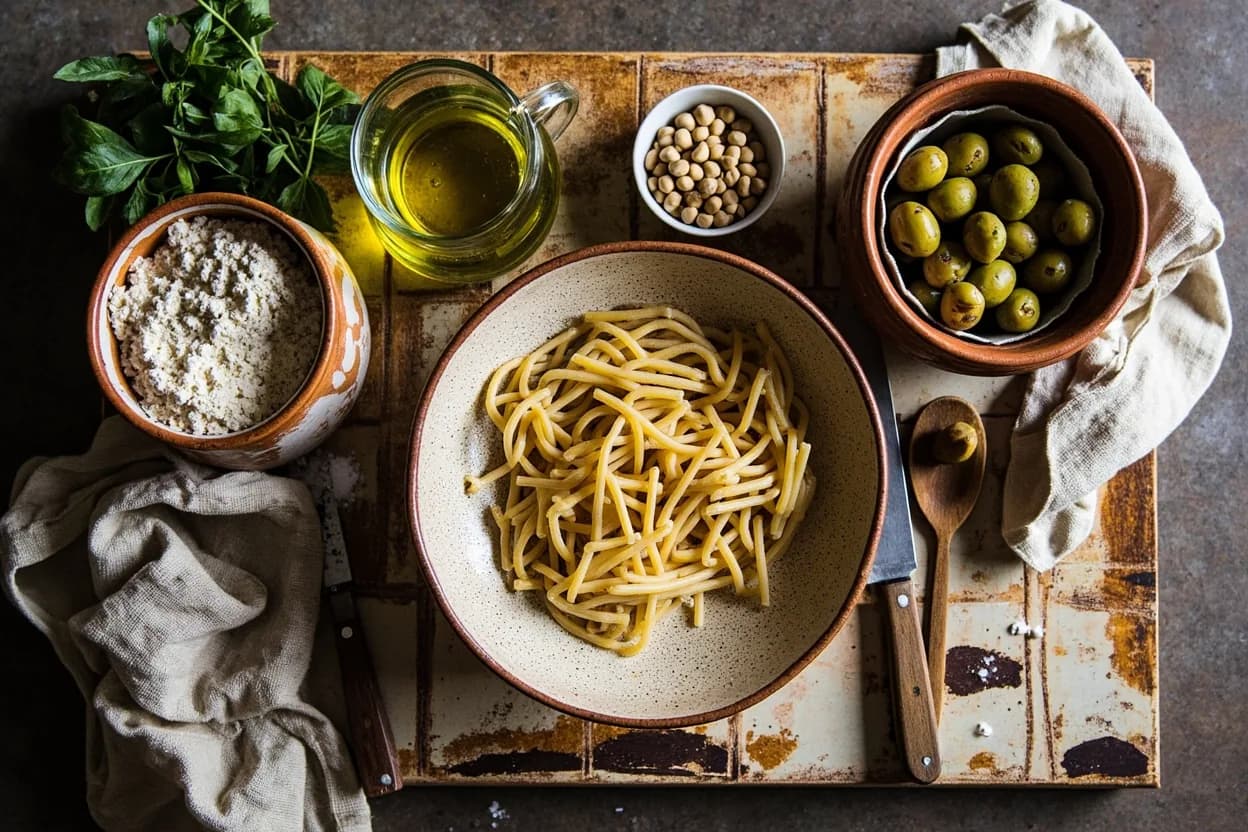
Fresh basil, garlic, Ligurian extra-virgin olive oil, and Parmigiano-Reggiano (or Pecorino Sardo for bite) ground together with pine nuts form the archetypal pesto — the region's definitive flavour grammar.
Pantry staples
Key ingredients
Signature techniques
Signature dishes
Ligurian on the table
At the table
A typical Ligurian meal is lighter than the Italian norm. Focaccia is eaten for breakfast or as a snack throughout the day. A sit-down meal centres on a pasta or torta course — the primo and the secondo often merge, with a torta pasqualina or stuffed vegetable (carciofi ripieni) serving as the main event. Meat is peripheral; a cutlet or a piece of coniglio (rabbit) with olives and pine nuts may follow. Street food — farinata eaten hot, panissa fried in cubes — is integral to how Ligurians actually eat.
History & context
Genoa was a maritime republic whose merchant fleets ranged from the Black Sea to the Atlantic. Genoese traders spread pesto-like preparations and brought chickpea flour from North Africa, creating farinata. The region's mountainous topography made it one of the first Italian kitchens to rely on olive oil rather than butter or lard — a choice that defined the cuisine's character long before 'Mediterranean diet' was a concept. Genoese sailors are thought to have introduced pesto to Argentina, where 'salsa verde' and a strong pasta culture in Buenos Aires traces to Ligurian emigration in the 19th century. At home, cucina Ligure resisted industrialisation and remained deeply tied to seasonal herbs and small-producer oils.
Regional variations
- Riviera di Ponente (western)
Closer to France and Provence; more use of Taggiasca olives in dishes rather than just oil; sardenaira (olive-topped flatbread) is the local focaccia variant; buridda fish stew is common.
- Riviera di Levante (eastern)
Nearer Tuscany; testaroli (griddle-cooked pasta discs) appear; pesto is still dominant but is sometimes served with testaroli rather than trenette or trofie.
- Inland valleys (entroterra)
Rabbit, wild mushrooms, and chestnuts dominate; the sea is absent; herb use intensifies with rosemary and thyme from the hillsides.
Related cuisines
Shares olive oil, herbs, anchovies, and chickpea flour (socca = farinata); centuries of shared coastline and trade created a nearly continuous culinary corridor.
Both cuisines carry medieval spice-trade DNA; Genoese and Venetian maritime rivalries did not prevent shared ingredients like pine nuts and raisins in savoury dishes.
Arab influence visible in both cuisines — chickpea fritters, sweet-sour agrodolce preparations, use of almonds and pine nuts in savoury contexts.
Canonical recipes
The dishes that define Ligurian, documented in the Canon.
References
- 1.Gastronomy of Italy, Anna del Conte, Pavilion Books
- 2.Pesto, Trofie e Focaccia: La Cucina Ligure, Sergio Rossi, Sagep Editori
- 3.The Food of Italy, Waverley Root, Vintage Books
- 4.Italian Regional Cooking, Ada Boni, Bonanza Books
Confidence: high
Notes
Pesto authenticity
Authentic pesto Genovese uses only Genovese basil DOP (small-leaved, intensely aromatic, never minty), Taggiasca or another Ligurian DOP olive oil, and a combination of Parmigiano-Reggiano and Pecorino Sardo. No cream. No blender ideally — heat from a blender blade oxidises the basil and turns it bitter. The Genoa World Pesto Championship (Campionato Mondiale di Pesto al Mortaio) has been held since 1992 and codifies these rules.
Focaccia vs. pizza
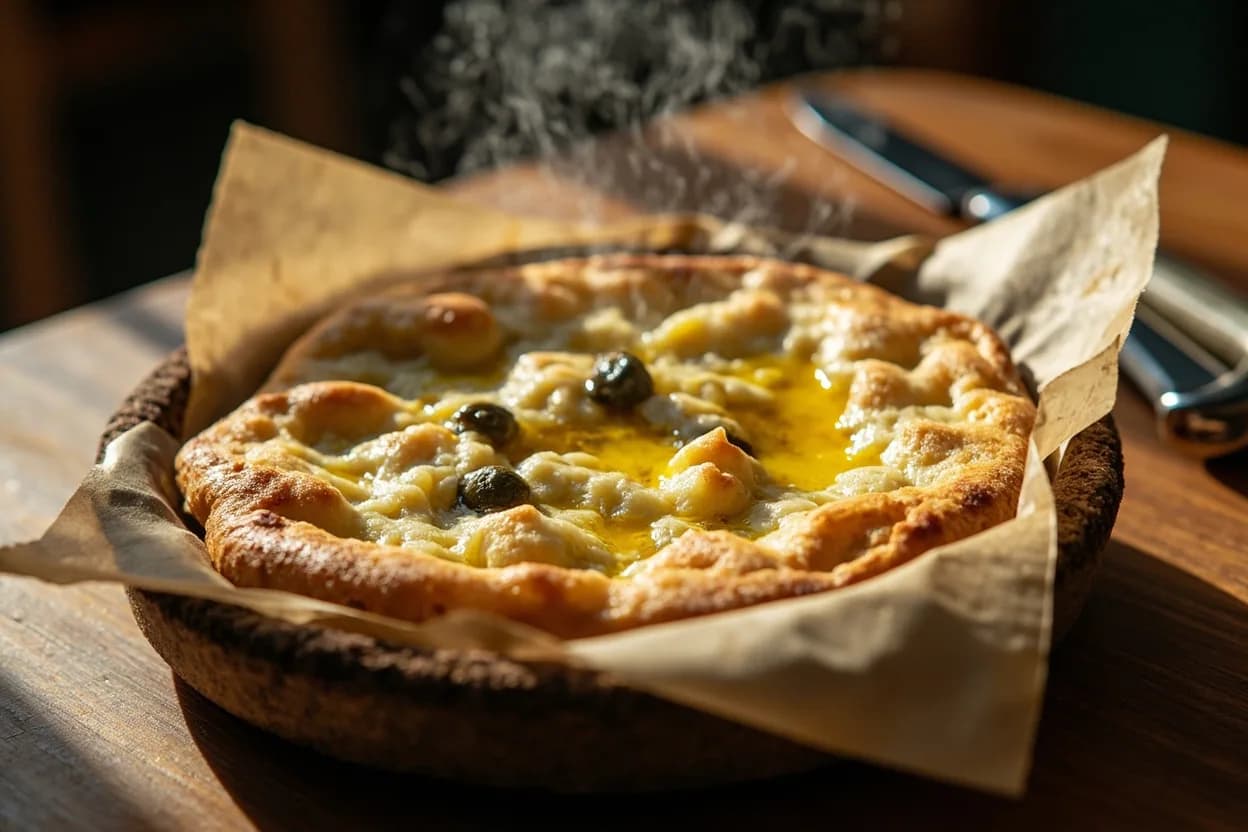
Ligurian focaccia (fugassa) is a distinct tradition from Neapolitan pizza: thicker, oilier, dimpled by hand, and flavoured with just coarse salt and olive oil. The version with onions (focaccia di Recco) is in fact a thin, crunchy-edged flatbread with stracchino cheese baked inside — protected by IGP status since 2014.