Latin America
Poblano
Also: Cocina Poblana, Pueblan cuisine, Cocina de Convento
Mexico's most baroque culinary tradition — convent-born, Moorish-inflected, and home to the world's most complex mole.
Poblano cuisine is Mexico's most elaborately syncretic cooking tradition, born at the crossroads of indigenous Nahua and Mixtec cultures, Spanish colonial ambition, and the convent kitchens of New Spain. Puebla's nuns and cooks fused New World chiles, chocolate, and turkey with Old World spices, nuts, and dried fruits to produce some of the most complex dishes in the Western hemisphere. The cuisine is characterized by layered, multi-ingredient sauces, a mastery of dried chiles at various stages of toasting and soaking, and a confectionery tradition of rare refinement.
The flavour base
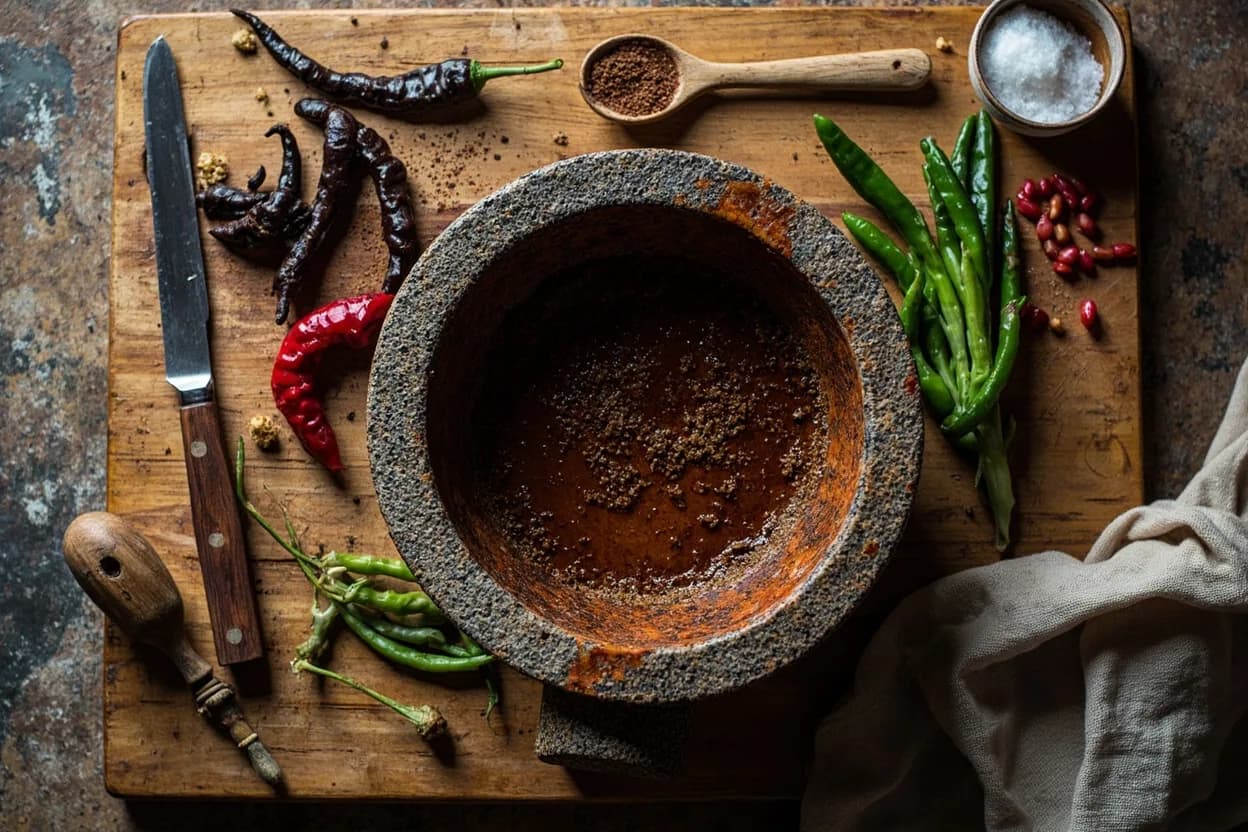
Dried chile blends — ancho, mulato, and pasilla — ground with toasted nuts, seeds, and spices, then tempered with dark chocolate form the iconic mole poblano base. Sweet-savory layering, achieved through raisins, plantain, and tomato, is the grammar beneath Puebla's most celebrated sauces.
Pantry staples
Key ingredients
Signature techniques
Signature dishes
Poblano on the table
At the table
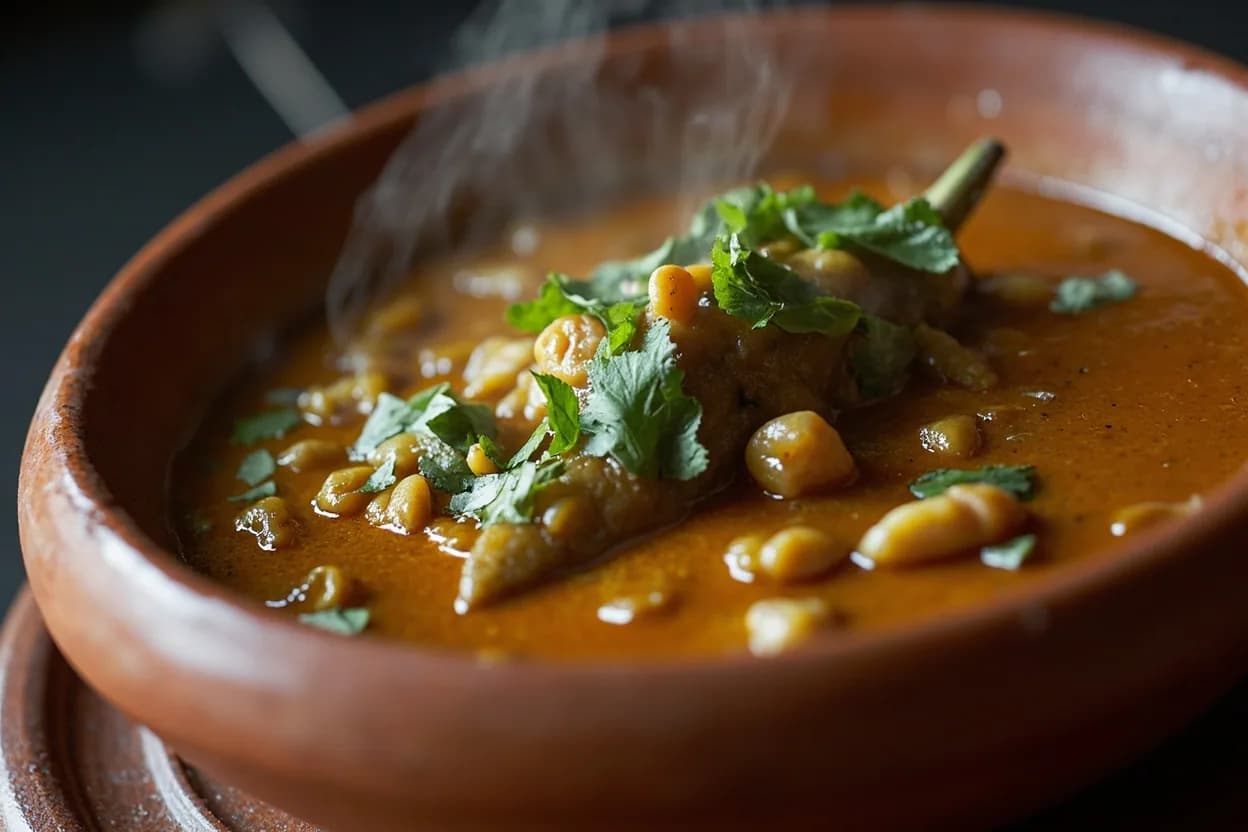
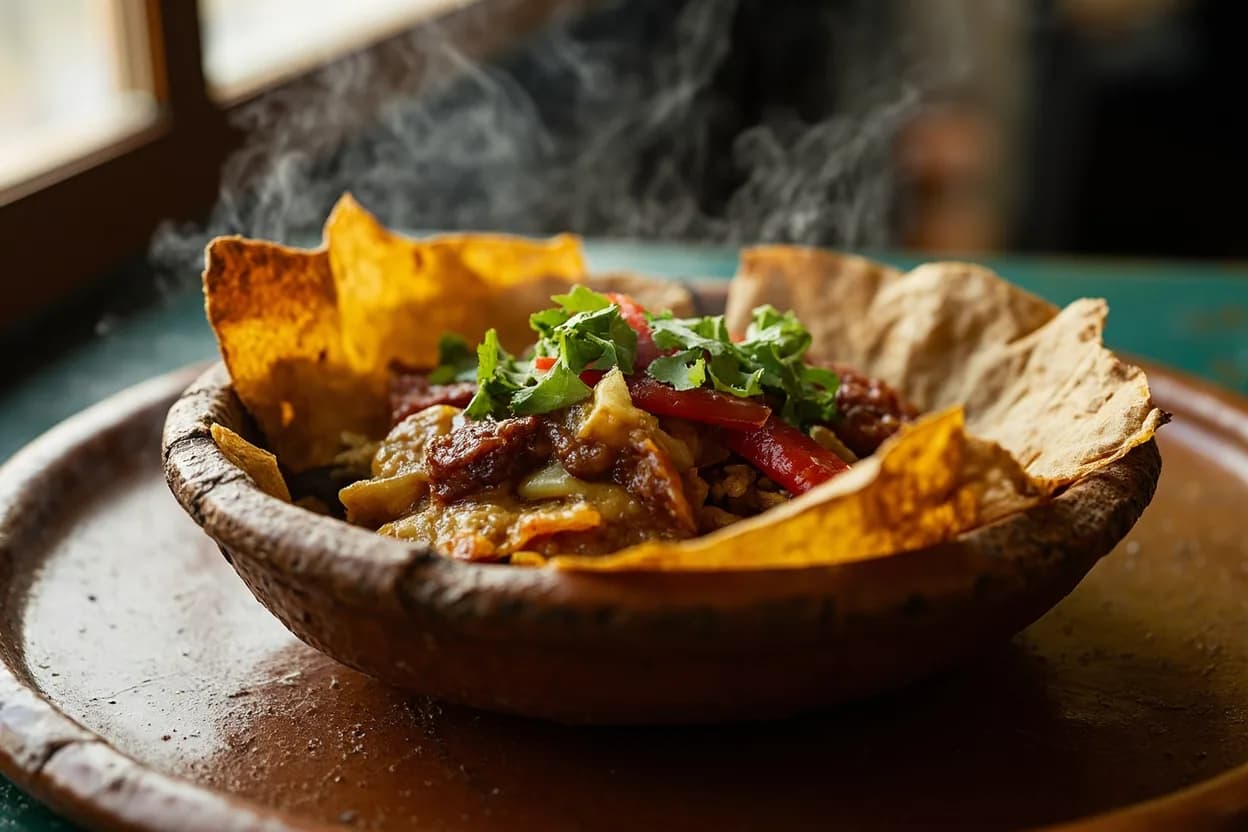
Meals build from antojitos (chalupas, molotes) through a substantial comida centered on mole or pipián. Sundays historically revolve around turkey in mole. The convent confectionery tradition means sweets appear at every transition — camotes (candied sweet potatoes), cocadas, and muéganos are as important to Puebla's identity as its savory moles.
History & context
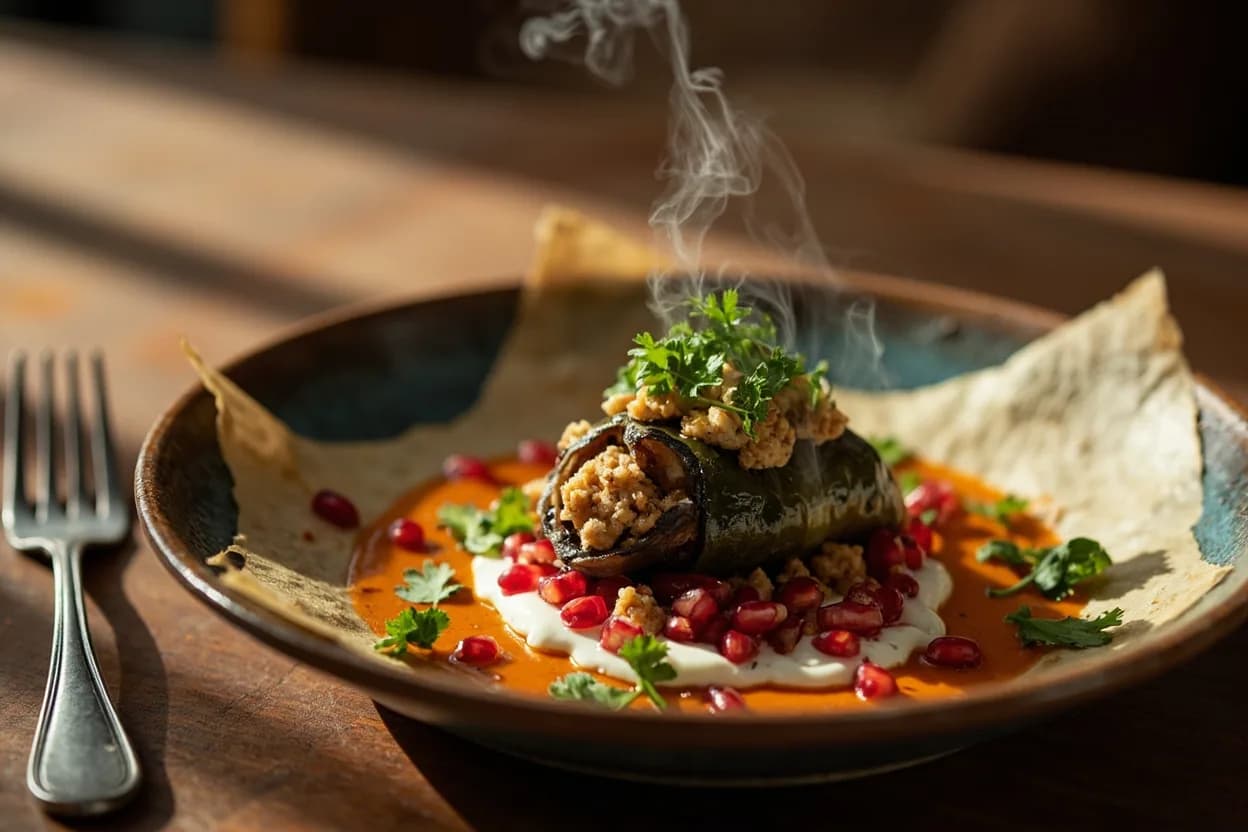
Puebla de los Ángeles was founded in 1531 as a planned colonial city on the Camino Real between Veracruz (the Atlantic port) and Mexico City. Its strategic position and large population of Spanish clergy made it a crucible. The convent of Santa Catalina de Siena and other religious houses are credited with codifying mole poblano and chiles en nogada in the 17th century — dishes that synthesized indigenous Mexican ingredients with medieval Spanish-Moorish spice traditions. Puebla's status as a trading crossroads also introduced Arabic pastry techniques (buñuelos, alfajores) that became local staples. The cuisine holds UNESCO Intangible Cultural Heritage recognition as part of Mexico's broader culinary tradition.
Regional variations
- Tehuacán
Southeastern Puebla; highly indigenous Mixtec and Nahua influence, stronger use of fresh herbs, cecina (dried salted beef), and pulque-based cooking.
- Sierra Norte
Cloud-forest highlands with Totonac and Nahua communities; reliance on corn fungus (cuitlacoche), mushrooms, and herbs unavailable in the valley.
- Atlixco Valley
Flower-growing region south of the city with a distinct repertoire of fresh-herb salsas and lighter, less mole-heavy cooking compared to urban Puebla.
Related cuisines
Both share the 'seven moles' tradition, dried-chile mastery, and indigenous Mesoamerican foundations; Oaxacan moles are generally earthier while Poblano moles are sweeter and more Baroque.
Linked by the Camino Real trade route; Veracruz supplied tropical ingredients and seafood that influenced Puebla, while Puebla exported its confectionery and chile techniques to the coast.
- Mexican national cuisine
Mole poblano and chiles en nogada are considered quintessentially 'Mexican' dishes on the national stage, giving Puebla outsized influence on the country's culinary identity.
Canonical recipes
The dishes that define Poblano, documented in the Canon.
References
- 1.Mexico: The Cookbook — Margarita Carrillo Arronte (Phaidon, 2014)
- 2.Cocina Poblana — Secretaría de Cultura del Estado de Puebla
- 3.The Essential Cuisines of Mexico — Diana Kennedy (Clarkson Potter, 2000)
- 4.Authentic Mexican: Regional Cooking from the Heart of Mexico — Rick Bayless (Morrow, 1987)
Confidence: high
Notes
Mole Poblano's Myth
The legend attributes mole poblano's invention to Sor Andrea de la Asunción at the Convent of Santa Catalina, who allegedly improvised the sauce for a visiting viceroy using available pantry items. While almost certainly apocryphal, the story captures a real historical truth: mole is a convent product, the result of institutional kitchens with access to both indigenous and imported ingredients and the time to develop something of extraordinary complexity.
Chiles en Nogada and the Calendar
Chiles en nogada is one of the world's most seasonally disciplined dishes, available only in August and September when fresh walnuts, pomegranates, and roasting chiles overlap. The dish's colors — green (parsley), white (walnut cream), red (pomegranate) — mirror the Mexican flag and its preparation commemorates Independence Day, making it as political as it is culinary.