Southern Europe
Roman
Also: Cucina Romana, Cucina Laziale, Rome cuisine
Cucina povera codified into canonical perfection — pecorino and guanciale transform pasta; the quinto quarto tradition turns every animal part into virtue.
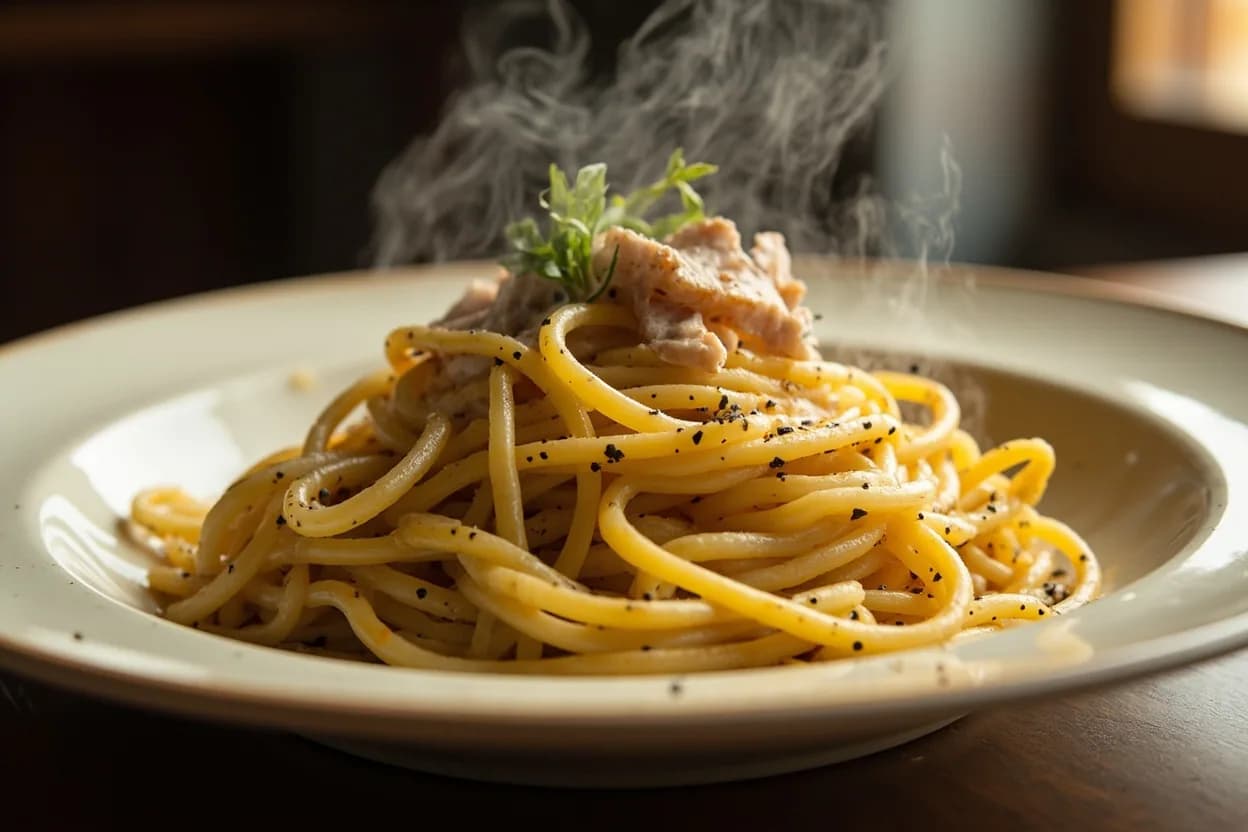
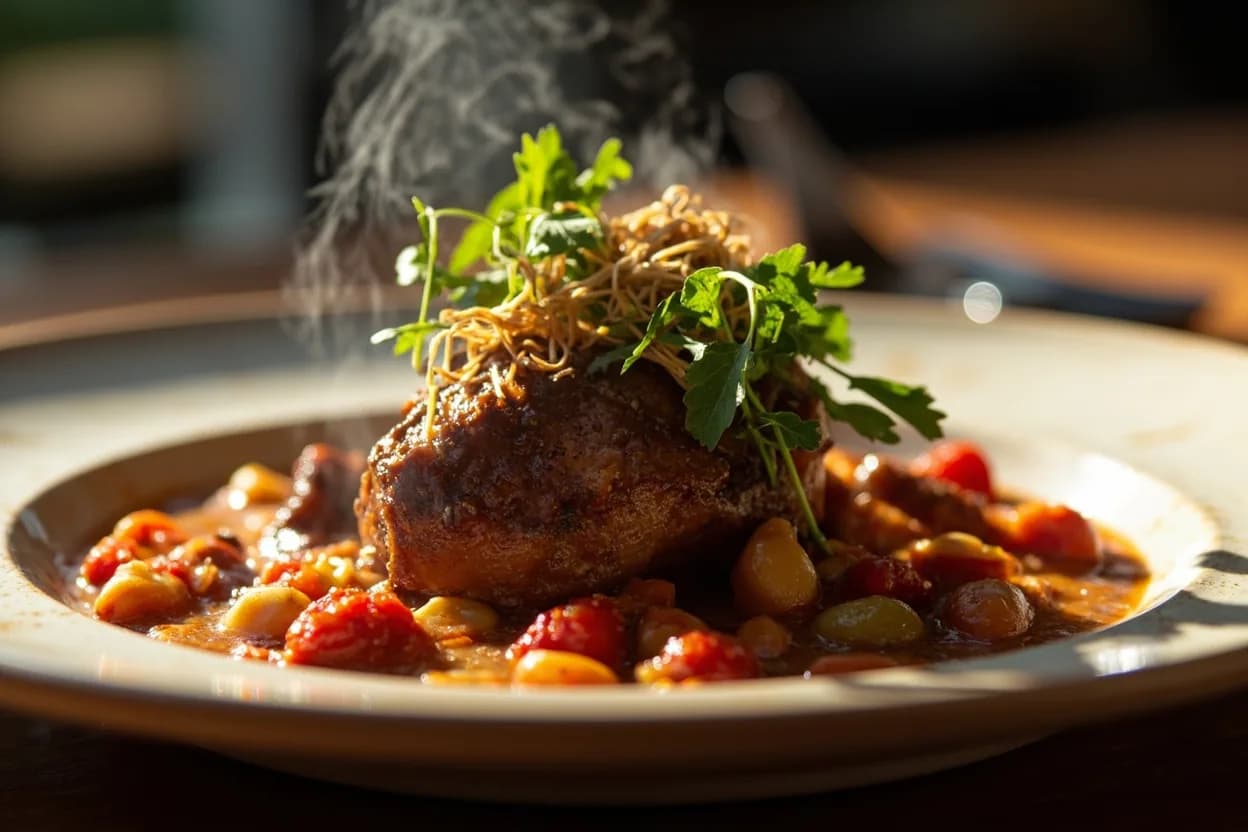
Roman cuisine is defined by two complementary impulses: the elegant frugality of cucina povera that wrings maximum flavour from cheap ingredients (pasta carbonara, cacio e pepe, pasta e ceci), and the radical nose-to-tail quinto quarto tradition in which slaughterhouse offal — the 'fifth quarter' given to workers as wages — becomes the city's most distinctive cooking. Both streams share a common vocabulary: guanciale (not pancetta), Pecorino Romano (not Parmigiano), dry white wine, and a refusal to overcomplicate. Roman pasta sauces are measured in minutes, not hours.
The flavour base
Guanciale (cured pig cheek) rendered in its own fat forms the aromatic base for Rome's canonical pasta sauces; whole garlic, peperoncino, and white wine work in parallel circuits. Pecorino Romano provides salinity and the signature grainy-sharp finish.
Pantry staples
Key ingredients
Signature techniques
Signature dishes
Roman on the table
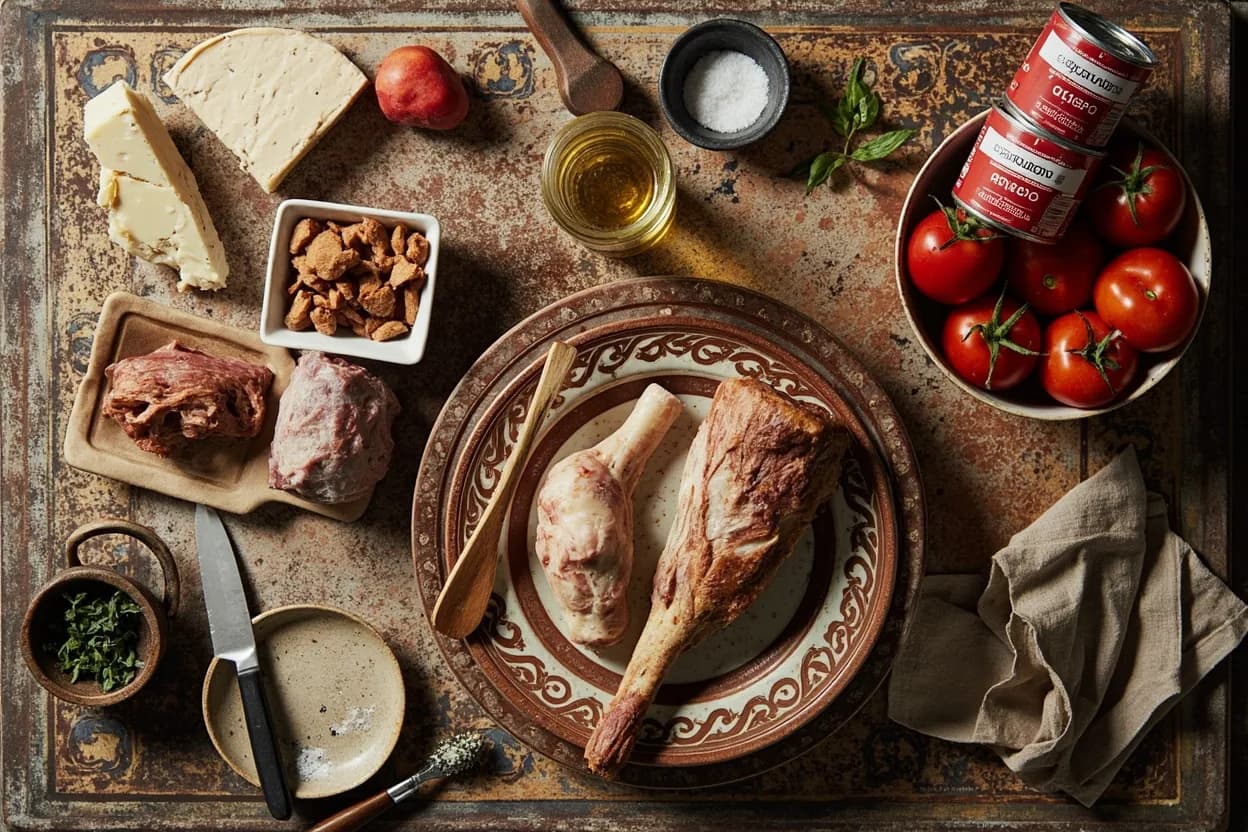
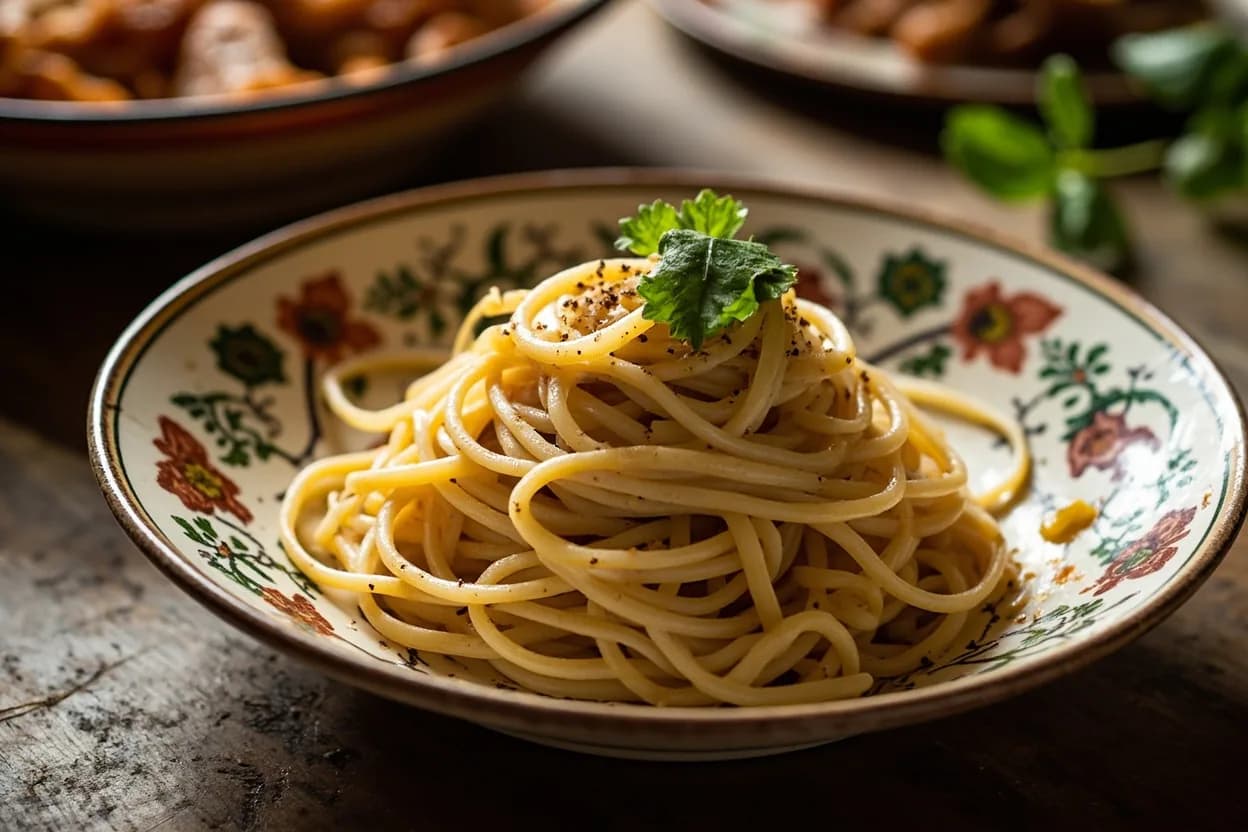
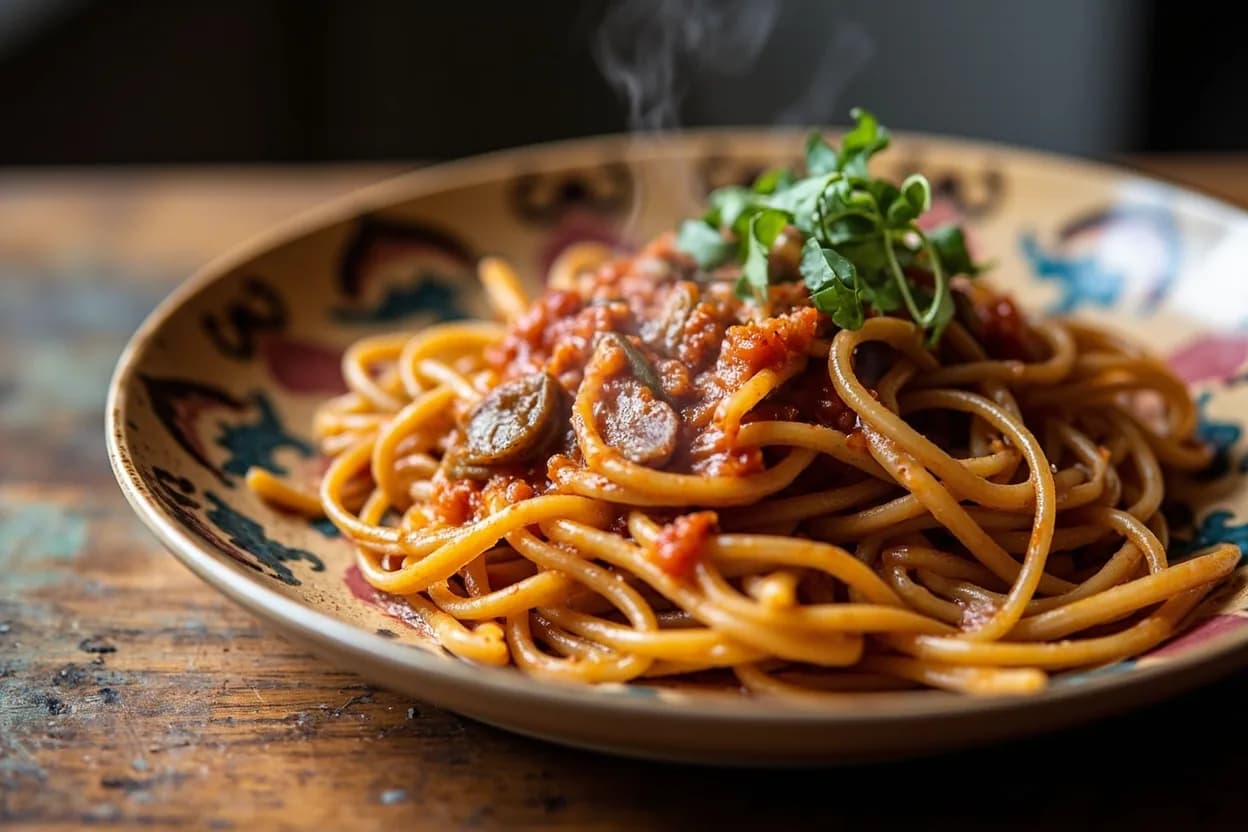
At the table
A Roman meal centres on one or two pasta courses rather than an elaborate antipasto spread. The primo is the centrepiece; the secondo — often a braised or fried protein, rarely elaborate — is secondary. Contorni (cicoria ripassata in padella, roasted artichokes) are ordered and served separately, never plated with the meat. Meals end with fruit, biscotti, or crostata rather than elaborate pastry. Wine is invariably local Castelli Romani or Frascati.
History & context
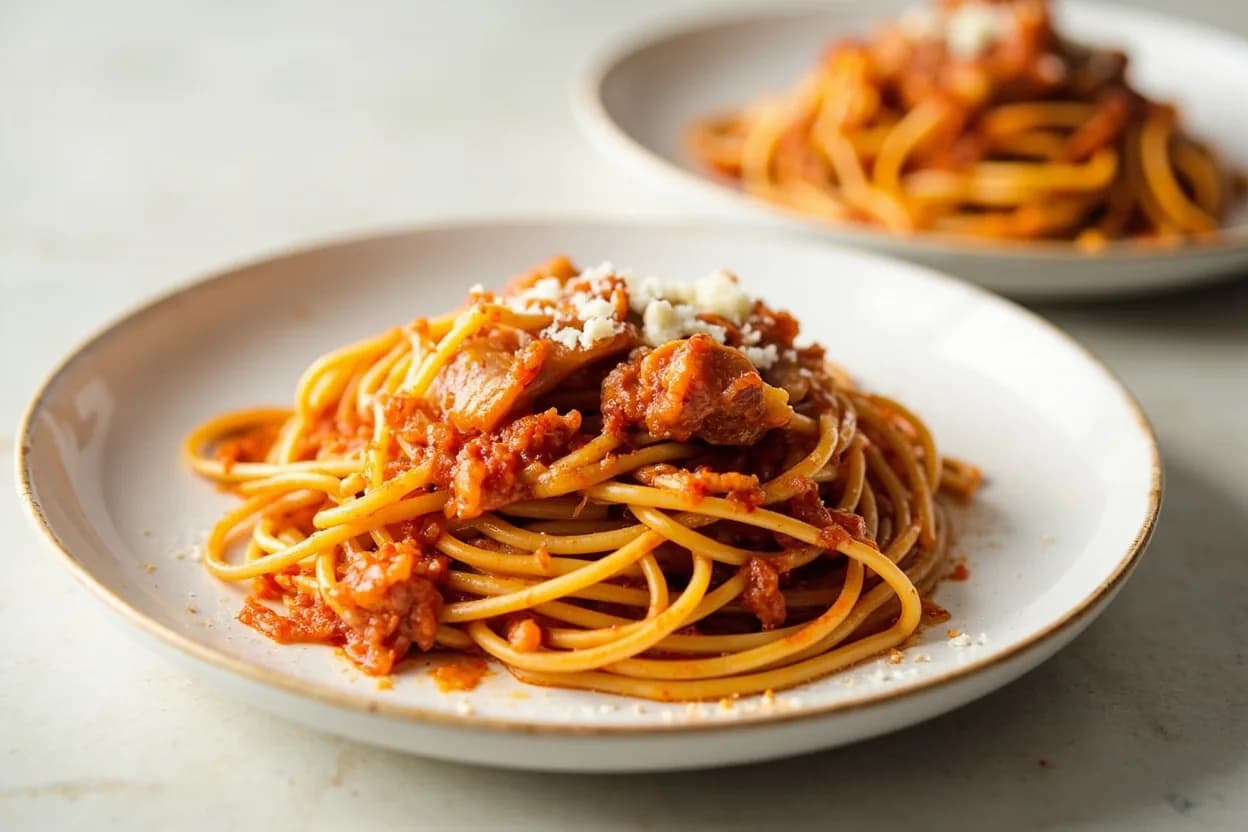
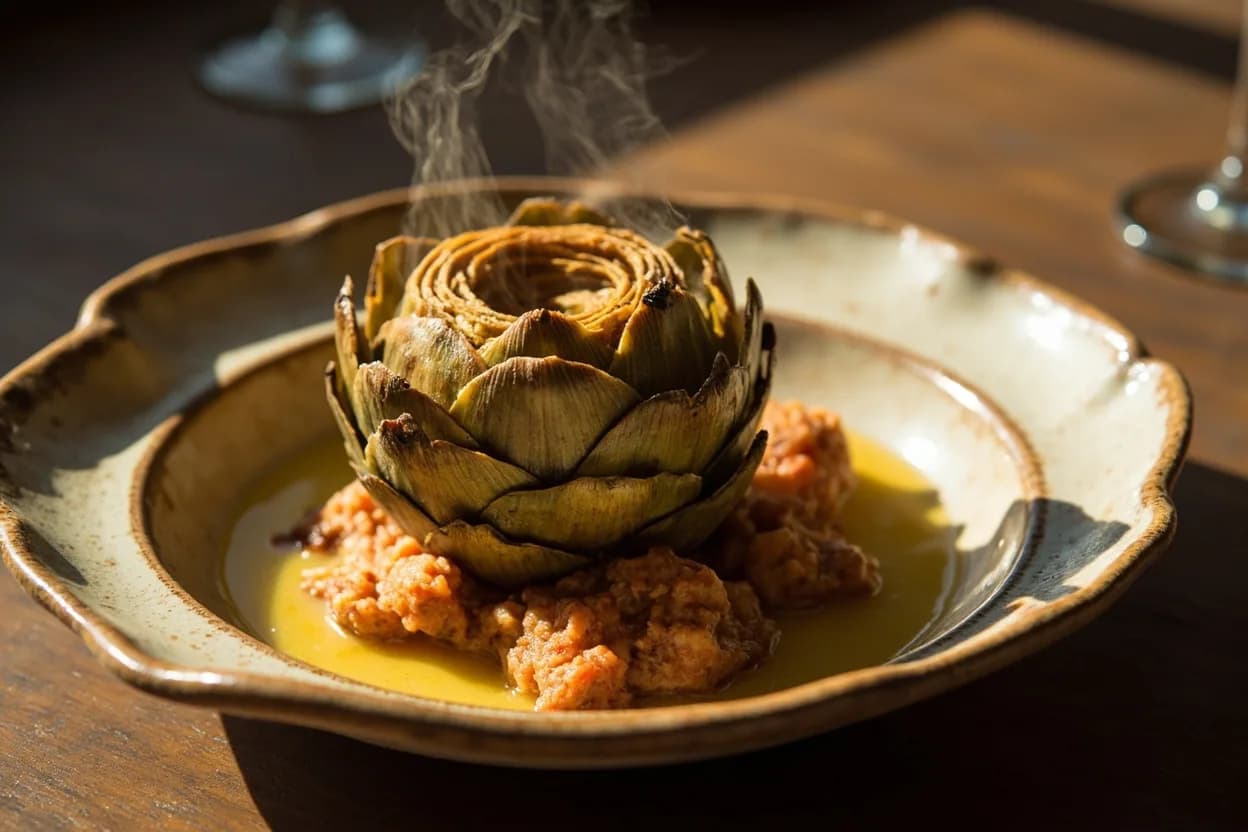
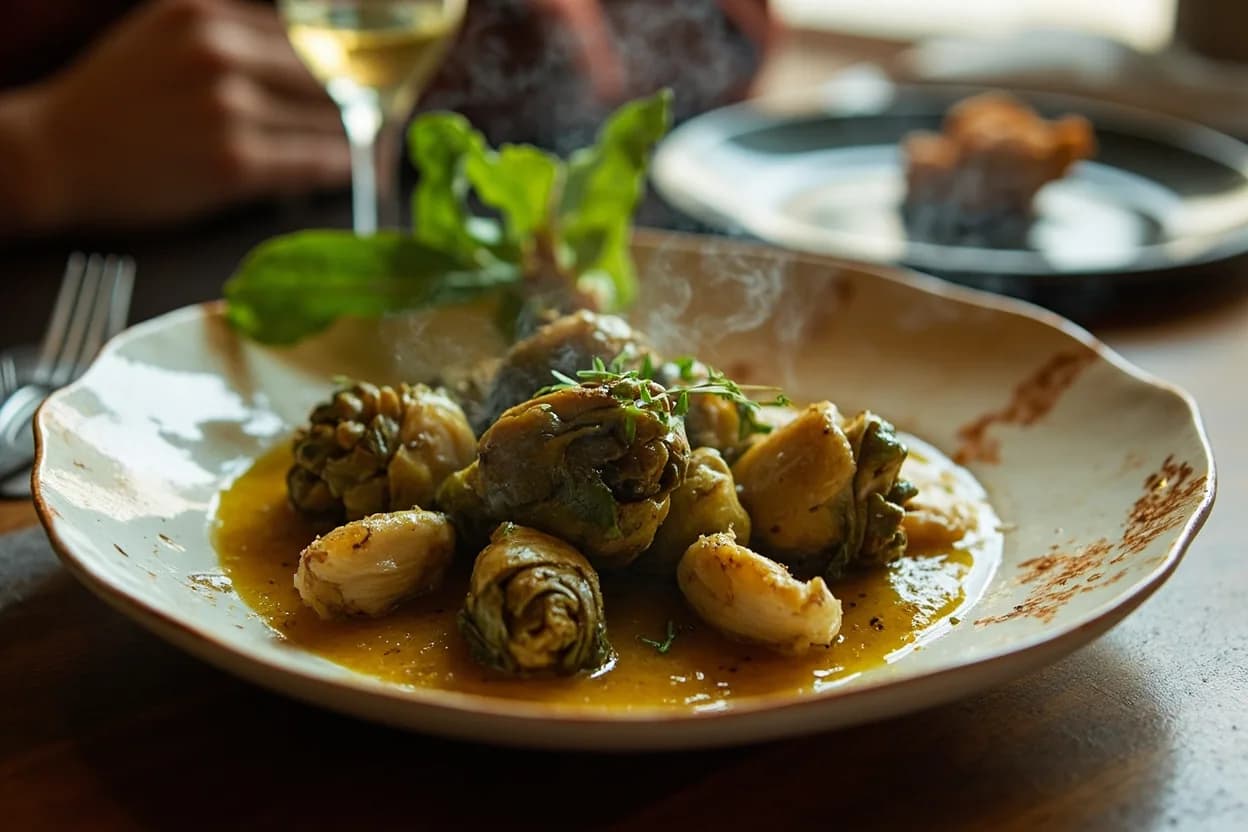
Rome's culinary identity was shaped less by imperial abundance than by the city's working-class Testaccio neighbourhood, which grew up around the Mattatoio (the 19th-century municipal slaughterhouse). Slaughterhouse workers received the quinto quarto — liver, kidneys, heart, lungs, intestines — as partial payment, and Testaccio trattorie became its laboratory. The four canonical pasta shapes (carbonara, cacio e pepe, amatriciana, gricia) form a mathematical set sharing two or three of the same four ingredients (guanciale, Pecorino Romano, black pepper, tomato) in varying combinations — evidence of an extremely coherent peasant pantry. Carbonara's eggs are a 20th-century innovation, possibly influenced by American rations during WWII. The Jewish community of the Roman ghetto (one of Europe's oldest continuous Jewish populations) contributed carciofi alla giudia, baccalà, and the fried courgette blossom to the mainstream Roman table.
Regional variations
- Testaccio
The quinto quarto heartland — rigatoni alla pajata (veal intestine), trippa alla romana, coratella (mixed offal with artichokes); the most radical expression of Roman cucina povera.
- Castelli Romani (Frascati, Ariccia)
Volcanic hill towns south of the city: porchetta di Ariccia (spit-roasted stuffed suckling pig), white wine, and simple grilled lamb define the rustic weekend trattoria.
- Roman Jewish (Ghetto)
Carciofi alla giudia, fiori di zucca fritti, baccalà in agrodolce — a five-century old kosher adaptation that has become part of mainstream Roman identity.
Related cuisines
Both share cucina povera roots and a tomato-anchored southern identity, but Rome leans on guanciale and Pecorino where Naples uses olive oil and bufala.
Amatriciana originated in Amatrice (Abruzzo/Lazio border) before being adopted wholesale by Rome.
Both traditions value precise emulsification of fat with cheese or pesto; different pantry, same technical instinct.
Canonical recipes
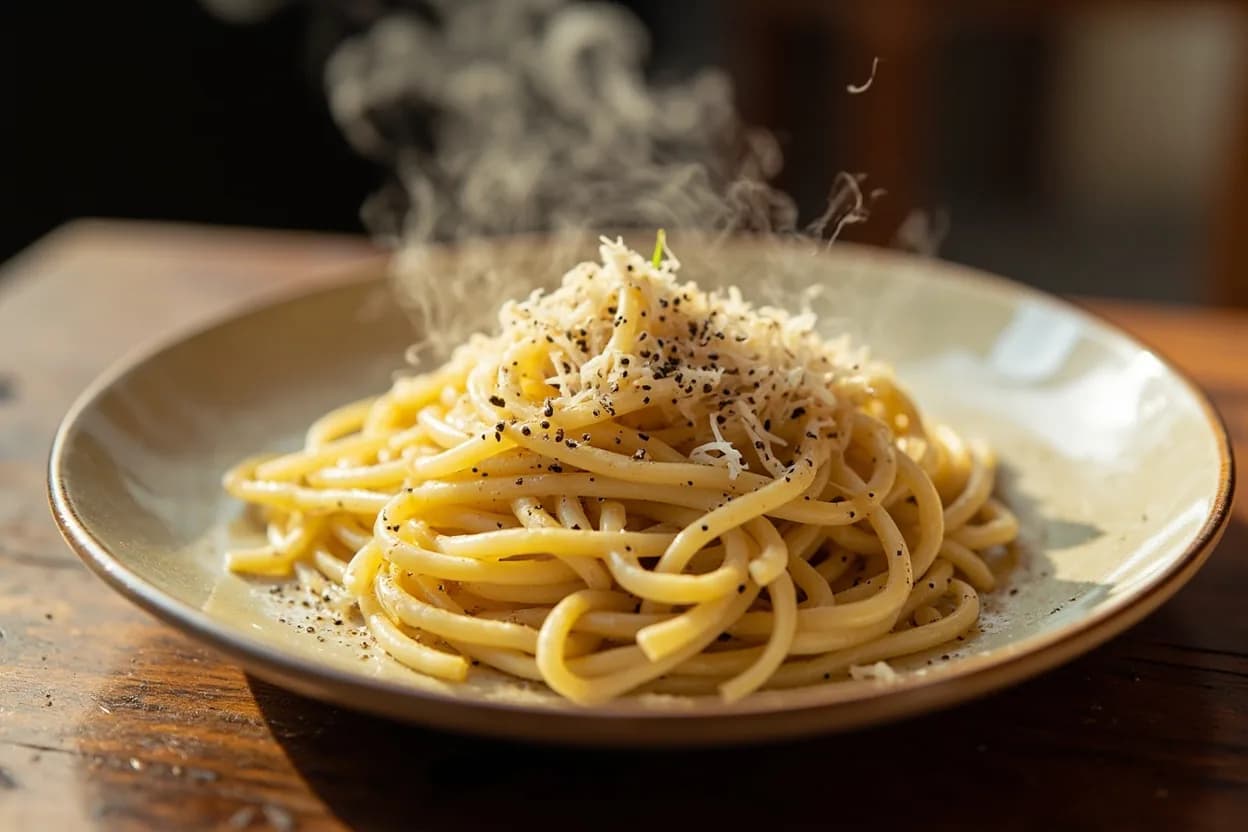
The dishes that define Roman, documented in the Canon.
References
- 1.La Cucina Romana — Ada Boni (1929)
- 2.Delizia! The Epic History of Italians and Their Food — John Dickie (2008)
- 3.The Rome Cookbook — Ursula Ferrigno (2002)
- 4.Il Cucchiaio d'Argento — Editoriale Domus (10th ed., 2011)
Confidence: high
Notes
The four-pasta canon
Romans speak of quattro paste as a coherent system: gricia (guanciale + Pecorino + pepper), amatriciana (gricia + tomato), carbonara (gricia + egg), cacio e pepe (Pecorino + pepper, no meat). The quartet emerged across roughly 150 years and represents the most efficient use of a minimal Roman pantry.
Quinto quarto ethics
Offal cooking in Rome is not fashionable-nose-to-tail revivalism — it is unbroken tradition. Trippa is sold at market stalls on Saturday mornings; rigatoni alla pajata (milk-fed calf intestine, with the chyme still inside, cured like sausage) was briefly banned during BSE scares but returned legally in 2015.