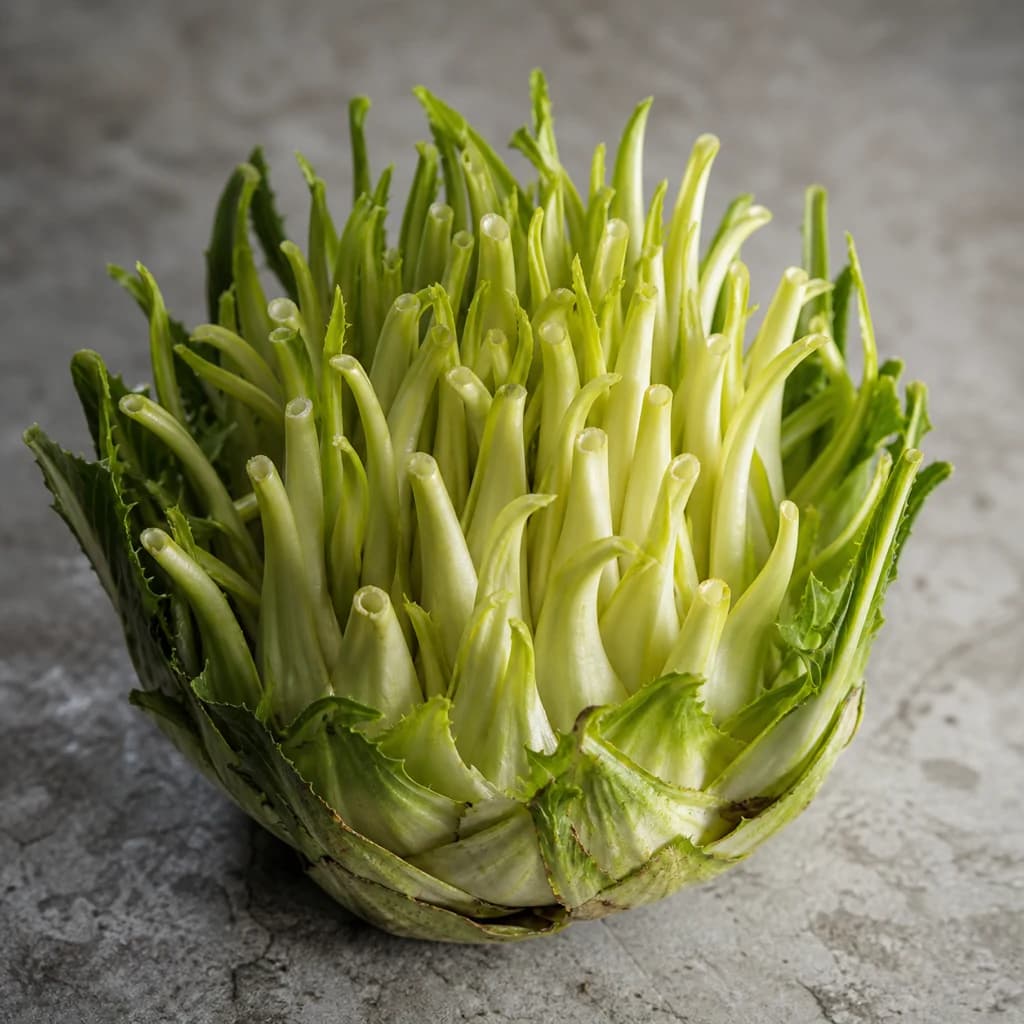
Natural form
Whole puntarelle head showing dense cluster of pale green hollow shoots rising from a broad base.
Teaches the reader to recognize puntarelle at market by its distinctive form — the tight bundle of ivory-green pointed shoots emerging from a leafy outer base, unlike any other chicory.
Produce
Puntarelle Chicory
Crunchy Roman chicory shoots curled in ice water, dressed with anchovy-garlic vinaigrette.
Puntarelle is a variety of chicory from Rome whose hollow inner shoots are sliced thin and soaked in ice water until they curl and crisp. The curled shoots are served raw as a salad with a pungent dressing of anchovy, garlic, lemon, and olive oil. It has a refreshing, pleasantly bitter crunch.
Puntarelle is a distinctive variety of chicory (Cichorium intybus var. foliosum) prized in Roman cuisine for its thick, pale stalks and tender inner leaves. What sets it apart from other bitter greens is a remarkable textural transformation: when the cut stalks are submerged in ice water, they curl into delicate, frilly fronds that resemble fine noodles. This reaction occurs because cutting disrupts the cellular structure, and the cold shock causes the strips to curve inward as they release turgor pressure—a small bit of vegetable theatre that transforms humble stalks into something elegant.
The vegetable is deeply woven into the fabric of Roman cooking, particularly the Jewish-Roman tradition, where it appears as a classic winter salad. You will find it at its peak from late fall through early spring, roughly October through March, sold in Roman markets either as whole heads or pre-cut bundles of stalks. Select firm, ivory-colored stalks with minimal browning; any yellowing indicates age, and the texture will suffer. The outer leaves are too fibrous for raw use but excellent quickly sautéed with olive oil and chili—don't discard them. Plan for roughly 50–60% yield when trimming whole heads to usable inner shoots.
The canonical preparation is puntarelle alla romana: curled stalks dressed with a punchy anchovy-garlic vinaigrette. The anchovies dissolve into the dressing, creating a savory, briny sauce that tames the pleasant bitterness and adds deep umami. Beyond the classic salad, puntarelle works well lightly sautéed or blanched as a side dish, wilted into pasta with anchovies and Pecorino, braised slowly with onions as a contorno, or pickled for longer preservation. The flavor is pleasantly bitter with clean, fresh bite and mineral notes—distinctive without being aggressive.
- Measured in
- g
- Storage
- Fridge
Allergens
Types & varieties
Prized variety from the Salento area of Puglia, known for particularly thick, tender stalks and pronounced curl
Traditional variety from Molfetta in Apulia, often considered among the finest for raw preparations
The broader category name for puntarelle-type chicories; used somewhat interchangeably with puntarelle in markets
The Ice-Water Curling Technique
The curling is not merely decorative—it fundamentally changes the texture and the way the dressing adheres. The frilly fronds capture vinaigrette in their folds, delivering bursts of anchovy-garlic flavor with each bite.
- Cut stalks into thin, uniform strips (about 3–4mm wide) using a sharp knife or mandoline
- Submerge immediately in a bowl of ice water—the colder and faster, the better the curl
- Soak for at least 30–45 minutes; you can leave them for up to 2 hours without texture degradation
- Remove from water just before dressing; drained curls will stay frilly for 15–20 minutes
Common uses
Tips & pitfalls
- Always soak cut stalks in ice water for at least 30–45 minutes—this step is non-negotiable for the classic curled texture
- Use a sharp knife or mandoline to cut stalks into thin, uniform strips; uneven cuts curl poorly or not at all
- Taste before dressing: puntarelle can vary in bitterness; adjust the vinaigrette strength accordingly
- Don't discard the outer leaves—they're too fibrous for raw use but excellent quickly sautéed with olive oil and chili
- For the vinaigrette, crush garlic to a paste rather than mincing; it integrates better into the emulsified dressing
- Room-temperature puntarelle curl better than cold; remove from refrigerator 15 minutes before cutting if curls are reluctant
- If anchovies are too strong, use 1–2 teaspoons of Worcestershire sauce as a milder umami alternative in the dressing
Nutrition
Energy
96 kJ · per 100 g
Where the calories come from
Protein
1.7g
3% DV
Carbs
4.7g
2% DV
Fat
0.3g
0% DV
Fiber
4g
14% DV
Sugars
0.7g
of which
Sodium
45mg
2% DV
Source · USDA FoodData Central · approx. Chicory greens, raw
View on FDC →In the shops
Matched grocery products
No matched grocery products for Puntarelle Chicory yet.
Good to know
- Scientific Name
- Cichorium intybus var. foliosum
- Origin
- Central Italy, especially Lazio region and Rome
- Peak Season
- Late fall through early spring (October through March)
- Flavor
- Pleasantly bitter with clean, fresh bite and mineral notes
- Key Characteristic
- Cut stalks curl into delicate fronds when soaked in ice water
- Part Used
- Young inner shoots—thick white stalks and tender inner leaves; outer leaves best cooked rather than raw
- Yield
- Plan for 50–60% yield from whole heads to usable shoots after trimming
- Storage
- Refrigerate unwashed in a plastic bag for up to 2 days; use immediately for best quality
Substitutes
- Belgian Endive — Similar bitter flavor; cut into strips and curl in ice water for a comparable texture, though the frilling is less dramatic
- Frisée — Provides the bitter component and frilly texture; combine with chopped raw celery for crunch if using as a puntarelle stand-in
- Radicchio — Bitter and crunchy but won't curl; best used shaved thin in mixed salads when puntarelle is unavailable
- Sugar Snap Peas — For textural mimicry in composed salads when puntarelle is out of season; lacks the bitterness but provides crisp sweetness
Pairs with
Also called
Puntarelle · Catalogna Chicory
Appears in these dishes
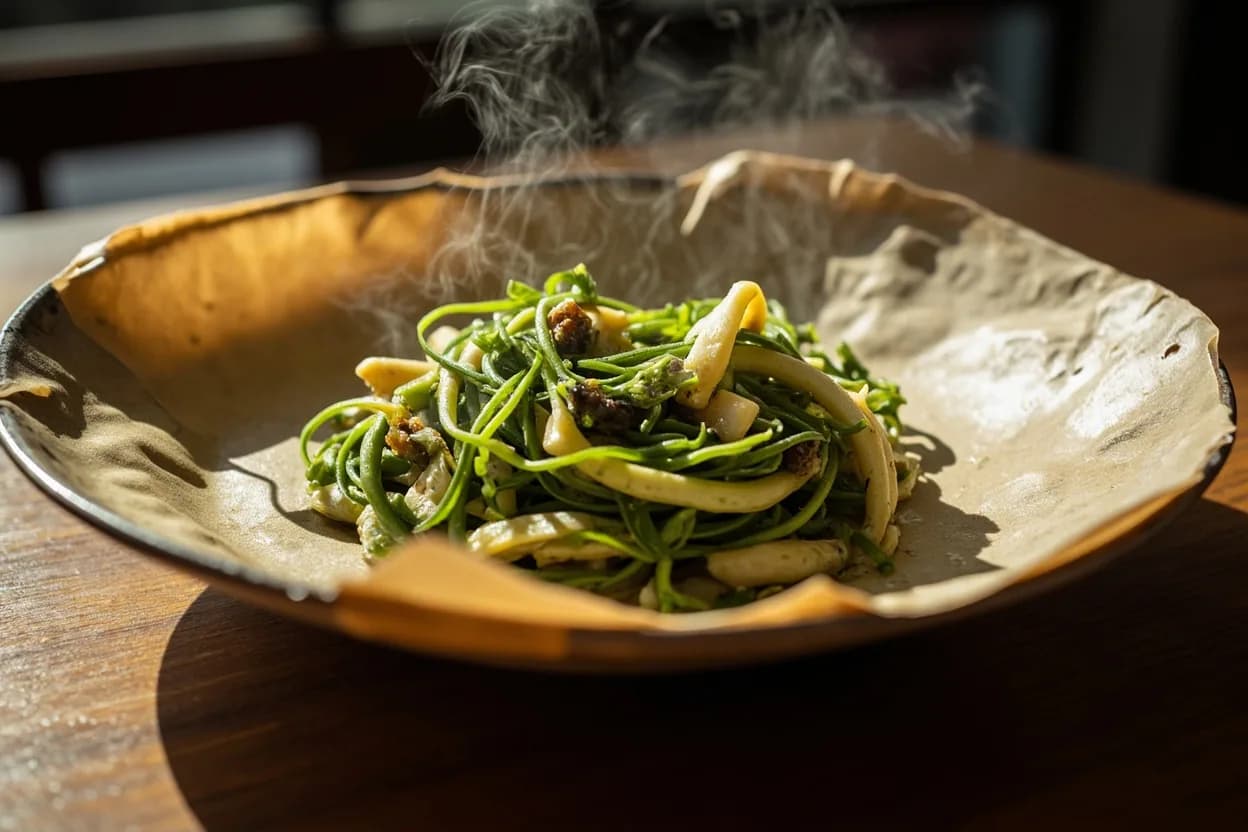
Related
Tomato
Juicy, sun-sweet fruit for sauces, salads, and slow-cooked depth
Yellow Onion
The aromatic backbone of soups, sofritos, and braises
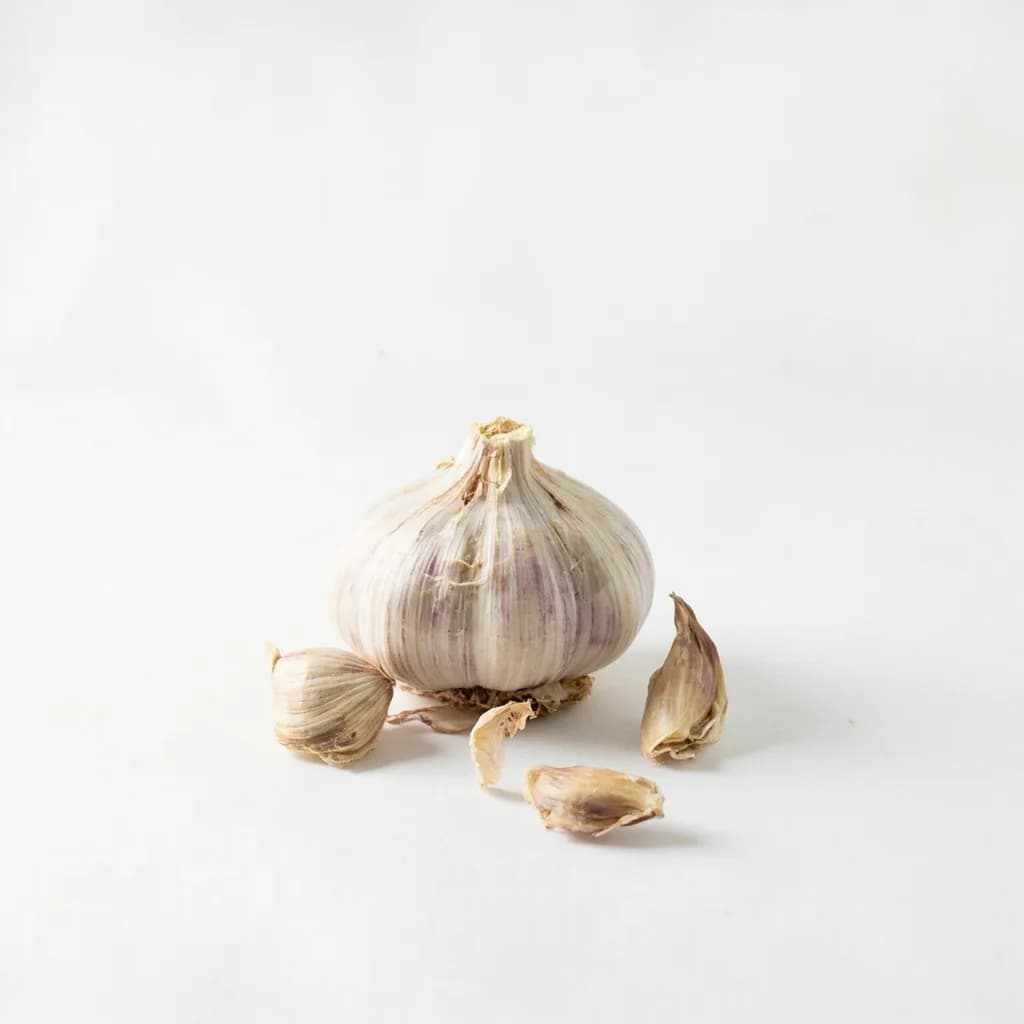
Garlic
Pungent cloves that perfume nearly every savory dish
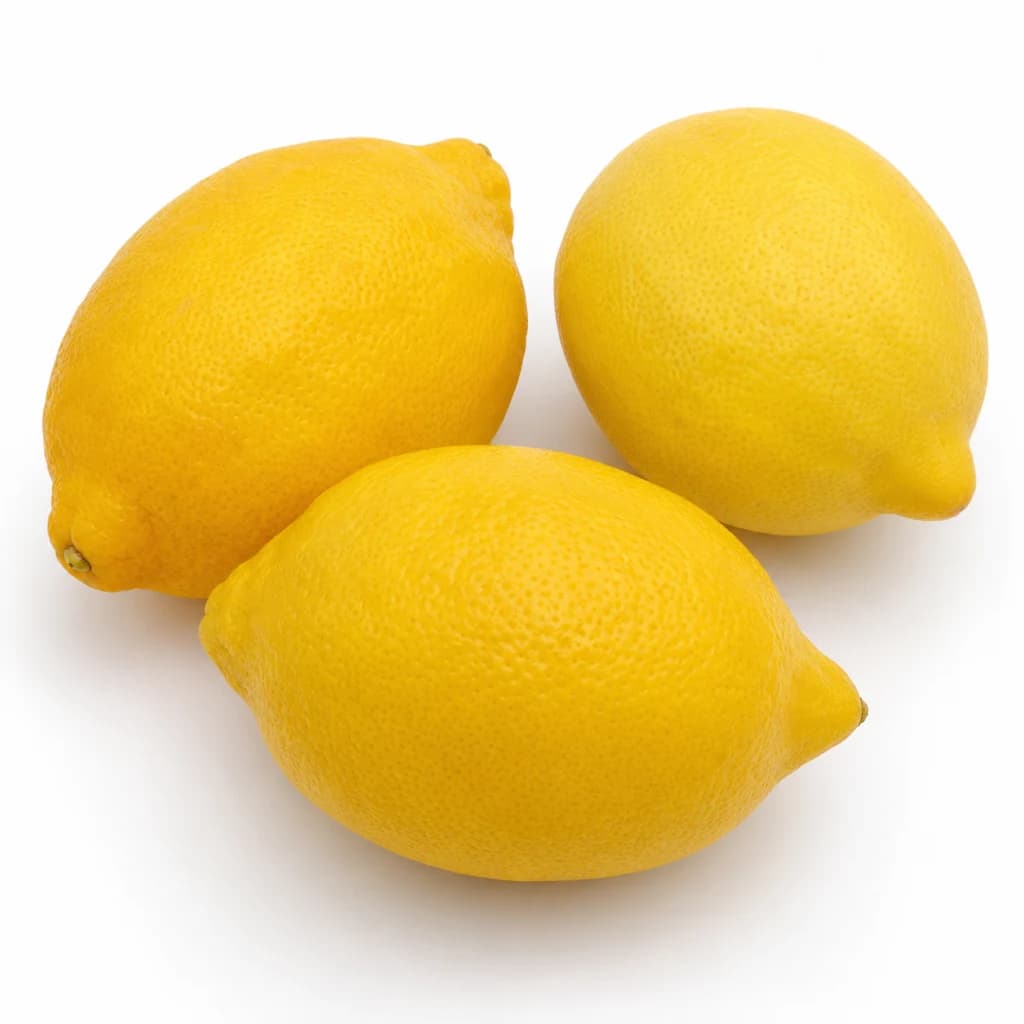
Lemon
Bright, acidic citrus that wakes up almost any dish
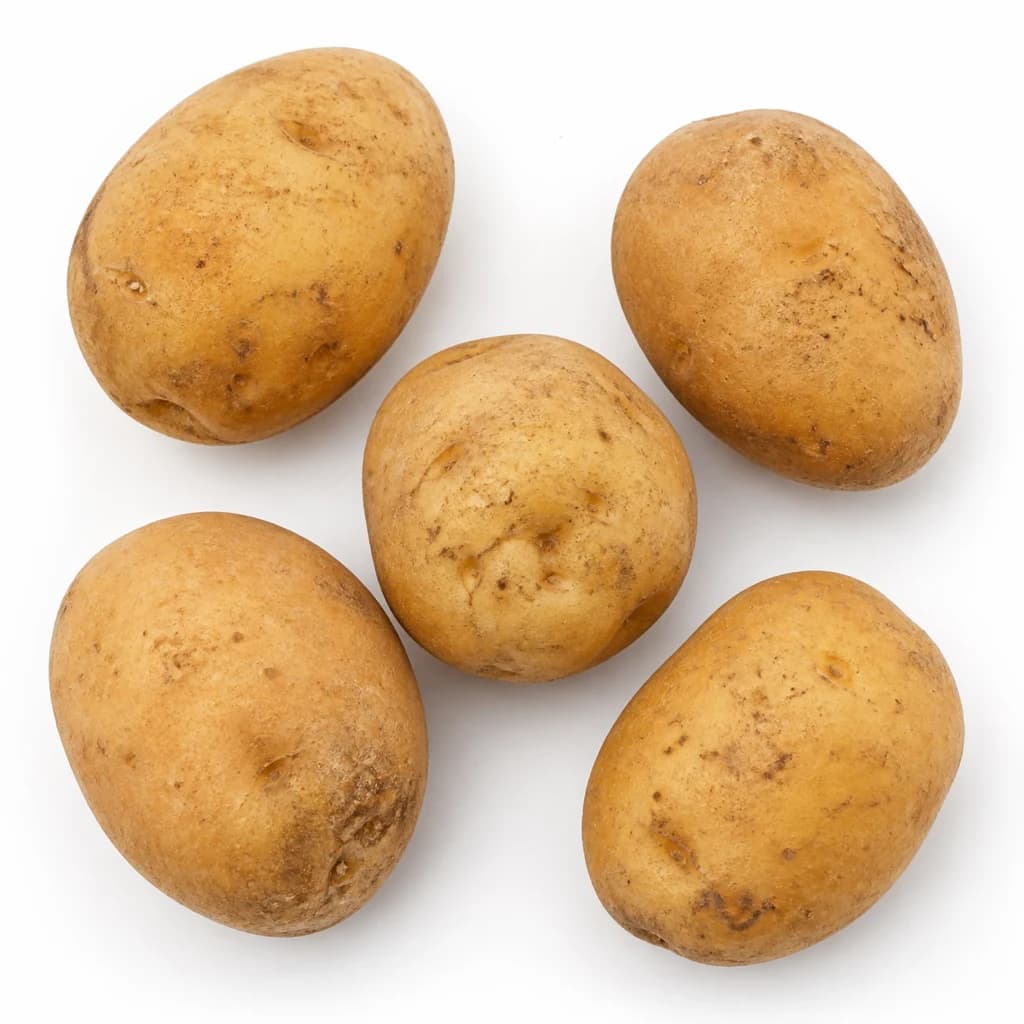
Potato
Humble, hearty staple — roast, mash, fry, or boil
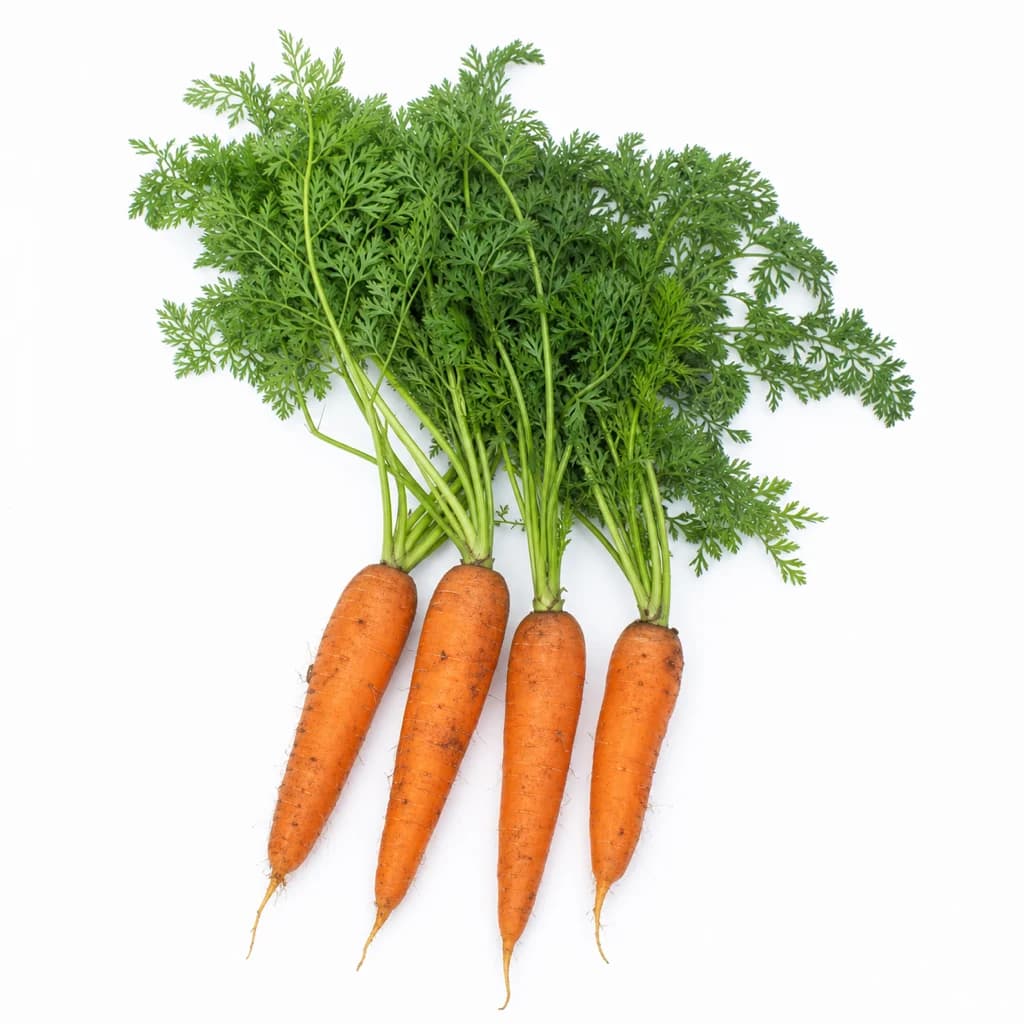
Carrot
Sweet, crunchy root — raw, roasted, or the base of a sofrito
Cucumber
Cool, crisp, and watery — for salads, pickles, and tzatziki

Lettuce
Crisp leaves for salads, wraps, and a fresh crunch