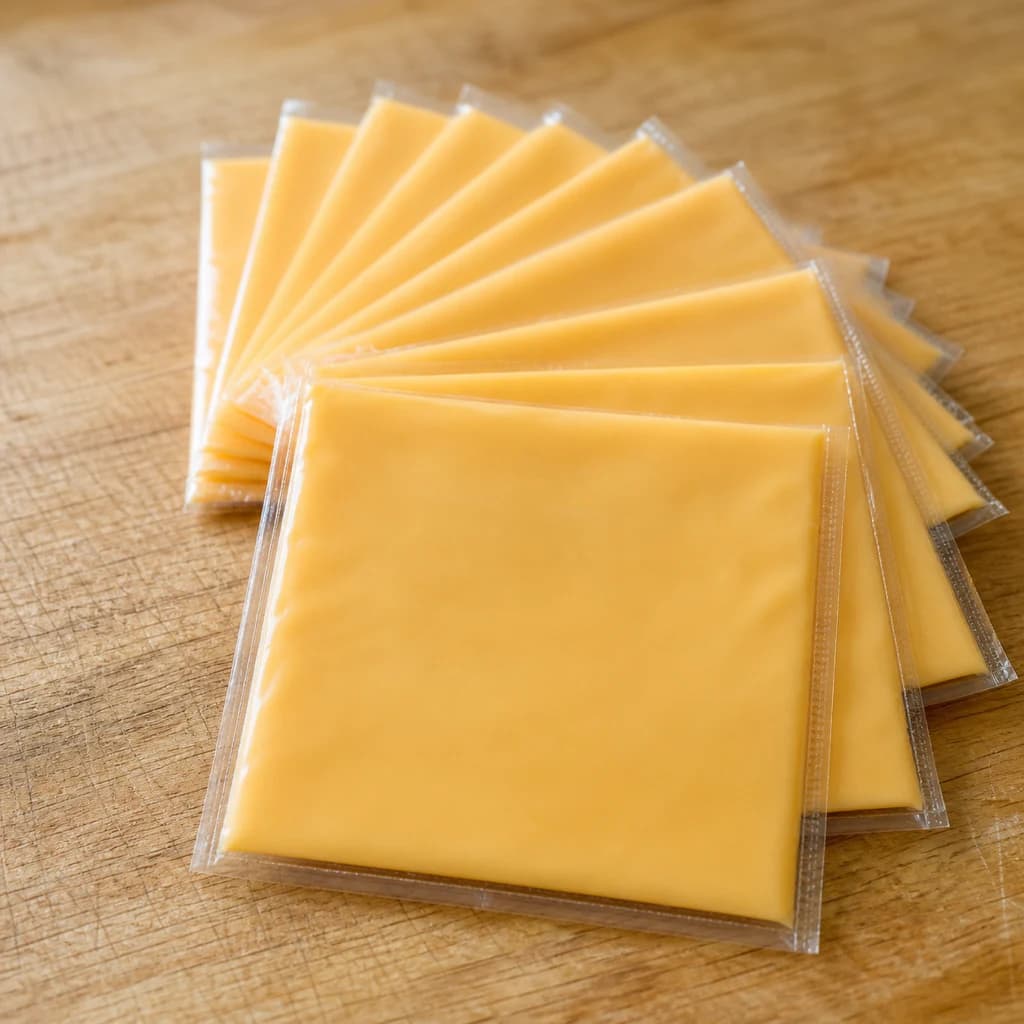
Natural form
Individually wrapped American cheese slices fanned out on a wooden board, showing the familiar orange color and uniform shape.
Shows the most recognizable retail form of American cheese — the plastic-wrapped single slices — so readers instantly identify the product they encounter in stores.
Dairy & Eggs
American Cheese
Smooth processed melting cheese, the classic gooey slice for burgers and grilled cheese.
American cheese is a soft, mild processed cheese blended with emulsifying salts so it melts into a perfectly smooth, gooey layer without breaking. It is the go-to for cheeseburgers, grilled cheese, and diner-style melts because of its even melt and creamy texture. Sold as individually wrapped slices or in blocks like Velveeta.
American cheese is a pasteurized process cheese product—an engineered melting cheese unlike any natural variety. Its defining characteristic is the addition of emulsifiers, typically sodium citrate or sodium phosphate, which bind fat and protein into a stable emulsion. This science is what gives American cheese its signature smooth, stringy melt without the oil separation that plagues natural cheese under high heat. The result is a cheese that performs a specific, irreplaceable function in the kitchen: it melts evenly and stays cohesive, whether draped over a burger patty or stirred into a velvety sauce.
The product originated in 1911 when J. L. Kraft patented the processed cheese method, revolutionizing shelf stability and melt consistency. It is made by blending young cheeses—usually cheddar, colby, or similar—with whey, milk fat, and those crucial emulsifiers. The legal classifications matter: "Pasteurized Process Cheese" must contain at least 51% cheese, while "Process Cheese Food" and "Process Cheese Product" allow progressively more additives and less actual cheese. The orange color, when present, comes from annatto; white American is identical but uncolored, preferred for white sauces.
Serious cooks recognize that American cheese serves a distinct purpose. Its flavor is mild, buttery, and slightly salty with a subtle tang—not complex or nuanced, but intentionally approachable. This mildness is a feature, not a flaw: it provides creamy richness without competing with other strong flavors. The trade-off is clear: when melt performance and functional cooking matter more than artisanal complexity, American cheese is the tool for the job. Many professional kitchens keep a loaf on hand precisely for this reason.
- Measured in
- piece
- Storage
- Fridge
Allergens
Types & varieties
The standard sliced product; minimum 51% cheese by law
Bulk form for delis and food service; same composition as slices, just not pre-cut
Lower cheese content, more whey and emulsifiers; often found in spreadable forms
Lowest cheese content; can contain vegetable oil instead of milk fat
Identical to orange variety but without annatto color; preferred for white sauces or béchamel
Higher proportion of aged cheddar; stronger flavor, still melts well
Colby adds a slightly sweeter, more open texture while maintaining melt quality
Common uses
Tips & pitfalls
- Tear slices into pieces before melting for more even distribution in sauces or sandwiches.
- Combine with an equal amount of shredded young cheddar for better flavor while retaining smooth melt.
- Use medium-low heat; high heat makes it turn rubbery and tough.
- It browns at lower temperatures than natural cheese—watch closely under the broiler.
- Account for its inherent saltiness before adding additional seasoning to dishes.
- Add a splash of milk or cream when making sauces to extend its silky texture and prevent clumping.
- For a cheese sauce, whisk 2 oz. American cheese into ½ cup hot béchamel for a perfectly smooth result.
- Store slices flat to prevent sticking together; reseal original packaging tightly.
Nutrition
Energy
1385 kJ · per 100 g
Where the calories come from
Protein
19.7g
39% DV
Carbs
8.3g
3% DV
Fat
24.5g
31% DV
Fiber
0g
0% DV
Sodium
966mg
42% DV
Source · USDA FoodData Central · Cheese food, cold pack, American
View on FDC →In the shops
Matched grocery products
No matched grocery products for American Cheese yet.
Good to know
- Type
- Processed cheese product (not technically cheese by FDA standards)
- Origin
- United States; J. L. Kraft patented processed cheese in 1911
- Base Cheeses
- Typically cheddar, colby, or similar young cheeses
- Key Additives
- Emulsifiers (sodium citrate, sodium phosphate), whey, milk fat, annatto for color
- Melting Point
- Very low; melts smoothly without oiling off
- Moisture Content
- High (40–50%), higher than most natural cheeses
- Flavor Profile
- Mild, buttery, slightly salty; subtle cheese tang
- Shelf Life
- Refrigerated: 2–4 weeks after opening; shelf-stable versions last months unopened
- Typical Packaging
- Individually wrapped slices (1 oz each) or loaves (5–10 lb blocks)
- Color
- Orange (with annatto) or white (uncolored)
- Legal Classification
- "Pasteurized Process Cheese" requires minimum 51% cheese; "Process Cheese Food" allows more additives
Substitutes
- Equal parts young cheddar and Fontina — Excellent flavor with nearly equivalent melt; lacks the buttery smoothness
- Gruyère — Better flavor but doesn't melt quite as smoothly; excellent for French onion soup
- Velveeta — Similar process, similar melt; slightly different flavor profile, also highly processed
- High-moisture low-fat cheese blends — Many supermarket shredded cheese blends are designed for better melt; check labels for "melting cheese"
Pairs with
Also called
Processed American Cheese Slice · Velveeta (Queso Base) · American Singles
Appears in these dishes
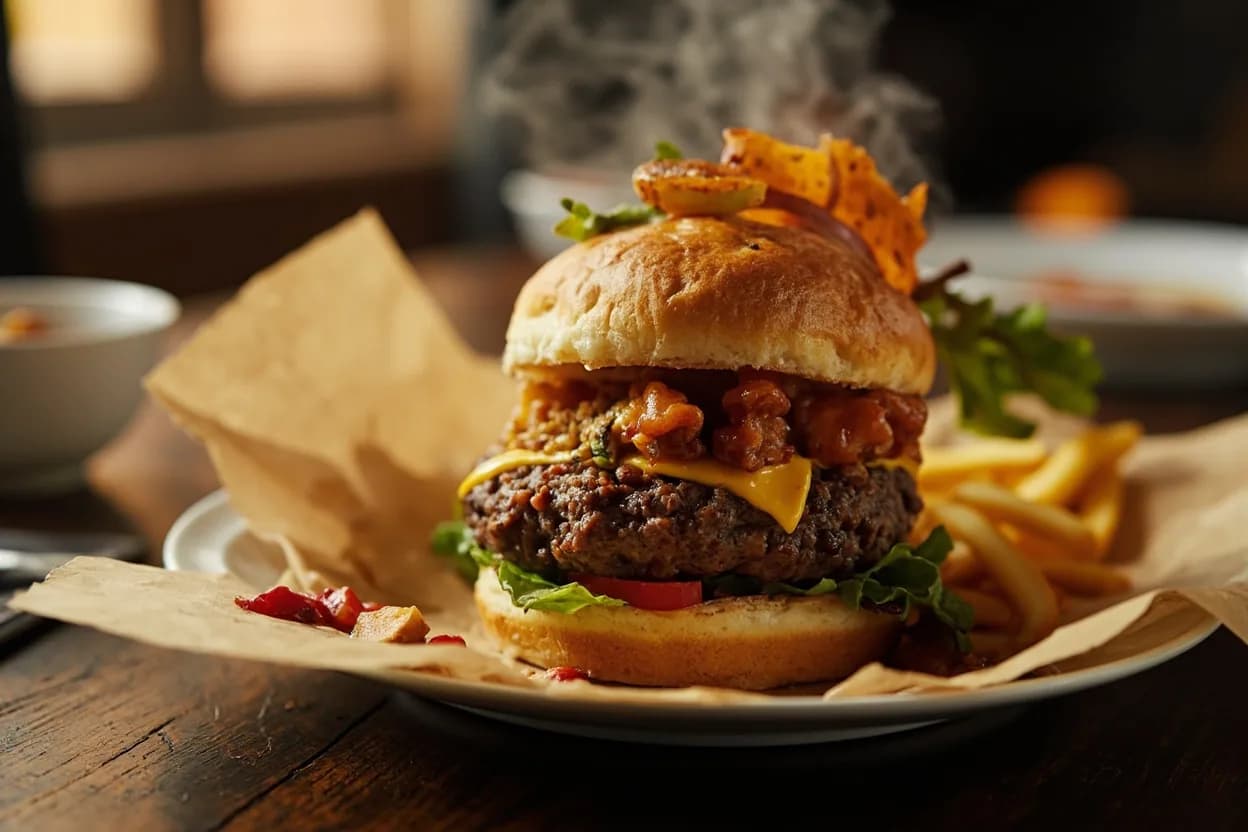
Related

Whole Milk
Rich, full-fat milk for drinking, coffee, sauces, and baking
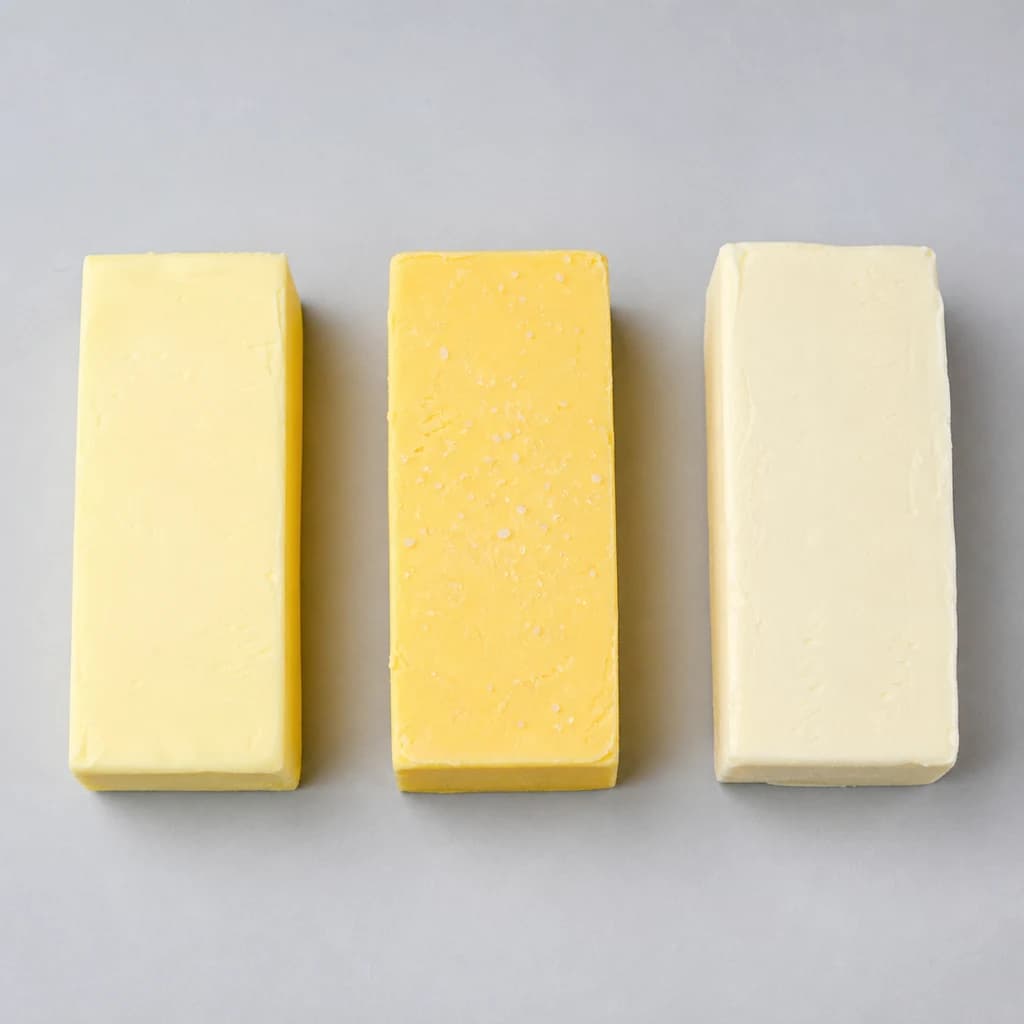
Butter
Golden fat for searing, baking, and finishing a sauce
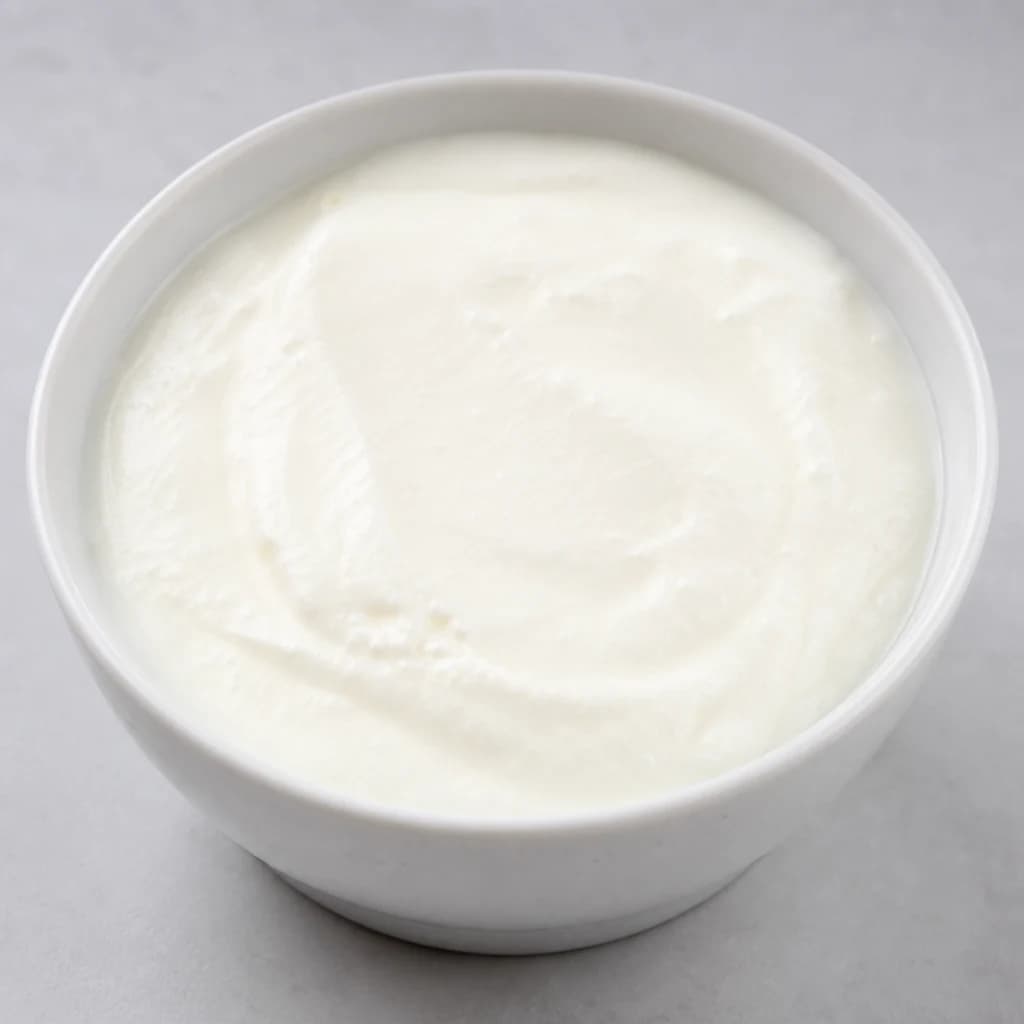
Yogurt
Tangy, creamy culture for breakfast, sauces, and marinades
Cheddar Cheese
Sharp, melty cheese for sandwiches, gratins, and grating

Skim Milk
Fat-free milk for lighter drinking, coffee, and cooking
Heavy Cream
Rich cream that whips, enriches sauces, and sets ganache

Sour Cream
Tangy, thick cream for dolloping, baking, and dips
Mozzarella
Soft, milky cheese that melts into stretchy pizza pulls