Proteins
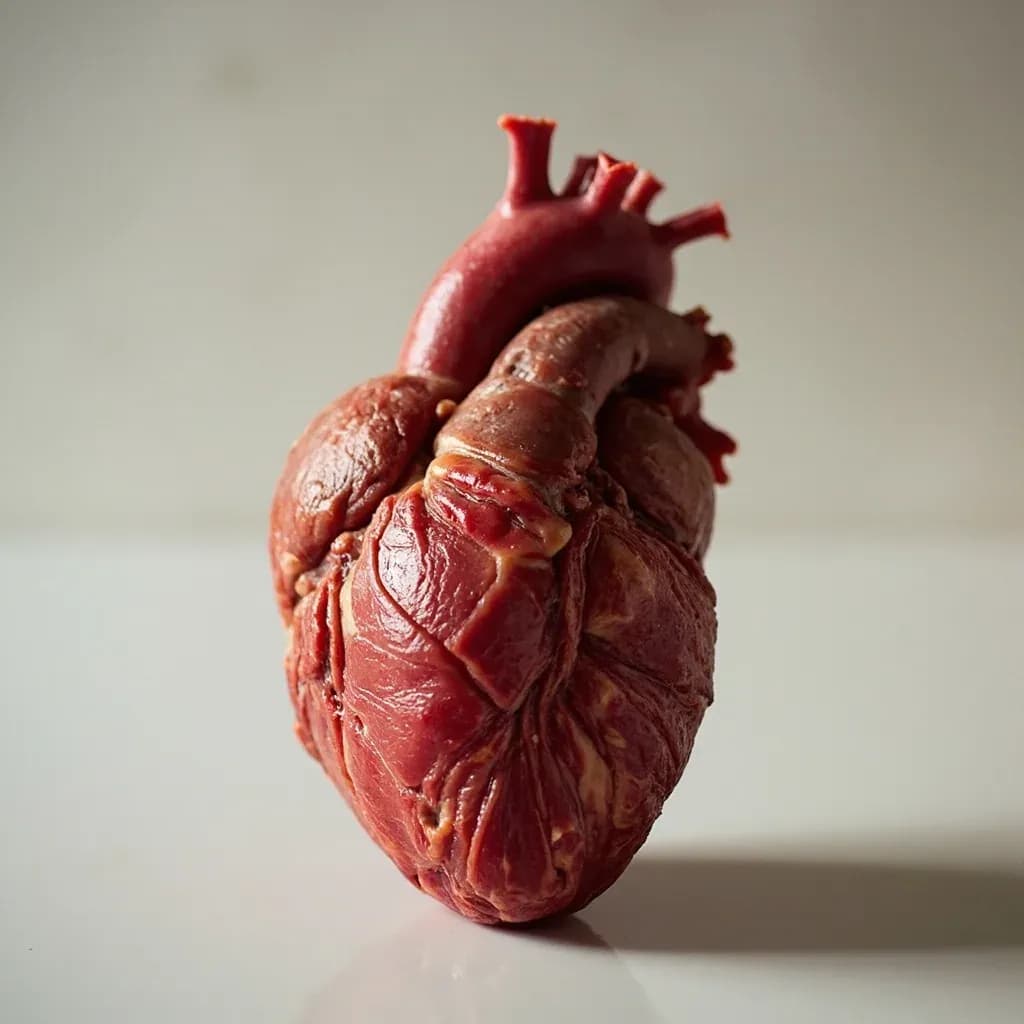
Beef Heart (Corazón)
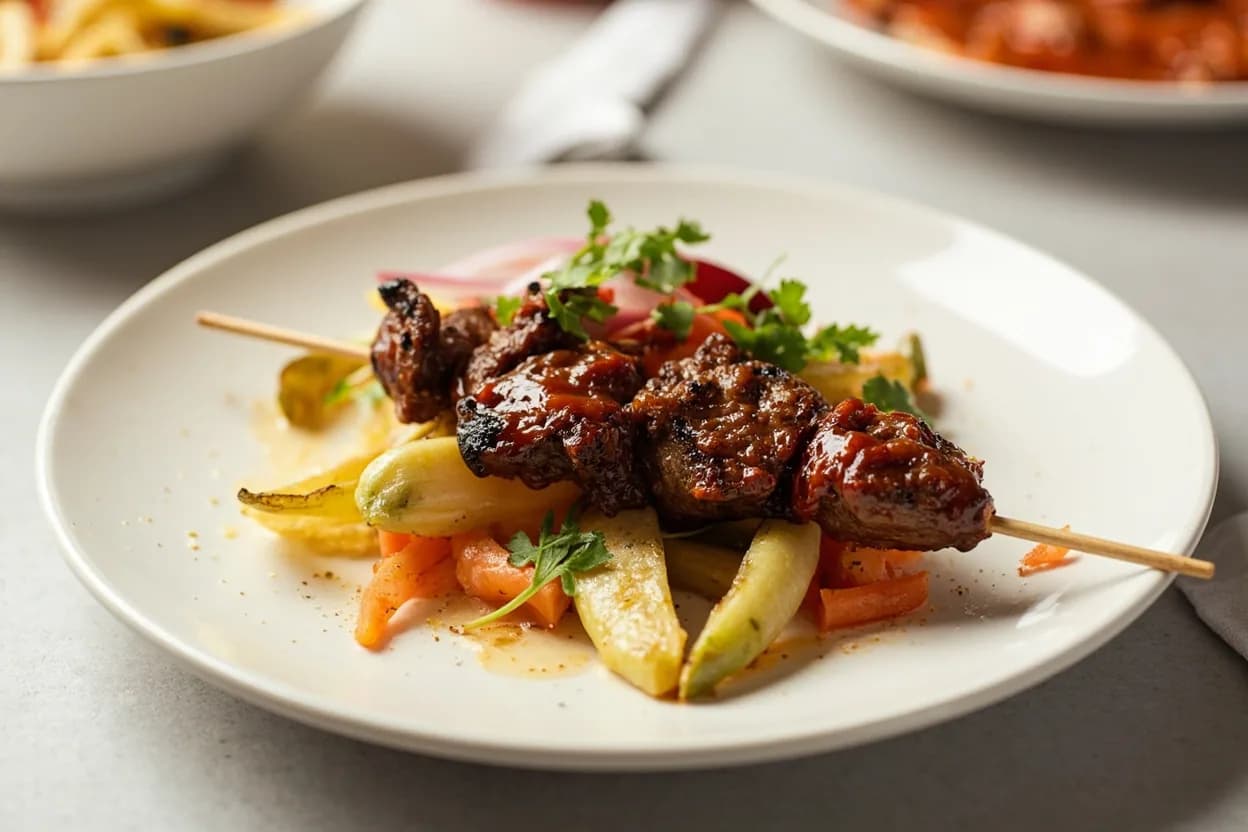
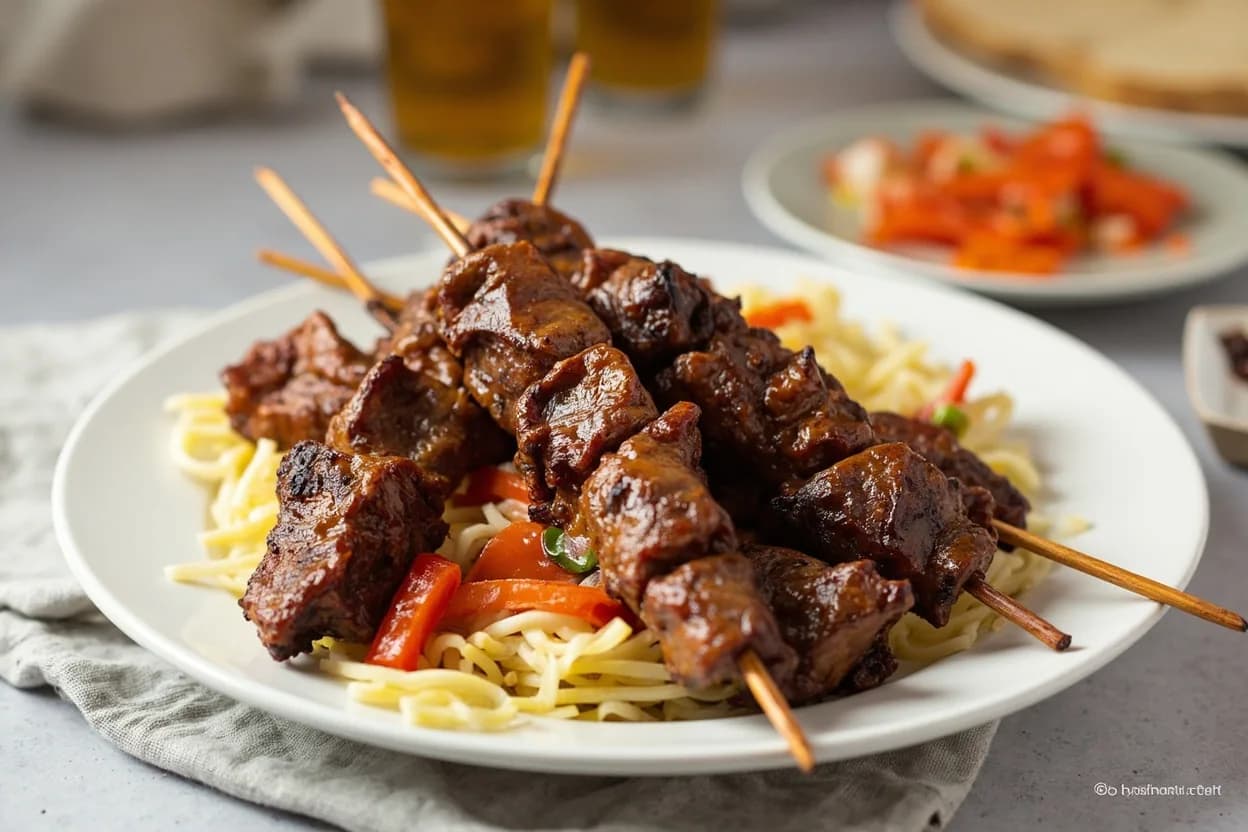
Lean, dense muscle organ meat — grilled as Peruvian anticuchos or skewered and seared.
Beef heart is a firm, deep-red organ meat that tastes like a richer, leaner version of steak. It is famously marinated and grilled as Peruvian anticuchos, sliced thin and seared, or braised. Trimmed of its tough exterior membrane and cooked quickly over high heat or low and slow, it stays tender.
Beef heart is the muscular organ at the center of the circulatory system, working ceaselessly throughout an animal's life to pump blood — and that constant, strenuous use creates a uniquely dense, red muscle meat unlike any cut on the carcass. It is the ventricular and auricle muscle of Bos taurus, trimmed of its coronary vessels, fat, and connective membranes before cooking. The result is an exceptionally lean protein, with roughly 5% fat content, making it one of the leanest beef cuts available and far more forgiving for high-heat cooking than fattier offal like liver or kidney.
Despite its low cost and wide availability at Hispanic markets and Latino butcher shops — where it is typically labeled Corazón de Res — beef heart has barely registered in mainstream American kitchens. This is a significant gap for adventurous cooks: heart offers a robust, meaty flavor with only a faint mineral note, milder than liver and without gaminess, making it approachable even to offal skeptics. Its dense, firm texture rewards proper technique; the single most important skill is thorough trimming followed by thin, cross-grain slicing, which transforms what could be chewy into something genuinely tender.
Beef heart appears at the heart of Peruvian anticuchos, Argentine asados, Mexican tacos de corazón, and traditional French cœur de bœuf — evidence of a rich global tradition that rewards exploration. Its nutritional profile is equally compelling: a concentrated source of heme iron, B12, B6, zinc, selenium, CoQ10, and phosphorus. The combination of affordability, availability, nutritional density, and culinary versatility makes beef heart one of the most undervalued proteins in the American kitchen.
- Measured in
- g
- Storage
- Fridge
Types & varieties
Standard retail form; requires full trimming of coronary vessels, fat, and auricles before cooking
Pre-trimmed and cut; available at specialty butchers or Hispanic markets; more convenient but oxidizes faster than whole
The Trimming Process
The single most important skill for cooking beef heart is proper trimming. A whole heart arrives with its coronary fat, tough outer membrane, internal blood clots, and a central column of clear connective tissue — all of which must be removed. Lay the heart flat and identify the major vessels entering the top; using a sharp chef's knife, slice these away down to the meat. The tough membrane peels off with your fingers once you find an edge. Inside, you will find clotted blood that must be completely removed; rinse briefly if needed and pat dry. The central connective column runs the length of the heart — slice this out completely. What remains is clean, red muscle tissue ready to cut. Do not rush this process; inadequate trimming is the primary cause of off-flavors and textural problems.
- Trim within 1–2 days of purchase; fresh heart is easier to work with than aged
- Work over a sheet pan to catch blood and trim pieces
- Pat the trimmed heart completely dry before slicing — surface moisture prevents proper browning
Understanding Heart's Texture
Heart is pure muscle, denser than skeletal cuts like ribeye or chuck because it has been working continuously throughout the animal's life. This density means heat penetrates more slowly, and the muscle fibers are longer and tougher than those of conventional beef if cut improperly. The solution is always the same: slice thin, and cut against the grain. The grain of heart muscle runs in a visible pattern; identify it before you cut and orient your knife perpendicular to those fibers. Pieces no thicker than 1/2 inch will cook through quickly and remain tender. Thicker cuts will be chewy regardless of how long you cook them, because the center never reaches the temperature needed to break down collagen before the exterior overcooks.
- Always cut against the grain — this is non-negotiable for tenderness
- Maximum thickness of 1/2 inch for quick-cook methods; 3/4 inch acceptable for braising only
- Let the heart rest after cooking for 2–3 minutes, just as you would a steak, before slicing
Common uses
Tips & pitfalls
- ALWAYS trim thoroughly: remove all coronary fat, the tough outer membrane, any blood clots, and the clear connective tissue running through the center
- Slice AGAINST the grain into pieces no thicker than 1/2 inch — this shortens muscle fibers and ensures tenderness
- Marinate for at least 2 hours in acid (vinegar or lime juice) with oil, garlic, and spices — the acid slightly tenderizes and adds flavor
- Cook HOT and fast: grill, cast-iron sear, or wok-toss at high temperature. 2–3 minutes per side for thin cuts; 4–5 minutes total for cubes. Residual heat continues cooking — remove early
- Do not crowd the pan or skewers — give pieces space for proper browning and caramelization
- Rest briefly after cooking, just as you would a steak, before slicing
- Common mistake: under-trimming leaves chewy fat and connective tissue that ruins the eating experience
- Common mistake: cooking heart past medium-rare to well-done; the dense muscle tightens and becomes rubbery at higher temperatures
- Common mistake: using thin marinade or skipping the acid — heart benefits significantly from the tenderizing effect of vinegar or citrus
Nutrition
Energy
469 kJ · per 100 g
Where the calories come from
Protein
17.7g
35% DV
Carbs
0.1g
0% DV
Fat
3.9g
5% DV
Fiber
0g
0% DV
Sugars
0g
of which
Sodium
98mg
4% DV
Source · USDA FoodData Central · Beef, variety meats and by-products, heart, raw
View on FDC →In the shops
Matched grocery products
No matched grocery products for Beef Heart (Corazón) yet.
Good to know
- Type
- Organ meat / offal — ventricular and auricle muscle of Bos taurus
- Origin
- Nose-to-tail tradition; core to Peruvian, Argentine, Chilean, and Mexican cuisines
- Flavor
- Meaty, robust, faintly mineral — milder than liver, without gameiness
- Texture
- Dense, firm, muscular; becomes chewy if overcooked
- Fat Content
- Extremely low — one of the leanest beef cuts available, ~5% fat raw
- Typical Weight
- Whole beef heart weighs 2–4 lbs (0.9–1.8kg)
- Key Nutrients
- Heme iron, B12, B6, zinc, selenium, CoQ10, phosphorus
- Storage — Fresh
- Refrigerate and use within 1–2 days; pat dry, wrap tightly
- Storage — Frozen
- Wrap airtight; freeze up to 3 months; thaw overnight in refrigerator
- Yield
- Trim loss ~30–40% after removing fat, blood clots, and connective tissue
- Difficulty
- Low cost, moderate skill; trimming and slicing technique are the learning curve
- Equipment
- Sharp chef's knife; long metal skewers (for anticuchos); grill or cast iron
Substitutes
- Lamb Heart — Virtually identical texture and flavor; slightly smaller, so adjust cooking time down by ~20%
- Pork Heart — Comparable lean red-meat heart; slightly milder flavor; same preparation applies
Pairs with
Also called
Corazón · Anticucho Meat
Appears in these dishes
Related
Egg
The kitchen's everything ingredient — bind, leaven, enrich, or fry
Chicken Breast
Lean, quick-cooking white meat for everyday dinners

Ground Beef
Versatile minced beef for burgers, ragù, tacos, and meatballs
Pork Loin
Lean, tender roasting cut that stays juicy with care
Salmon
Rich, rosy fish that roasts, grills, or cures beautifully

Egg White
Pure protein that whips to airy peaks for meringue and more
Egg Yolk
Rich, golden yolk for custards, mayonnaise, and pasta

Quail Egg
Tiny, speckled eggs for garnishing and elegant bites