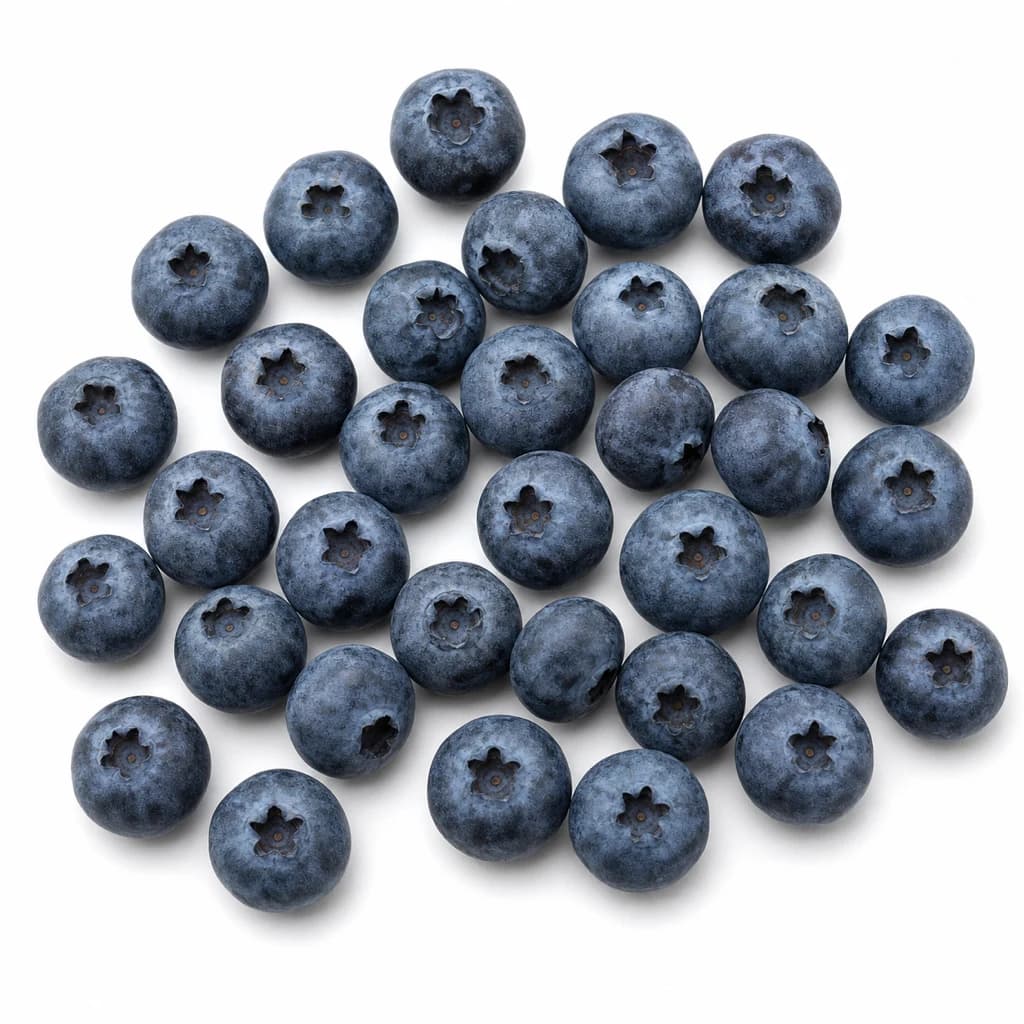
Natural form
Fresh blueberries showing characteristic deep blue-purple skin and pale powdery bloom.
Teaches the reader to identify blueberries by their distinctive color, waxy bloom, size, and the star-shaped calyx crown at the tip.
Produce
Blueberry
Plump, sweet-tart berries for baking, breakfast, and snacking
Bursting with sweet-tart juice, blueberries fold into muffins and pancakes, top yogurt, and snack straight from the punnet. Keep them dry and cold until you eat them.
Blueberries are plump little orbs of sweet-tart juice with a faint floral note and a satisfying pop — one of the few berries that's as good cooked as raw and that keeps relatively well. They burst into muffins and pancakes, fold into yogurt and oatmeal, cook down to a glossy compote, and snack straight from the box. Their natural dusty 'bloom' is a freshness sign, not dirt, and a quick toss in flour keeps them from sinking in batter.
- Measured in
- g
- Storage
- Refrigerate
- Shelf life
- 7 days
Find it in
Types & varieties
The common large cultivated blueberry sold in stores
Tiny, intense, more flavorful; often sold frozen
Southern variety; larger, firmer, later season
How to choose
Want plump, firm, deep-blue berries with a uniform silvery-white 'bloom' (a natural protective coating that signals freshness — don't wash it off until eating). They should be dry and loose in the box, not wet, clumped, or stained. Avoid shriveled, soft, green-tinged, or moldy berries; check the bottom of the container for crushed ones.
How to store
Keep blueberries dry and unwashed in the fridge in a breathable container, and they'll last a week or more — longer than most berries. Wash only just before eating, since moisture hastens mold. They freeze excellently: spread on a tray to freeze loose, then bag, and use straight from frozen.
- Refrigerate dry and unwashed
- They keep longer than other berries
- Freeze loose on a tray, then bag
How to bake with them
To stop blueberries sinking to the bottom of muffins and cakes, toss them in a spoonful of the recipe's flour before folding in — the coating helps suspend them. Frozen berries work in baking; don't thaw them first (and consider a quick flour toss) to limit purple streaking. For a compote, simmer with a little sugar and lemon until some burst and the rest stay whole.
Common uses
Tips & pitfalls
- Don't rinse off the silvery bloom until you're about to eat — it's freshness, not dirt
- Toss in flour before folding into batter so they don't sink
- Use frozen berries straight from the freezer in muffins (don't thaw)
- Lemon zest and juice make blueberry flavor pop
- Simmer into a quick compote for pancakes and yogurt
Nutrition
Energy
238 kJ · per 100 g
Where the calories come from
Protein
0.7g
1% DV
Carbs
14.5g
5% DV
Fat
0.3g
0% DV
Fiber
2.4g
9% DV
Sugars
10g
of which
Sodium
1mg
0% DV
Source · USDA FoodData Central · Blueberries, raw
View on FDC →In the shops
Matched grocery products
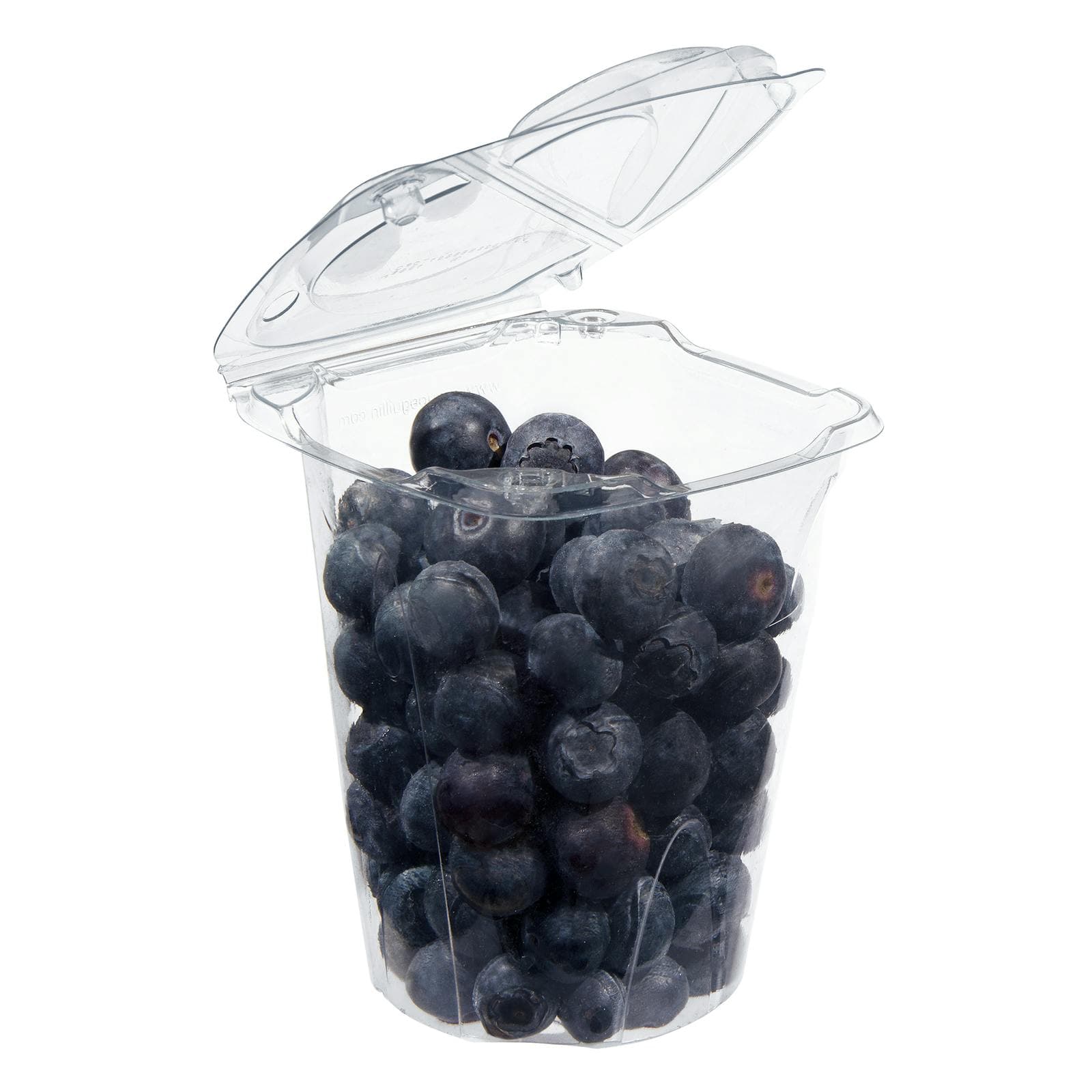 €3.20
€3.20Blueberries
225 g · Mercadona
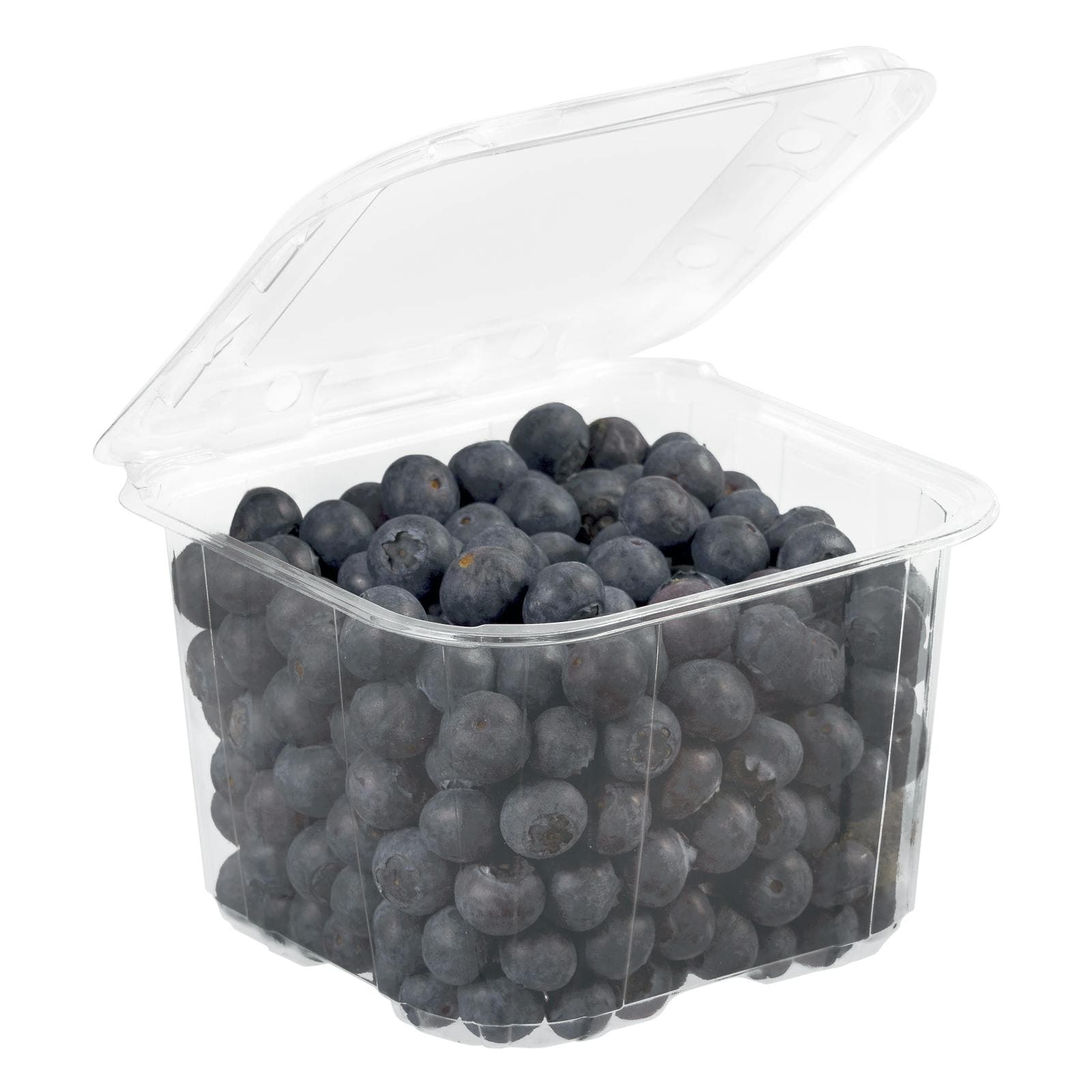 €6.00
€6.00Blueberries
500 g · Mercadona
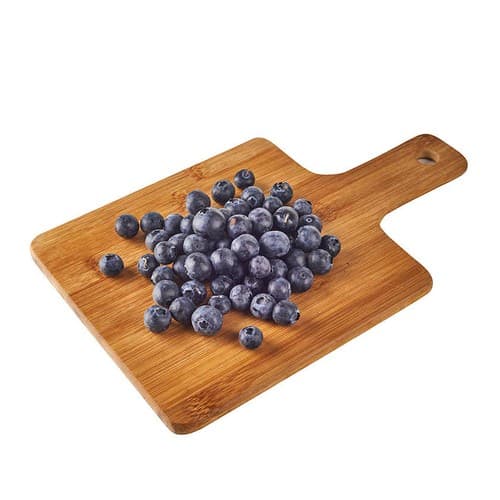 €2.99
€2.99Ecological Blueberries in Terrine 125g
LA COLLITA · kg · Bonpreu
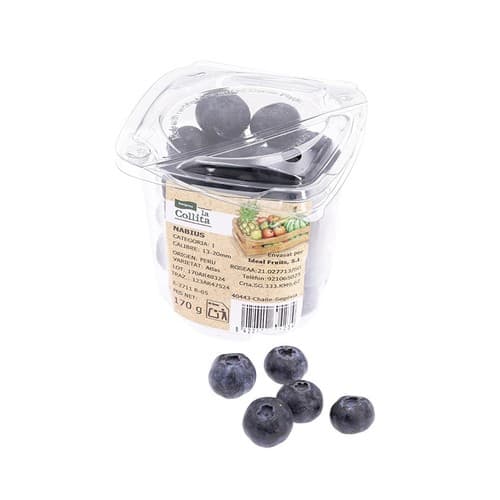 €2.59
€2.59LA COLLITA Nabius Terrine 170 g
LA COLLITA · kg · Bonpreu
Good to know
- Peak season
- Summer (June–August)
- Flavor
- Sweet-tart, mildly floral; juicy with a gentle pop
- Origin
- North America; one of the few native cultivated fruits
- Nutrition
- ~57 kcal/100g; antioxidants (anthocyanins), vitamins C, K, fiber
- How to buy
- Plump, firm, deep blue with silvery bloom; dry; no shriveling or mold
Substitutes
- Blackberry — Larger, tarter; bake and sauce similarly
- Frozen blueberries — Picked ripe; ideal for baking and smoothies
- Huckleberry / black currant — For an intense, tart berry note
Also called
blueberries · arándano · arándanos · nabius · nabiu
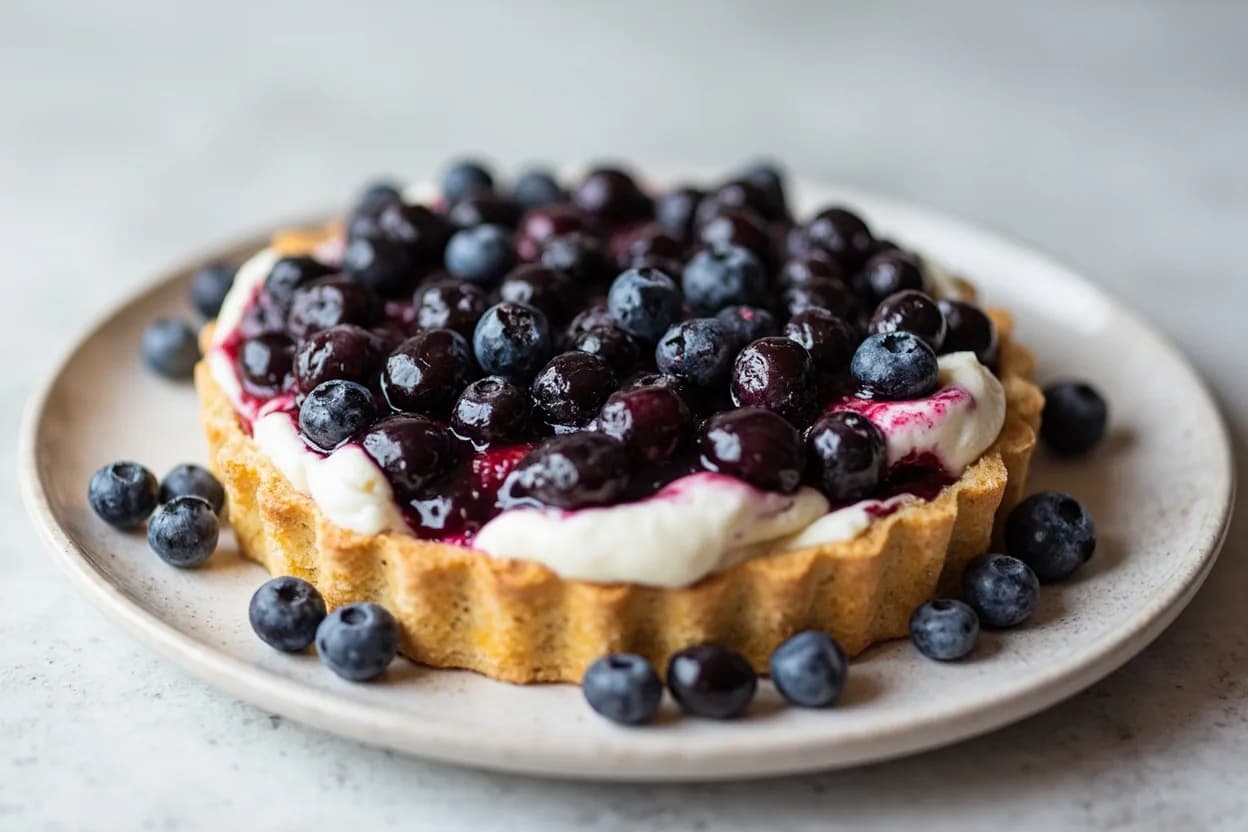
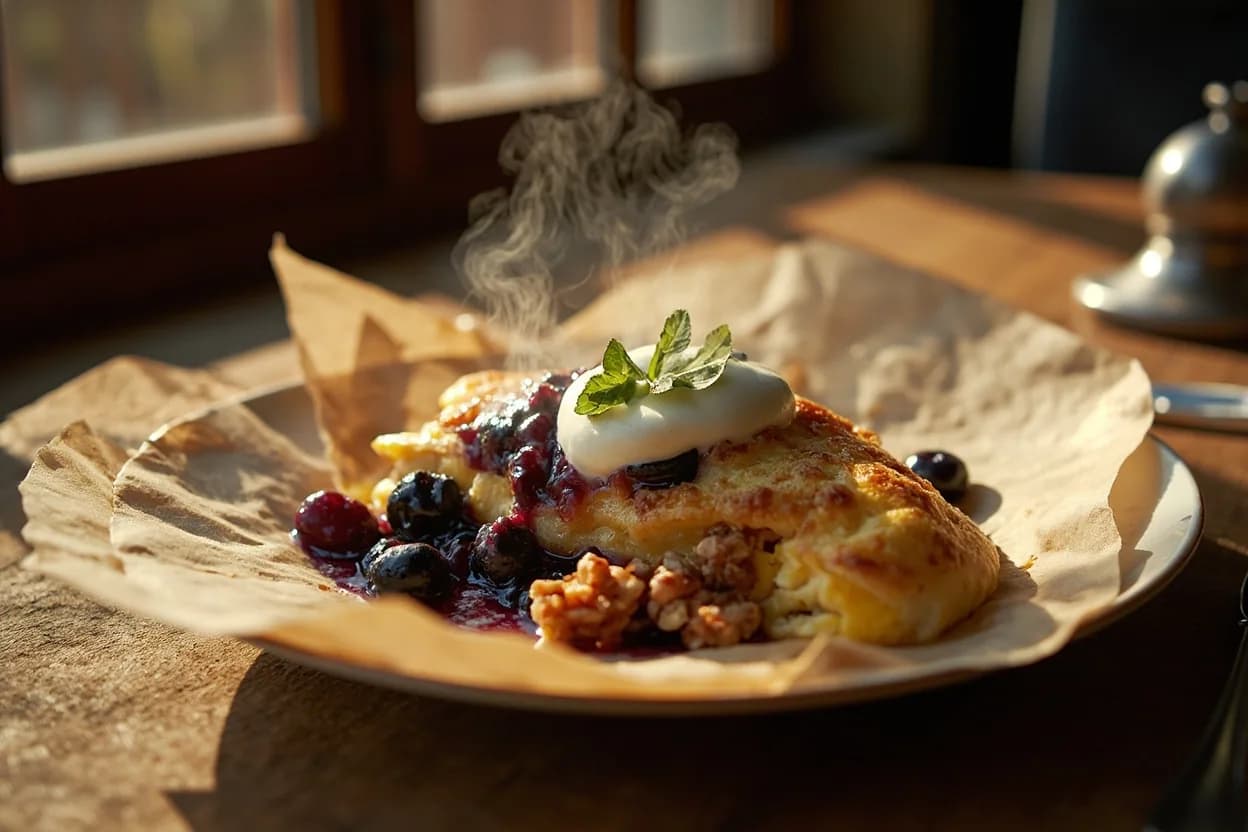
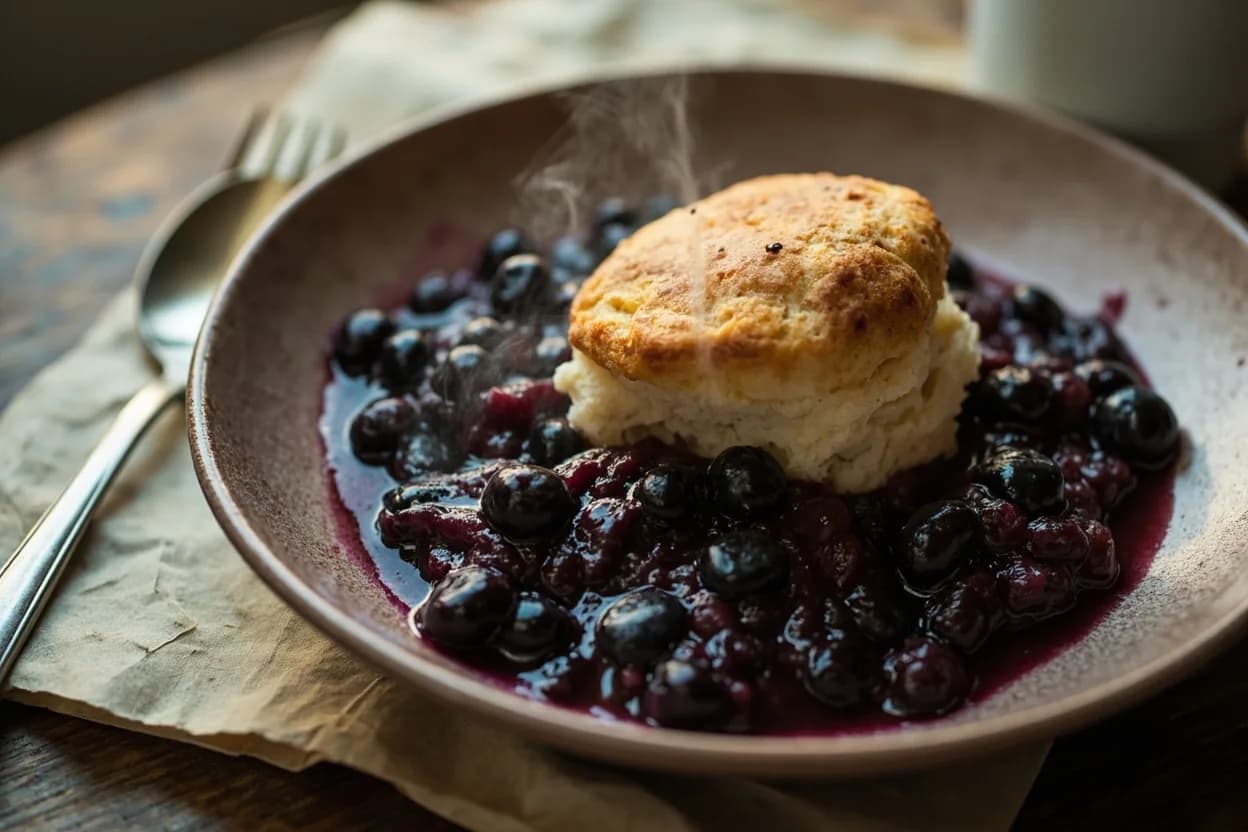
Appears in these dishes
Related
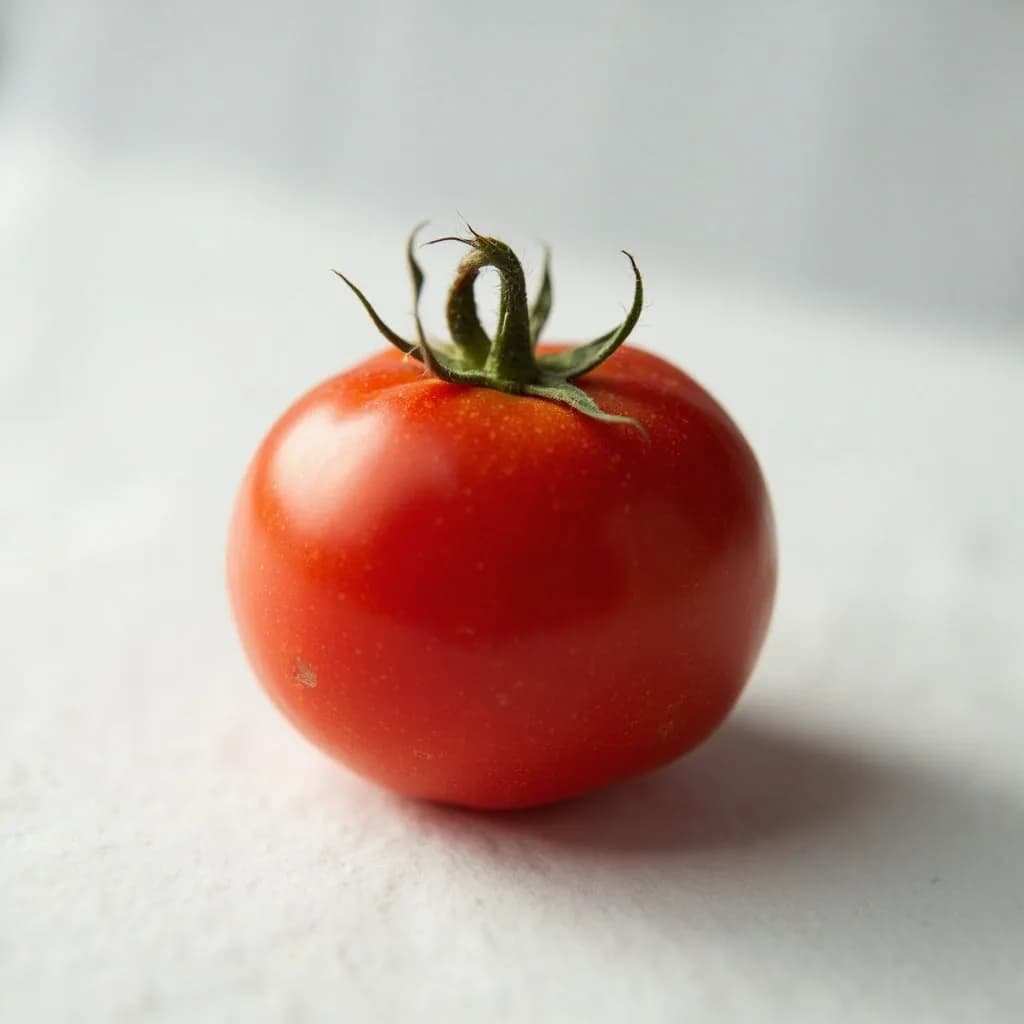
Tomato
Juicy, sun-sweet fruit for sauces, salads, and slow-cooked depth
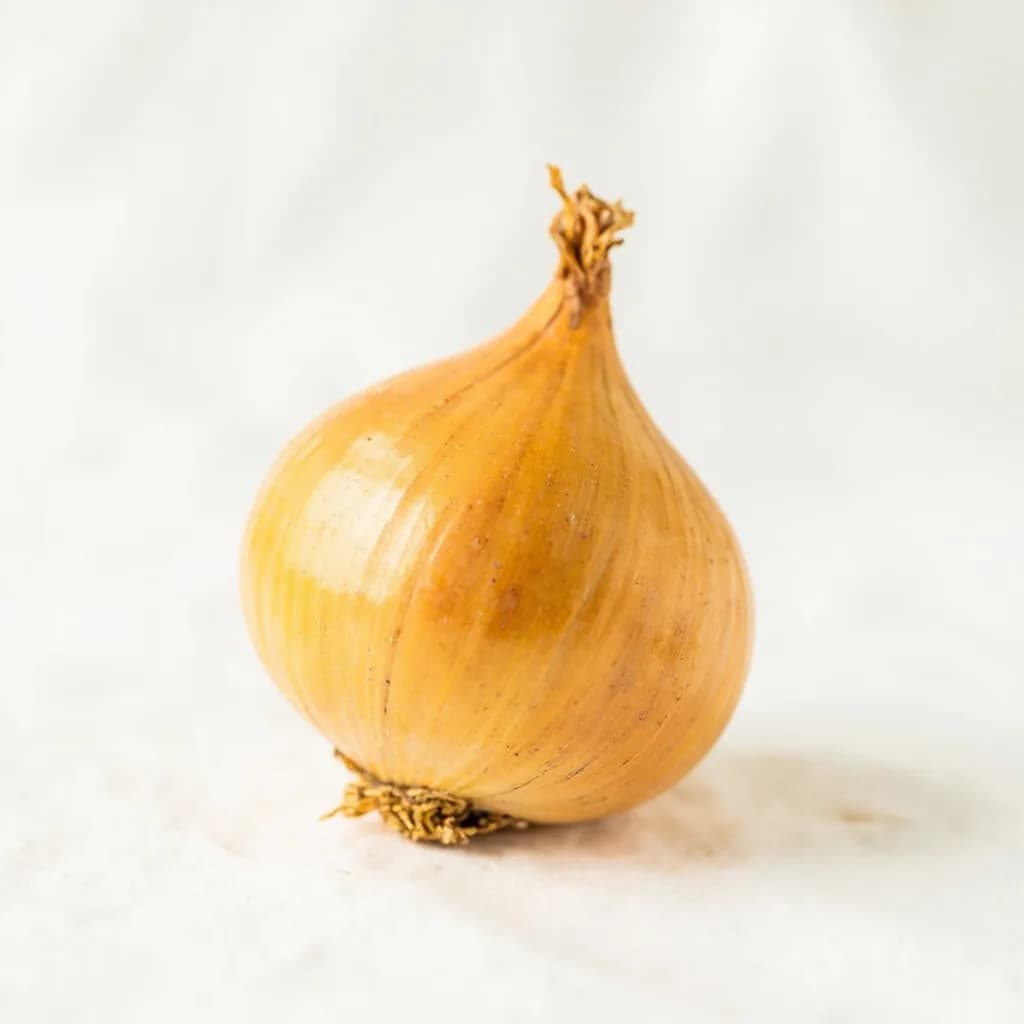
Yellow Onion
The aromatic backbone of soups, sofritos, and braises
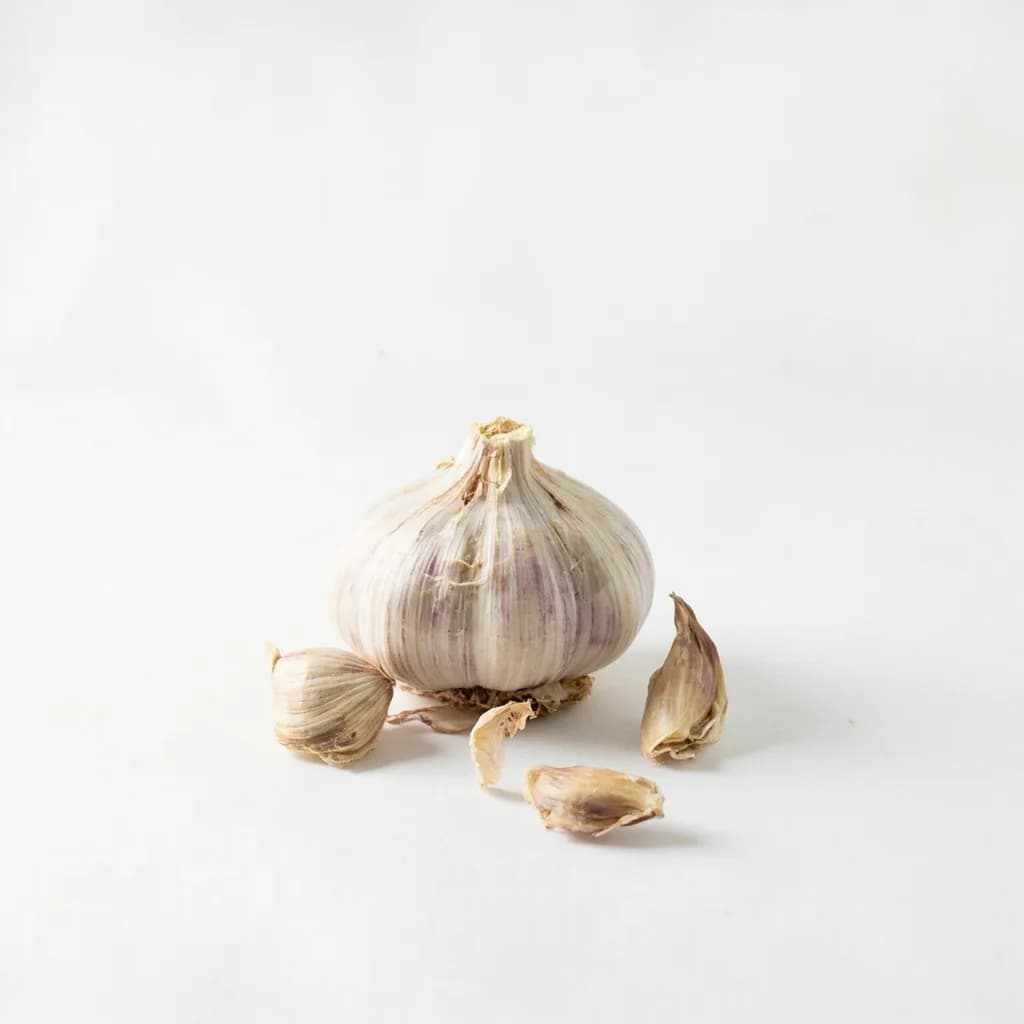
Garlic
Pungent cloves that perfume nearly every savory dish
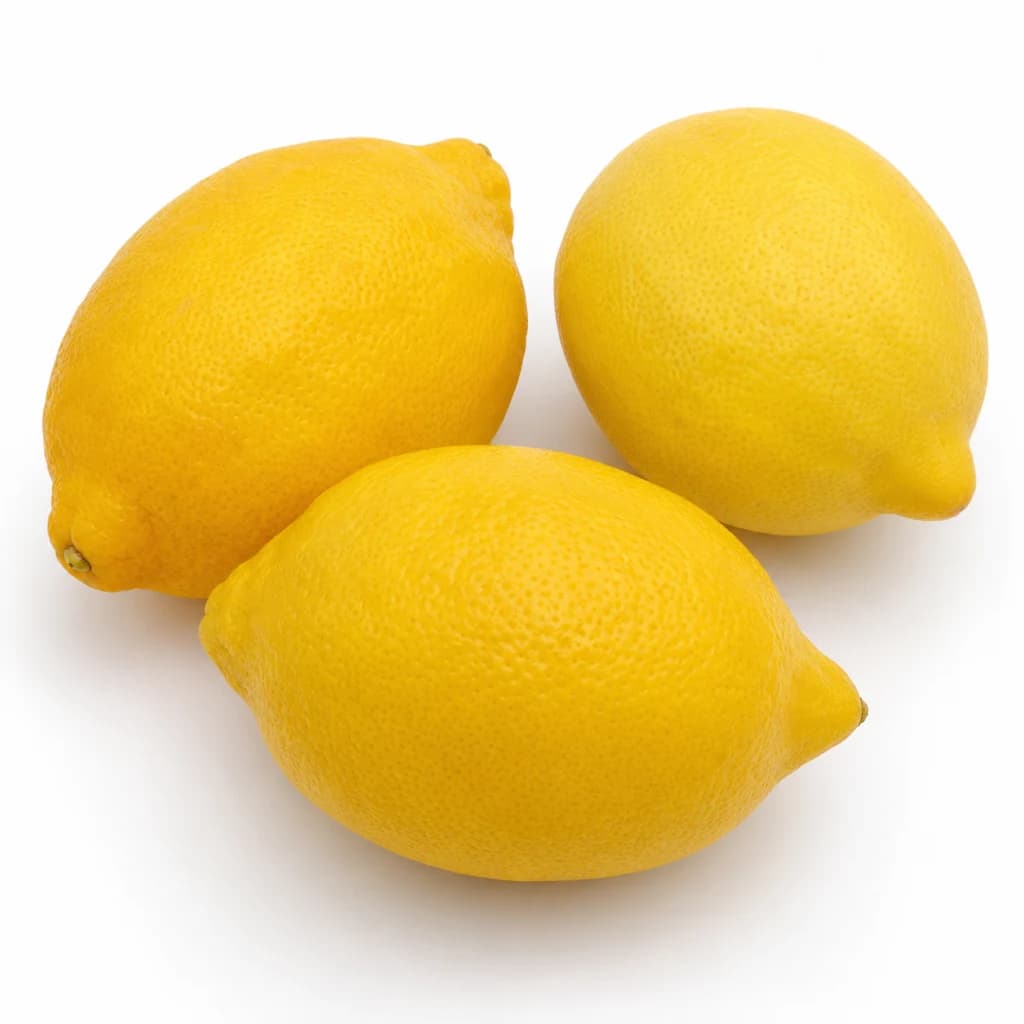
Lemon
Bright, acidic citrus that wakes up almost any dish
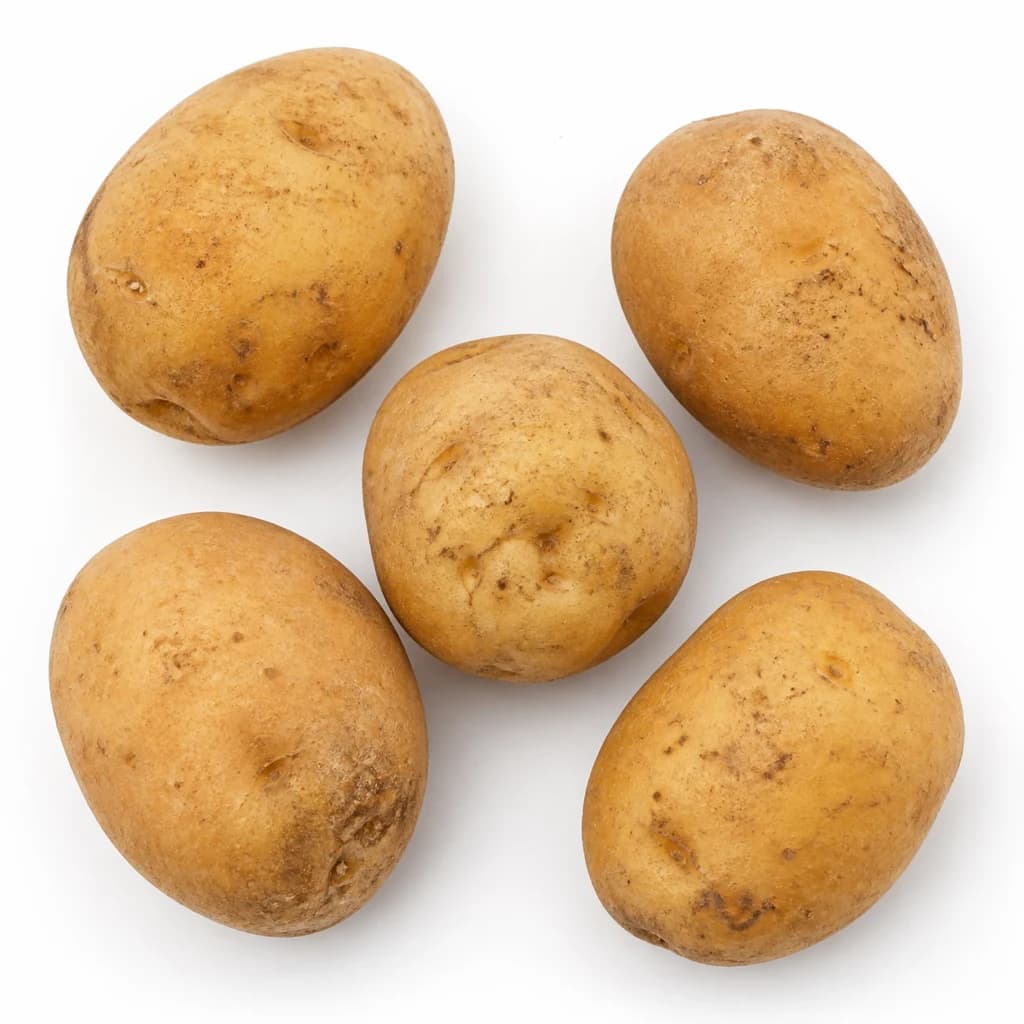
Potato
Humble, hearty staple — roast, mash, fry, or boil
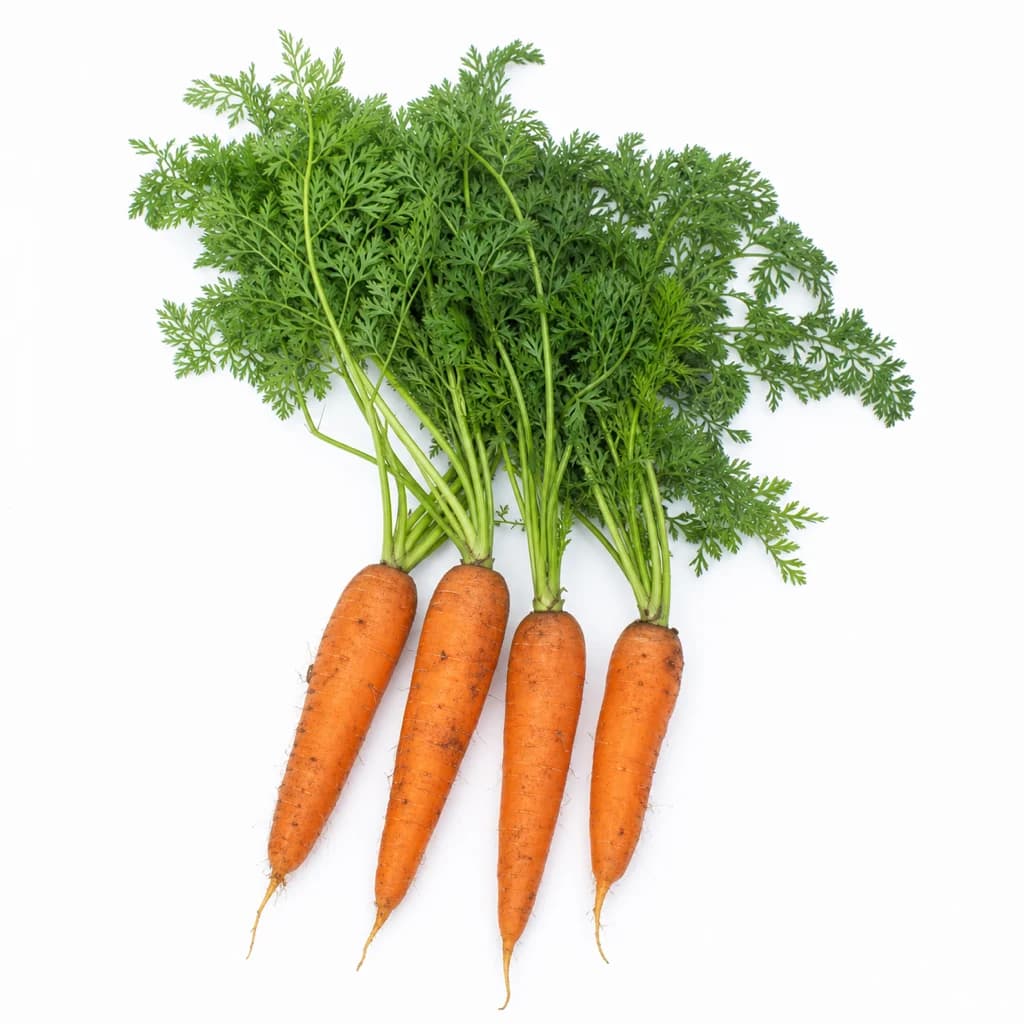
Carrot
Sweet, crunchy root — raw, roasted, or the base of a sofrito
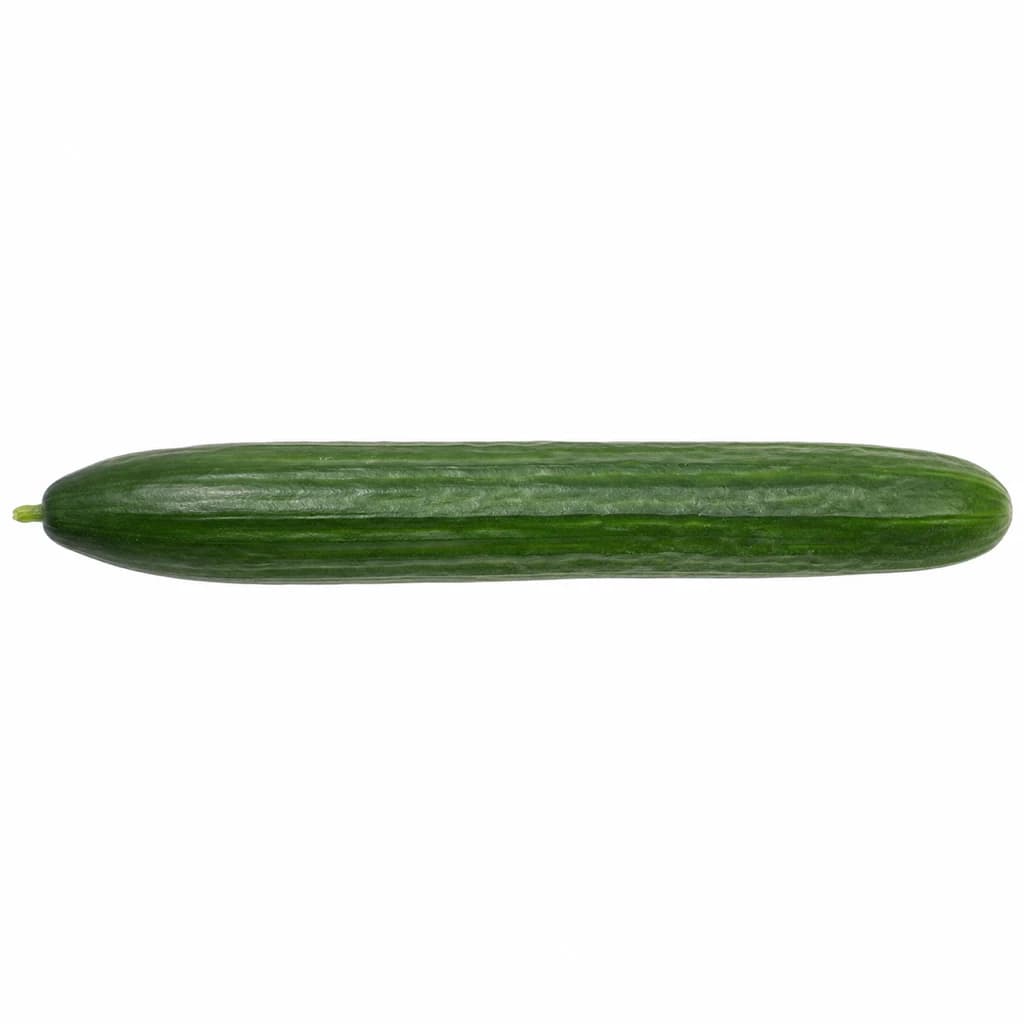
Cucumber
Cool, crisp, and watery — for salads, pickles, and tzatziki

Lettuce
Crisp leaves for salads, wraps, and a fresh crunch