Natural form
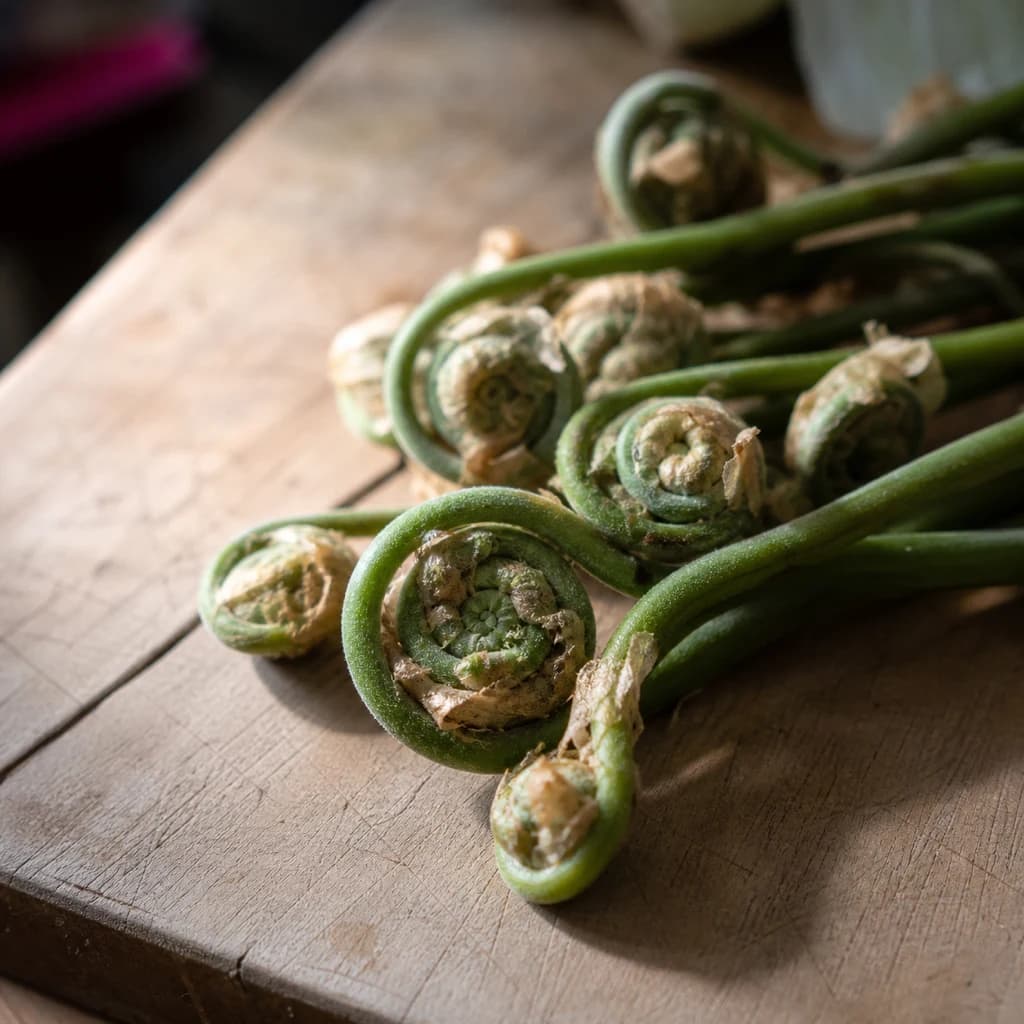
Fresh bracken fern fiddleheads coiled tightly before harvest, showing the plant's distinctive curled shoots.
Shows the plant in its raw, recognizable state — the tightly coiled fiddlehead form that identifies bracken fern at harvest.
Produce
Bracken Fern
Young fern shoots (gosari) blanched and seasoned in Korean cooking.
Bracken fern (gosari) refers to the young curled shoots of the bracken plant, a key vegetable in Korean cuisine. They are blanched, dried, then rehydrated and seasoned for namul side dishes and bibimbap, with a chewy texture and mild, earthy flavor. Proper cooking and soaking are required before eating.
Bracken fern (Pteridium aquilinum) is one of the most widely distributed plants on Earth, thriving on every continent except Antarctica. In Korean cuisine, the young fiddleheads are called gosari (고사리), harvested in spring when the fronds remain tightly coiled. These young shoots have a mildly bitter, grassy, earthy character with subtle vegetal sweetness when properly prepared—qualities that make them prized in the Korean namul tradition. What sets properly cooked gosari apart is its pleasing slight chew and remarkable ability to absorb seasoned oils without becoming soggy, making it ideal for mixing into rice dishes.
The preparation of bracken fern is not merely culinary tradition—it reflects an understanding of the plant's toxicity. Bracken fern contains ptaquiloside, a carcinogenic compound that requires multiple blanching and soaking sessions to reduce to safe levels. Korean grandmothers have long emphasized this ritual, passing down meticulous preparation methods that transform potentially dangerous foraged greens into beloved dishes. Fresh gosari appears in Korean markets for only a brief window each spring, tying it to the Korean concept of seasonal eating and making it a celebrated seasonal ingredient. Dried gosari serves as the year-round alternative, reconstituted with the same careful attention to safety before use.
- Measured in
- g
- Storage
- Pantry
Types & varieties
Seasonal; sold in bundles at Korean markets in spring; bright green, tightly coiled fronds with firm, slightly crunchy texture
Rehydrated before use; darker color, more concentrated flavor; available year-round and requires same blanching-soaking protocol
Same species; preparation methods differ—often simply sautéed with butter and garlic in Western cooking rather than the multi-step Korean process
Understanding Bracken Fern's Place in Korean Cooking
Gosari appears in the classic namul lineup, standing as one of the traditional namul ingredients that define a Korean table. The seasonal nature of fresh gosari—available only in spring—has made it a celebrated ingredient tied to the Korean concept of seasonal eating. Its mildly bitter profile balances richer dishes, and its firm texture holds up well in mixed rice preparations, which explains its enduring presence in bibimbap and rice bowls across generations.
- Namul (seasoned vegetable) is the most traditional preparation, dressed with sesame oil, soy sauce, garlic, and sesame seeds
- Fresh gosari commands premium prices in spring markets due to its short harvest window and labor-intensive preparation
- The multiple blanching and soaking steps reflect a deep culinary understanding of food safety that predates modern scientific analysis
The Toxicology of Bracken Fern
The ptaquiloside content in bracken fern has been extensively studied and documented. This compound is water-soluble and breaks down with heat, which is why the traditional Korean preparation of repeated blanching and soaking is effective at reducing it to safe levels. Western foraging guides similarly emphasize thorough cooking for all bracken fiddleheads. The preparation ritual is not optional or cultural superstition—it is food safety practice derived from generations of observation and refined through tradition.
- Blanching alone is insufficient; repeated soaking in fresh cold water is essential for leaching water-soluble compounds
- The process takes 90 minutes to 2 hours minimum; rushing this step compromises both safety and flavor
- Mature, unfurled fronds concentrate more ptaquiloside than young fiddleheads—harvest timing matters
Common uses
Tips & pitfalls
- Harvest or buy young fiddleheads before they unfurl—mature fronds are bitter, tough, and contain higher levels of harmful compounds
- Always blanch gosari for 2–3 minutes before any other preparation; this step is non-negotiable for safety
- Change the soaking water 2–3 times, letting gosari sit in fresh cold water for at least 30 minutes each time
- For dried gosari, soak in warm water for 30–40 minutes until fully rehydrated, then blanch and soak following the same safety protocol
- Do not overcook during blanching—2 minutes is sufficient; over-blanching destroys the firm, slightly crunchy texture
- Store fresh gosari unwashed in a damp paper towel in the refrigerator; wash only before cooking
- Add a small amount of sugar when seasoning namul to balance the bitterness—this is standard practice in Korean cooking
- Never eat bracken fern raw or underprepared; the ptaquiloside content requires proper heat treatment and leaching
- Test for doneness by tasting a piece after preparation—it should be tender with a mild bitter note, not raw-tasting or mushy
Nutrition
Energy
142 kJ · per 100 g
Where the calories come from
Protein
4.6g
9% DV
Carbs
5.5g
2% DV
Fat
0.4g
1% DV
Sodium
1mg
0% DV
Source · USDA FoodData Central · Fiddlehead ferns, raw
View on FDC →In the shops
Matched grocery products
No matched grocery products for Bracken Fern yet.
Good to know
- Korean Name
- 고사리 (gosari)
- Scientific Name
- Pteridium aquilinum
- Plant Family
- Dennstaedtiaceae (bracken fern family)
- Harvest Season
- Spring, typically April–May when fronds are still tightly coiled fiddleheads
- Part Used
- Young, unfurling fronds (fiddleheads); mature fronds are too fibrous and bitter
- Flavor Profile
- Mildly bitter, grassy, earthy, with subtle vegetal sweetness when properly prepared
- Primary Regions
- Korea, Japan, China, parts of Europe and North America; widely foraged in mountainous regions of Korea
- Toxicity
- Contains ptaquiloside; requires blanching and repeated soaking to reduce carcinogenic compounds
- Shelf Life
- Fresh: 2–3 days refrigerated; dried: up to 6 months in airtight container
Substitutes
- Ostrich Fern Fiddleheads — North American variety; similar appearance and use in cooking; requires same careful preparation for safety
- Mugwort (ssuk) — Different flavor (more aromatic and bitter) but similar texture in namul preparations; not a close flavor substitute
- Dried Radish Greens (mootsae) — Different flavor but similar role as a bitter namul ingredient in Korean cooking
- Spinach (sigeumchi) — Not a flavor substitute but provides similar green vegetal element in bibimbap and rice dishes
Pairs with
Also called
Gosari · Bracken Fern · Fiddlehead Fern
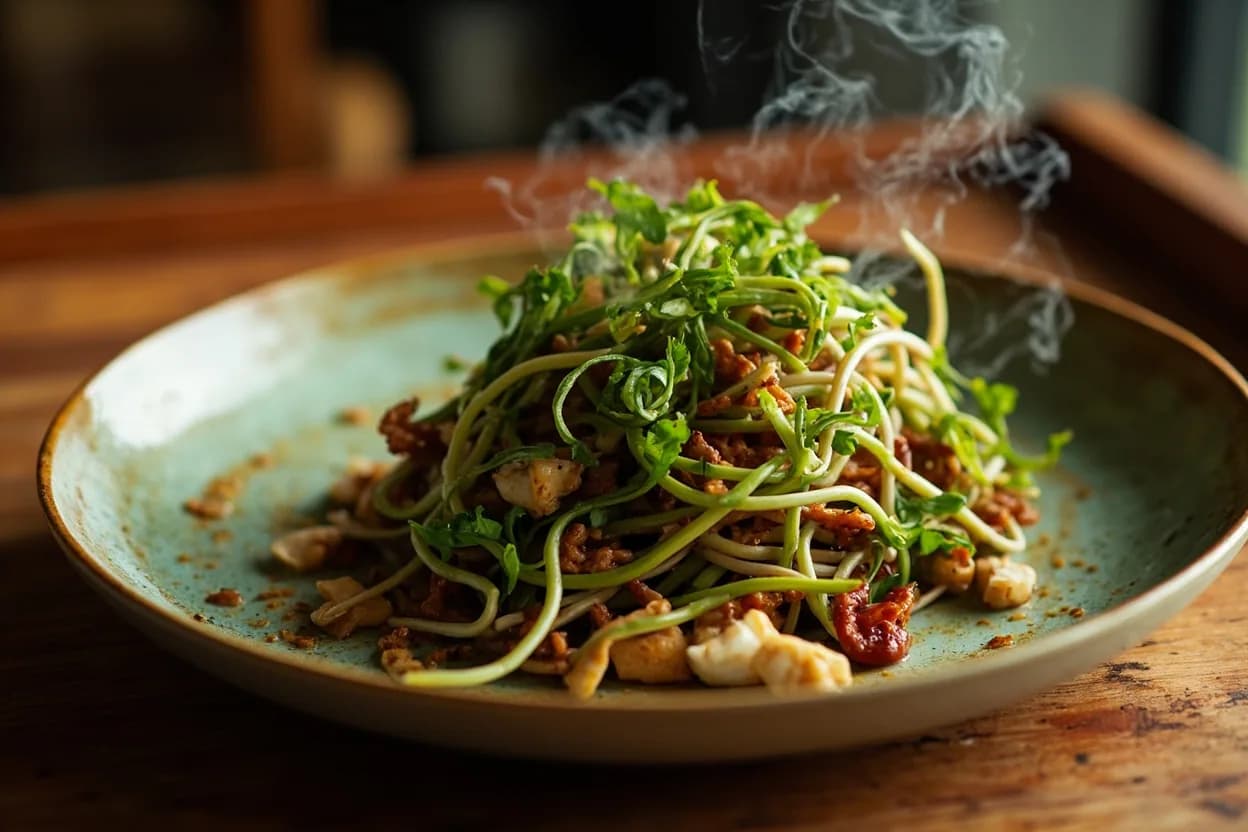
Appears in these dishes
Related
Tomato
Juicy, sun-sweet fruit for sauces, salads, and slow-cooked depth
Yellow Onion
The aromatic backbone of soups, sofritos, and braises
Garlic
Pungent cloves that perfume nearly every savory dish
Lemon
Bright, acidic citrus that wakes up almost any dish
Potato
Humble, hearty staple — roast, mash, fry, or boil
Carrot
Sweet, crunchy root — raw, roasted, or the base of a sofrito
Cucumber
Cool, crisp, and watery — for salads, pickles, and tzatziki

Lettuce
Crisp leaves for salads, wraps, and a fresh crunch