Natural form
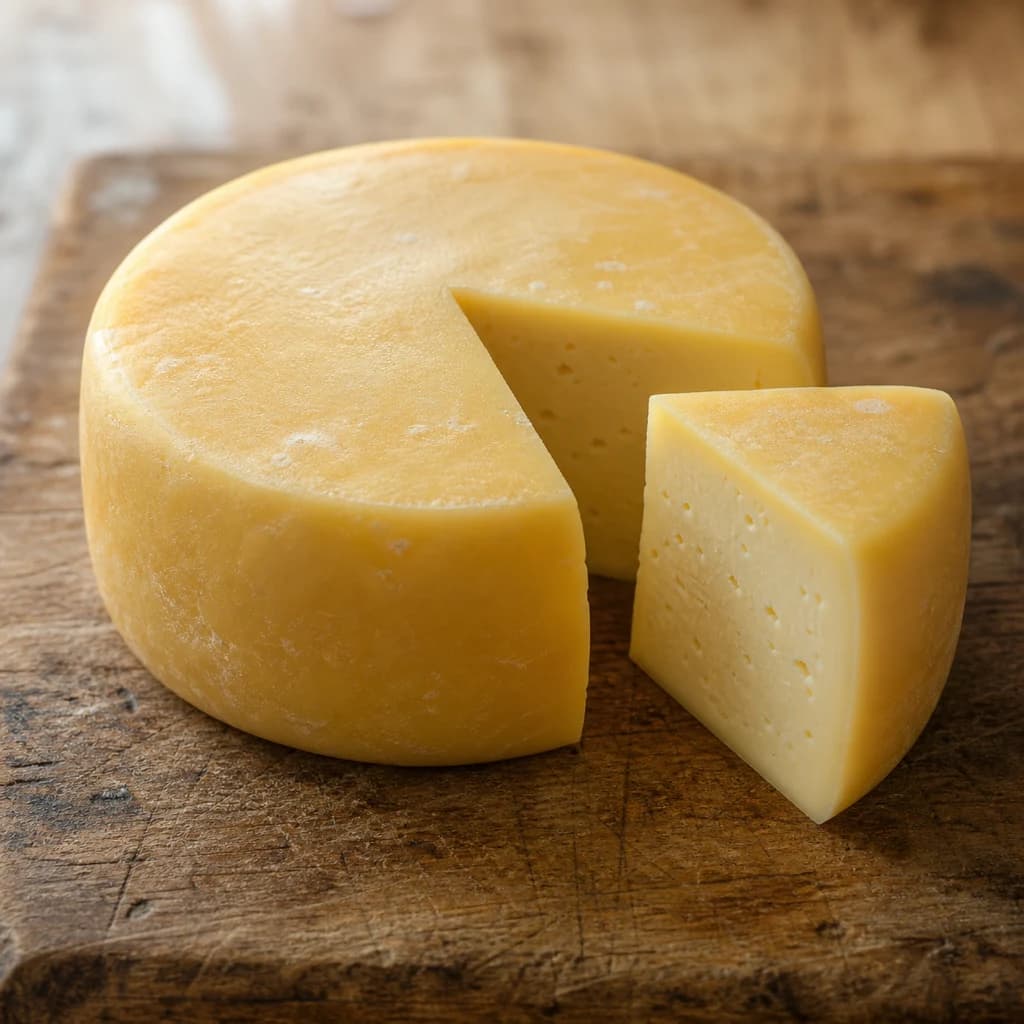
A whole wheel of cașcaval rests on a wooden board, showing its pale yellow rind.
Shows the cheese in its intact wheel form so readers recognize its shape, size, rind color, and texture at a glance.
Dairy & Eggs
Cașcaval
Semi-hard Balkan stretched-curd cheese, mild and meltable, sliced or fried.
Cașcaval is a semi-hard yellow cheese made from sheep's or cow's milk across Romania, Bulgaria, and the Balkans, using a stretched-curd technique like Italian caciocavallo. It is mild, salty, and melts well, used in sandwiches, grilled (cașcaval pané), or grated over dishes. Aged versions become sharper and firmer.
Cașcaval is a semi-hard stretched-curd cheese made across the Balkans and Romania, produced by the same pasta filata technique used for mozzarella and provolone. The cheese is heated and worked in hot whey or brine until it develops its characteristic smooth, elastic texture and the ability to stretch when melted. Its name derives from Turkish kaşar, which itself comes from Arabic qasr meaning fortress—a nod to the cheese's historical importance as a storable protein source in the region. Young cașcaval is pale yellow, mild, and buttery with a slight tang; as it ages, it becomes firmer, nuttier, and more complex in flavor. The cheese occupies the same structural role in Balkan and Romanian cooking that mozzarella holds in Italian cuisine: a versatile, meltable cheese used equally in raw preparations, fried dishes, and baked gratins. Its excellent stretch-and-hold behavior makes it indispensable for dishes where stringy, molten cheese is the point.
The stretched-curd method is what sets cașcaval apart from other semi-hard cheeses like Gouda or young cheddar. When heated, the curd proteins align and retain their elasticity, allowing the cheese to form long, satisfying pulls rather than pooling into a greasy smear. This property is exploited fully in fried preparations like cașcaval pane, where a thick slice develops a golden breaded crust while the interior melts into a creamy, stretchy core. In baked dishes—burek, moussaka, gratins—the cheese forms a cohesive, golden top layer that pulls away in sheets. Cașcaval is typically sold in large wheels or smaller rounds, but pre-sliced packages are increasingly common in markets outside the Balkans. Smoked variants, particularly from Serbia, add a woodsy, savory dimension that pairs exceptionally well with honey or bold condiments.
Cașcaval's mild flavor profile makes it a forgiving ingredient: it won't overwhelm delicate vegetables or compete with strong cured meats and pickles. This adaptability has helped it spread beyond its traditional range—Romanian and Serbian brands appear in Central and Eastern European grocery stores throughout Europe and North America, and well-stocked supermarkets often carry it near specialty cheeses. The cheese performs best in applications where its melting and stretching properties are the star, but it also holds its own on a simple bread plate with olives and charcuterie. Understanding whether you have a young, mild cașcaval (for melting) or an aged, firmer cașcaval maturat (for grating) is the single most important decision in cooking with it.
- Measured in
- g
- Storage
- Fridge
Allergens
Types & varieties
Mild, pale yellow; commonly sold pre-sliced; young versions dominate retail; aged variants are firmer and more flavorful
Especially Zlatibor Kačkavalj (protected designation); often richer, deeper colored, more pronounced flavor; frequently smoked
Two styles: Kashkaval vitosha (young, meltable) and Kashkaval djado (aged, hard, used for grating)
A preparation style rather than a distinct variety—thick slices breaded in flour, egg, and breadcrumbs, fried until golden; the canonical Balkan fried cheese
Cold-smoked or hot-smoked, particularly Serbian; adds woodsy, savory depth; excellent with honey or bold condiments
Pasta Filata: The Technique Behind the Stretch
The pasta filata (Italian for 'stretched curd') method is what gives cașcaval its distinctive elastic texture. Curd is heated in hot whey or salted water, then kneaded and stretched until the proteins align into long, pliable strands. This process, also used for mozzarella, provolone, and scamorza, is what allows the cheese to stretch in long, satisfying strings when melted—behavior that distinguishes it from cheeses like cheddar or Gouda that melt into pools. The technique requires fresh, high-quality curd with good acidity and moisture levels; poorly made curd will not stretch properly regardless of heat application.
- The curd is typically heated to 60–70°C (140–160°F) in whey or brine
- Stretching must happen while the curd is hot and pliable—once cool, it loses elasticity
- Salt is often added during stretching for flavor and preservation
- Regional variations exist in milk type, stretching methods, and aging protocols
Young vs. Aged Cașcaval: Choosing the Right One
The age of cașcaval determines its culinary function. Young cașcaval (cașcaval proaspăt or immature) is pale, pliable, and sliced easily; it melts smoothly and stretches reliably, making it the choice for frying, baking, gratins, and anywhere the cheese should become molten. Aged cașcaval (cașcaval maturat) develops a firmer, drier texture and a more complex, nutty, sharper flavor—but it loses some melt-ability and tends to clump rather than flow. Use aged cașcaval for grating over pasta, salads, or baked dishes where you want flavor without excessive melting. For breading and frying, always select the youngest, most pliable cașcaval you can find.
- Check the label: 'tânăr' (Romanian) or 'mlad' (Serbian) indicates young; 'maturat' or 'star' indicates aged
- Firm, dry aged cașcaval will not give you the molten interior you want in fried preparations
- Young cașcaval should spring back when pressed lightly; avoid packages with excess liquid or slimy surfaces
- If shopping from a deli, ask for the freshest wheel rather than pre-cut slices for best melting performance
Common uses
Tips & pitfalls
- Slice thickly (at least 1 cm) when frying—thin slices melt too quickly and lose structural integrity before the breading browns properly
- Bring cold cașcaval to near room temperature before frying or melting; cold cheese resists even cooking and the interior may stay raw while the exterior burns
- Do not over-fry: cașcaval continues cooking from residual heat; remove from oil when pale gold—it will firm as it rests
- For baked dishes requiring smooth melt, grate or slice thinly; for stringy pulls in fried dishes, keep slices thick and work quickly
- Avoid high-moisture substitutes—excess water causes breading to separate and prevents proper browning during frying
- When purchasing, press the surface lightly: it should spring back; avoid packages with excessive liquid or a slimy surface
- Aged cașcaval grates better and has more complex flavor, but does not melt smoothly—reserve it for grating, not melting applications
- Store with wax paper first, then plastic wrap—direct plastic contact promotes mold growth; change wrapping if moisture accumulates
- If cașcaval dries out, wrap in a damp (not wet) paper towel inside a sealed bag for a few hours to restore some pliability before using
Nutrition
Nutrition
No USDA FoodData Central match for Cașcaval yet. We surface a per-100 g profile once a generic whole-food entry is matched and verified.
In the shops
Matched grocery products
No matched grocery products for Cașcaval yet.
Good to know
- Origin
- Balkans – Romania, Serbia, Bulgaria, and neighboring countries; name from Turkish kaşar (from Arabic qasr, fortress)
- Primary Milk
- Cow's milk (occasionally sheep's or buffalo's milk)
- Texture
- Semi-hard to hard; smooth and slightly elastic; yields long, stringy pulls when melted
- Color
- Pale to deep yellow; deeper color from annatto or longer aging
- Flavor
- Mild and buttery when young; nuttier and sharper when aged; slight tang
- Aging
- Weeks to months; young cașcaval melts smoothly, aged versions are firmer and more complex
- Melting
- Excellent—stretches rather than pools; ideal for gratins, fried cheese, and baked dishes
- Storage
- Refrigerate wrapped in wax paper then plastic; use within 2–4 weeks; can be frozen but texture may suffer
Substitutes
- Scamorza — Italian stretched-curd cheese; nearly identical texture and melting behavior; slightly more pronounced tang
- Provolone (young) — Excellent melt, mild flavor, good stretch; widely available in most markets
- Mozzarella (part-skim) — Acceptable but less flavorful; better melt than fresh mozzarella; best for baking, not ideal for frying
- Kashar or Turkish Kaşar — Direct regional relative; similar flavor and melting; often slightly saltier
- Gouda (young) — Melts smoothly and has a mild, buttery flavor; widely available; lacks the slight tang of cașcaval
Also called
Kashkaval
Appears in these dishes

Related

Whole Milk
Rich, full-fat milk for drinking, coffee, sauces, and baking
Butter
Golden fat for searing, baking, and finishing a sauce
Yogurt
Tangy, creamy culture for breakfast, sauces, and marinades
Cheddar Cheese
Sharp, melty cheese for sandwiches, gratins, and grating

Skim Milk
Fat-free milk for lighter drinking, coffee, and cooking
Heavy Cream
Rich cream that whips, enriches sauces, and sets ganache

Sour Cream
Tangy, thick cream for dolloping, baking, and dips
Mozzarella
Soft, milky cheese that melts into stretchy pizza pulls