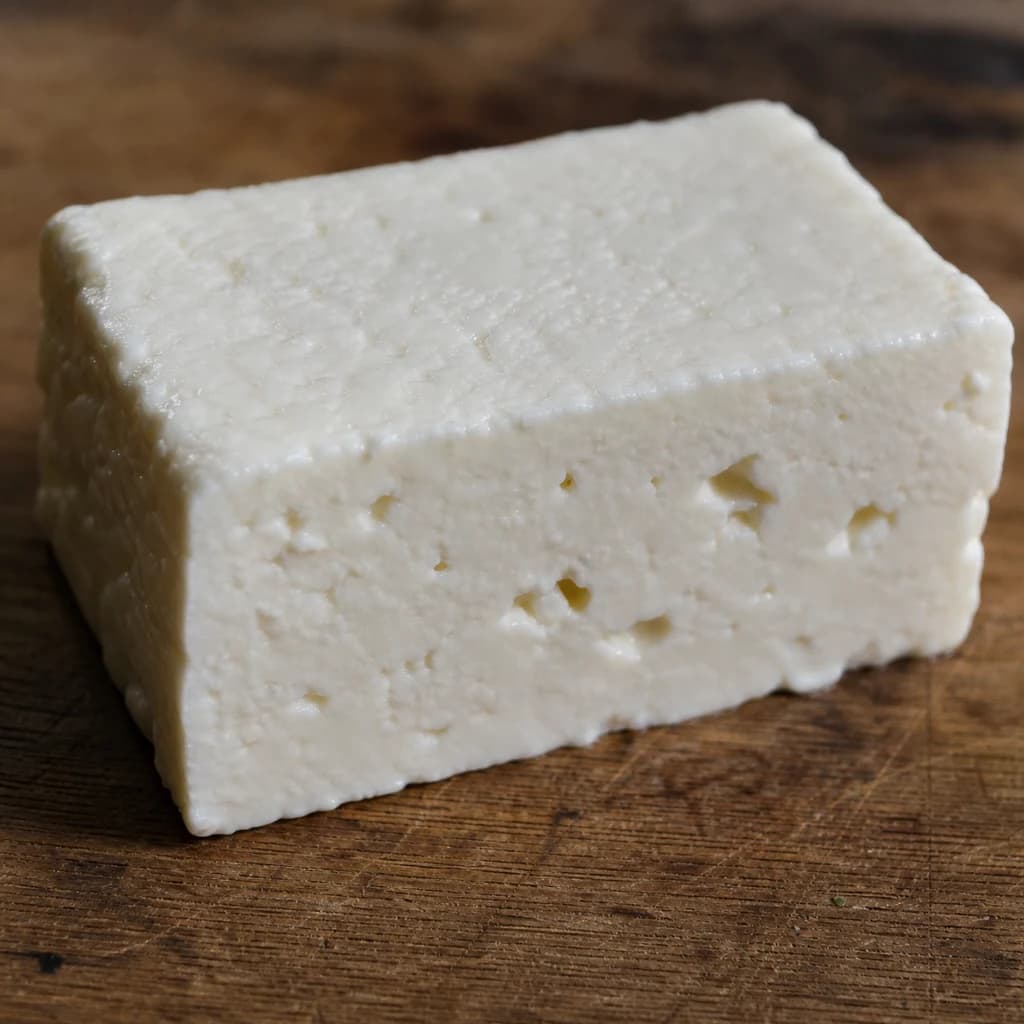
Natural form
A firm block of Chanakh cheese resting on a wooden board, showing its pale ivory surface.
Establishes the cheese's characteristic firm block shape, pale color, and slightly rough brined exterior so readers can identify it at a glance.
Dairy & Eggs
Chanakh Cheese
Armenian brined sheep- or cow's-milk cheese, salty and firm like feta.
Chanakh is an Armenian brined cheese made from sheep's or cow's milk, ripened in salt brine in clay pots. It is firm, salty, and slightly tangy, comparable to feta or telemea. It is eaten as a table cheese with bread and herbs or added to salads and pastries.
Chanakh is the quintessential brine cheese of Armenian cuisine, a staple found in virtually every Armenian refrigerator and considered as essential to the national pantry as salt or bread. It belongs to the extended family of Mediterranean brined cheeses that includes feta, akkawi, and sirene, but carries its own distinct identity rooted in the pastoral cheesemaking traditions of the Armenian highlands. The cheese is made by curdling heated milk with rennet, pressing the curd into molds, then submerging the finished wheels in a strong brine solution where it ages for a minimum of three weeks, developing its characteristic sharp, salty, and pleasantly tangy flavor. In Armenia proper, the finest chanakh comes from spring and summer milk when sheep graze on alpine meadows, yielding a richer, more complex cheese with distinctive lanolin notes—though cow's milk and blended versions have long been standard, especially in diaspora production. Its firm yet crumbly texture and assertive brine character make it immediately recognizable and deeply embedded in Armenian culinary identity, appearing at nearly every meal from humble family dinners to holiday feasts.
What distinguishes chanakh from other brine cheeses is its assertive saltiness and the way that brine aging transforms the texture over time—younger cheeses are denser and chewier, while properly aged specimens crumble cleanly under pressure. The high salt content serves as both preservative and flavor agent, giving chanakh its signature punch that anchors rather than overwhelms dishes when used with understanding. The cheese is almost always sold and stored submerged in brine within blocks or rounds, and this brine is not merely packaging—it is a usable ingredient with intense savory depth that can replace seawater in fish preparations or braises. When you encounter chanakh in an Armenian kitchen, you are seeing a living culinary tradition: the same methods used in village households for generations, now adapted for commercial production but fundamentally unchanged in spirit and practice.
For the home cook, chanakh rewards attention to a few key principles. Its saltiness means you must always taste before seasoning a dish further—adding the cheese last and tasting as you go prevents the common mistake of creating an oversalted finished product. The texture shifts dramatically with temperature: cold from the refrigerator, it is rock-hard and nearly impossible to cut cleanly; at room temperature it becomes yielding and crumbly, ideal for salads and meze. When frying, the high water content means moderate heat is essential to avoid burning the exterior while the center remains cold. These are not complications—they are the practical knowledge that transforms a humble ingredient into an everyday culinary resource, and they reflect how Armenian cooks have thought about chanakh for centuries.
- Measured in
- g
- Storage
- Fridge
Allergens
Types & varieties
Traditional version; richer, more complex flavor with distinct lanolin notes; preferred in Armenia proper and considered the finest quality
Milder and less tangy than sheep's milk versions; more common in diaspora production; lighter color and softer flavor
Blend of sheep and cow milk; balances traditional character with broader accessibility and gentler flavor
Traditional village-style production; often hand-pressed and naturally brined; variable quality but authentic character
Understanding Brine Aging
The brine immersion that defines chanakh is not simply a storage method—it is an active part of the cheesemaking process. As the cheese ages in salt solution, moisture gradually migrates out while salt penetrates inward, concentrating flavor and creating the firm, dense interior. This process also explains why chanakh is always sold submerged: removing it from brine causes the surface to dry, harden, and lose the complex brine-developed flavor. When selecting chanakh at a market, look for pieces taken directly from the brine container rather than pre-packaged chunks that may have dried edges.
- A minimum of 3 weeks aging in brine develops the characteristic tangy, sharp flavor
- The brine itself becomes more complex over time, absorbing notes from the cheese
- Commercial chanakh is often younger (3-6 weeks) than traditional village versions which may age 2-3 months
Regional Preferences
Within Armenia, chanakh preferences vary by region and personal taste. Eastern Armenian households often favor slightly younger, saltier versions with a firmer bite, while western Armenian diaspora communities (descended from communities in Turkey, Syria, and Lebanon) sometimes prefer a milder, more crumbly style influenced by local feta traditions. These are not hard rules but tendencies worth knowing when seeking out authentic chanakh—asking for the "village style" or "spring milk" version at a specialty shop often yields the traditional product rather than the diaspora-standard variety.
- Spring and summer production from pastured sheep yields the most complex flavor
- Winter milk chanakh is usually made from stored fall milk and has a simpler, flatter flavor profile
- Some producers mark their wheels with the season of production
Common uses
Tips & pitfalls
- Always taste chanakh before adding salt to a dish—its inherent saltiness may make further seasoning unnecessary
- Remove from brine and let drain on paper towels for 10-15 minutes before using in salads if you want less diluted briny flavor in the finished dish
- When frying chanakh, use moderate heat—the high water content causes burning on high heat before the interior warms through
- The clean, fresh brine itself makes an excellent substitute for seawater in fish dishes, braises, or anywhere you want salty depth
- To reduce saltiness for stuffing or light applications, soak chunks in cold water or milk for 30 minutes before using
- If the cheese crumbles unevenly when cutting, let it reach room temperature—cold brine cheese is extremely firm and difficult to slice cleanly
- Do not freeze chanakh—brined cheeses develop a grainy, watery texture when frozen and thawed that ruins their character
- When substituting chanakh in recipes calling for other cheeses, add it toward the end of cooking to preserve its texture rather than melting into oblivion
Nutrition
Energy
1628 kJ · per 100 g
Where the calories come from
Protein
25.6g
51% DV
Carbs
1.6g
1% DV
Fat
31.1g
40% DV
Fiber
0g
0% DV
Sugars
1.6g
of which
Sodium
800mg
35% DV
Source · USDA FoodData Central · approx. Cheese, fontina
View on FDC →In the shops
Matched grocery products
No matched grocery products for Chanakh Cheese yet.
Good to know
- Origin
- Armenia and Armenian diaspora communities in the Middle East and Mediterranean
- Type
- Brined cheese, feta-style; aged minimum 3 weeks in brine solution
- Milk
- Traditionally sheep's milk; also made with cow's milk or a blend of both
- Texture
- Firm and dense when cold, crumbly when cut at room temperature
- Flavor
- Salty and tangy with pronounced brine character; sheep's milk versions are richer with subtle lanolin notes
- Color
- White to ivory, sometimes with small eyes in certain batches
- Salt Content
- High; typically 4-6% in the finished cheese plus additional brine immersion
- Form
- Sold and stored submerged in brine as blocks or rounds
Substitutes
- Feta (Greek or Bulgarian) — The closest Western equivalent; Greek sheep's milk feta is most comparable in flavor and texture, though chanakh is typically saltier and has a more pronounced brine character
- Akkawi — Lebanese brine cheese; milder and less tangy than chanakh; works well in cooked applications where the subtler flavor will not be overwhelmed
- Sirene (Village Cheese, Bulgaria) — Has a similar brined, salty character and crumbly texture; a reliable substitute with its own Eastern European identity
- Ricotta Salata — Saltier, dried ricotta; not brined but works for salads and cold applications; crumbles similarly but lacks the tang and brine-developed complexity of chanakh
Pairs with
Related

Whole Milk
Rich, full-fat milk for drinking, coffee, sauces, and baking
Butter
Golden fat for searing, baking, and finishing a sauce
Yogurt
Tangy, creamy culture for breakfast, sauces, and marinades
Cheddar Cheese
Sharp, melty cheese for sandwiches, gratins, and grating
Skim Milk
Fat-free milk for lighter drinking, coffee, and cooking
Heavy Cream
Rich cream that whips, enriches sauces, and sets ganache

Sour Cream
Tangy, thick cream for dolloping, baking, and dips
Mozzarella
Soft, milky cheese that melts into stretchy pizza pulls