Proteins
Chianina Beef
Lean, ancient Tuscan cattle breed — the beef behind the bistecca alla Fiorentina.
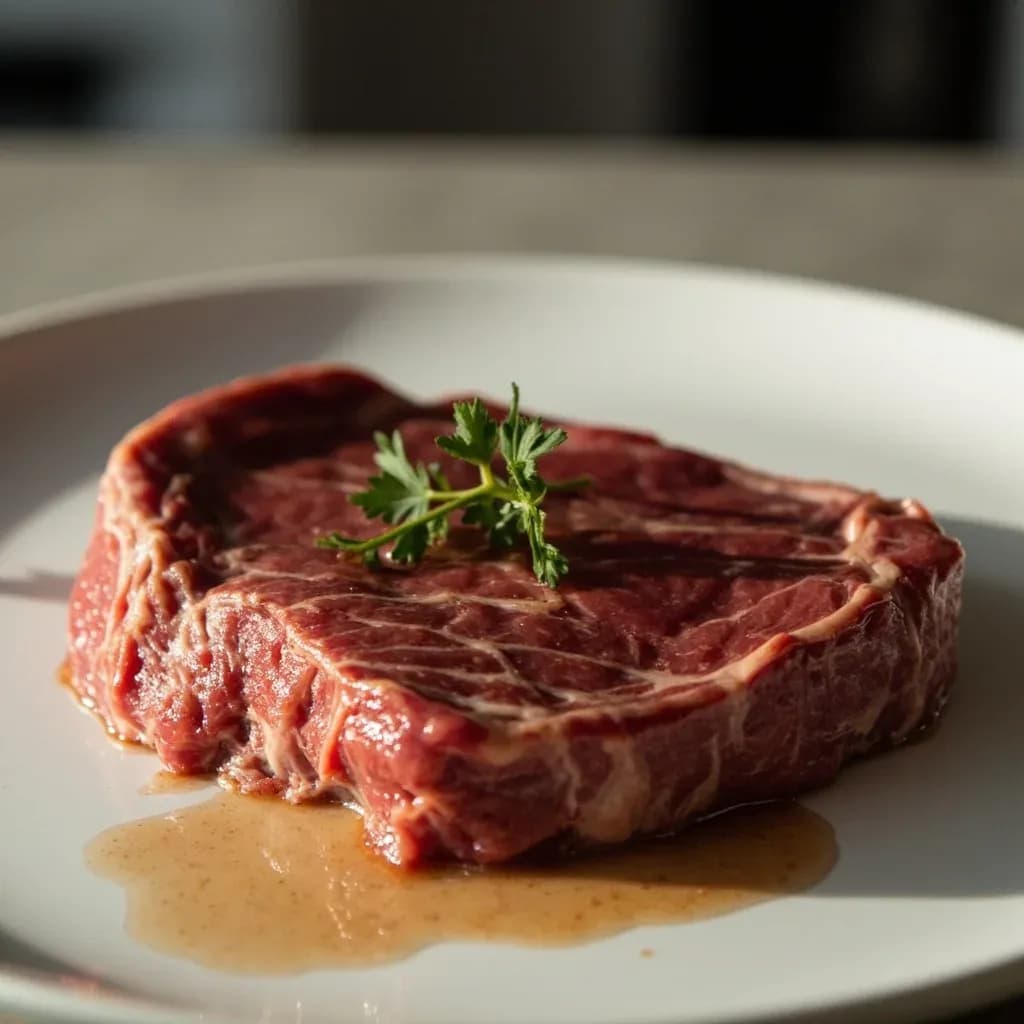
Chianina is one of the oldest and largest cattle breeds, raised in Tuscany and prized for lean, flavorful beef. It is the traditional source of the bistecca alla Fiorentina, a thick T-bone grilled rare over wood coals and seasoned only with salt, pepper, and olive oil. The meat is tender with a clean, mineral flavor despite its leanness.
Chianina is one of the oldest and largest cattle breeds in the world, originating in the Chiana Valley of Tuscany where it was bred for centuries as a draft animal by Etruscan and Roman farmers. Standing up to 180 centimeters at the withers, these white-coated animals with darkly pigmented skin were essential to agricultural life across central Italy until postwar mechanization nearly drove the breed to extinction. The breed's recovery, spearheaded by the Associazione Italiana Allevatori through strict herd book registration, transformed it from a working animal into a prized beef breed prized for its exceptional leanness and fine-grained texture.
The meat of the Chianina is unmistakable: bright cherry-red with a fine fiber structure and remarkably little external fat, yielding a lean-to-fat ratio of approximately 80:20. This leanness is not a deficiency but a defining character—the breed's myostatin gene operates differently from the Piedmontese nt821 mutation, producing naturally slender carcasses from traditional conformation and feeding rather than a genetic muscle anomaly. At 18–24 months of slaughter age, the meat develops an intensity of beef flavor that deepens with age, distinguishing it from younger, milder veal.
The breed's highest calling is the bistecca alla Fiorentina, the monumental thick-cut T-bone steak that defines Tuscan steak culture. Cut from the loin at a minimum of three centimeters thick and weighing at least one kilogram, this preparation demands beef of exceptional quality—lean enough to survive the intense heat without excess fat rendering, yet flavorful enough to stand with nothing more than olive oil, salt, and rosemary. Outside Italy, true Chianina is difficult to source; most exported "Chianina-style" beef comes from crossbred animals, making direct breed authenticity worth verifying with your butcher when seeking the genuine article.
- Measured in
- g
- Storage
- Fridge
Types & varieties
A Piedmontese variety originating in the Aosta Valley; introduced to Piedmont in the 19th century; considered even more tender than standard Chianina
Uncastrated bulls yielding more intensely flavored but tougher meat; increasingly rare in commercial production
Young calf under 8 months; lighter, more delicate meat suited to scaloppine and rapid-cook preparations
Grain and hay finished for 4–6 months; higher marbling while retaining breed character; traditional Parmigiano-Reggiano dairy region practice
The Bistecca alla Fiorentina Standard
This preparation is not casual cooking—it is a discipline. The bistecca must be cut from the loin section with the T-bone intact (taglio di scamone con osso), weighed at minimum one kilogram, and sliced no thinner than three centimeters. The traditional standard calls for two people to share a steak this size. Cooking requires white-hot embers, ideally from oak or holly oak, with the steak turned only once after three to four minutes per side for three-centimeter thickness. It is served at the rare end of the spectrum, garnished with nothing but extra-virgin olive oil, coarse sea salt, and optionally a halved garlic clove rubbed across the surface. Any accompaniments—white beans, bitter greens—are side dishes, not the steak itself.
- Request the taglio di scamone con osso specifically from your butcher
- Insist on Chianina or documented Italian breed origin for authenticity
- Cook to rare or medium-rare; anything beyond loses the character of the lean meat
- Serve immediately after resting; bistecca waits for no one
Breed Integrity and the Crossbreeding Threat
During the 1960s and 1970s, Chianina herds were extensively crossbred with French imports including Charolais, severely threatening the breed's genetic purity. The Associazione Italiana Allevatori responded by establishing rigorous herd book registration to preserve Chianina genetics. Unlike the Piedmontese breed, which carries the nt821 myostatin mutation causing double muscling, Chianina beef achieves its characteristic leanness through natural conformation and feeding practices. This distinction matters for flavor: the Chianina's fat content comes from traditional finishing rather than genetic modification, producing a cleaner, more terroir-expressive beef. Outside Italy, 'Chianina' labeling is unreliable; seek documentation of breed origin or purchase through suppliers specializing in Italian beef.
- Verify breed authenticity with documentation when purchasing outside Italy
- Crossbred animals may closely resemble Chianina but lack the true flavor profile
- Italian-bred Chianina from the Chiana Valley represents the authentic expression
Common uses
Tips & pitfalls
- Bring to room temperature 30–45 minutes before cooking; cold meat seizes and cooks unevenly
- Salt only at the last moment before cooking—salting too early draws moisture and dilutes natural flavor
- For bistecca, cook over white-hot embers from oak or holly oak, not open flame; 3–4 minutes per side for 3 cm thickness
- Rest a minimum of 5–8 minutes after cooking, tented loosely with foil; juices must redistribute
- Slice across the grain—the long muscle fibers are evident in this lean cut; correct slicing is the single most impactful technique
- Avoid pressing the steak with tongs during cooking; this squeezes out the flavorful juices you worked to develop
- For braising, sear hard first in a very hot pan to develop fond; deglaze with wine before adding liquid
- The lean character means it overcooks to dryness quickly; err toward lower doneness and trust the heat
- For carpaccio and tartare, ensure the beef is from a source you trust for raw service; Chianina's clean flavor suits these preparations
- When roasting whole loins, tie securely for even cooking and rest thoroughly before slicing
Nutrition
Energy
828 kJ · per 100 g
Where the calories come from
Protein
19.4g
39% DV
Carbs
0g
0% DV
Fat
12.7g
16% DV
Fiber
0g
0% DV
Sugars
0g
of which
Sodium
68mg
3% DV
Source · USDA FoodData Central · approx. Beef, grass-fed, ground, raw
View on FDC →In the shops
Matched grocery products
No matched grocery products for Chianina Beef yet.
Good to know
- Origin
- Chiana Valley, Tuscany, Italy
- Breed type
- Large-framed cattle; white to light gray coat with dark pigmented skin
- Historical use
- Draft animals in Etruscan and Roman times; nearly extinct after WWII mechanization
- Slaughter age
- 18–24 months for beef production
- Carcass weight
- Bulls yield 600–700 kg dressed; steers average 400–500 kg
- Meat characteristics
- Lean, bright cherry-red color, fine fiber, minimal external fat; flavor intensifies with age
- Traditional bistecca cut
- High on the loin with T-bone; minimum 1–1.5 kg, 3–5 cm thick
- Protected status
- Vitellone Bianco dell'Appennino Centrale IGP
- Storage
- 0–2°C; 3–5 days fresh, 7–10 days dry-aged under controlled humidity
- Yield
- 58–62% dressing percentage; 80:20 lean meat to fat ratio
Substitutes
- Fassona (Piedmontese) — Most authentic substitute; shares the lean, fine-grained character with slightly more tenderness
- Marchigiana — Neighboring central Italian breed; similar lean profile and mild beef flavor; second-tier substitute for true bistecca
- Romagnola — Italian breed from Emilia-Romagna; good marbling potential if grain-finished; comparable texture
- Piedmontese — Genetic double-muscling produces exceptionally lean, fine-grained beef; close in spirit but not identical to Chianina
- USDA Prime T-bone or Porterhouse — Substitute only for the steak format; American beef has more marbling but same primal cut; use for T-bone preparation when Chianina unavailable
Pairs with
Also called
Chianina · Tuscan Beef
Appears in these dishes
Related

Egg
The kitchen's everything ingredient — bind, leaven, enrich, or fry

Chicken Breast
Lean, quick-cooking white meat for everyday dinners

Ground Beef
Versatile minced beef for burgers, ragù, tacos, and meatballs

Pork Loin
Lean, tender roasting cut that stays juicy with care

Salmon
Rich, rosy fish that roasts, grills, or cures beautifully

Egg White
Pure protein that whips to airy peaks for meringue and more

Egg Yolk
Rich, golden yolk for custards, mayonnaise, and pasta

Quail Egg
Tiny, speckled eggs for garnishing and elegant bites