Natural form
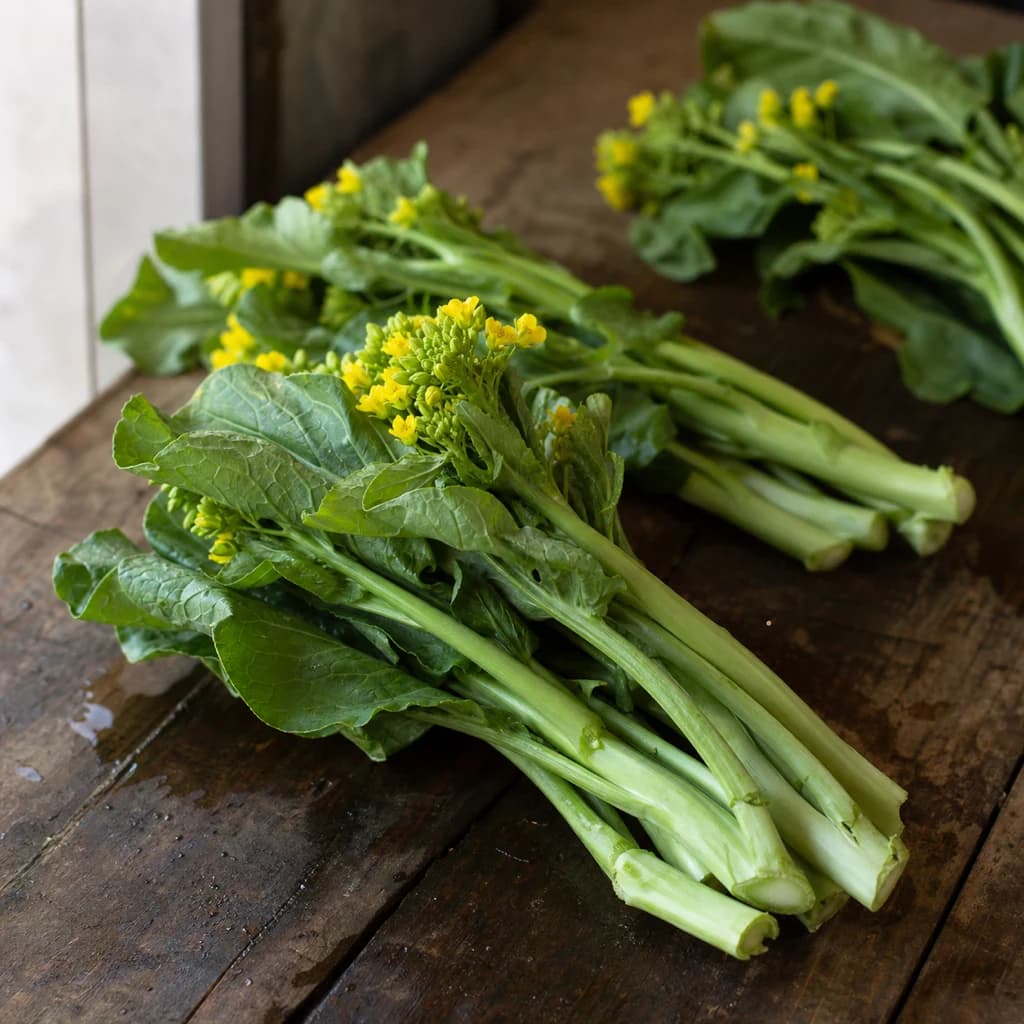
Choy sum bundles showing slender stems, tender green leaves, and small yellow flowers.
Shows the plant's defining visual identity — the yellow flowers that distinguish choy sum from other Chinese greens.
Produce
Choy Sum
Tender leafy green with yellow flowers, quickly blanched or stir-fried in Cantonese cooking.
Choy sum is a leafy Chinese green with slender stems, green leaves, and small yellow flowers, sweeter and more tender than its relatives. It is blanched and dressed with oyster sauce or stir-fried with garlic, cooking in just a couple of minutes. A everyday vegetable across Cantonese and Southeast Asian kitchens.
Choy sum (Brassica rapa var. parachinensis) is a tender leafy green vegetable central to Cantonese and broader Southern Chinese cooking. Distinguished by hollow stems, smooth dark-green leaves, and edible yellow flowers, it belongs to the same species complex as bok choy and gai lan but stands apart through its exceedingly slender stalks and delicate, almost succulent texture. The entire plant is edible—stems, leaves, and flowers alike—requiring only the briefest encounter with heat to transform from raw to perfectly cooked. In Cantonese culinary tradition, choy sum is classified as a fundamental 'green vegetable' (ching chaan), served alongside rice and protein to create a balanced meal. Its mild bitterness and subtle sweetness complement rich, savory sauces without overpowering them, making it one of the most reliable vegetables in the Cantonese repertoire. The flowers not only add visual appeal—bright yellow punctuating glossy green—but also a faint sweetness that signals the vegetable's freshness when barely open.
- Measured in
- g
- Storage
- Fridge
Types & varieties
Harvested at 25–30 days; thinner stems, more delicate, ideal for quick blanching or raw applications
Harvested at 35–45 days; medium stem thickness, the workhorse variety for most restaurant and home use
Harvested at 50+ days; thicker stems, stronger flavor, more prone to fiber—peel outer layers before cooking
Often conflated with choy sum in markets; distinguished by slightly serrated leaf edges and a more pronounced mustardy bite
Distinguishing Choy Sum from Similar Greens
Choy sum's tender hollow stems set it apart from gai lan (Chinese broccoli), which has solid, thick, and noticeably more fibrous stems requiring longer cooking. Bok choy, while also having hollow stems, produces a denser, heavier stalk with a different texture altogether. When shopping, look for plants with bright yellow flowers that are still tight buds—open flowers indicate age, and the stalks will be coarser. The stems should feel snap-fresh, not bendy or wilted. Some markets sell choy sum with roots intact; these roots are edible but need significantly more cooking time or should be trimmed off for standard preparations.
- Hollow stems vs. solid stems (gai lan)
- Edible flowers vs. flower buds that may be removed
- Slender stalks vs. thicker, denser bok choy
Common uses
Tips & pitfalls
- Buy choy sum before flowers fully open—open flowers indicate older, coarser stalks that have passed their prime
- Wash thoroughly by separating individual stalks and rinsing between leaves; soil collects at the base and in leaf crevices
- Never overcook: stems should retain a slight snap. Blanch 30–60 seconds; stir-fry 1–2 minutes maximum
- Select smaller specimens (10–15 cm) for tenderness; larger stalks become stringy and fibrous
- Chinese supermarkets often sell choy sum with roots attached; trim roots for standard dishes or cook them separately for longer preparations
- If stems feel thick and woody, peel the outer fibrous layer with a knife before cooking—this step transforms late-season choy sum
- Season blanching water generously with salt to set the bright green color and add baseline seasoning to the vegetable itself
- For stir-frying, ensure your wok is properly heated and smoking before adding oil and vegetables; cold wok equals soggy greens
Nutrition
Energy
54 kJ · per 100 g
Where the calories come from
Protein
1.5g
3% DV
Carbs
2.2g
1% DV
Fat
0.2g
0% DV
Fiber
1g
4% DV
Sugars
1.2g
of which
Sodium
65mg
3% DV
Source · USDA FoodData Central · Cabbage, chinese (pak-choi), raw
View on FDC →In the shops
Matched grocery products
No matched grocery products for Choy Sum yet.
Good to know
- Botanical name
- Brassica rapa var. parachinensis (also cited as B. chinensis)
- Primary cuisine
- Cantonese
- Edible parts
- Stems, leaves, and yellow flowers
- Stem character
- Hollow, slender, and tender when young
- Cooking principle
- High heat, minimal time—30 seconds to 2 minutes maximum
- Seasonality
- Available year-round; best in cooler months when stalks remain tender
Substitutes
- Gai lan (Chinese broccoli) — Stems are thicker and more fibrous; blanch 30 seconds longer and consider peeling outer layers
- Bok choy — Denser stems work in stir-fries but lack the tender flower stalks and delicate character of choy sum
- Baby bok choy — More succulent stems with similar cooking time; acceptable substitute when choy sum is unavailable
Pairs with
Also called
Sawi · Cai Xin · Chinese Flowering Cabbage
Appears in these dishes
Related
Tomato
Juicy, sun-sweet fruit for sauces, salads, and slow-cooked depth
Yellow Onion
The aromatic backbone of soups, sofritos, and braises
Garlic
Pungent cloves that perfume nearly every savory dish
Lemon
Bright, acidic citrus that wakes up almost any dish
Potato
Humble, hearty staple — roast, mash, fry, or boil
Carrot
Sweet, crunchy root — raw, roasted, or the base of a sofrito
Cucumber
Cool, crisp, and watery — for salads, pickles, and tzatziki

Lettuce
Crisp leaves for salads, wraps, and a fresh crunch