Natural form
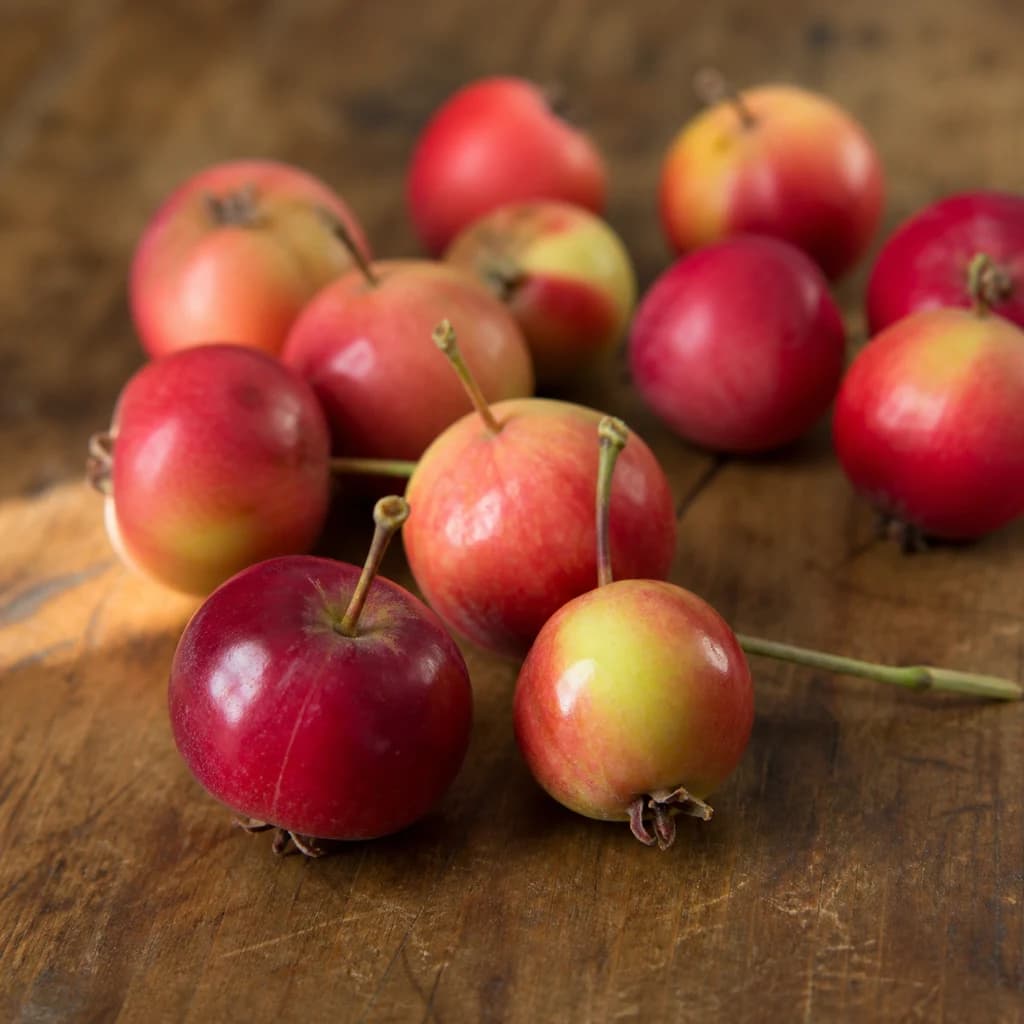
Clusters of wild crabapples on the branch, each fruit under two inches across.
Shows the fruit in its natural harvested state — size, color variation, and clustering habit that distinguish crabapples from cultivated apples.
Produce
Crabapple
Tiny tart wild apple, too sour to eat raw but excellent for jelly and preserves.
Crabapples are small wild apples, usually under two inches, with a sharp, tart and astringent flesh. Too sour to eat raw, they are high in pectin and prized for making jelly, preserves, cider and verjuice, and can be roasted alongside meats. Their flavor sweetens after cooking.
Crabapple is the wild ancestor of the cultivated apple, a small, intensely tart fruit typically measuring 1–2 inches in diameter. While ornamental varieties crowd suburban streets and parklands, the culinary crabapples grown specifically for their fruit offer remarkable versatility in the kitchen. Their extremely high natural acidity and pectin content make them one of the finest ingredients for preserves—a single batch of crabapple jelly sets with minimal added pectin, producing a clear, jewel-like result that commercial pectins struggle to match. The flavor is aggressively sour with subtle astringency, which cooking transforms into something nuanced and complex.
Unlike eating apples, crabapples are unsuitable for raw consumption in any meaningful quantity; the tartness overwhelms rather than refreshes. What makes them invaluable to cooks is what happens when heat breaks down their cellular structure: the harsh malic acid softens into a bright, clean sourness, tannins mellow, and pectin molecules bond to create reliable gel structures. The fruit yields approximately 50–60% juice or pulp after cooking and straining, so plan accordingly when sourcing. Foragers will find that wild Malus species grow throughout North America and Europe on thorny trees or bushy forms—identification is straightforward and there are no dangerous look-alikes, though ornamental street trees should be avoided due to possible pesticide treatment.
The key challenge with crabapple is timing: the fruit must ripen fully on the tree, with seeds turning dark brown before harvest. Underripe specimens are unbearably astringent and no amount of sugar will rescue them. Once properly ripe and cooked, however, crabapple rewards the patient cook with exceptional jellies, complex sauces, and condiments that elevate everything from game birds to aged cheese. The high acidity also makes them a forgiving choice for beginning preservers, as their natural acid content supports safe water-bath canning.
- Measured in
- piece
- Storage
- Fridge
Types & varieties
The most common culinary variety; yellow-red skin, reliably productive, good pectin levels
Deep red fruit; popular in New England for jelly; very tart flesh
Larger crabapple (up to 1.5 inches); less astringent than most; good for sauce
Golden-yellow fruit; mildest flavor; good for sweeter preserves
Sweet enough to eat fresh; still small and tart compared to eating apples
Large crabapple with some sweetness; good for single-variety preserves
Red-skinned, self-fertile ornamental; very high pectin; popular with home preservers
Orange-red elongated fruit; good flavor; widely planted in the UK
Common uses
Tips & pitfalls
- Harvest when fully tree-ripe—seeds should be dark brown, not white; underripe crabapples are unbearably astringent and no amount of sugar corrects them
- For clear jelly, cook whole fruit (washed, stems removed) with just enough water to cover, then strain through cheesecloth overnight without pressing; pressing clouds the jelly
- Test gel readiness by placing a drop of cooked juice in cold water; if it forms a soft gel blob that holds its shape, you have sufficient pectin
- For a cleaner, less bitter flavor in preserves, peel before cooking—the skins can add medicinal bitterness
- Pair crabapple with sweet eating apples (Jonagold, Gala, Mutsu) in pies and sauces to balance aggressive tartness
- Common mistake: overcooking jelly past the gel point, which breaks the gel and produces rubbery texture; stop as soon as the cold-water test passes
- Common mistake: using unripe fruit—this results in harsh, bitter preserves that cannot be salvaged
- Season preserves with fresh ginger, cinnamon, cardamom, or rosemary sprigs for added depth and complexity
- Remove all seeds and core before making large batches of sauce or butter—seeds add trace cyanide compounds and bitter notes
Nutrition
Energy
318 kJ · per 100 g
Where the calories come from
Protein
0.4g
1% DV
Carbs
20g
7% DV
Fat
0.3g
0% DV
Sodium
1mg
0% DV
Source · USDA FoodData Central · Crabapples, raw
View on FDC →In the shops
Matched grocery products
No matched grocery products for Crabapple yet.
Good to know
- Scientific Name
- Malus species (primarily M. angustifolia, M. coronaria, M. sylvestris)
- Origin
- Wild species native to East Asia, Europe, and North America; cultivated forms spread via colonial trade routes
- Season
- Late August through October, depending on variety and climate
- Size
- 1–2 inches (2.5–5 cm) diameter
- Flavor
- Intensely tart and mildly astringent; high natural acidity and pectin content
- Pectin Level
- Very high—excellent natural setting agent for jellies and jams
- Yield
- Approximately 50–60% juice or pulp after cooking and straining
- Key Safety Note
- Remove all seeds before processing—seeds contain trace cyanogenic compounds
Substitutes
- Tart eating apples with added lemon juice — Use Granny Smith or similar; add 1–2 tablespoons lemon juice per pound to approximate acidity; add commercial pectin for jelly
- Cranberries — Similar tartness and pectin level; good for preserves but a distinctly different flavor profile
- Quince — Comparable pectin content and cooking properties; milder flavor; excellent for pastes and jellies
Pairs with
Also called
Crab Apple
Related

Tomato
Juicy, sun-sweet fruit for sauces, salads, and slow-cooked depth

Yellow Onion
The aromatic backbone of soups, sofritos, and braises

Garlic
Pungent cloves that perfume nearly every savory dish

Lemon
Bright, acidic citrus that wakes up almost any dish

Potato
Humble, hearty staple — roast, mash, fry, or boil

Carrot
Sweet, crunchy root — raw, roasted, or the base of a sofrito

Cucumber
Cool, crisp, and watery — for salads, pickles, and tzatziki

Lettuce
Crisp leaves for salads, wraps, and a fresh crunch