Natural form
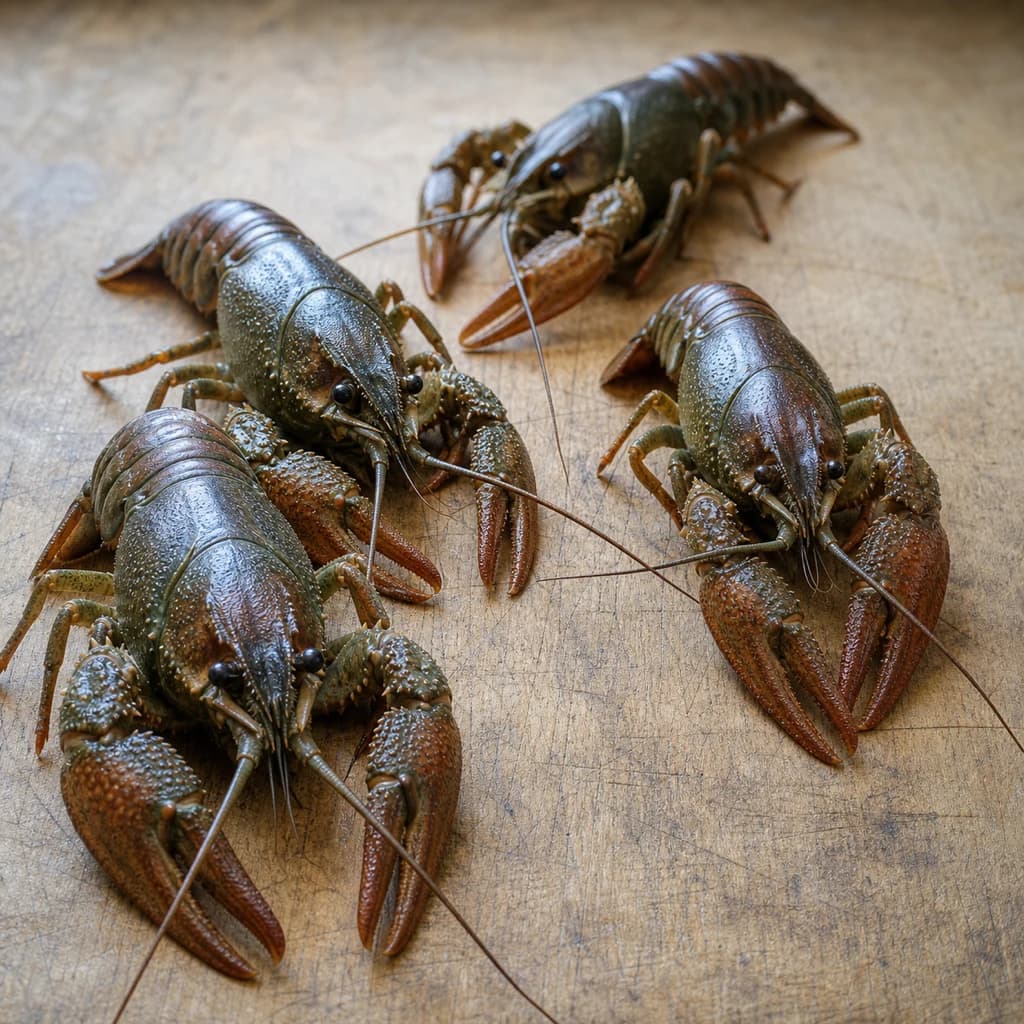
Live whole crayfish display their characteristic claws, segmented shells, and reddish-brown coloring.
Shows the reader exactly what a crayfish looks like in its recognizable whole form before cooking.
Proteins
Crayfish
Small freshwater crustacean used whole, or ground dried as a savory seasoning.
Crayfish are small freshwater crustaceans that taste like a cross between shrimp and lobster, sweet and briny. Whole crayfish are boiled with spices in Cajun and Nordic feasts, while ground dried crayfish is a staple umami seasoning in West African soups and stews. The ground form thickens and deepens the flavor of egusi and pepper soups.
Crayfish are small freshwater crustaceans belonging to the same order as lobsters (Decapoda), though they inhabit rivers, streams, ponds, and swamps rather than the sea. They range from 3 to 15 cm depending on species, with meat concentrated in the tail section and smaller amounts in the claws. Their flavor is distinctly sweet and briny with a delicate lobster-like quality and a subtle earthy undertone that reflects their freshwater habitat—a taste unlike any other American crustacean. Because they bioaccumulate toxins from their environment, sourcing matters enormously: always buy from clean, well-regulated waters, as polluted crayfish can be unsafe to eat.
The Louisiana crayfish industry produces over 90% of the United States' crop, largely in rice-fish rotation systems throughout the Atchafalaya River Basin, making crayfish a cornerstone of Cajun and Creole cuisine. Their commercial season runs roughly March through July, while European and Scandinavian crayfish are traditionally harvested in cooler months when water temperature drops. Despite their small size, crayfish are labor-intensive: the meat represents only about 15–20% of total weight, so a pound of live crayfish yields roughly 3 ounces of tail meat. This scarcity contributes to their cultural prestige in regions where they are prized.
Crayfish appear in preparations from France's Bordelaise to Australia's yabby farms, Sichuan's dried crayfish powder, and Sweden's kräftskiva (crayfish party). The entire crustacean is used—tails cooked and eaten, shells roasted for stock, and dried tails ground into a potent umami seasoning. Their versatility rewards understanding both their delicate nature and their capacity to deliver serious flavor when handled properly.
- Measured in
- g
- Storage
- Fridge
Allergens
Types & varieties
Most commercially important species; native to Southern US; bright red when cooked; firm texture
Pale color when raw; slightly milder flavor; found in Eastern and Central US
Noble crayfish; traditional in French and Scandinavian cuisine; dark green-brown; highly prized; endangered in wild stocks
Pacific Northwest native; larger than European species; invasive in Europe where it displaced native stocks
Australian species; hardy; grows to 20–30 cm; firm white flesh
Australian species; larger than yabby; mild, sweet flavor; farmed commercially
Refers to any small crayfish, especially in Louisiana; most often P. clarkii
Sourcing and Water Quality
Crayfish are bioaccumulators—they absorb and concentrate whatever is in their environment. Historically used as pollution sentinels in freshwater ecosystems, they reflect water quality directly in their flesh. This means sourcing from clean, well-regulated waters is not optional but critical to food safety. The Louisiana industry, which dominates global production, operates largely in managed rice-fish rotation systems with monitored water quality. Wild-caught crayfish from unknown urban or agricultural waterways carry real risk. When buying live, ask your supplier about the source. When buying frozen, choose products from reputable processors who can certify their harvest waters.
- Buy from suppliers who can identify their harvest source
- Avoid wild-caught crayfish from unknown or urban waterways
- Frozen products from certified processors offer traceable sourcing
- If you catch your own, verify water quality before eating
Understanding Crayfish Yields
A common mistake is underestimating how little edible meat a live crayfish yields. The math is unforgiving: a pound of live crayfish (roughly 30–40 specimens at typical market size) produces only about 3 ounces of tail meat. Claws add minimal yield and are often not worth the effort for small species. This yield reality shapes every recipe decision. A dish listing 1 pound of live crayfish as an ingredient will deliver roughly 4–5 tablespoons of actual meat. Plan accordingly and buy by the pound if cooking live, or buy frozen tail meat by the ounce if you need predictable yields. This is why étouffées, gumbos, and boils are built around generous quantities of live crayfish—the communal nature of the dishes compensates for the labor-to-meat ratio.
- 1 lb live crayfish ≈ 3 oz tail meat
- Frozen tail meat eliminates yield guesswork
- Scale recipes by meat weight, not live weight
- Build dishes around generous quantities for authentic results
Common uses
Tips & pitfalls
- Purge live crayfish 12–24 hours in clean, well-oxygenated water with a handful of cornmeal before cooking to clear their digestive tracts—this step is essential for removing grit from the meat
- Cook live crayfish in actively boiling seasoned water for 3–5 minutes maximum; overcooking causes the flesh to turn rubbery and shrink dramatically
- When buying live: select active specimens with intact, uncracked shells; reject any with blackened spots, visible mold, or a foul ammonia-like odor
- For frozen tails: choose IQF (individually quick frozen) for best texture; avoid packages with excessive ice crystals, which indicate refreezing and degraded quality
- Clean tails by peeling and pinching out the dark intestinal vein that runs along the top of the tail—leave it in and you will serve gritty, unpleasant flesh
- Reserve and roast crayfish shells before simmering for stock; this Maillard reaction develops a deeper, more complex base flavor than plain simmered shells
- Substitute 1:1 by weight for lobster in most recipes, but reduce cooking time significantly as crayfish cook much faster than lobster
- Never freeze live crayfish; they must be cooked first—freezing alive causes the shell to separate from the meat and results in mushy texture
- If serving whole at a boil, season heavily with bay leaves, lemons, garlic, cayenne, and salt; crayfish need robust seasoning to shine
- Dried crayfish powder is highly concentrated—use sparingly, starting with ¼ teaspoon, as a seasoning rather than a main ingredient
Nutrition
Energy
322 kJ · per 100 g
Where the calories come from
Protein
16g
32% DV
Carbs
0g
0% DV
Fat
1g
1% DV
Fiber
0g
0% DV
Sugars
0g
of which
Sodium
58mg
3% DV
Source · USDA FoodData Central · approx. Crustaceans, crayfish, mixed species, wild, raw
View on FDC →In the shops
Matched grocery products
No matched grocery products for Crayfish yet.
Good to know
- Type
- Freshwater crustacean (decapod)
- Size
- 3–15 cm (1.2–6 in) depending on species
- Flavor
- Sweet, briny, delicate lobster-like essence with subtle earthy undertone
- Protein
- ~18–20 g per 100 g serving
- Fat
- Less than 1 g per 100 g serving
- Meat Yield
- 15–20% of total weight; tails yield higher than claws
- Primary Season
- March–July (North America); autumn/winter (Europe)
- Shelf Life
- Live: 1–2 days; Cooked: 3 days refrigerated, up to 3 months frozen
Substitutes
- Small lobsters — Closest flavor and texture match; cook lobsters slightly longer than you would crayfish
- Small shrimp — Readily available substitute; use small shrimp for texture similarity; less sweet, so add a pinch more salt
- Langoustines — European cousin with similar delicate sweetness; excellent substitute but significantly more expensive
- Krab (surimi) — Not recommended—texture and flavor are too different from real crayfish; only acceptable in genuine emergencies
Pairs with
Also called
Crawfish · Ground Crayfish
Appears in these dishes
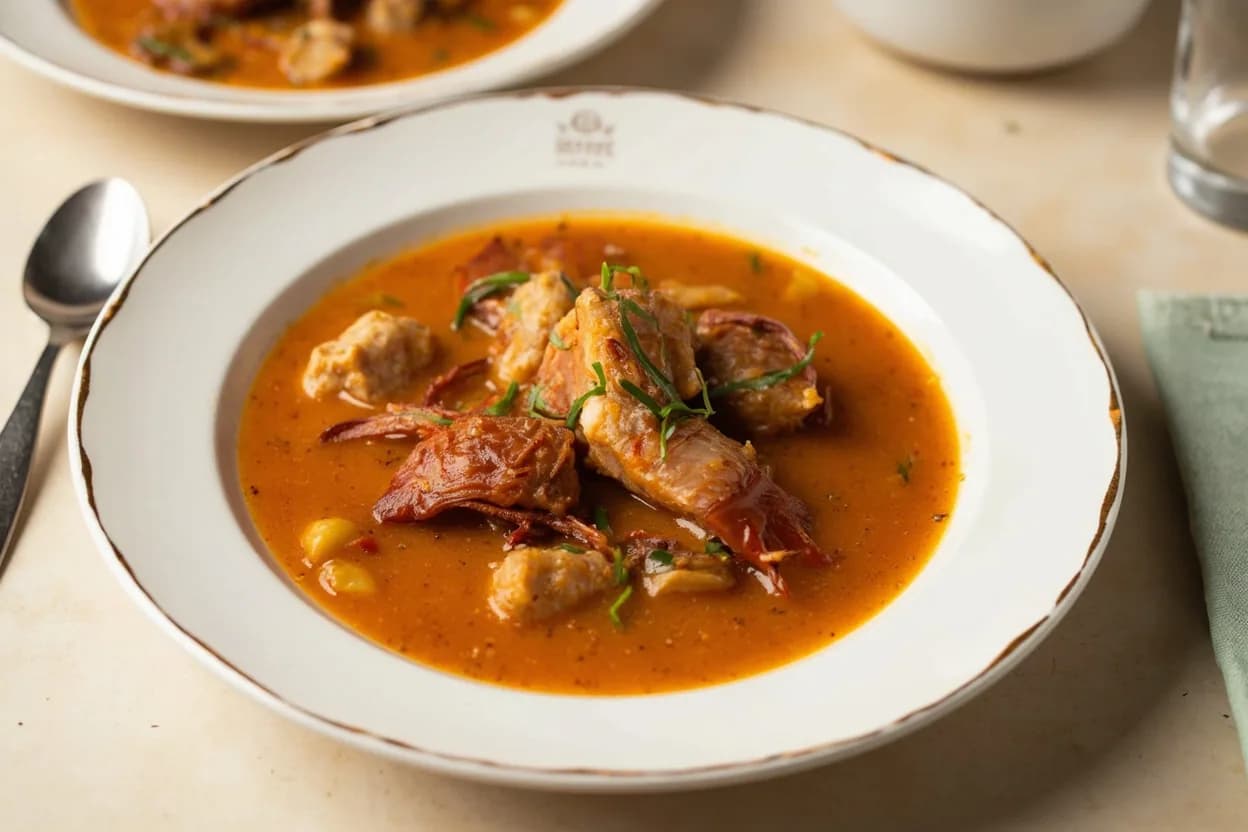
Related
Egg
The kitchen's everything ingredient — bind, leaven, enrich, or fry
Chicken Breast
Lean, quick-cooking white meat for everyday dinners

Ground Beef
Versatile minced beef for burgers, ragù, tacos, and meatballs
Pork Loin
Lean, tender roasting cut that stays juicy with care
Salmon
Rich, rosy fish that roasts, grills, or cures beautifully

Egg White
Pure protein that whips to airy peaks for meringue and more
Egg Yolk
Rich, golden yolk for custards, mayonnaise, and pasta

Quail Egg
Tiny, speckled eggs for garnishing and elegant bites