Proteins
Cured Chicken
Chinese salt-cured, air-dried chicken with concentrated savory flavor.
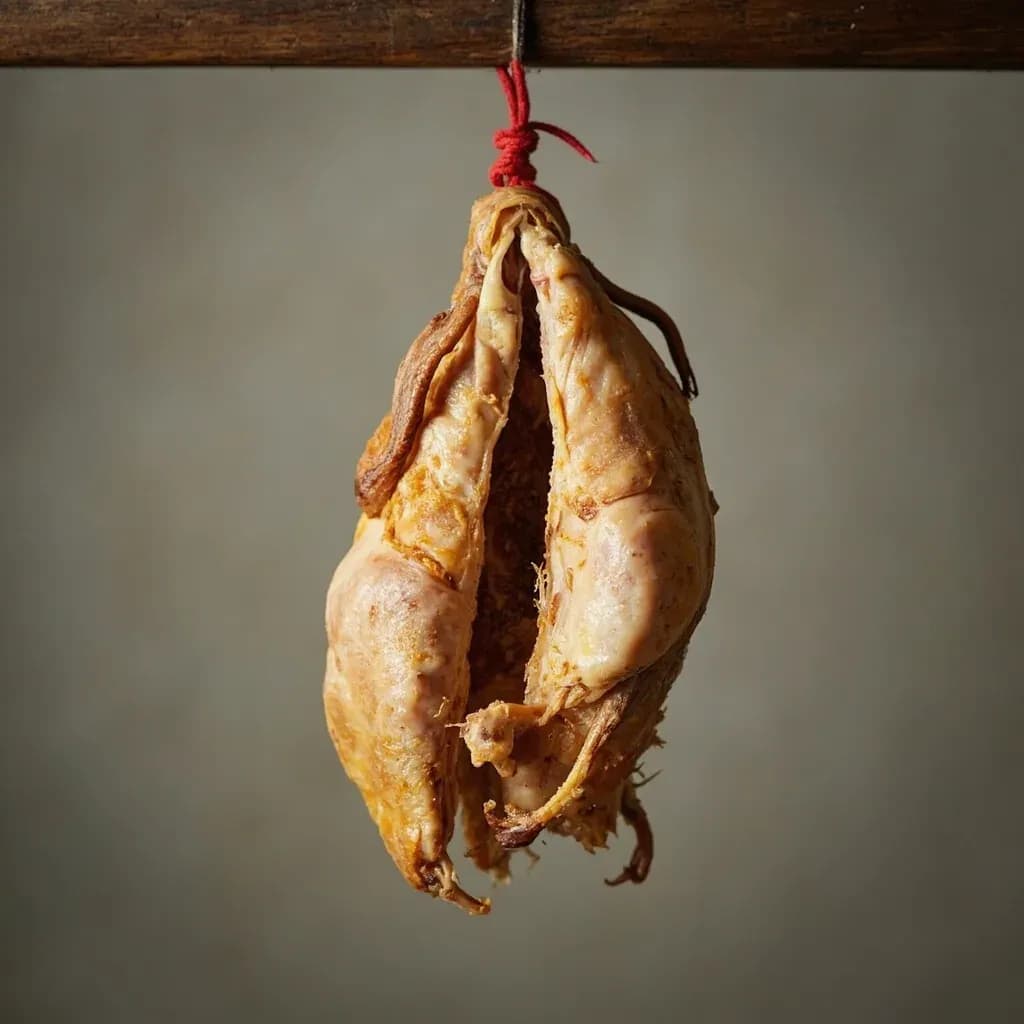
Cured chicken (腊鸡) is chicken preserved by salting and air-drying, part of the Chinese 'la' family of winter cured meats. It is steamed or added to clay-pot rice and braises, lending a deep, salty, slightly funky savor. The drying firms the flesh and concentrates its umami.
Cured chicken is a traditional Chinese preservation technique that transforms whole birds—or halves—into a dense, intensely savory ingredient through salt-curing and air-drying. The process, born of necessity in the humid southern provinces where fresh meat spoils quickly, involves rubbing the bird with coarse salt (often enhanced with spices like Sichuan pepper, star anise, cassia, or sugar depending on region), curing for one to three days, then hanging to air-dry in well-ventilated shade for one to three weeks. The result is a firm, concentrated product that functions as much as a seasoning agent as a standalone protein—almost a savory jerky that packs enormous umami into a small portion.
Unlike fresh chicken, cured chicken requires minimal cooking; the goal is controlled rehydration rather than heat-driven doneness. Its flavor is extremely concentrated, so portion sizes are substantially smaller than you would use with fresh poultry. The texture firms further when chilled, and slicing paper-thin reveals its dense, almost translucent character. When purchasing, select birds with firm, dry skin and no sticky residue or off-odor. Surface white crystallization is salt, not spoilage—a sign of proper cure, though heavy crusts should be scrubbed off before soaking.
Cured chicken behaves unlike most proteins in the kitchen: it resists overcooking in the traditional sense but can become leathery if simmered aggressively during rehydration. It is fundamentally an adding-ingredient rather than a carrying-ingredient, lending depth to stocks, braising liquids, and grain dishes rather than standing alone as a featured roast or grill item.
- Measured in
- g
- Storage
- Fridge
Types & varieties
Sugar added to cure; slightly sweet-savory; skin turns golden-brown when dried
Cured with Sichuan peppercorns, giving characteristic numbing warmth; often spicier overall cure profile
Cured with Shaoxing wine and soy sauce; darker color, richer umami depth
Heavily salted; developed for hotter climates; very firm, dense texture
Choosing and Evaluating Cured Chicken
Select pieces with taut, dry skin and a firm body that feels heavy for its size. Avoid any bird that feels lightweight and hollow, which indicates excessive drying and poor texture. The surface may show fine white salt crystallization—this is desirable and not a spoilage indicator. However, clumped or crusty salt deposits should be brushed away during the initial soak. Any sour, ammonia-like, or musty odor is a discard signal. If buying from a wet market, ask to see the curing setup; reputable vendors will air-dry birds in clean, shaded, breezy conditions. Vacuum-sealed packaged cured chicken from specialty grocers is reliable but should be checked for intact seals and absence of liquid pooling in the package.
- Firm, taut skin with no stickiness or tackiness
- Heavy-for-size; avoid lightweight, desiccated pieces
- White salt crystals are normal and desirable
- Sour or ammonia odor means discard the piece
Rehydrating and Prepping
Cured chicken must be soaked before cooking to remove excess surface salt and begin rehydration. Place the bird or halves in cold water for 30 to 60 minutes, changing the water once midway. Use a soft brush or your hands to scrub the skin gently, dislodging salt crystals and any residual ash. If working with a whole bird, pour water through the cavity and scrub the interior surfaces thoroughly—the cavity salt can be disproportionately intense. After soaking, pat dry with paper towels. The soaking liquid itself is deeply flavored; strain it through a fine-mesh sieve and reserve it for cooking rice, steaming, or as a soup base. Slice or portion the bird after rehydration but before adding to dishes, using a sharp Chinese cleaver or heavy chef's knife. For cold serving applications, chill the rehydrated bird first—the flesh firms noticeably and slices more cleanly.
- Soak 30–60 minutes in cold water; change water once
- Scrub skin and interior cavity with brush or hands
- Reserve and strain the soaking liquid for cooking
- Portion before cooking; chill first for clean cold slicing
Cooking Behavior and What to Avoid
Cured chicken responds poorly to aggressive high-heat cooking. Unlike fresh chicken, it has already reached its structural endpoint during drying; sustained boiling or frying causes the meat to tighten and expel moisture, resulting in a leathery, chewy texture that defeats the purpose of rehydration. For steaming or simmering, bring the cooking liquid to a gentle simmer and maintain it at just below the boil for 10 to 15 minutes for half-birds, or up to 25 minutes for a whole bird. This is sufficient to heat through and finish rehydration without overworking the proteins. In stir-fries, add cured chicken in the final 2–3 minutes of cooking, after the wok has been deglazed and fresh ingredients have begun to soften. In stocks and braises, the cured chicken should be added early but treated gently—no vigorous boil. If using in congee or rice porridge, add chopped pieces in the last 20 minutes of cooking.
- Never boil aggressively; use gentle simmer at 80–90°C
Regional Character and How It Affects Cooking
Cantonese cured chicken, with its sugar-enriched cure, carries a mild sweetness that stands up well to bright, acidic sauces and steamed preparations. It benefits from a light drizzle of Chinese black vinegar and sliced scallions after steaming. Sichuan cured chicken brings numbing warmth and spice depth; it integrates naturally into mapo-style dishes, dry wok preparations with dried chilies, or soups where the Sichuan pepper character can bloom. Shanghai cured chicken's soy- and wine-enhanced cure makes it the most intensely savory of the four; use it sparingly as a flavoring agent in fried rice, or braise it low and slow with dark soy and rock sugar for a rich, lacquered finish. Hunan cured chicken is the saltiest and firmest; it works best when sliced very thin and added to dishes with bold, fresh counterparts—abundant ginger, chiles, and rice—to rebalance its intensity. Always adjust seasoning when substituting one regional variety for another, tasting and reducing other salts in the recipe accordingly.
- Cantonese: mild sweetness; use with vinegar and scallions
- Sichuan: numbing warmth; pair with chilies and fresh herbs
- Shanghai: richest umami; use sparingly as a flavoring agent
- Hunan: saltiest; needs bold fresh counterparts to balance
Common uses
Tips & pitfalls
- Always soak 30–60 minutes and scrub the skin and cavity thoroughly with a brush to remove excess surface salt before any cooking
- Rinse the interior cavity aggressively—salt concentrates there and can make entire dish inedible
- Save and strain the soaking water; it is a deeply flavored cooking liquid for rice, congee, or light broths
- Slice paper-thin when serving cold; the texture firms considerably when chilled and thin slices are more pleasant
- Do not overcook during rehydration; a gentle simmer for 10–15 minutes (half-bird) is sufficient—aggressive boiling makes the meat leathery
- Pair with fresh, bright ingredients to balance the salt intensity—pickled vegetables, fresh herbs, or a squeeze of citrus work better than you might expect
- When substituting one regional variety for another, reduce the other salts in your recipe—the Hunan type in particular can overwhelm a dish calibrated for Cantonese cured chicken
- Store in the refrigerator wrapped in clean cloth, not plastic, to maintain surface drying; plastic traps moisture and promotes mold
- If surface mold appears (distinct from white salt crystals), discard—the bird has been stored too warm or too long in unfavorable conditions
- Start with small portions relative to fresh chicken expectations; this is a seasoning agent as much as a protein, and the concentrated salt can easily dominate a dish
Nutrition
Energy
598 kJ · per 100 g
Where the calories come from
Protein
17.4g
35% DV
Carbs
0g
0% DV
Fat
8.1g
10% DV
Fiber
0g
0% DV
Sugars
0g
of which
Sodium
60mg
3% DV
Source · USDA FoodData Central · approx. Chicken, ground, raw
View on FDC →In the shops
Matched grocery products
No matched grocery products for Cured Chicken yet.
Good to know
- Origin
- China (various regional traditions)
- Type
- Salt-cured, air-dried poultry
- Primary Flavor
- Concentrated savory, intensely umami, moderately salty, subtle sweetness from drying
- Typical Weight
- 400–900 g per piece (whole bird or halves)
- Shelf Life
- 2–3 months at room temperature; up to 6 months refrigerated; can be frozen indefinitely
- Salt Content
- High (4–8% depending on cure)
- Equipment Needed
- None special; relies on air circulation and low humidity for drying
- Prep Time
- 30–60 minutes for soaking/rinsing; cooking time varies by dish
Substitutes
- Prosciutto di Parma — Different animal and tradition, but shares a salt-cured, air-dried profile; use sparingly due to stronger, more complex flavor; not a direct substitute in Chinese dishes
- Jamón Ibérico — Cured pork, not poultry; texturally and flavor-wise the closest cured-meat analog; dice finely and use in small amounts for a comparable depth
- Country Ham (US) — Salt-cured, aged; the salt ratio is considerably higher—reduce quantity by about 30% compared to any recipe calling for cured chicken
- Pancetta (unsmoked) — Cured pork belly; provides salt and fat but lacks the dried-poultry character and umami depth of cured chicken; best for Western preparations
- Turkey ham — Lowest-common-denominator substitute; mild cured turkey product, accessible but not comparable in depth or flavor concentration; use more generously and season carefully
Pairs with
Also called
腊鸡 · La Ji · Chinese Cured Chicken
Related
Egg
The kitchen's everything ingredient — bind, leaven, enrich, or fry
Chicken Breast
Lean, quick-cooking white meat for everyday dinners

Ground Beef
Versatile minced beef for burgers, ragù, tacos, and meatballs
Pork Loin
Lean, tender roasting cut that stays juicy with care
Salmon
Rich, rosy fish that roasts, grills, or cures beautifully

Egg White
Pure protein that whips to airy peaks for meringue and more
Egg Yolk
Rich, golden yolk for custards, mayonnaise, and pasta

Quail Egg
Tiny, speckled eggs for garnishing and elegant bites