
Stored
Dried dill weed in a small glass jar showing the characteristic feathery, muted green flakes.
Shows the shelf-stable form readers will actually buy and store, with color and texture as recognition cues.
Herbs
Dried Dill
Shelf-stable dill for dressings, dips, and fish
Convenient and aromatic, dried dill seasons creamy dressings, dips, and fish dishes year-round. Add it early to let it bloom. Keep it airtight and dark.
Dried dill (often labeled dill weed) is a convenient, aromatic pantry herb that seasons creamy dressings, dips, and fish dishes year-round when fresh fronds aren't around. Drying mutes dill's grassy brightness but keeps a recognizable anise-and-celery character, more so than many herbs lose. It's a natural in ranch dressing, tzatziki-style dips, potato salad, and on baked fish. Add it early to creamy or cooked dishes so it rehydrates and blooms, or let it steep in cold sauces for a half-hour to soften. It complements yogurt, sour cream, cucumber, and salmon especially well.
- Measured in
- g
- Storage
- Airtight
- Shelf life
- 540 days
Find it in
Types & varieties
The dried fronds — milder than fresh, fine for dips and dressings.
A stronger, caraway-like form for pickling and breads.
How to use
Stir dried dill into creamy bases — yogurt, sour cream, mayonnaise — and let it sit so it rehydrates and the flavor blooms. In cooked dishes add it early. It's especially good on fish, in potato salad, and in homemade ranch.
- Let it steep in cold, creamy sauces 30 minutes
- Add early to cooked dishes
- About 1 tsp dried ≈ 1 tbsp fresh
Fresh vs dried
Dried dill holds its flavor better than many herbs but still lacks the bright, feathery freshness of the fronds. Use dried for dressings, dips, and cooked dishes; fresh for finishing fish, gravlax, and salads.
Common uses
Tips & pitfalls
- Let dried dill steep in cold sauces to rehydrate and bloom.
- Use about a third the amount of fresh dill.
- A staple of homemade ranch dressing and dill dip.
- Pairs naturally with yogurt, cucumber, and salmon.
- For pickling, reach for dill seed instead of the dried weed.
Nutrition
Energy
180 kJ · per 100 g
Where the calories come from
Protein
3.5g
7% DV
Carbs
7g
3% DV
Fat
1.1g
1% DV
Fiber
2.1g
8% DV
Sodium
61mg
3% DV
Source · USDA FoodData Central · Dill weed, fresh
View on FDC →In the shops
Matched grocery products
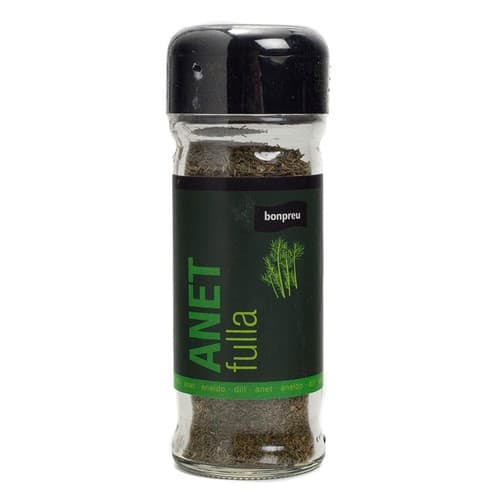 €0.79
€0.79Dill Leaves
BONPREU · Bonpreu
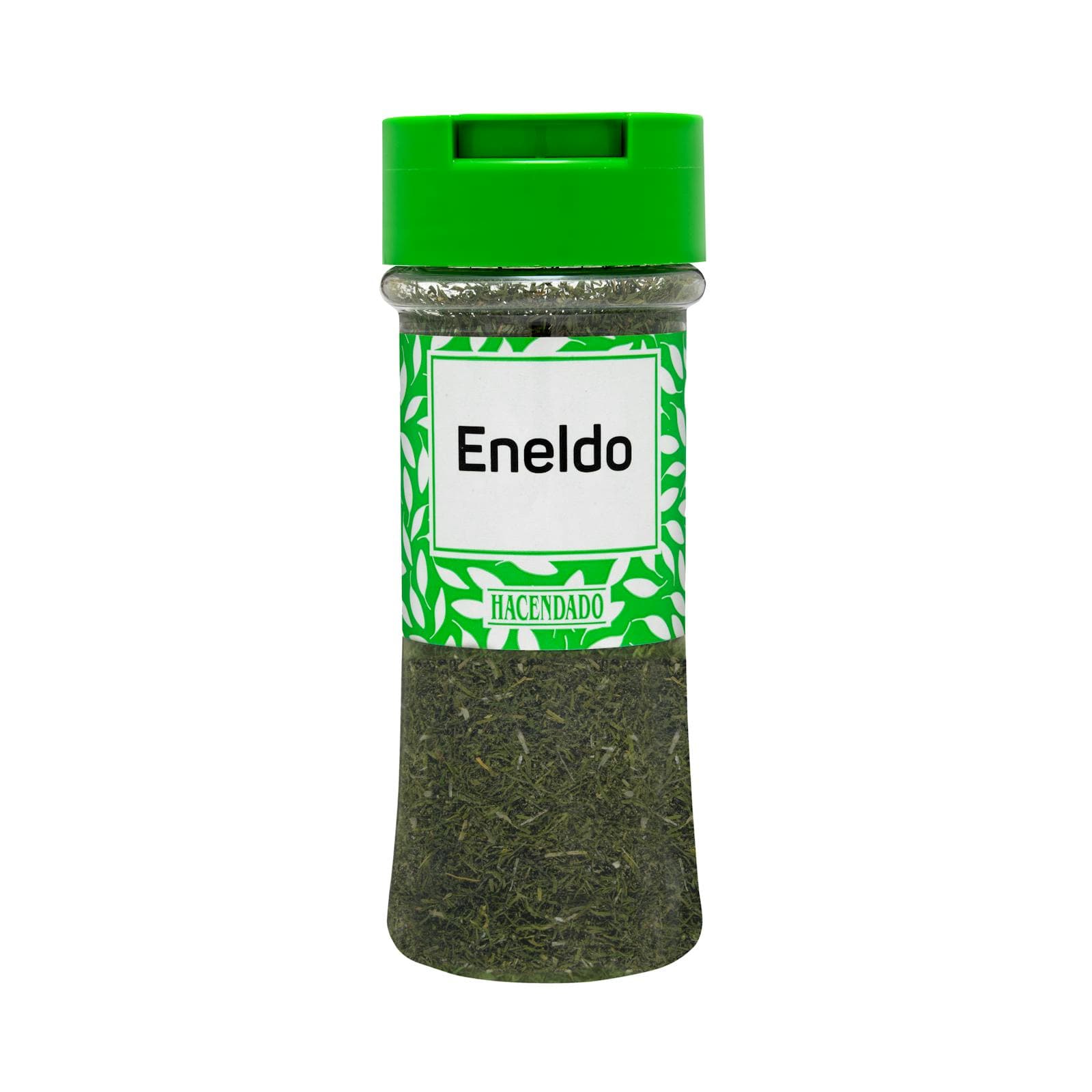 €1.85
€1.85Dill
Hacendado · 0.018 100 g · Mercadona
Good to know
- Flavor
- Muted but recognizable anise-celery, grassy
- Form
- Dried fronds (dill weed)
- Add when
- Early to bloom; or steep in cold sauces
- Cuisines
- American, Scandinavian, Eastern European, Greek
- How to buy
- Green and fragrant, not gray and dusty
- How to store
- Airtight, dark, cool; best within a year
Appears in these dishes
Related

Basil
Sweet, fragrant leaves for pesto, pasta, and caprese

Parsley
Fresh, grassy herb for finishing nearly any savory dish

Cilantro
Bright, citrusy herb for salsas, curries, and tacos

Mint
Cool, fragrant herb for teas, salads, and desserts
Rosemary
Piney, resinous herb for roasts, breads, and potatoes

Thyme
Earthy, floral herb for braises, roasts, and stocks

Sage
Savory, velvety herb for butter sauces and stuffings

Oregano
Pungent, peppery herb for tomato sauces and grilling