Produce
Dried Salted Radish
Chewy, salty preserved radish bits that add crunch and umami to Asian stir-fries and omelets.
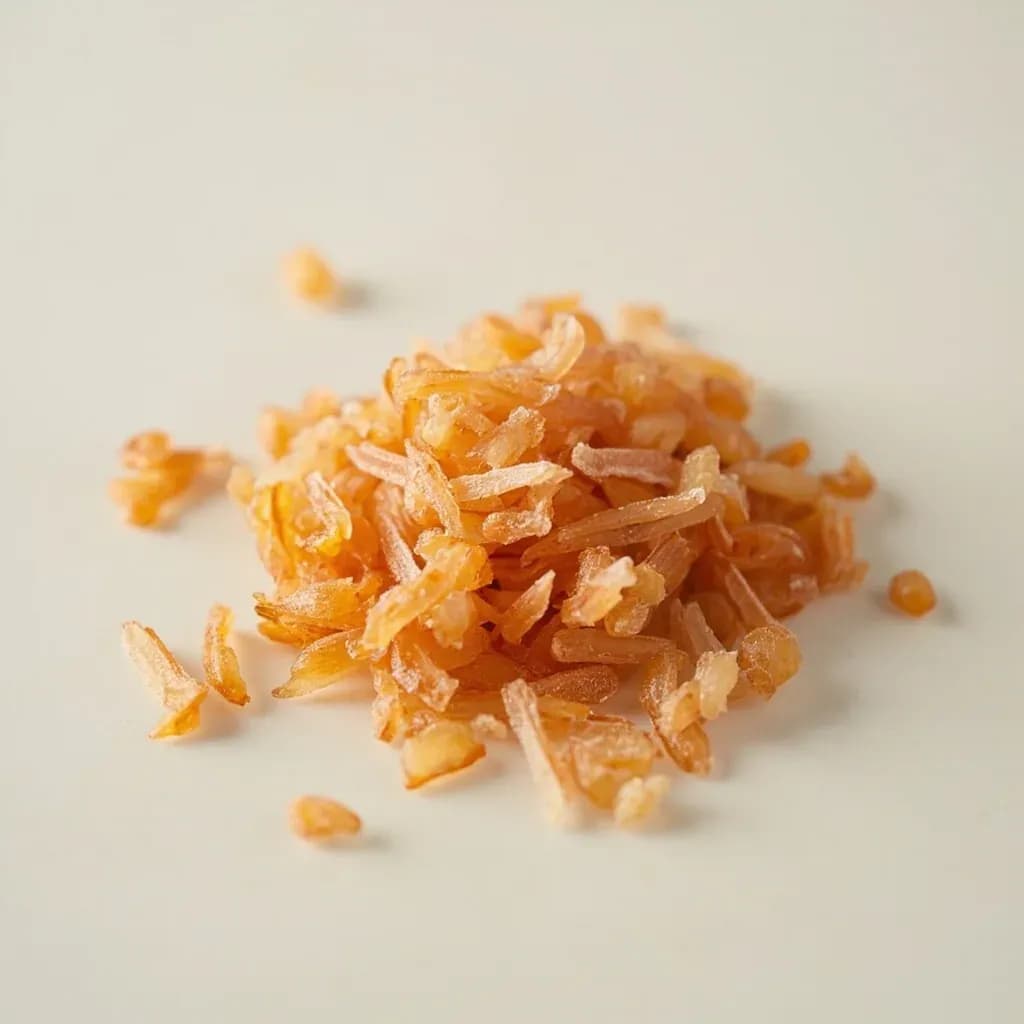
Dried salted radish is daikon that has been salted and sun-dried into firm, chewy, amber pieces with a pungent, salty-savory flavor. A staple in Chinese, Thai, and Southeast Asian cooking, it is rinsed and chopped into omelets (chai poh), stir-fries, and rice porridge for a burst of crunch and umami. It keeps for a very long time and is used in small, intensely flavored amounts.
Dried salted radish is a preserved pantry staple essential to Chinese, Korean, Thai, and Southeast Asian cuisines. Unlike takuan (pickled radish) which is vinegar-brined, dried salted radish is salted and sun-dried, concentrating the radish's natural sugars and creating an intensely savory, chewy ingredient. The drying process transforms mild, crisp daikon into small cubes or strips with a concentrated umami character that deepens sauces, adds textural contrast, and provides backbone to simple dishes. When rehydrated, it retains a pleasant chew; when fried without soaking, it crisps into crunchy, salty bits. This ingredient bridges the gap between fresh and fermented—preserved through salt and dehydration rather than live fermentation, yet developing complex, deeply savory flavors that make it indispensable in everyday cooking across East and Southeast Asia. In Cantonese kitchens it is called ham choy and appears in the beloved classic of stir-fried eggs with preserved radish, while Korean households use mu-jangajji in bibimbap and namul side dishes.
- Measured in
- g
- Storage
- Pantry
Types & varieties
Unscented base variety; most versatile for savory dishes
Seasoned with chili flakes or chili oil; adds heat and color
Seasoned with ground Sichuan pepper; adds numbing citrusy spice
Preserved in salt; smaller cubes, commonly used in noodle soups
Dried radish strips, often briefly pan-fried; used in bibimbap and namul
Selecting and Storing
When shopping, choose pieces that are uniformly dried without soft spots, discoloration, or off-odors. Avoid packages showing any moisture condensation. Transfer to airtight containers with a silica gel packet for pantry storage; refrigeration extends shelf life indefinitely and prevents any residual oil in seasoned varieties from going rancid. Properly stored, dried salted radish maintains quality for up to a year.
- Look for uniform color and texture throughout the package
- Avoid any signs of moisture or clumping
- Seal tightly after each use to prevent moisture absorption
Common uses
Tips & pitfalls
- Always soak dried radish in warm water for 5–10 minutes before use to remove excess salt and rehydrate.
- Rinse briefly after soaking if the variety is too salty for your taste.
- Press out excess water after soaking with a clean towel before frying to ensure proper browning.
- Add toward the end of cooking in soups or stir-fries to preserve some chewiness rather than cooking until completely soft.
- When stir-frying without rehydrating (for extra crunch), use medium heat and allow the radish to toast in the oil for 1–2 minutes before adding other ingredients.
- Store in an airtight container with a silica gel packet to prevent moisture absorption and mold.
- Do not over-salt your dish—dried radish carries significant sodium; adjust other seasonings accordingly.
Nutrition
Energy
1134 kJ · per 100 g
Where the calories come from
Protein
7.9g
16% DV
Carbs
63.4g
23% DV
Fat
0.7g
1% DV
Fiber
23.9g
85% DV
Sugars
37.3g
of which
Sodium
278mg
12% DV
Source · USDA FoodData Central · Radishes, oriental, dried
View on FDC →In the shops
Matched grocery products
 €1.69
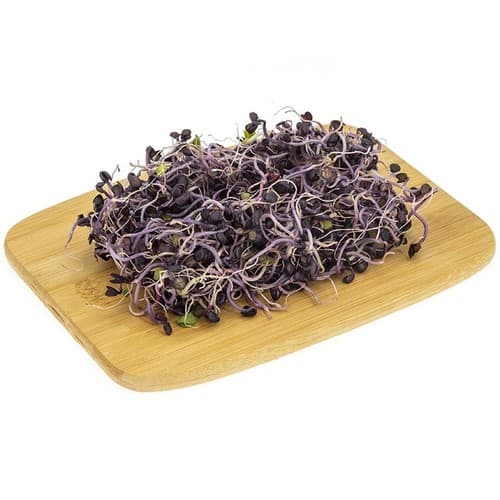
€1.69Organic Purple Radish Sprouts in 50g Tray
BROT D'OR · kg · Bonpreu
Good to know
- Also Known As
- Dried salted radish cubes, preserved radish, jiamengcai (Chinese), mu-jangajji (Korean), chai po (Thai)
- Primary Origin
- China; also widely used in Korean, Thai, and other Southeast Asian cuisines
- Base Ingredient
- White radish (daikon or Asian varieties) cut into small cubes or strips
- Primary Flavor
- Intense salty-umami with subtle sweetness; can be mildly spicy depending on variety
- Typical Texture
- Chewy when rehydrated; crunchy when fried without rehydration
- Shelf Life
- 6–12 months stored airtight in a cool, dry place; indefinitely refrigerated
- Sodium Content
- Very high; always taste before adding salt to a dish
- Rehydration Ratio
- Approximately 1:3 (dried to water); expands significantly when soaked
Substitutes
- Dried shrimp — Provides similar intense umami-salty flavor; use half the quantity due to stronger taste
- Fermented black beans (douchi) — Similar salty-umami profile; rinse and chop before use; commonly paired with dried radish anyway
- Salted turnip greens — Comparable texture and saltiness; readily available in Chinese markets
- Shojin-dashi powder — For the umami component only; does not replicate the chewy texture
- Kimchi (finely chopped) — Provides saltiness and crunch but introduces strong fermented tang; use sparingly
Pairs with
Also called
萝卜干 · Chai Poh · Preserved Radish
Appears in these dishes

Related
Tomato
Juicy, sun-sweet fruit for sauces, salads, and slow-cooked depth
Yellow Onion
The aromatic backbone of soups, sofritos, and braises
Garlic
Pungent cloves that perfume nearly every savory dish
Lemon
Bright, acidic citrus that wakes up almost any dish
Potato
Humble, hearty staple — roast, mash, fry, or boil
Carrot
Sweet, crunchy root — raw, roasted, or the base of a sofrito
Cucumber
Cool, crisp, and watery — for salads, pickles, and tzatziki

Lettuce
Crisp leaves for salads, wraps, and a fresh crunch