Proteins
Fish Balls
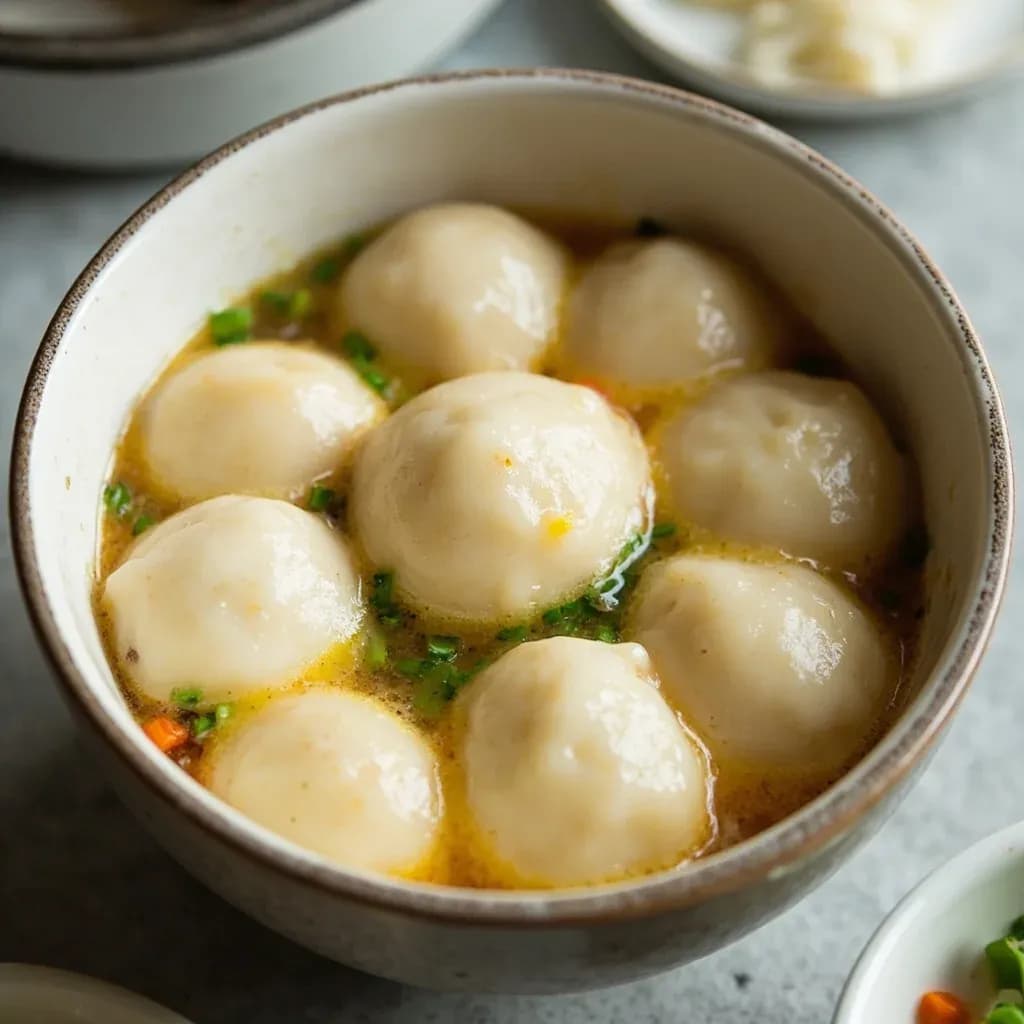
Springy balls of minced fish paste, dropped into soups, noodles, and hot pots.
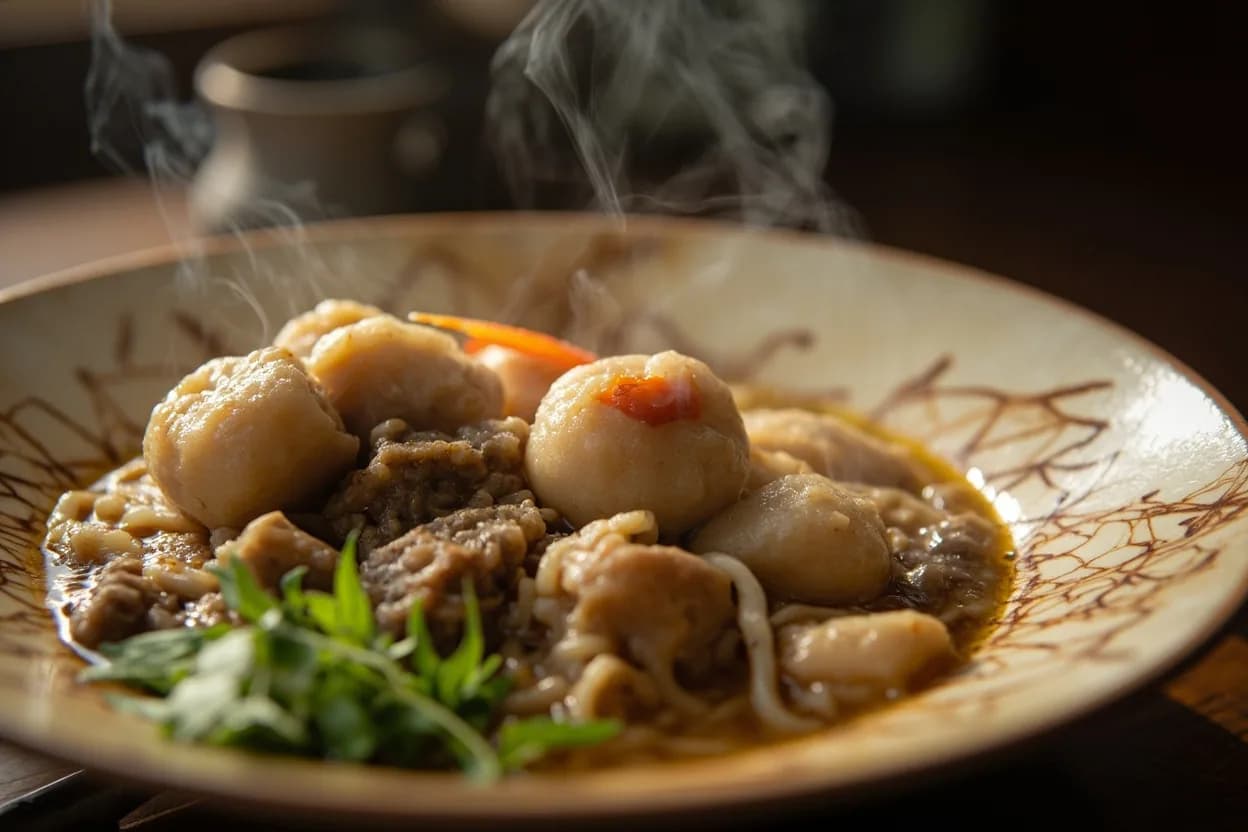
Fish balls are made from minced white fish pounded with salt and starch into a bouncy, springy paste, then shaped into balls and boiled. They are a staple of Southeast and East Asian street food and Scandinavian fiskeboller, served in clear soups, noodle bowls, curries, and hot pots. Mild in flavor with a signature elastic bite, they soak up the broth they are cooked in.
Fish balls are a celebration of texture — soft, springy, and slightly bouncy spheres of finely minced white fish bound into an elastic matrix through vigorous kneading. Unlike dumplings or meat balls, the fish ball's defining quality is its ability to snap back when bitten, a phenomenon achieved through protein development rather than fillers. The technique traces back to coastal communities in Fujian province, where fish was abundant and preservation methods limited; grinding and shaping fish into balls extended shelf life while creating something entirely new. Today, fish balls are a street food institution from Hong Kong wet markets to Manila cart vendors, bridging generations of home cooks and professional kitchens alike.
The magic lies in the science: salt draws out the fish's natural proteins, and extended kneading aligns these proteins into a network that traps air and moisture. This network is delicate — heat above 90°C causes it to collapse, hence the gentle poaching method. The result is a ball that is simultaneously tender and resilient, a canvas for broths and sauces rather than a flavor powerhouse on its own. Commercial versions range wildly in quality; the best are nearly all fish with minimal starch, while cheaper products substitute starch for fish protein and produce a dense, rubbery bite. Making them at home takes 20 minutes and yields a product that outperforms most store-bought options.
Regional traditions shape the ball itself: Teochew and Cantonese styles favor larger, more tender preparations served in clear broth, while Hakka cooks add five-spice for earthiness and Thai vendors mix curry paste directly into the paste before shaping. The filled varieties found in Taiwan and the Philippines represent another dimension entirely — a juicy pork or shrimp center encased in that yielding fish skin. Understanding these variations transforms fish balls from a single ingredient into a family of preparations with distinct personalities.
- Measured in
- piece
- Storage
- Fridge
Allergens
Types & varieties
Unfilled, the standard type; clean fish flavor, pale white
Contains a savory center (often pork or shrimp); more common in Taiwan and Philippines
Previously fried before sale; darker exterior, can be reheated in soups or eaten with sauce
Colored black with squid ink; found in Japan and some specialty producers
Compressed into oval shapes, mixed with curry paste and kaffir lime leaves, often deep-fried
Typically larger, softer, more delicate; often served in fish ball noodle soup
Denser, more elastic texture; seasoned with five-spice
Usually filled; firmer skin with juicy filling
Smaller, often served with sweet-sour-spicy dipping sauce as street food
Related but typically flattened; sold on skewers or in soups
Why Temperature Control Matters
Everything connected to fish ball making must be cold. Chilled fish flesh, cold equipment, even cold water for poaching. This is not superstition — warm fat melts and lubricates the protein strands, preventing them from aligning into that elastic network you want. The kneading process itself generates heat, so experienced cooks work in short bursts or rest the paste in the freezer between sessions. For poaching, maintain 80–90°C: you should see small bubbles forming on the bottom of the pot, not a rolling boil. At full boil, the balls' exterior sets too quickly while the interior remains raw, and the agitation causes them to bump and rupture.
- Keep fish flesh and equipment cold throughout preparation
- Work in bursts if kneading by hand to prevent warming the paste
- Simmer at 80–90°C — small bubbles, not a rolling boil
- Ice bath stops carryover cooking and preserves tender texture
Choosing Commercial Fish Balls
Read ingredient lists carefully. Fish or the specific fish name should appear first; if water, starch, or modifiers come first, you are buying a mostly-filler product. High-quality fish balls list salt, perhaps sugar, and maybe one starch (tapioca or potato). Avoid products with excessive additives, artificial colors, or stabilizers. Frozen commercial fish balls are already cooked during processing — add them near the end of your cooking time, just enough to heat through. Fresh market fish balls, found at Asian grocers with same-day production, offer superior texture but require full cooking and shorter storage.
- First ingredient should be a named fish, not water or starch
- Minimal additive list indicates higher fish content
- Frozen commercial balls are pre-cooked; add at end of cooking
- Fresh market balls require full cooking and 2–3 day refrigeration
Common uses
Tips & pitfalls
- Knead the fish paste for at least 10 minutes by hand, or 5 minutes in a stand mixer with paddle—under-kneading produces dense, rubbery balls
- Keep everything cold: chill the fish, equipment, and water for poaching; fat warms and breaks the protein network, ruining springiness
- Salt is essential: without it, the proteins won't develop the elastic matrix; use 2–3% of fish weight
- Simmer, never boil: rapid boiling ruptures the balls; maintain 80–90°C with gentle bubbles
- Float test works: they are done when they bob to the surface, usually 2–4 minutes depending on size
- Shock in ice water immediately after cooking—this stops carryover cooking and keeps the texture tender
- If homemade balls are crumbly, the fish may be too old or the paste was over-worked then rested too long
- Commercial frozen fish balls are already cooked; add them at the end when reheating soups
- For extra chew, add 1–2% transglutaminase (meat glue) or increase starch to 10% of fish weight
- Test freshness: fresh fish balls smell clean and mildly oceanic; discard if sour or slimy
Nutrition
Nutrition
No USDA FoodData Central match for Fish Balls yet. We surface a per-100 g profile once a generic whole-food entry is matched and verified.
In the shops
Matched grocery products
No matched grocery products for Fish Balls yet.
Good to know
- Primary Fish Used
- Alaska pollock, cod, tilapia, or other white-fleshed fish with low fat content
- Typical Diameter
- 2–4 cm (0.8–1.6 inches)
- Key Additives
- Salt, sugar, tapioca or potato starch, egg white, sometimes fish sauce
- Texture Development
- From vigorous kneading (5–15 minutes) which creates a aligned protein network
- Cooking Method
- Poached in simmering water (80–90°C) until they float, then shocked in ice water
- Shelf Life (Fresh)
- 2–3 days refrigerated
- Shelf Life (Frozen)
- Up to 6 months at -18°C or below
- Country of Prominence
- Hong Kong, Taiwan, Philippines, Singapore, Malaysia, Thailand
- Historical Note
- Street food staple in Hong Kong from at least the 1950s; popularized in Southeast Asia through Teochew and Fujianese immigrants
- Yield
- 1 kg fish yields approximately 25–30 medium fish balls
Substitutes
- Shrimp Balls — Similar texture and size; swap 1:1 in soups; sweeter, more expensive
- Surimi (Imitation Crab) — Already cooked; less fishy flavor, softer texture; works in cold salads and sushi
- Pork Balls — Different flavor entirely but similar cooking behavior; use in non-fish broths
- Scallop Balls — Premium substitute; delicate, slightly sweet; good for hot pot
- Tofu Balls — Vegan alternative; absorb flavors well but lack the savory fish backbone
Pairs with
Also called
Fish Balls (Fiskeboller) · Fishballs
Appears in these dishes
Related
Egg
The kitchen's everything ingredient — bind, leaven, enrich, or fry
Chicken Breast
Lean, quick-cooking white meat for everyday dinners

Ground Beef
Versatile minced beef for burgers, ragù, tacos, and meatballs
Pork Loin
Lean, tender roasting cut that stays juicy with care
Salmon
Rich, rosy fish that roasts, grills, or cures beautifully

Egg White
Pure protein that whips to airy peaks for meringue and more
Egg Yolk
Rich, golden yolk for custards, mayonnaise, and pasta

Quail Egg
Tiny, speckled eggs for garnishing and elegant bites