Produce
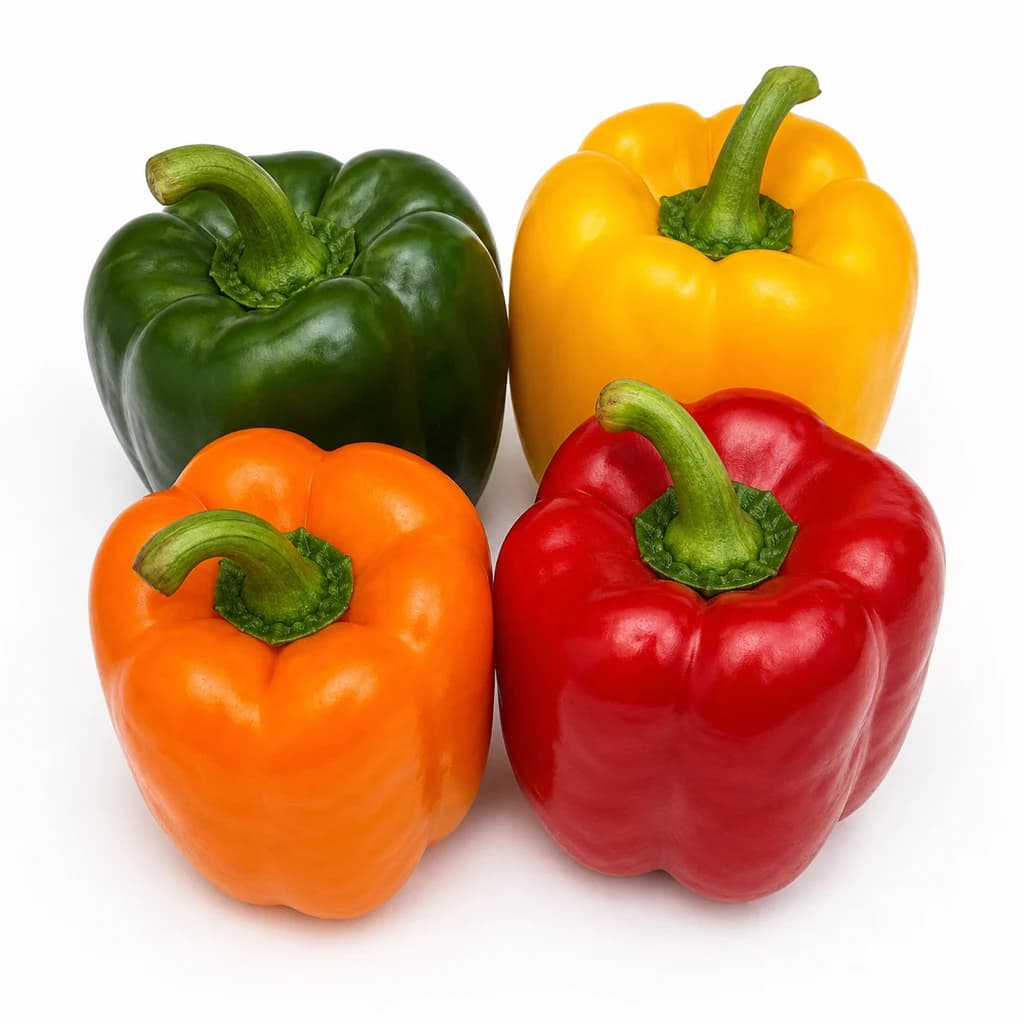
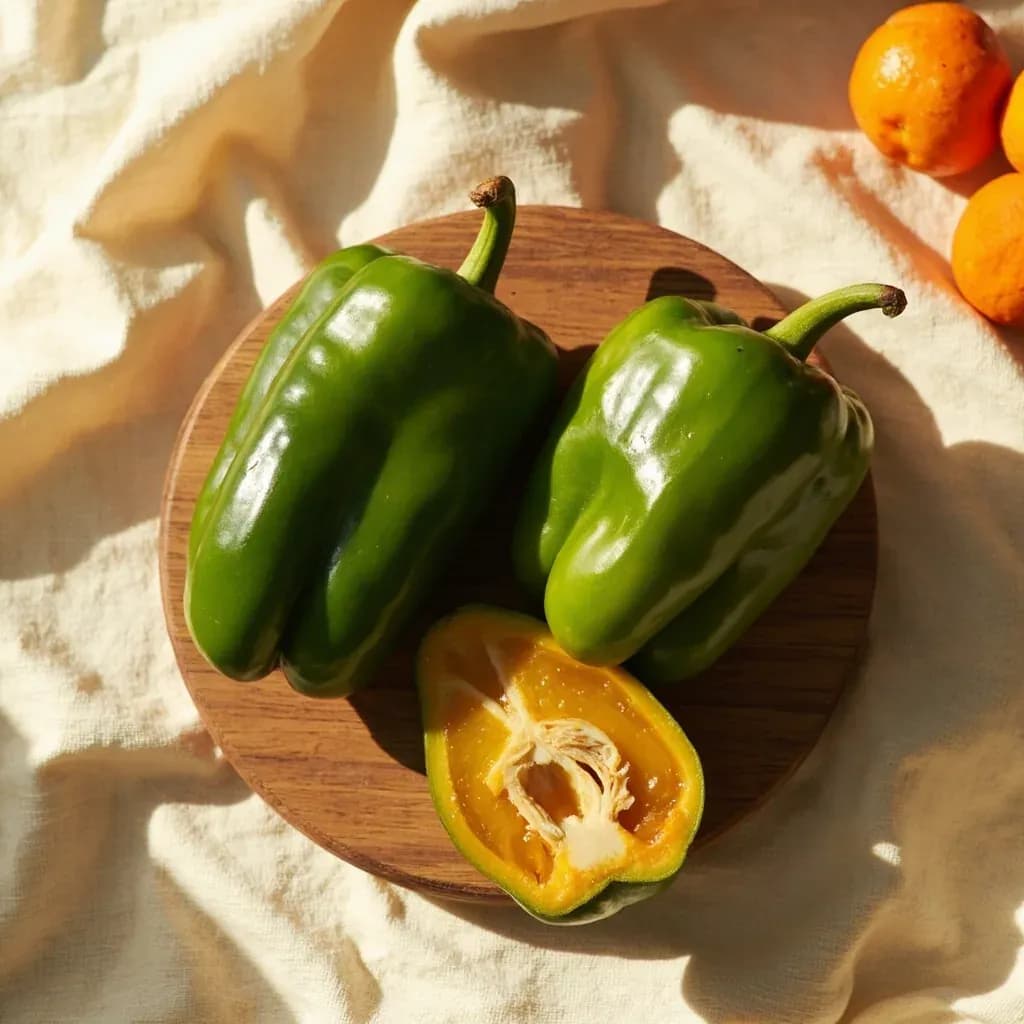
Green Bell Pepper
An unripe bell with a grassy, slightly bitter bite and firmer flesh; holds its shape in stir-fries, fajitas, and the Cajun holy trinity better than sweeter ripe peppers.
Green bell pepper is the unripe fruit of Capsicum annuum, picked before the sugars develop and the chlorophyll breaks down into the red, yellow, or orange carotenoids that signal ripeness. That early harvest gives it a denser, firmer wall than ripe bells, a water content around 92%, and a flavor that leans grassy, faintly citrusy, and mildly bitter rather than sweet. Cooks who reach for green bells specifically want that savory edge and structural integrity — the ability to hold up in a 45-minute braise, a stuffed-pepper bake, or a high-heat stir-fry without collapsing into the soft, sweet slump of a fully ripe pepper.
In the kitchen, green bell is most famous as one-third of the Cajun holy trinity alongside onion and celery, the aromatic base of gumbos, étouffées, and jambalayas. The same structural role shows up in Spanish sofrito, Italian-leaning soffritto bases, and Tex-Mex fillings, and it remains the cheapest and most available bell year-round, which keeps it central to weeknight cooking. The trade-off is moisture: crowd the pan, under-salt, or cook too long and the pepper turns limp and dull. Give it space, dry heat, and a sharp knife, and it stays crisp-tender with a charred edge that no ripe pepper quite matches.
- Measured in
- piece
- Storage
- Fridge
Find it in
Suits
Types & varieties
The open-pollinated market standard; blocky, 3–4 lobed, reliable and widely grown
Improved California Wonder with better disease resistance; same blocky shape
Long, 4-lobed hybrid; mild flavor and the classic stuffing pepper
Compact hybrid with thick walls, a popular home-garden choice
Heirloom-style bell with very large lobes, well suited to stuffing
Sweet-flavored green that ripens to red; large and blocky
European greenhouse variety; deep green color and very uniform fruit
Early-maturing hybrid that sets fruit well in cool weather
The Holy Trinity and Beyond
In Louisiana cooking, green bell pepper is one of three aromatic vegetables — with onion and celery — that form the base of nearly every gumbo, étouffée, and jambalaya. Its grassy sharpness holds up against a long-simmered roux in a way sweeter peppers cannot. The same trio shows up in sofrito across the Spanish-speaking Caribbean and in the Italian soffritto family, where green bell often stands in for the leaner green element. Its bitterness is the point: it gives these long-cooked bases a savory backbone that ripe peppers would blunt.
Buying and Storing
- Look for heavy, firm fruits with taut, glossy skin and 3–4 even lobes
- Reject peppers with soft spots, wrinkled shoulders, or dark blemishes
- Refrigerate unwashed in a perforated plastic bag in the crisper; wash only just before cutting
- Whole peppers keep 10–14 days; once cut, use within 4–5 days
- For long storage, roast and freeze in zip-top bags — they hold about 6 months and peel easily as needed
- Keep away from ethylene producers like tomatoes and bananas, which accelerate softening
Common Mistakes
- Crowding the pan: peppers steam and turn gray instead of searing and charring
- Cutting too far ahead: pre-sliced peppers lose water and limp in the fridge after a day
- Overcooking: more than 4–5 minutes in a screaming-hot pan kills the snap
- Under-salting early: a pinch of salt at the start draws out moisture and concentrates flavor
- Stripping all the pith unnecessarily: a thin membrane layer adds structure and a tolerable bitter note
Common uses
Tips & pitfalls
- Salt sliced green pepper and let it sit 10–15 minutes, then drain the liquid before stir-frying; this seasons it deeply and prevents a watery finished dish
- Avoid the classic mistake of cramming peppers into a cold pan — give them space and high heat so they sear and char instead of steaming into mush
- For stuffed peppers, par-blanch or roast halves for 5–8 minutes first so they soften through the oven without drying out the filling
- Use a sharp knife: a dull blade crushes the cells and you lose far more juice than you would with a clean slice
- Leave a thin rim of the white membrane if you want maximum grassy bitterness; scrape it all out for a milder result
- Roasted green peppers can be frozen in a zip-top bag with their charred skins on, then peeled as needed for months
- Choose peppers with flat, even sides and a flat bottom if you plan to stuff and stand them up in the baking dish
- Never toss the seedy core into the trash; simmer it with aromatics for a free boost of vegetable broth
Nutrition
Energy
84 kJ · per 100 g
Where the calories come from
Protein
0.9g
2% DV
Carbs
4.6g
2% DV
Fat
0.2g
0% DV
Fiber
1.7g
6% DV
Sugars
2.4g
of which
Sodium
3mg
0% DV
Source · USDA FoodData Central · Peppers, sweet, green, raw
View on FDC →In the shops
Matched grocery products
 €1.04
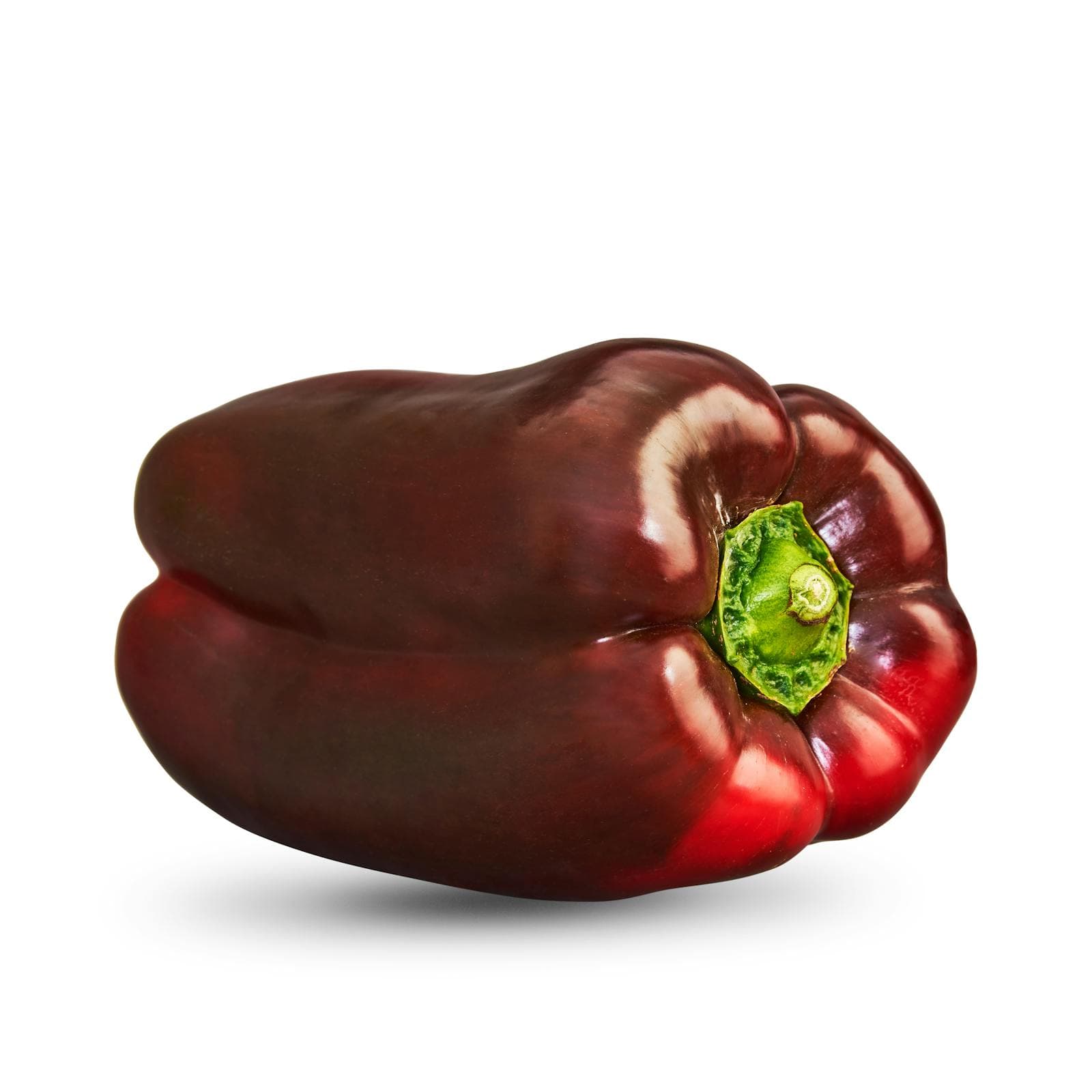
€1.04Red Pepper
360 g · Mercadona
 €2.20
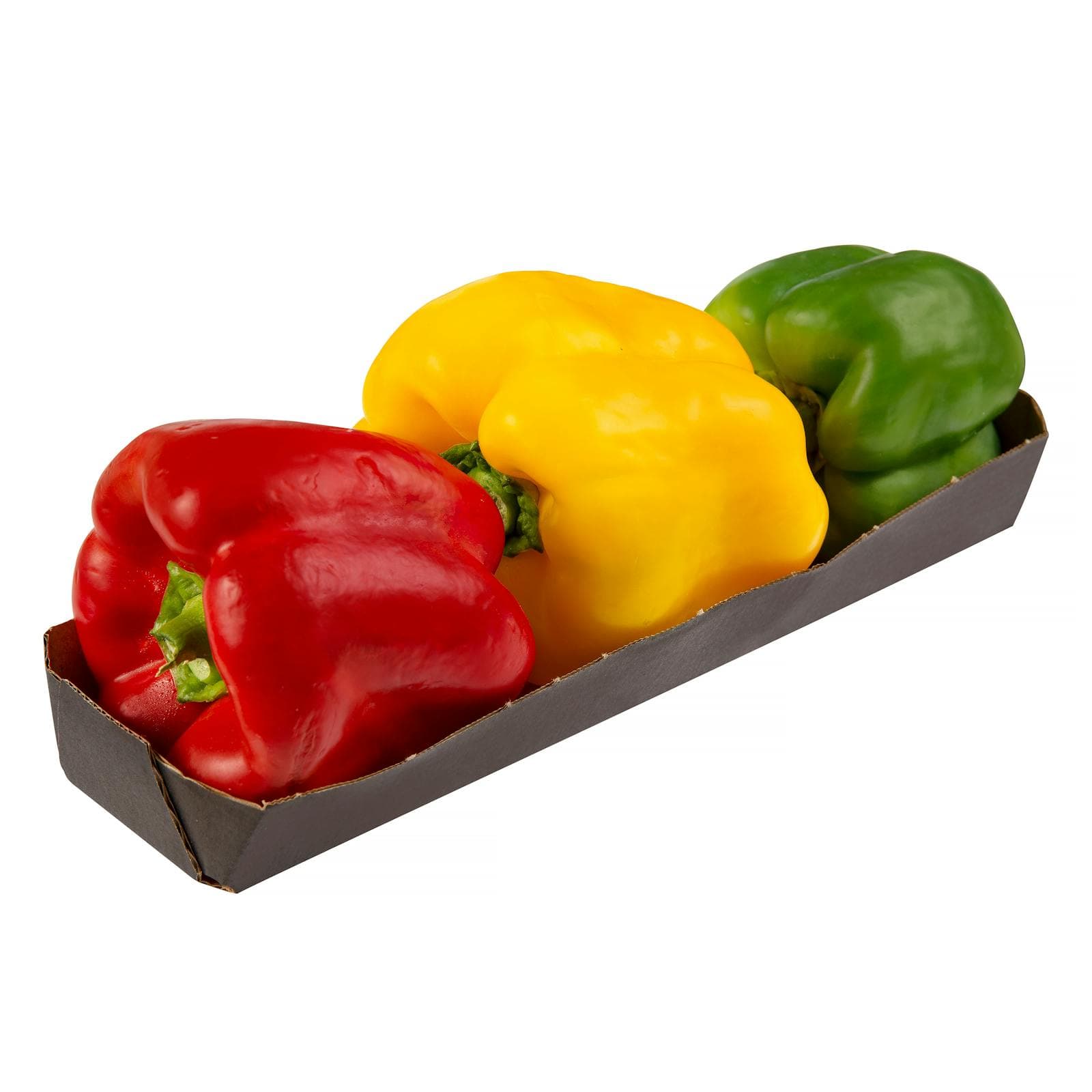
€2.20Tricolor Peppers
710 g · Mercadona
 €0.23
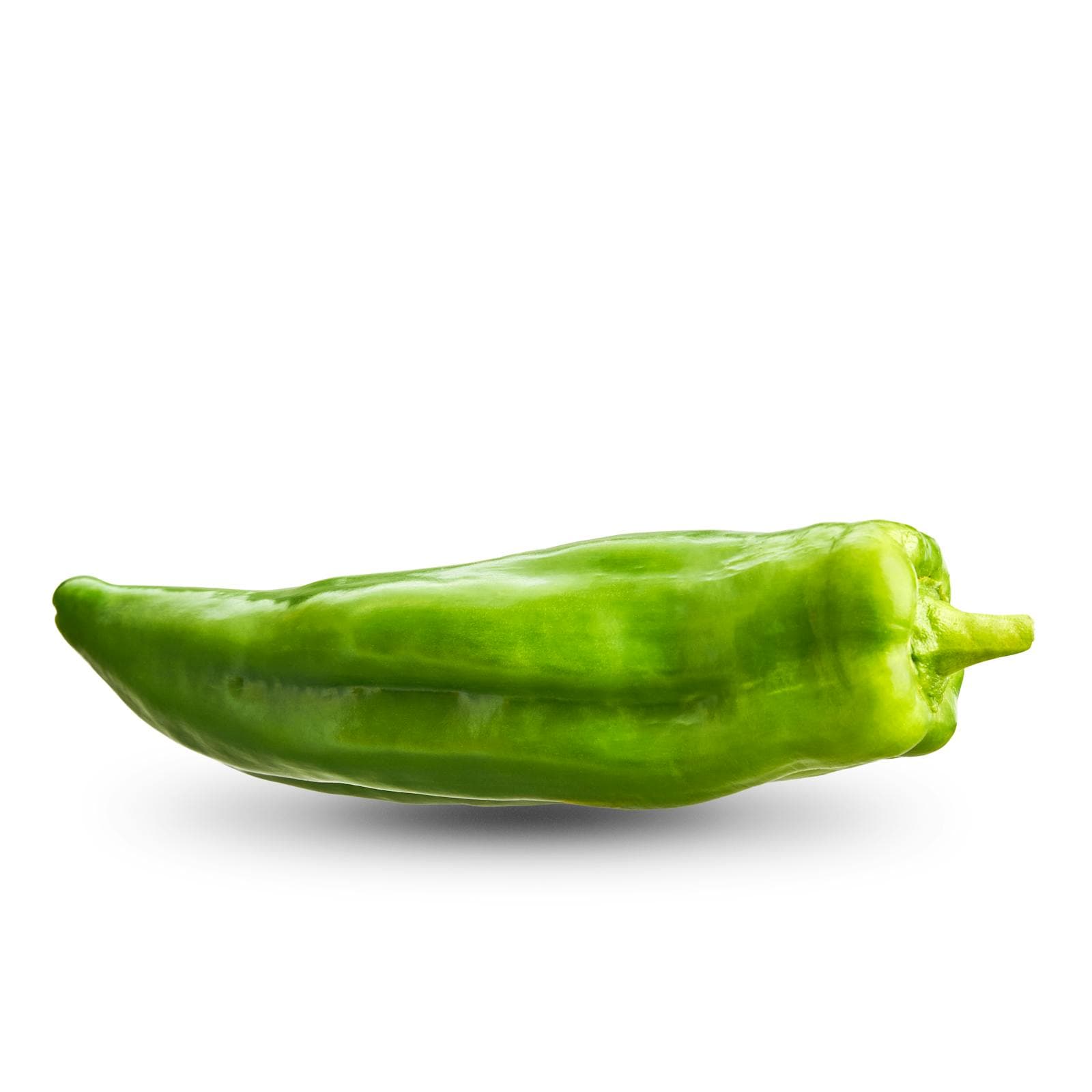
€0.23Green Frying Pepper
90 g · Mercadona
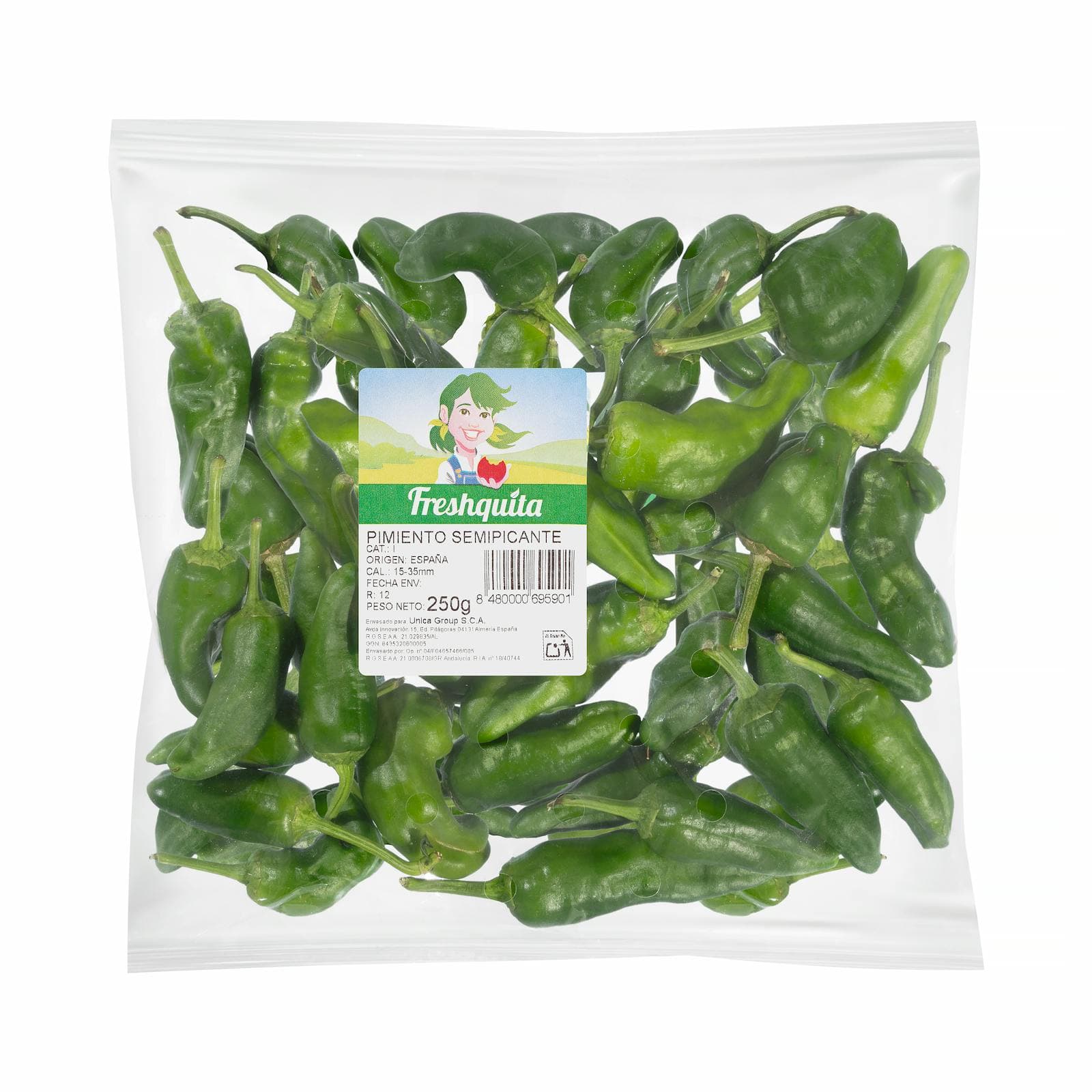 €1.35
€1.35Semi-Spicy Peppers
250 g · Mercadona
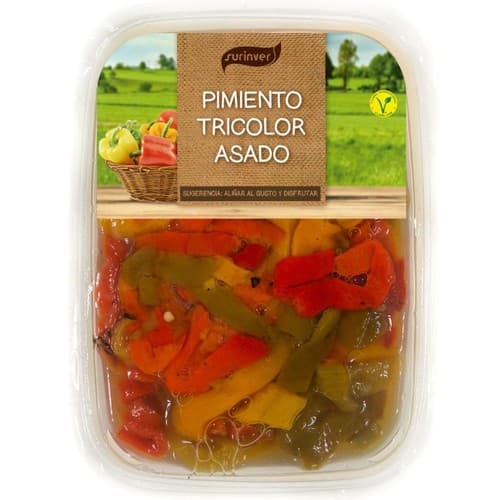 €2.49
€2.49Roasted Bell Peppers Three Colors
SURINVER · kg · Bonpreu
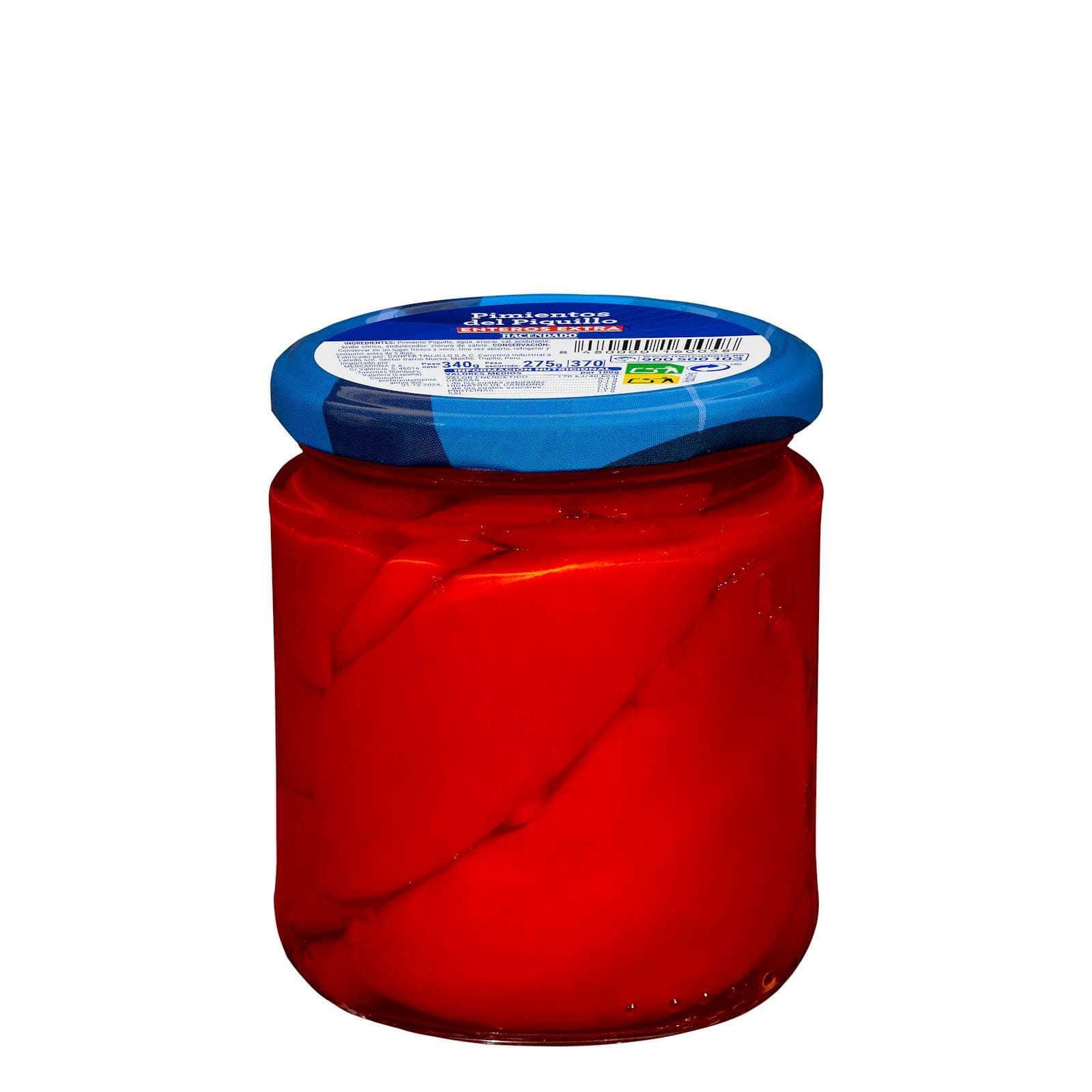 €1.45
€1.45Extra Whole Piquillo Peppers
Hacendado · 340 g · Mercadona
Good to know
- Botanical name
- Capsicum annuum (grossum group)
- What it is
- Unripe fruit of the bell-pepper plant, picked before sugars develop and color changes
- Heat
- 0 SHU (non-pungent)
- Wall thickness
- Thicker than most chiles; one of the firmest peppers when raw
- Water content
- About 92%, which is why it softens quickly when crowded in the pan
- Yield
- Roughly 75% usable flesh after coring and seeding
- Storage (whole)
- 10–14 days in the refrigerator crisper, unwashed
- Storage (cut)
- 4–5 days refrigerated in a sealed container; freezes well after roasting
Substitutes
- Poblano — Holds up to long cooking and stuffing like green bell, but adds earthy depth and a touch of heat
- Cubanelle — Milder and thinner-walled; good in sautés and fajitas but too soft for stuffed-pepper baking
- Anaheim — Works in cooked applications; brings mild heat and a more pronounced chile flavor
- Green Italian frying pepper — Sweet and thin-walled; closer to a ripe red than to a green bell, so use only when sweetness is acceptable
- Unripe red bell pepper — Direct swap; flavor and wall texture are nearly identical, just slightly sweeter
- Roasted green chile (Hatch) — Good in sauces and stews; saltier and spicier, so adjust seasoning accordingly
Pairs with
Also called
green pepper · green capsicum · pimiento verde · pebrot verd