Produce
Jocote
Small Central American fruit eaten green with salt or ripe and sweet-tart.
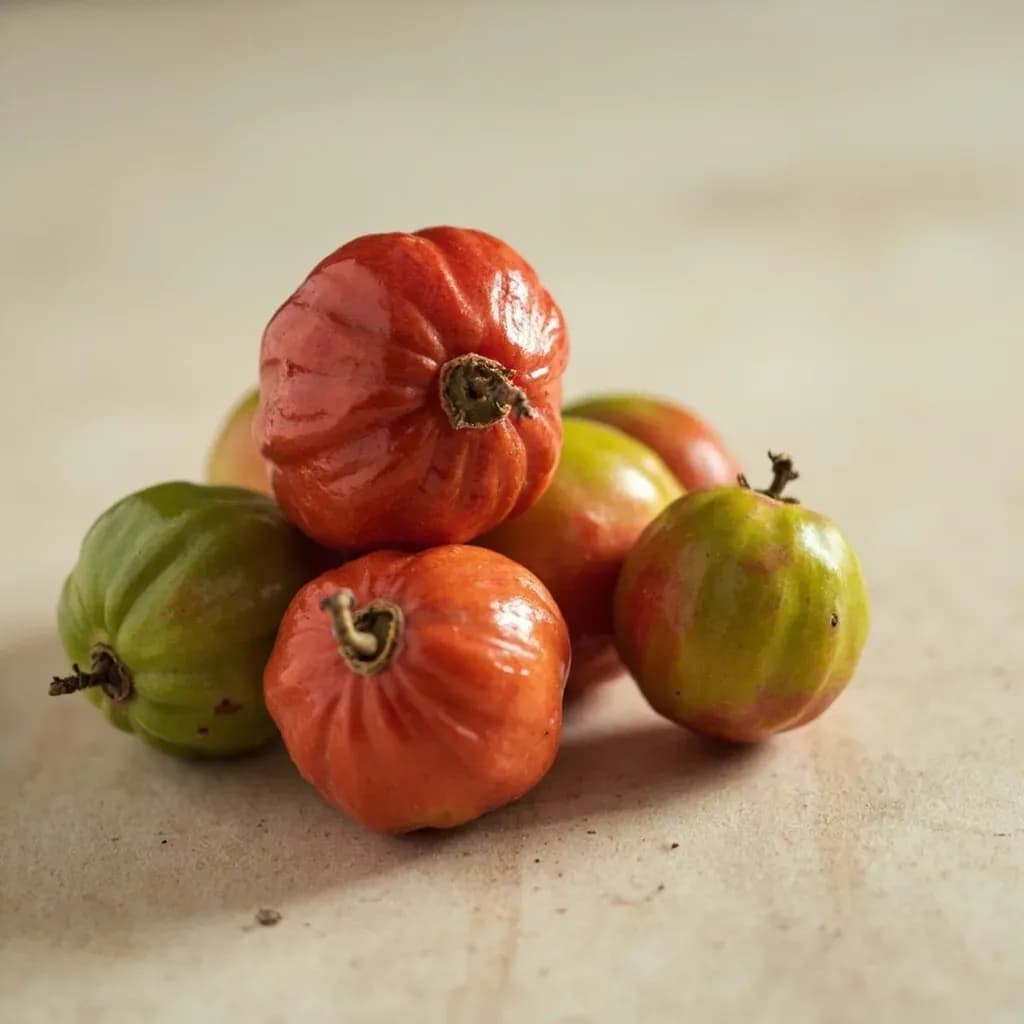
Jocote is a small tropical fruit native to Central America, related to the mango, with a thin skin and a large pit. Eaten green it is crunchy and tart, often sprinkled with salt, lime, and chili, while ripe it turns yellow-red, soft, and sweet-tart. It is enjoyed fresh as a street snack and cooked into syrups and preserves.
Jocote is a small stone fruit from Spondias mombin, a tropical tree native to Central America and southern Mexico that belongs to the Anacardiaceae family alongside cashews and mangoes. The fruit grows roughly olive-to-plum-sized, typically 2–4 cm long, and is distinguished by its single large seed surrounded by fibrous flesh that accounts for 60–70% of the fruit's volume. Jocote is unique among tropical fruits for its dual culinary personalities: harvested green in late spring through summer it is firm, crunchy, and intensely tart with a slightly astringent quality, while allowed to ripen on the tree into late summer and fall it develops a sweet-tart, plum-like flavor with tender flesh. This versatility—eating the same fruit in two entirely different states—has made jocote a cornerstone of Central American cuisine for centuries, though it remains largely unknown outside the region. The fruit does not continue ripening once picked; green fruits will not soften off the tree, which means timing of harvest determines the entire character of the finished dish.
The fruit's cultural significance extends far beyond its culinary uses. In Costa Rica and Nicaragua it is simply called jocote; in Mexico it appears as jocote de corona or jocote de jobo; in the Caribbean it is known as hog plum. This naming variation reflects both the fruit's wide geographic range and its deep integration into local food traditions. The most iconic preparation remains the simplest: green jocotes eaten out of hand with a pinch of salt, a street snack found from Guatemala to Panama. El Salvador has developed its own specialty, transforming green jocotes into a sharp pickled condiment called curtido de jocote by preserving them in vinegar with onion and jalapeño. The skin of ripe jocotes carries a faintly bitter note that many cooks prefer to remove before eating raw, though it disappears entirely in cooked preparations where the fruit's natural pectin makes it particularly suited to preserves and spreads.
- Measured in
- g
- Storage
- Fridge
Types & varieties
Picked unripe; firm, crunchy, very tart; the most common eating style, traditionally served with salt
Yellow-orange to red skin; softer, sweeter; preferred for preserves, desserts, and beverages
Larger variety with thicker flesh; often selected for cooking applications
Regional name used in parts of Mexico; same species and characteristics
Regional Names and Relatives
Jocote belongs to the genus Spondias, which includes several commercially important fruits. It is distinct from the better-known Spondias purpurea (red mombin or joaquiniquil), which has smaller fruits and a different flavor profile. Regional naming varies widely: in Costa Rica and Nicaragua it is simply 'jocote'; in Mexico it may be called 'jocote de corona' or 'jocote de jobo'; in the Caribbean it is known as 'hog plum.' These are not separate species but rather local names for the same fruit, sometimes referring to slightly different cultivars or simply regional preferences. When encountering any of these names, the underlying fruit is Spondias mombin and can be used interchangeably in recipes.
- Spondias mombin is distinct from Spondias purpurea (red mombin)
- Regional names do not indicate different varieties
- Same fruit, different names across Central America and the Caribbean
The Curtido de Jocote Tradition
In El Salvador, green jocotes undergo a transformation that has become a defining element of the country's culinary identity. Pickled in vinegar with sliced onion and jalapeño peppers, green jocotes become curtido de jocote—a sharp, tangy condiment served alongside pupusas and other traditional dishes. The unripe fruit's firm texture holds up to the pickling liquid without turning mushy, while its natural tartness anchors the brine. This preparation exemplifies how Central American cooks have historically used jocote: not as a delicate dessert fruit but as an ingredient with assertive flavor that can stand up to bold accompaniments.
- Green jocotes are essential for proper curtido—ripe fruit will not survive the pickling process
- The natural acidity of unripe jocotes means less vinegar is needed to achieve proper preservation
- Curtido de jocote keeps refrigerated for several weeks
Common uses
Tips & pitfalls
- Choose firm, bright green jocotes with no softening or wrinkles for the salt-and-fruit method; any give indicates overripeness for that preparation.
- Test ripeness by color shift: ripe jocotes turn yellowish with orange or red blush and yield slightly to gentle pressure.
- The skin of ripe jocotes carries a faintly bitter note; peel before eating raw if you prefer a cleaner sweet-tart flavor.
- When making preserves, leverage the high pectin content of underripe fruit to help the jam set naturally without added pectin.
- Never eat the seed—it is large, hard, and contains compounds that can cause digestive upset if consumed in quantity.
- Add ripe jocotes late in cooking to preserve their delicate sweet-tart flavor; overcooking mutes the fruit's character.
- Green jocotes will not ripen off the tree—pick them when you intend to use them green, or accept they will only be good for preserves.
- In aguas frescas, strain the blended flesh thoroughly; the fiber can make the drink gritty if left in.
Nutrition
Energy
192 kJ · per 100 g
Where the calories come from
Protein
0.7g
1% DV
Carbs
11.4g
4% DV
Fat
0.3g
0% DV
Fiber
1.4g
5% DV
Sugars
9.9g
of which
Sodium
0mg
0% DV
Source · USDA FoodData Central · Plums, raw
View on FDC →In the shops
Matched grocery products
No matched grocery products for Jocote yet.
Good to know
- Botanical name
- Spondias mombin (yellow mombin)
- Family
- Anacardiaceae (cashew family)
- Origin
- Central America and southern Mexico
- Typical size
- 2–4 cm long, olive-to-plum shaped
- Harvest season
- Green: late spring through summer; ripe: late summer into fall
- Flavor (unripe)
- Tart, slightly astringent, crunchy texture
- Flavor (ripe)
- Sweet-tart, plum-like, mildly tangy
- Storage
- Refrigerate ripe fruits up to 5 days; green fruits keep slightly longer
- Flesh ratio
- 60–70% of fruit weight; single large inedible seed
- Pectin content
- High when unripe; useful for natural jam setting
Substitutes
- Green mango — Comparable tartness and crunch; reduce any added sugar when substituting in preserves
- Tamarind paste — Similar sour-tangy profile but more concentrated; use sparingly and adjust sweetness
- Plum (unripe) — Similar texture and acidity; works in desserts, pies, and preserves
- Sour serviceberry (saragoza) — Comparable size and tartness; harder to source outside Central America
Also called
Hog Plum · Spanish Plum · Ciruela
Related
Tomato
Juicy, sun-sweet fruit for sauces, salads, and slow-cooked depth
Yellow Onion
The aromatic backbone of soups, sofritos, and braises
Garlic
Pungent cloves that perfume nearly every savory dish
Lemon
Bright, acidic citrus that wakes up almost any dish
Potato
Humble, hearty staple — roast, mash, fry, or boil
Carrot
Sweet, crunchy root — raw, roasted, or the base of a sofrito
Cucumber
Cool, crisp, and watery — for salads, pickles, and tzatziki

Lettuce
Crisp leaves for salads, wraps, and a fresh crunch