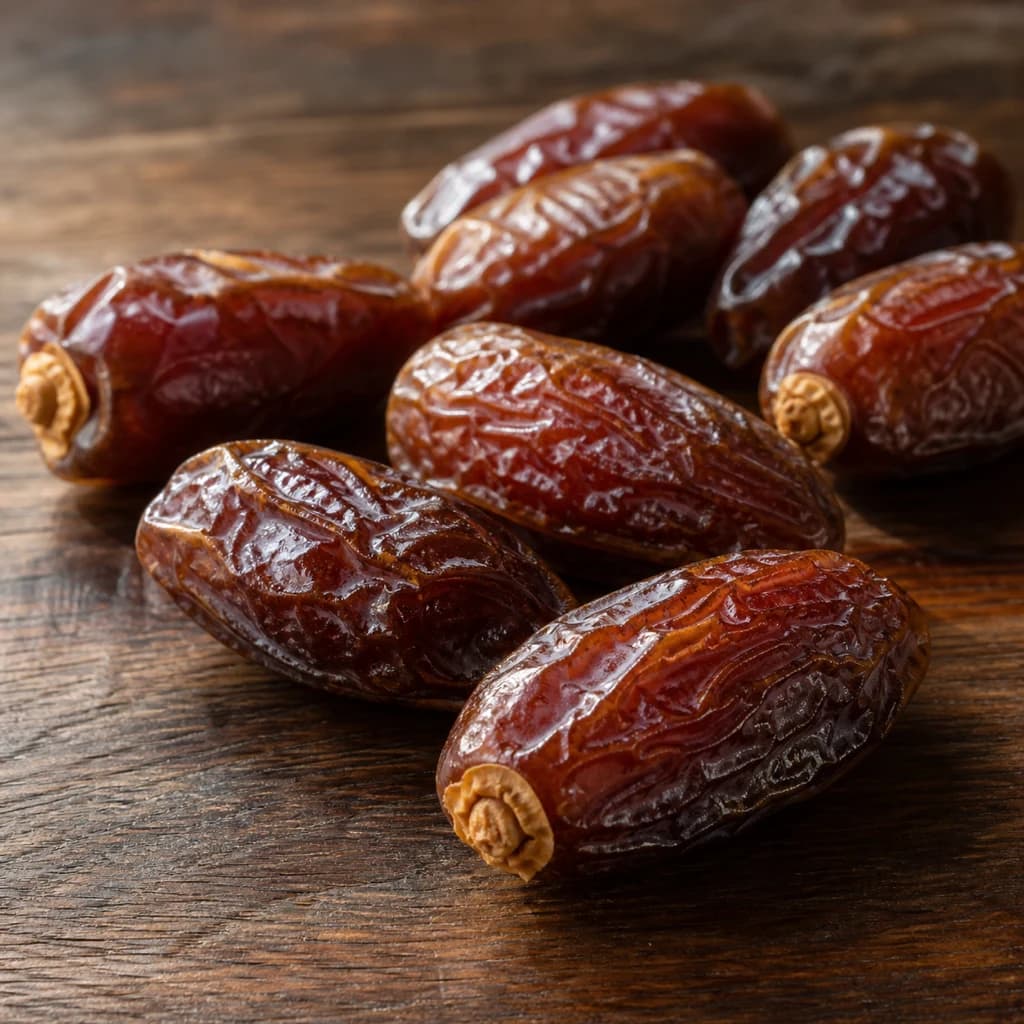
Natural form
Whole Medjool dates showing their plump, wrinkled amber-brown skin and large size.
Shows the defining visual characteristics — size, color, and skin texture — that identify a Medjool date at a glance.
Produce
Medjool Date
Large, soft, caramel-sweet date eaten whole or used as a natural sweetener.
The Medjool is a large, soft, plump date variety with a rich caramel-toffee sweetness and chewy flesh. It is eaten out of hand, stuffed with nuts or cheese, blended into smoothies and energy balls, or used as a whole-food sweetener in baking. Originally from Morocco, it is now widely grown in desert climates worldwide.
Medjool dates are the benchmark of the date world—large, soft, and intensely caramel-sweet with honey, toffee, and butterscotch undertones. Unlike truly dried fruits, Medjools are technically fresh-picked dates that have been cured on the palm or in shade to develop their characteristic soft texture and concentrated sweetness. This curing preserves significantly more moisture than conventional drying, giving Medjools their supple, almost meaty bite and superior juiciness. Once reserved for Moroccan royalty and called "the bread of the desert" by Bedouins, they are now grown primarily in California's Coachella Valley alongside crops from Israel, Saudi Arabia, and Jordan. Their high natural fructose and glucose content (60–65% sugar by weight) makes them an exceptionally efficient sweetener, while their fibrous texture and sticky moisture provide structural binding in raw desserts, energy balls, and baked goods—properties that distinguish them sharply from firmer date varieties.
- Measured in
- piece
- Storage
- Pantry
Types & varieties
The benchmark large date; prized for exceptional softness, size, and rich caramel sweetness. Often called the "king of dates."
The most widely grown commercial variety; slightly firmer texture, translucent flesh, more subtle sweetness.
Medium-sized, golden-yellow, firmer and nuttier; holds shape better in cooking; common in Middle Eastern cuisine.
Small, round, and extremely soft when ripe; bright golden color; intense honey sweetness. Often eaten at the khalal (crunchy) stage.
Soft and extremely sweet; name means "sweet" in Arabic; similar to Medjool but smaller and less expensive.
Popular variety from Saudi Arabia and Gulf states; medium-large, semi-dry to soft; caramel-forward flavor.
Fresh, Cured, or Dried—Understanding the Distinction
Medjool dates occupy a unique category. They are picked ripe and then cured—allowed to dry partially on the palm or in shade—which concentrates their sugars while retaining moisture. This differs from both fresh fruit (which spoils quickly) and truly dried dates (like many Deglet Noor varieties sold as dried). The moisture content of a properly cured Medjool is what gives it that soft, yielding flesh and makes it behave differently in recipes. When purchasing, look specifically for "Medjool" on labels—many commercial "date pieces" or "chopped dates" are made from lower-grade varieties that lack the characteristic caramel depth and binding properties.
- Medjools are NOT fully dried—expect a soft, sticky texture when properly cured
- 'Date pieces' and 'chopped dates' on ingredient labels are often inferior varieties, not Medjools
- Check for plumpness and glossiness; crystallization or hardening indicates age or improper storage
Common uses
Tips & pitfalls
- Choose dates that are plump, glossy, and yield slightly to pressure; avoid any with crystallization, dryness, or a hardened surface
- Store fresh Medjools in an airtight container in the refrigerator to maintain moisture and pliability for months
- To soften hardened dates, wrap in damp paper towel and microwave 15–20 seconds, or soak in warm water for 15 minutes
- Always pit dates by pressing the sides together or inserting a small knife along the seam; the pit should pull out easily
- For a silky smooth paste, blend pitted dates with a tablespoon of coconut oil or water until the fibers break down completely
- When using in baking, chop rather than blend if you want textural contrast; whole or halved dates will sink
- Watch portions: Medjools are calorie-dense (about 280 kcal per 100g) and the high fiber can cause digestive distress in large amounts
- Do not substitute Deglet Noor in applications requiring Medjool's binding properties; their lower moisture and firmer texture produce different results
- For savory dishes, seek out unsweetened, unsulfured Medjools to avoid caramel or sugar additives that clash with savory profiles
- When making date syrup, cook pitted dates with just enough water to cover until very soft, then blend and reduce; the resulting syrup is far superior to commercial varieties
Nutrition
Energy
1159 kJ · per 100 g
Where the calories come from
Protein
1.8g
4% DV
Carbs
75g
27% DV
Fat
0.2g
0% DV
Fiber
6.7g
24% DV
Sugars
66.5g
of which
Sodium
1mg
0% DV
Source · USDA FoodData Central · Dates, medjool
View on FDC →In the shops
Matched grocery products
No matched grocery products for Medjool Date yet.
Good to know
- Origin
- Tafilalt region of southeastern Morocco; introduced to California in the early 1900s
- Primary Growing Region
- California's Coachella Valley; also grown in Arizona, Israel, Saudi Arabia, and Jordan
- Harvest Season
- Late September through November in the Northern Hemisphere
- Size
- Largest commercial date variety; typically 1.5–2 inches (4–5 cm) long
- Flavor
- Intense caramel, honey, and toffee with butterscotch undertones
- Texture
- Soft, supple, and yielding; slightly fibrous; moist flesh clings to the pit
- Sugar Content
- 60–65% sugar by weight when ripe; naturally high in fructose and glucose
- Shelf Life
- 1–2 months at room temperature; 6–12 months refrigerated; indefinitely frozen
Substitutes
- Deglet Noor dates — Acceptable in desserts and stuffings, but less soft and with a milder caramel flavor; reduce cooking liquid by 20% when substituting
- Honey or maple syrup — Use 1 tablespoon syrup per pitted Medjool for sweetening in smoothies, dressings, and marinades; not a structural substitute for baking
- Prunes (dried plums) — Similar texture and sweetness level; slightly tarter and denser; works in savory applications and baking
- Golden raisins — Only in non-critical applications; lack Medjool's moisture, size, and caramel depth; add a splash of water when using
- Date syrup (silan) — Concentrated liquid form; use about 3/4 ratio; good for glazing and dressings but cannot substitute whole dates in stuffings
Pairs with
Also called
Medjool · Majhool Date
Appears in these dishes

Related

Tomato
Juicy, sun-sweet fruit for sauces, salads, and slow-cooked depth

Yellow Onion
The aromatic backbone of soups, sofritos, and braises

Garlic
Pungent cloves that perfume nearly every savory dish

Lemon
Bright, acidic citrus that wakes up almost any dish

Potato
Humble, hearty staple — roast, mash, fry, or boil

Carrot
Sweet, crunchy root — raw, roasted, or the base of a sofrito

Cucumber
Cool, crisp, and watery — for salads, pickles, and tzatziki

Lettuce
Crisp leaves for salads, wraps, and a fresh crunch