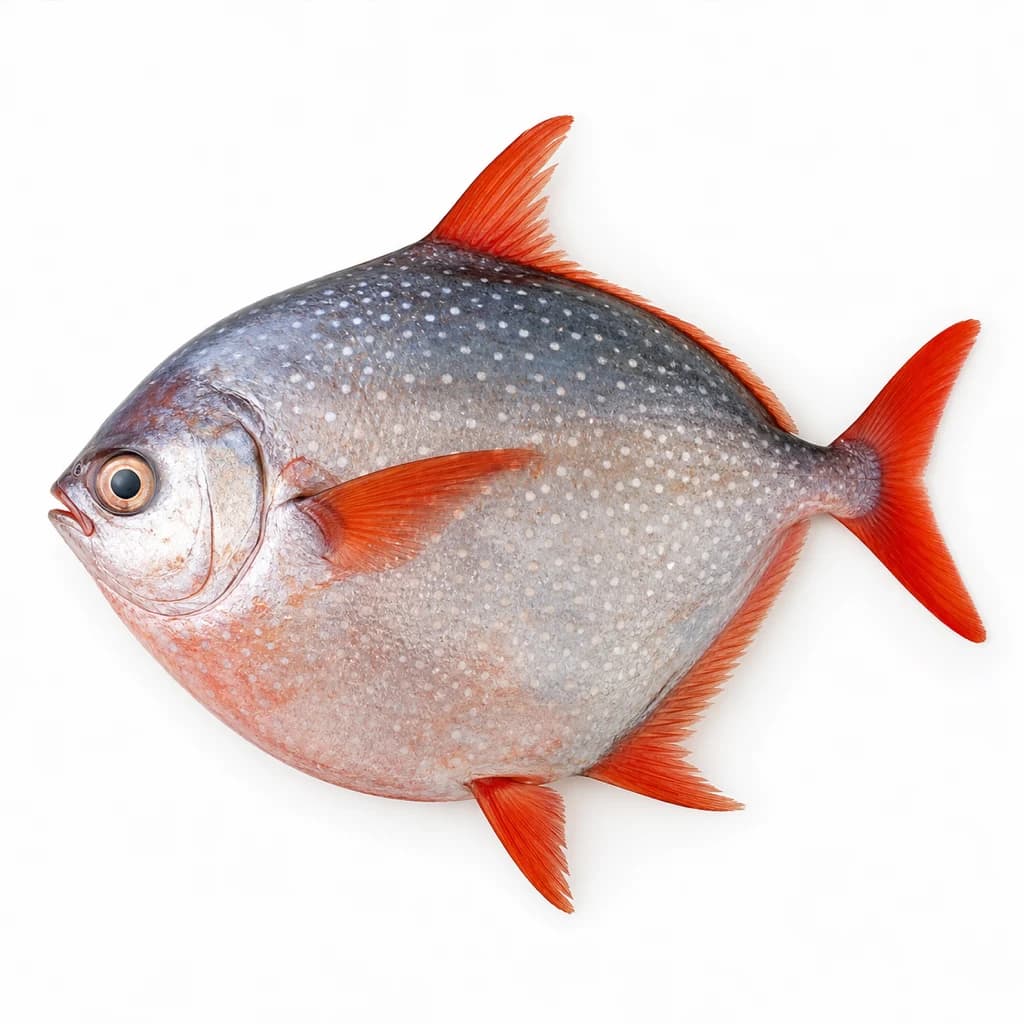
Natural form
Whole opah showing its distinctive round body, silver-blue skin, and vivid red fins.
Establishes the fish's unmistakable circular silhouette, bright coloration, and large size so readers can identify it whole.
Proteins
Opah (Moonfish)
Large, colorful Hawaiian moonfish with multiple cuts of rich, salmon-pink flesh.
Opah, or moonfish, is a large round, brightly colored deep-water fish caught in Hawaii. Its flesh varies in color and texture across the fish, ranging from pale pink to deep red, and is rich and fatty. It is grilled, seared or served raw as poke, with a flavor between tuna and swordfish.
Opah (Lampris guttatus), commonly called moonfish, is a large pelagic species found circumglobally in tropical and temperate oceans, with major commercial stocks concentrated in Hawaiian, Central Pacific, and Eastern Pacific waters. Specimens typically range from 30 to 100 pounds at harvest, with market sizes of 20 to 60 pounds whole and individuals exceeding 200 pounds recorded. What distinguishes opah in the kitchen is its exceptional fat content—5 to 15 percent intramuscular lipid distributed evenly throughout the flesh—combined with a firm, meaty texture and sweet, mild flavor. The raw flesh presents a striking salmon-pink to deep coral-red color with white marbling; when cooked, it turns translucent white to pale pink while retaining its substantial bite and moisture. This combination of visual appeal, forgiving fat content, and clean flavor has made opah a restaurant favorite, earning it a reputation as a natural salmon substitute with superior portioning characteristics. Multiple cuts are available: the center-cut loins yield the most premium portions, while steaks, cheeks, and collar sections offer variety for different preparations.
- Measured in
- g
- Storage
- Fridge
Allergens
Types & varieties
The most prized variety in U.S. markets; identified by bright red fins with white tips; the premium standard for culinary use
Found in Atlantic and Mediterranean waters; typically smaller than Pacific varieties; similar cooking properties and flavor
Harvested from Southern Hemisphere waters; flesh runs slightly darker in color; interchangeable in most preparations
Frequently confused with opah but is a true shark species; exhibits different texture and more pronounced flavor; request clear identification from your fishmonger to avoid misidentification
Understanding the Cuts
Opah yields several distinct cuts, each suited to different cooking methods. The loins—particularly the center-cut section—are the most valuable portions: they are thick, uniform in cross-section, and yield clean portions for grilling, searing, or raw applications. Steaks are cross-section cuts through the round, including the spine; they are excellent for high-heat grilling and retain moisture well due to the bone and surrounding fat. The cheeks are small but prized: yielding only a few ounces per fish, they have a tender, almost shellfish-like texture when grilled or roasted quickly. The collar—the section behind the gill plate—is another delicacy offering rich, fatty meat that benefits from quick, high heat. Belly sections are thicker and fattier, ideal for slow cooking or smoking where the connective tissue can break down.
- Center-cut loins: premium portions for grilling, searing, raw preparations
- Cross-section steaks: best for high-heat grilling; moisture-retentive
- Cheeks: small yield but exceptionally tender; cook quickly over high heat
- Collar: fatty, rich; high-heat grilling or roasting
- Belly sections: best for slow cooking, braising, or smoking
Buying and Storing
Fresh opah is highly perishable—1 to 2 days on ice once filleted—which makes sourcing outside Hawaii challenging. When purchasing whole or headed fish, apply the same freshness indicators used for any premium pelagic: clear, convex eyes and bright red gills indicate recent harvest. Avoid any specimen with sunken eyes, cloudy corneas, or brownish gills. Frozen loins are often superior to fresh fish in mainland markets because quality-conscious suppliers flash-freeze at sea, preserving the flesh before degradation begins. Look for frozen product at 0°F (-18°C) or below and use within 3 months for best quality. Cheeks and collar sections are considered chef's cuts and may need to be special-ordered from your fishmonger. Sustainable sourcing matters: opah is not typically a primary target of longline fisheries but is taken as bycatch; sourcing from well-managed fisheries in Hawaii, Central Pacific, or Eastern Pacific ensures responsible supply.
- Inspect eyes (clear, convex) and gills (bright red) for freshness
- Frozen-at-sea loins often outperform fresh outside Hawaii
- Request cheeks and collar from your fishmonger in advance
- Frozen opah maintains quality for up to 3 months at 0°F (-18°C)
- Source from well-managed fisheries to support sustainable populations
Common uses
Tips & pitfalls
- Bring opah to room temperature 20 to 30 minutes before cooking to ensure even doneness throughout thick cuts
- Use high heat and never crowd the cooking surface; the high fat content renders quickly and causes flare-ups if you overload the pan or grill
- Do not overcook: opah turns tough and loses its silky texture beyond medium doneness; target 125 to 130°F (52–54°C) internal for medium-rare in thick cuts
- The skin is edible and crisps beautifully when scored with a knife, dried thoroughly, and seared over sustained high heat
- Season conservatively—the fish needs little masking; salt, pepper, and a finishing fat like compound butter, good olive oil, or toasted sesame oil are sufficient
- For grilling whole or half-sections, oil the fish well and preheat the grate until it smokes; a hot, clean grate prevents sticking and renders the skin crisp
- When smoking opah, use moderate smoke and lower temperatures (200–225°F); the internal fat will baste the flesh as it renders, keeping it moist
- For a proper seared crust on loins, use cast iron or stainless steel over high heat—nonstick pans inhibit the browning reaction you want
- Rest cooked loins 3 to 5 minutes before slicing against the grain to allow juices to redistribute throughout the flesh
- Frozen opah loins are often superior to fresh in non-Hawaiian markets due to better handling practices at sea—do not dismiss frozen product as inferior
Nutrition
Nutrition
No USDA FoodData Central match for Opah (Moonfish) yet. We surface a per-100 g profile once a generic whole-food entry is matched and verified.
In the shops
Matched grocery products
No matched grocery products for Opah (Moonfish) yet.
Good to know
- Scientific Name
- Lampris guttatus (Regal Sunfish); L. incognitus and L. lazacii recognized regionally
- Common Names
- Moonfish, Sunfish, Kingfish, Uku (Hawaii), Antara (Mexico)
- Origin
- Circumglobal in tropical and temperate oceans; major stocks in Hawaiian, Central Pacific, and Eastern Pacific waters off Mexico and Central America
- Market Size
- Typically 30–100 lbs at harvest; 20–60 lbs whole; specimens to 220 lbs recorded
- Peak Season
- Year-round in Hawaiian waters; U.S. mainland availability peaks spring through fall
- Raw Flesh Color
- Salmon-pink to deep coral red with white intramuscular marbling
- Cooked Flesh Color
- Translucent white to pale pink; some sections retain a blush at center
- Flavor Profile
- Sweet, mild, clean; oceanic sweetness without fishiness; richness comparable to salmon
- Texture
- Firm, meaty, and substantial; moist from high fat content; flakes cleanly when cooked
- Fat Content
- High—5 to 15 percent lipid; among the fattiest fish per serving; fat distributes evenly throughout flesh
- Fillet Yield
- Head-on yield ~60 percent; skin-on fillet ~40–45 percent of whole weight; loins represent 15–20 percent of fillet
- Shelf Life
- 1–2 days on ice when fresh; up to 3 months frozen at 0°F (-18°C) or below
- Nutrition
- Excellent source of omega-3s (EPA/DHA); high in vitamin B12 and selenium; protein density comparable to other large pelagics
Substitutes
- Salmon (Atlantic or Pacific) — The closest substitute in fat content and texture; look for high-fat cuts; works in virtually any opah preparation
- Yellowtail (Hamachi) — Similar richness and fatty texture; slightly milder flavor; excellent for raw applications and light cooking
- Blue Marlin — Comparable firmness and meaty texture; slightly denser and less fatty; adjust cooking times accordingly
- Swordfish — Firm, meaty texture with moderate fat; more neutral flavor; substitute 1:1 in grilled and seared preparations
Pairs with
Also called
Moonfish
Related
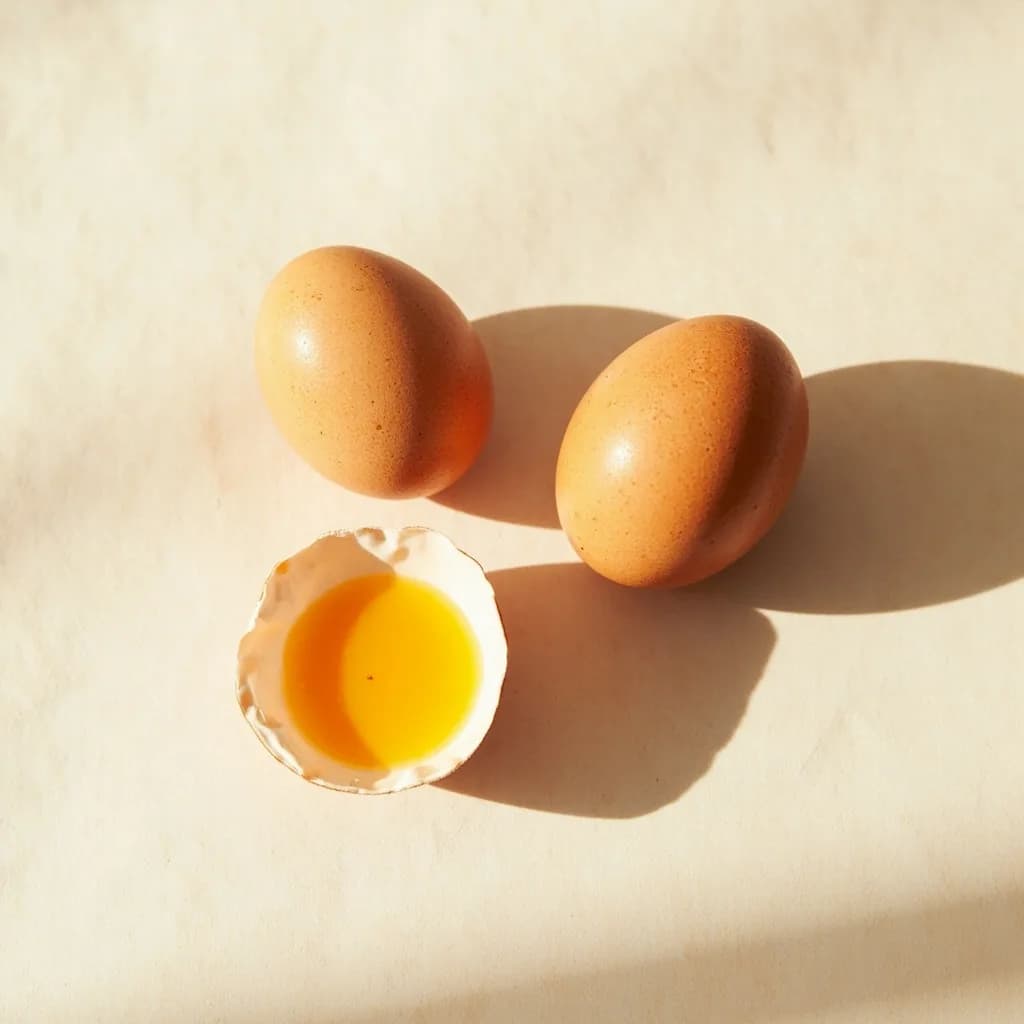
Egg
The kitchen's everything ingredient — bind, leaven, enrich, or fry
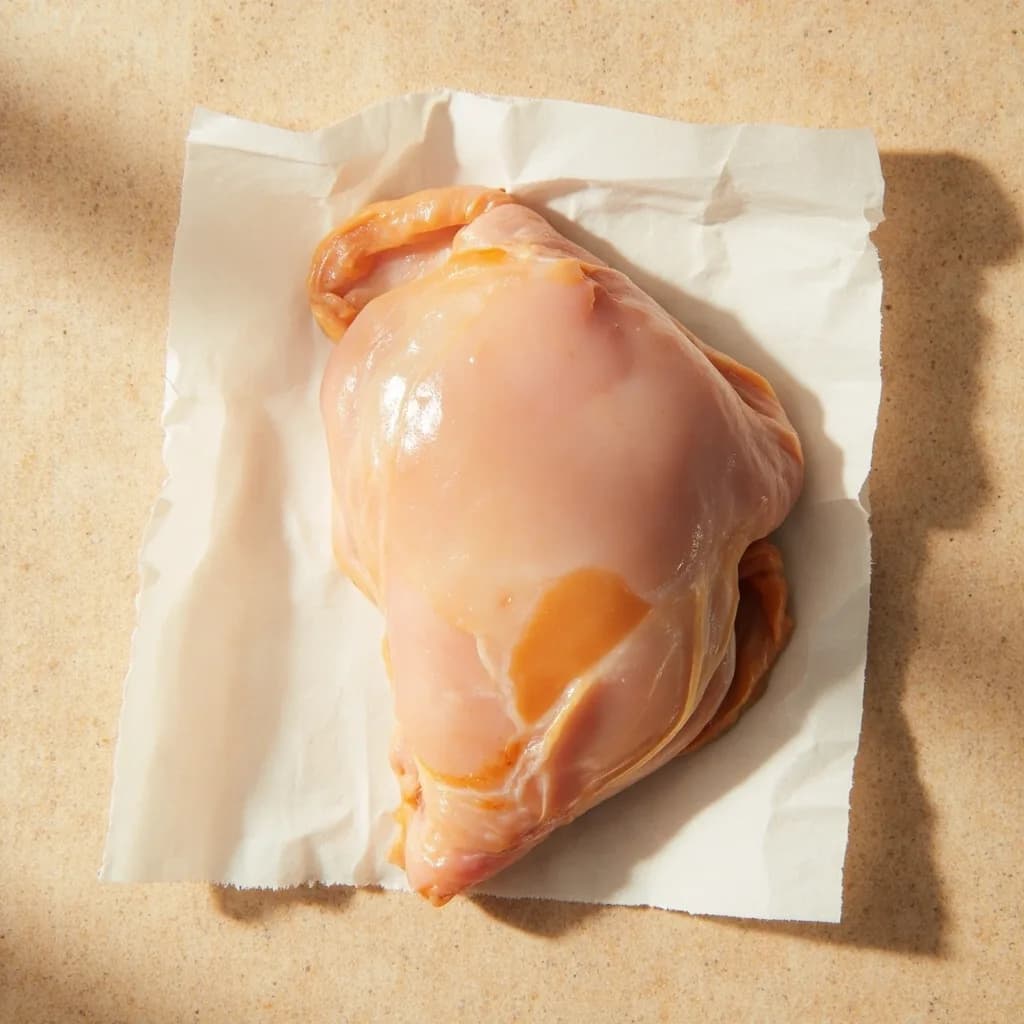
Chicken Breast
Lean, quick-cooking white meat for everyday dinners

Ground Beef
Versatile minced beef for burgers, ragù, tacos, and meatballs
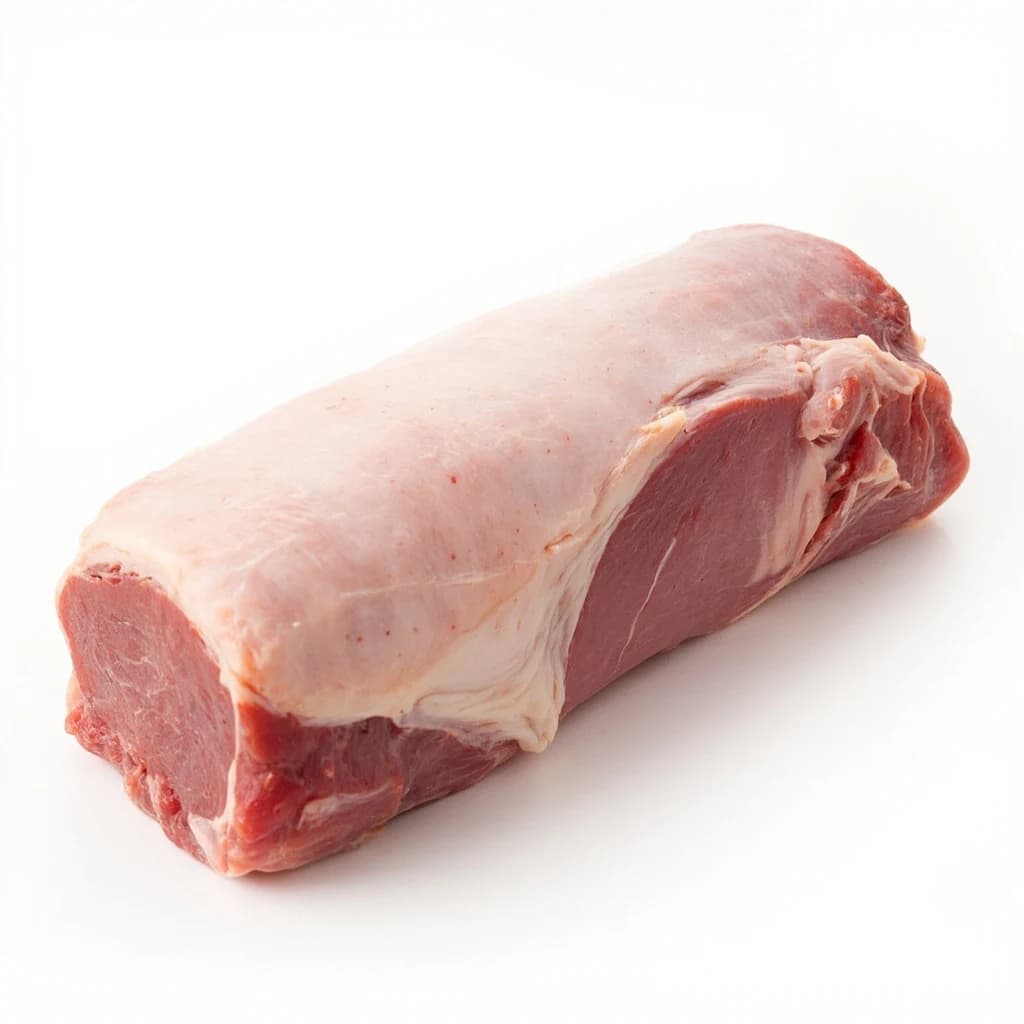
Pork Loin
Lean, tender roasting cut that stays juicy with care
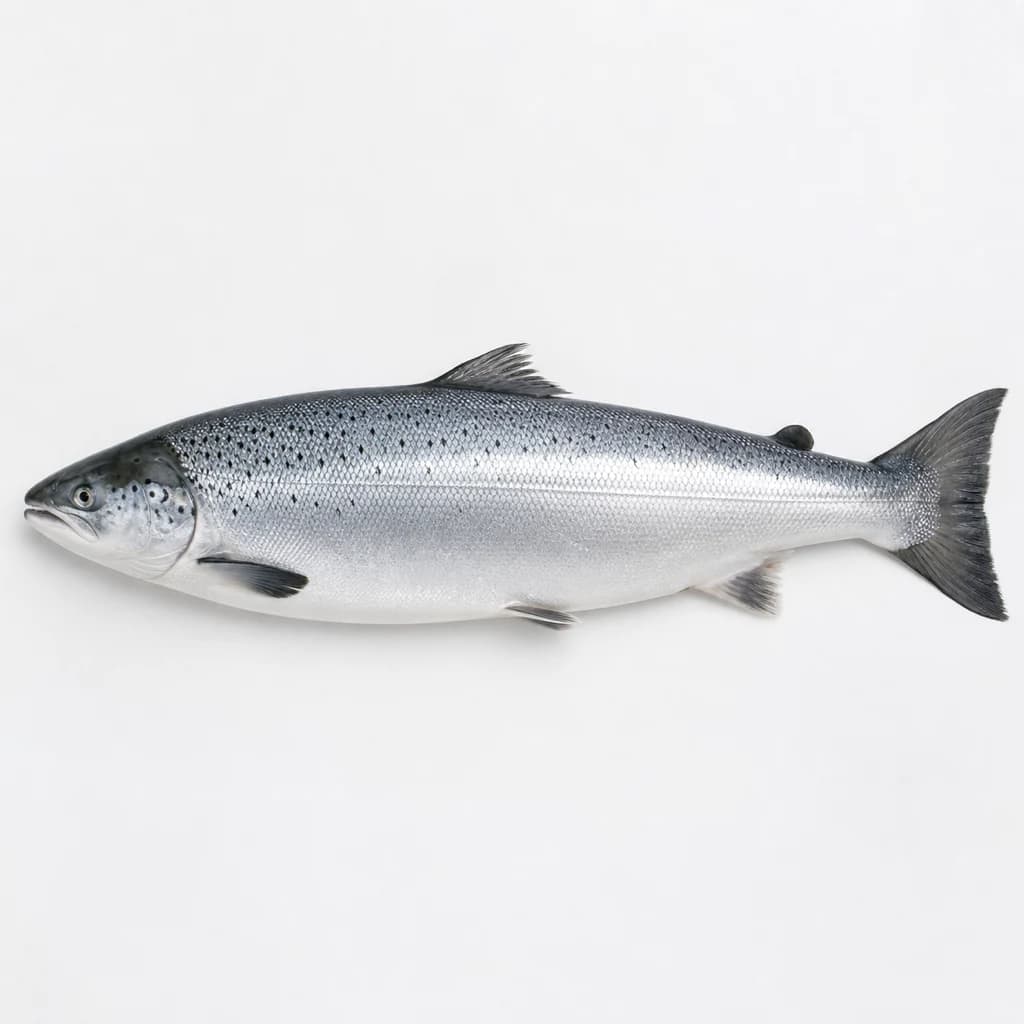
Salmon
Rich, rosy fish that roasts, grills, or cures beautifully

Egg White
Pure protein that whips to airy peaks for meringue and more
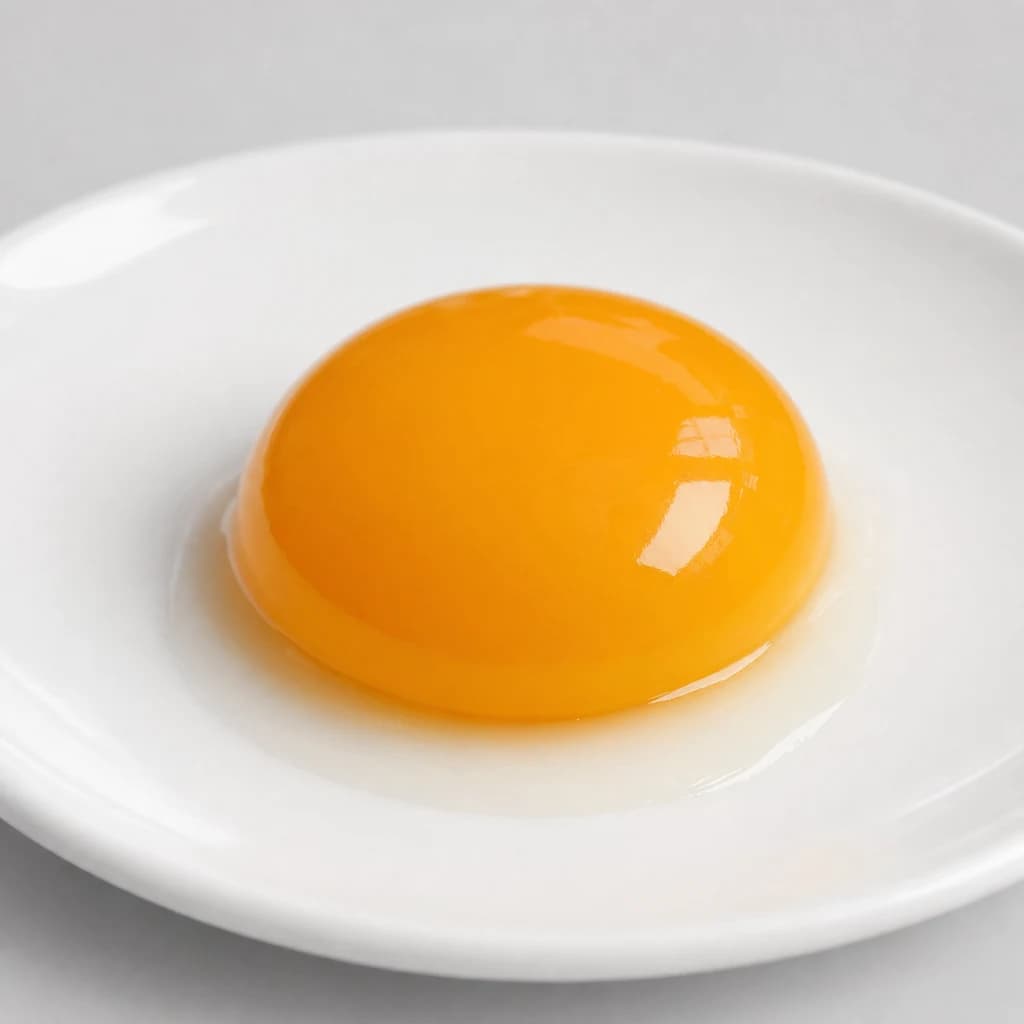
Egg Yolk
Rich, golden yolk for custards, mayonnaise, and pasta

Quail Egg
Tiny, speckled eggs for garnishing and elegant bites