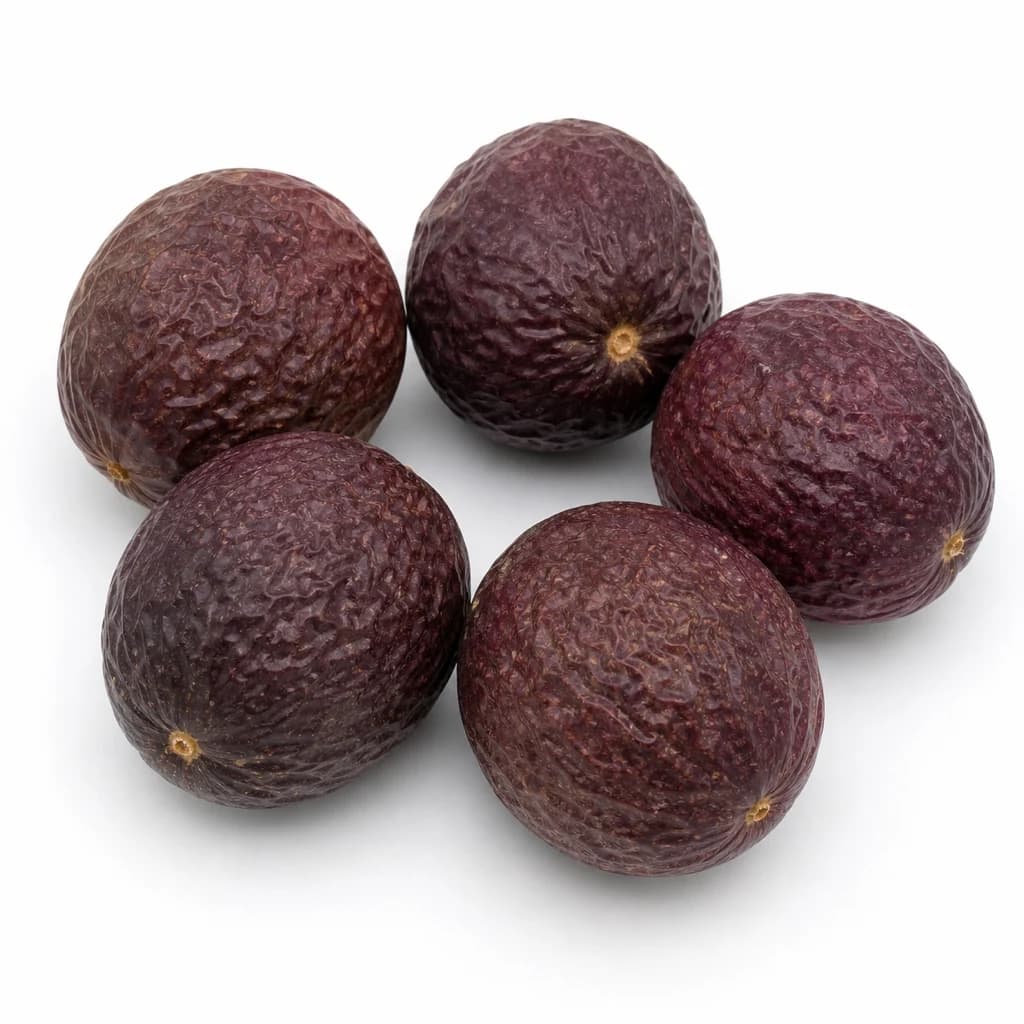
Natural form
Whole passion fruit showing the characteristic wrinkled leathery purple rind at peak ripeness.
Teaches readers to identify whole ripe passion fruit by its distinctive wrinkled purple rind and egg-like size before purchase.
Produce
Passion Fruit
Wrinkled tropical fruit with intensely aromatic, tart-sweet seedy pulp for juices and desserts.
Passion fruit is a round tropical fruit with a leathery purple or yellow rind enclosing fragrant, jelly-like pulp studded with crunchy edible seeds. The intensely tart-sweet pulp is spooned over desserts, blended into juices and cocktails, and made into mousses and sauces across Latin America and the tropics. Its perfume is unmistakable and a little goes a long way.
Passion fruit is the intensely flavored pulp of the Passiflora edulis vine, a tropical climbing plant native to South America. The fruit is roughly the size of a large egg, with a tough wrinkled skin that belies the treasure inside: a deeply aromatic, seed-filled pulp that delivers an immediate punch of tartness balanced by tropical sweetness and floral-citrussy notes. The seeds are edible and contribute pleasant textural crunch in preparations where they're retained. Two commercial varieties dominate the market: the smaller purple-skinned type, which is more aromatic and acidic, originating from its South American homeland; and the larger yellow-skinned variety, sweeter and less tart, which dominates commercial production in Hawaii and Southeast Asia. The fruit's extraordinary aromatic intensity—one of the most concentrated of any tropical fruit—makes it a prized ingredient that transforms even modest preparations with its singular character. Because the flavor is so concentrated, passion fruit behaves differently from many other fruits: it needs no cooking to release its qualities, and prolonged heat destroys its volatile aromatics, leaving only a flat, overly tart taste.
- Measured in
- piece
- Storage
- Fridge
Types & varieties
Smaller, size of a large egg; deep purple skin; more aromatic and acidic; originates from South America
Larger with yellow skin; sweeter and less acidic; dominant commercial variety from Hawaii and Southeast Asia; often labeled 'golden' in markets
Smooth pale-orange shell; much sweeter and milder than P. edulis; native to the Andes; breaks open easily to reveal translucent pulp
Oval fruit up to 12 inches long; mild, watermelon-like flavor; used young as a vegetable in tropical cuisines
Elongated, banana-shaped; yellow to orange skin; tart but less aromatic than common passion fruit; common in Latin American markets
Working with Whole Passion Fruit
The wrinkled exterior is counterintuitive to consumers expecting smooth skin on ripe produce, but this is perhaps the most important practical fact about passion fruit: a smooth-skinned fruit is an underripe one and will lack the characteristic tart-sweet balance entirely. Select fruits with deeply dimpled, puckered skin and a slight give when pressed. The fruit should feel heavy for its size, indicating abundant juicy pulp inside. To extract the pulp, halve the fruit crosswise and scoop the contents—both seeds and gel—into a fine-mesh strainer. For smooth preparations like mousses, curd, or beverages, press firmly to extract the juice, discarding the seeds. For textural applications like sauces, fruit salads, or dressings, use the seeds whole; they contribute a pleasant poppy crunch that many find pleasant.
- Halve crosswise, not lengthwise, to maximize pulp exposure
- Use a spoon to scoop every bit of the attached pulp from the rind interior
- A single large fruit yields approximately 1–2 tablespoons of pulp
- Freeze pulp in ice cube trays for convenient portioning
Heat and Passion Fruit: A Critical Relationship
Passion fruit's aromatic complexity comes from volatile compounds that are destroyed by sustained heat. This is the single most important technical consideration when cooking with the fruit. In practice, this means adding passion fruit pulp or juice in the final minutes of sauce preparation, or using it completely raw. Preparations like passion fruit curd succeed because the fruit is added off-heat or the cooking is brief. Glazes work best when made as a quick reduction with the fruit added at the end. The classic mistake is simmering passion fruit for extended periods, which produces a flat, one-dimensional tartness rather than the layered aromatic experience of properly handled fruit.
- Add pulp after removing from heat whenever possible
- For glazes, reduce the base (sugar, liquid, other aromatics) separately, then whisk in fresh pulp off heat
- Refrigerate finished preparations containing fresh passion fruit to preserve aromatics
- Frozen pulp can be added directly to hot preparations as the freezing itself blunts the heat impact somewhat
Common uses
Tips & pitfalls
- Select fruits with deeply wrinkled, dimpled skin—this indicates full ripeness and concentrated flavor; smooth-skinned fruits are underripe and will lack the characteristic tart-sweet balance
- Store whole ripe fruits in the refrigerator; they hold 1–2 weeks but flavor peaks within the first few days after wrinkling appears
- To extract pulp: halve the fruit and scoop contents into a fine-mesh strainer. Press to separate juice from seeds, or use seeds whole for textural contrast in sauces and salads
- Freeze excess pulp in ice cube trays for convenient portions—frozen pulp retains flavor for up to 3 months and can be thawed or used directly in smoothies and sauces
- Heat is passion fruit's enemy: avoid prolonged cooking, which destroys the volatile aromatic compounds; add pulp or juice in the final stages of preparation or use fresh
- A little goes a long way. The flavor is concentrated and intensely aromatic; start with modest amounts and adjust. Overuse produces an unpleasant, medicinal bitterness
- Balance tartness with sugar or cream. The natural acidity pairs well with dairy fats (cream, condensed milk) which round and mellow the sharp edges
- When a recipe calls for passion fruit juice concentrate, dilute 1 part frozen concentrate with 3–4 parts water rather than assuming it's the same as fresh juice
Nutrition
Energy
406 kJ · per 100 g
Where the calories come from
Protein
2.2g
4% DV
Carbs
23.4g
9% DV
Fat
0.7g
1% DV
Fiber
10.4g
37% DV
Sugars
11.2g
of which
Sodium
28mg
1% DV
Source · USDA FoodData Central · Passion-fruit, (granadilla), purple, raw
View on FDC →In the shops
Matched grocery products
No matched grocery products for Passion Fruit yet.
Good to know
- Scientific Name
- Passiflora edulis
- Primary Varieties
- Purple (more aromatic, acidic) and Yellow (sweeter, less acidic)
- Typical Size
- 2.5–3 inches (6–8 cm) diameter for purple; larger for yellow
- Peak Season
- Late summer through fall; year-round in tropical regions
- Flavor Profile
- Intense tartness, tropical sweetness, floral and citrus notes
- Pulp Yield
- 35–40% of fruit weight
- Shelf Life
- 1–2 weeks refrigerated whole; 1 week fresh pulp; up to 3 months frozen
- Ripe Indicator
- Deeply wrinkled, puckered skin; fruit feels heavy for its size
Substitutes
- Frozen Passion Fruit Pulp — Preferred substitute; available year-round and comparable to fresh when thawed
- Mango Puree — Different tropical fruit character but provides similar sweet-tart balance for desserts and sauces
- Passion Fruit Juice Concentrate — Reconstitute with water; less aromatic than fresh but similar flavor profile; useful for beverages
- Guava Puree — Comparable tropical sweetness and seeded texture for sauces and desserts
- Tamarind Paste — Provides similar intense tartness with exotic complexity; reduce sugar accordingly when substituting in desserts
Pairs with
Also called
Maracujá · Maracuyá · Pasheni
Related

Tomato
Juicy, sun-sweet fruit for sauces, salads, and slow-cooked depth

Yellow Onion
The aromatic backbone of soups, sofritos, and braises

Garlic
Pungent cloves that perfume nearly every savory dish

Lemon
Bright, acidic citrus that wakes up almost any dish

Potato
Humble, hearty staple — roast, mash, fry, or boil

Carrot
Sweet, crunchy root — raw, roasted, or the base of a sofrito

Cucumber
Cool, crisp, and watery — for salads, pickles, and tzatziki

Lettuce
Crisp leaves for salads, wraps, and a fresh crunch