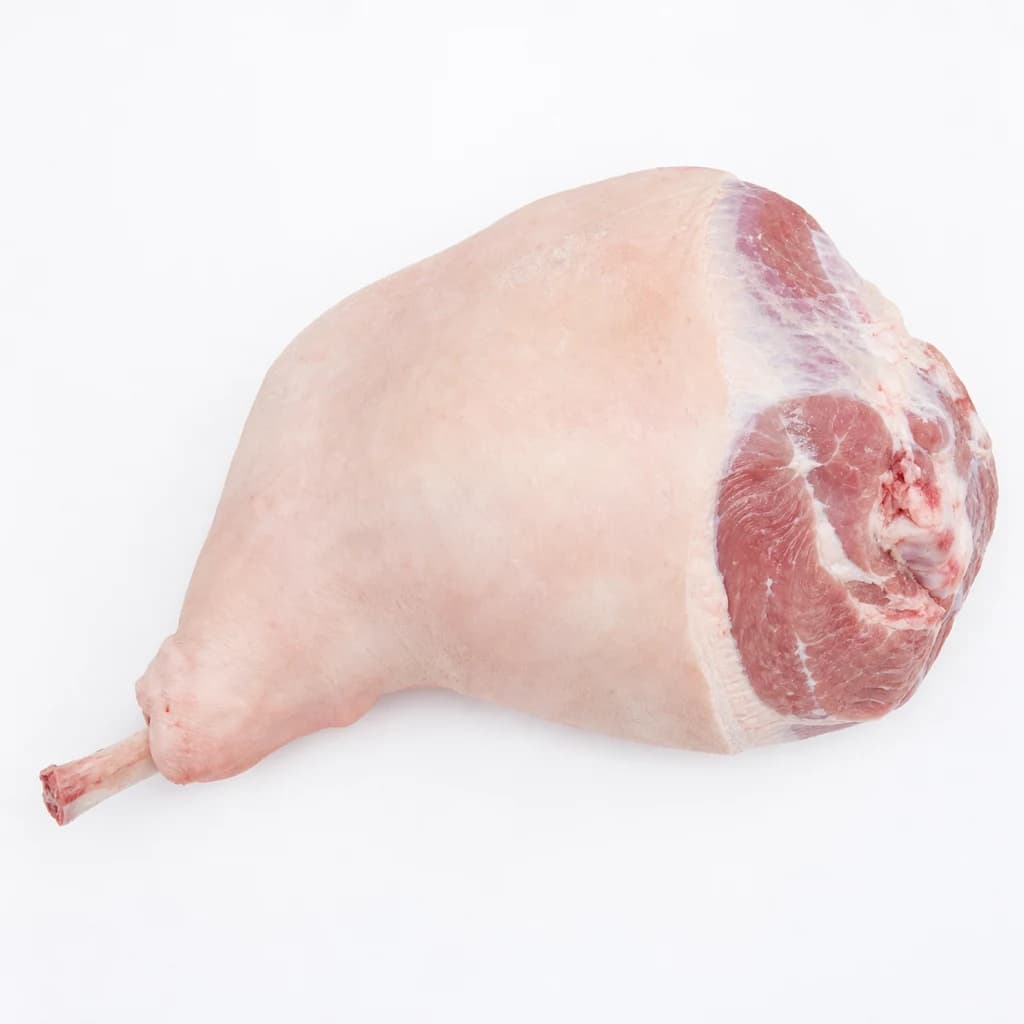
Natural form
A whole fresh bone-in pork leg, showing its large size and pale pink lean muscle.
Shows the reader the raw whole cut — its distinctive large oblong shape, bone-in structure, and lean pale-pink muscle — so it is immediately recognizable at a butcher or market.
Proteins
Pork Leg
Large lean hind leg of pork, roasted whole or cured into ham.
Pork leg is the hind leg (ham primal) of the pig, a large, relatively lean cut. Fresh, it is slow-roasted whole for crackling roasts and pernil; cured, it becomes ham, prosciutto and jamón. Its size and low fat reward gentle, slow cooking.
The pork leg—also called fresh ham before curing—is the haunch of the pig, extending from the hock at the ankle to the aitchbone at the hip. It is one of the largest and most utilitarian primal cuts, composed of muscles that do heavy work during the animal's life. This gives the meat a firmer texture and deeper color than the loin, with notably higher myoglobin content that translates to a robust, full-flavored eating experience. The leg is divided into three primary muscles: the top (sirloin end) is the most tender, the bottom is moderately firm, and the shank is the toughest—each suited to different cooking methods.
The critical distinction in the kitchen is between the fresh leg and its cured descendants. A fresh pork leg behaves like a large, lean roast: it benefits from low-and-slow cooking or careful high-heat roasting to develop crackling, and it responds well to brining or dry-curing with salt in advance. The cured leg, once salt and time have done their work, becomes ham in all its forms—from quick-cooked deli slices to aged country hams that can hang for months. This duality makes the leg one of the most versatile cuts in the cooler; a single primal can anchor a weeknight stew or become a centuries-old tradition on the wall.
- Measured in
- g
- Storage
- Fridge
Types & varieties
Bone-in or boneless; the most common retail form
Cut 3/4–1 inch thick; sold with or without the round bone
Whole leg sold fresh; same cut as country ham before curing
Sirloin portion, the most tender and expensive sub-cut
Lower shank portion below the knee joint; sold fresh or smoked
Whole leg dry-cured with salt and sometimes sugar; aged; Southern US tradition
Dry-cured Virginia ham style from heritage hogs; must age 6–12 months
Cured and cold-smoked; German style, boneless
Spanish mountain ham; dry-cured from pork leg
Wet-cured then smoked; similar to Canadian bacon texture
The Fresh vs. Cured Divide
The leg is a single cut that transforms entirely depending on how it is treated. Fresh pork leg requires cooking to tenderness; cured leg requires time, salt, and often smoke to develop complexity. In American kitchens, fresh legs are common and versatile—roasted, braised, or cubed for stews. In Southern and Appalachian traditions, the whole country ham hanging in a farmhouse pantry is a different relationship with the same primal: the curing process concentrates flavor and preserves the meat without refrigeration. Understanding which you have in hand determines everything from seasoning to cooking time to serving size.
- Fresh leg: cook within 5 days refrigerated, or freeze for up to 6 months
- Cured whole ham: age in a temperature-controlled environment or slice and refrigerate 1–2 weeks
- The same raw leg becomes prosciutto, Smithfield, or a weeknight roast—the cut itself is identical
Understanding the Three Muscles
The leg is not a uniform mass of meat. The top muscle, nearest the sirloin, is the most tender and best suited to quick-cooking methods or thin slicing after roasting. The bottom muscle is moderate in tenderness and benefits from moist cooking or careful roasting. The shank is the toughest—packed with collagen that melts into gelatin during long braises—and is ideal for stews, soups, or applications where you want the meat to shred apart. When carving a roast, work with these natural separations rather than fighting them.
- Top (sirloin end): most tender, best for thin-sliced roasts or steaks
- Bottom muscle: moderate tenderness, good for braising or moderate-temperature roasting
- Shank: toughest but most collagen-rich, ideal for long braises and shredding
Common uses
Tips & pitfalls
- Bring the leg to room temperature for 1–2 hours before roasting for even cooking throughout
- Score the skin in a diamond pattern 1/4 inch deep before roasting; this allows fat to render and the rind to puff into proper crackling
- Season aggressively with salt 24 hours ahead if possible—the leg is thick and needs time for the cure to penetrate
- Use a probe thermometer inserted into the center of the thickest muscle; remove at 145°F and rest for at least 15 minutes
- Do not cover the skin with foil during roasting or you will not get crackling; the skin must be exposed to dry oven heat
- Rest the roast uncovered on a rack for at least 20 minutes before carving; this allows juices to redistribute throughout the muscle
- When carving, slice across the grain through each muscle individually rather than sawing through the bone
- If buying a whole leg for curing, request it from your butcher 2–3 weeks in advance; most retail legs have the aitchbone removed already
- The lean muscles of the leg can dry out faster than shoulder—monitor internal temperature carefully and do not overcook
- For pulled pork texture, braise covered at 300°F for 4–5 hours until the meat releases from the bone
Nutrition
Energy
569 kJ · per 100 g
Where the calories come from
Protein
20.5g
41% DV
Carbs
0g
0% DV
Fat
5.4g
7% DV
Fiber
0g
0% DV
Sugars
0g
of which
Sodium
55mg
2% DV
Source · USDA FoodData Central · Pork, fresh, leg (ham), whole, separable lean only, raw
View on FDC →In the shops
Matched grocery products
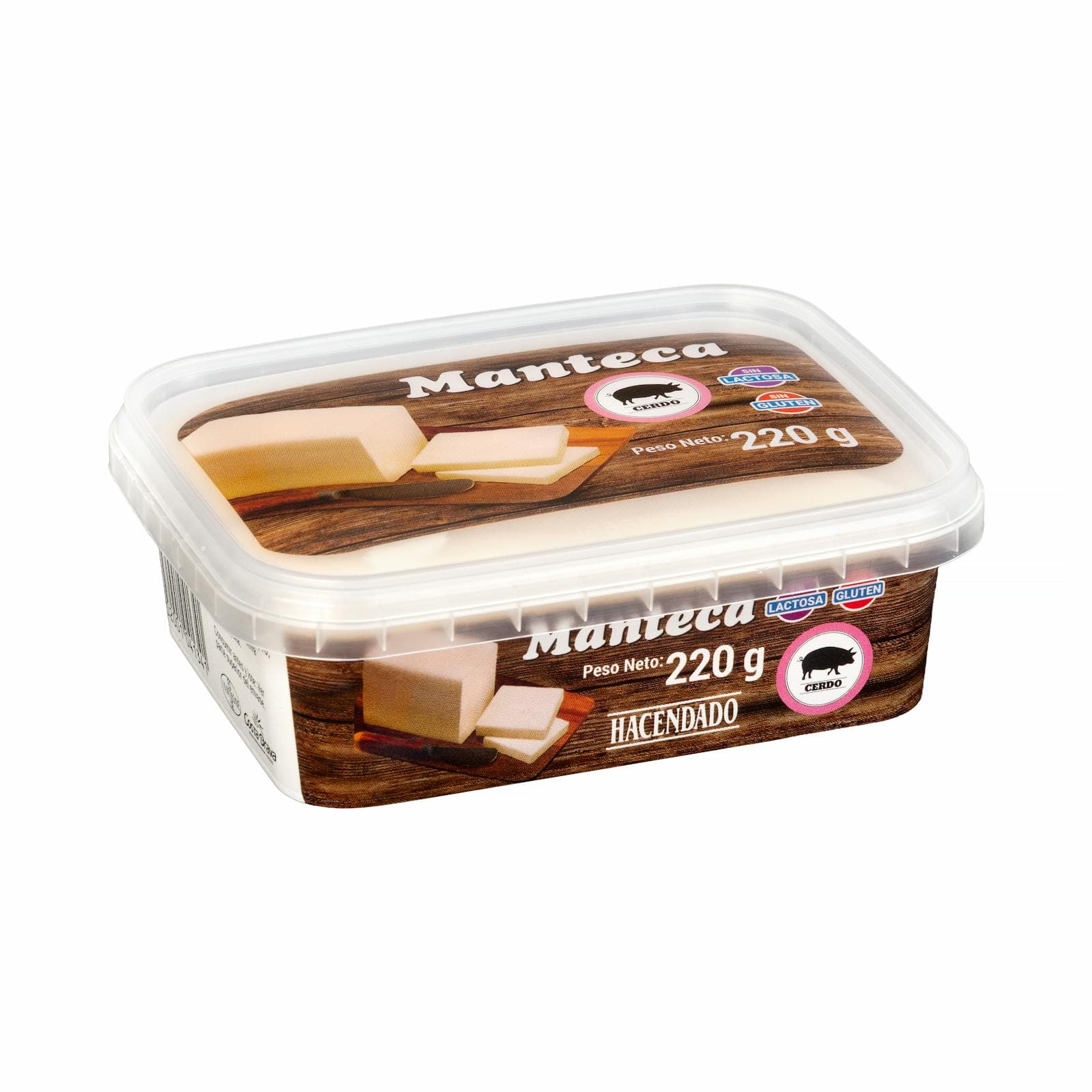 €2.20
€2.20Pork Lard
Hacendado · 220 g · Mercadona
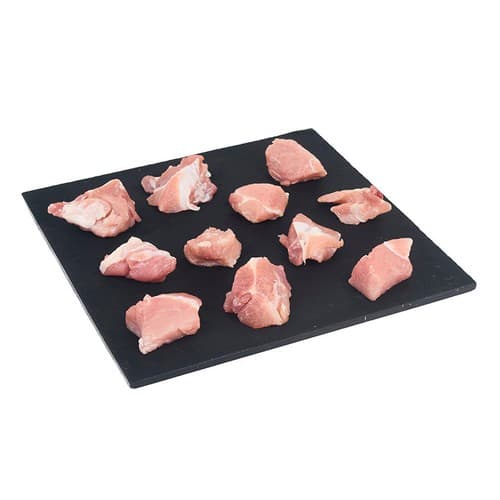 €3.40
€3.40Pork Stew
BONPREU · ud · Bonpreu
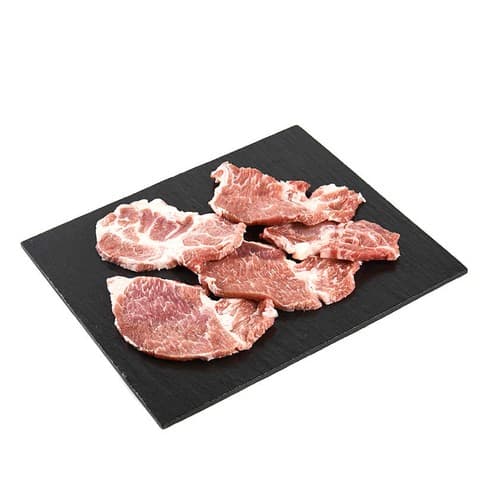 €3.45
€3.45Lean Pork
BONPREU DE L'ERA · ud · Bonpreu
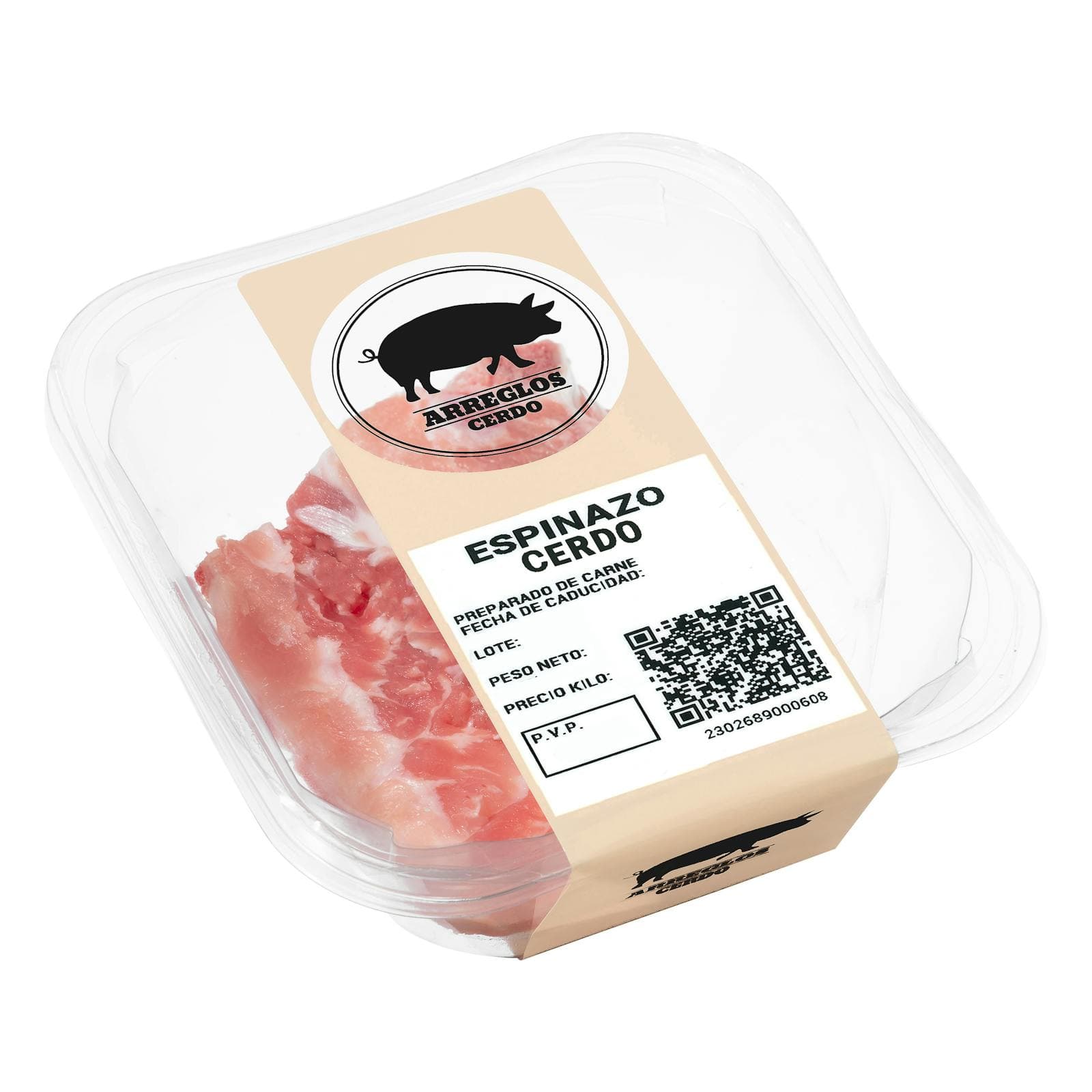 €2.10
€2.10Pork Spine
300 g · Mercadona
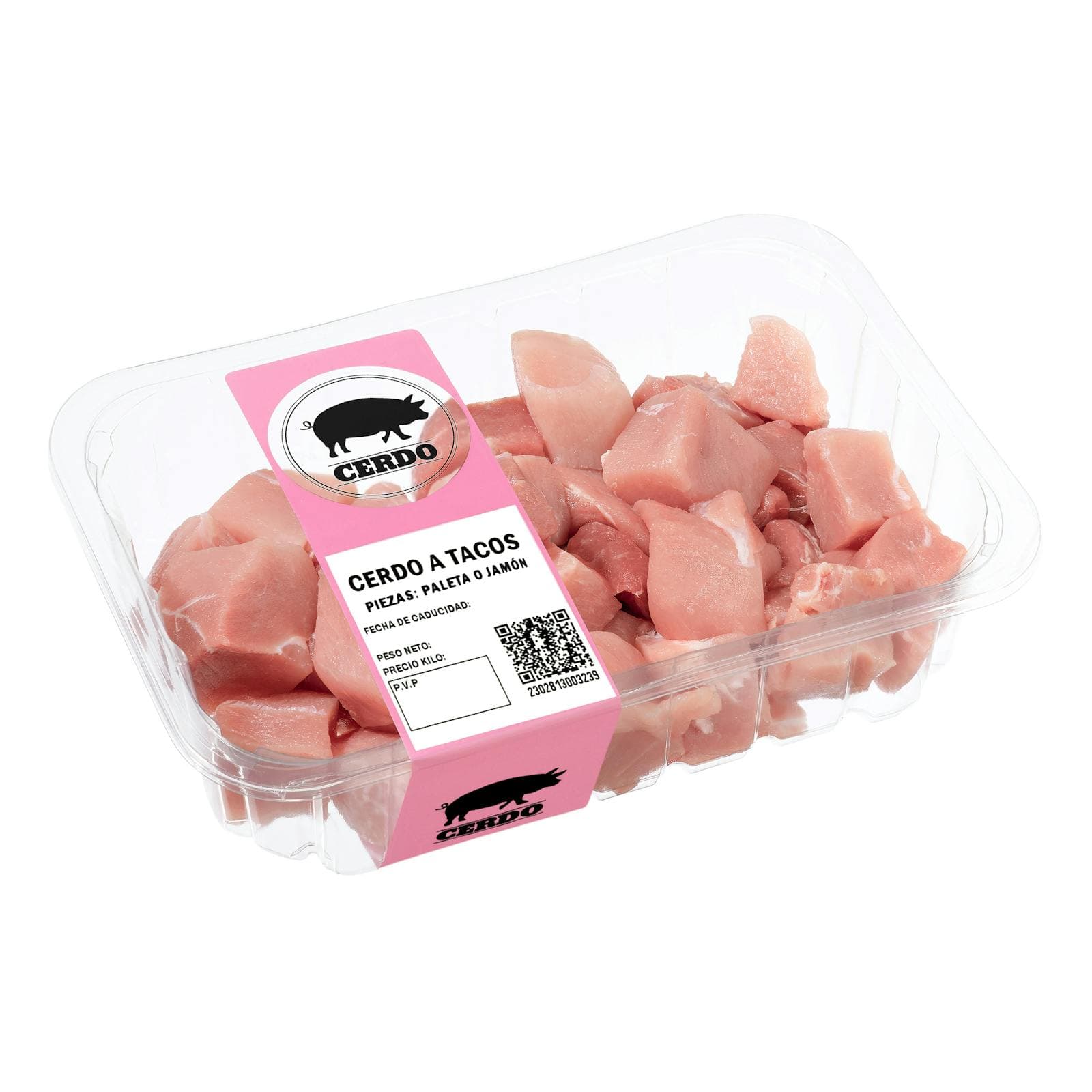 €3.22
€3.22Diced Pork
560 g · Mercadona
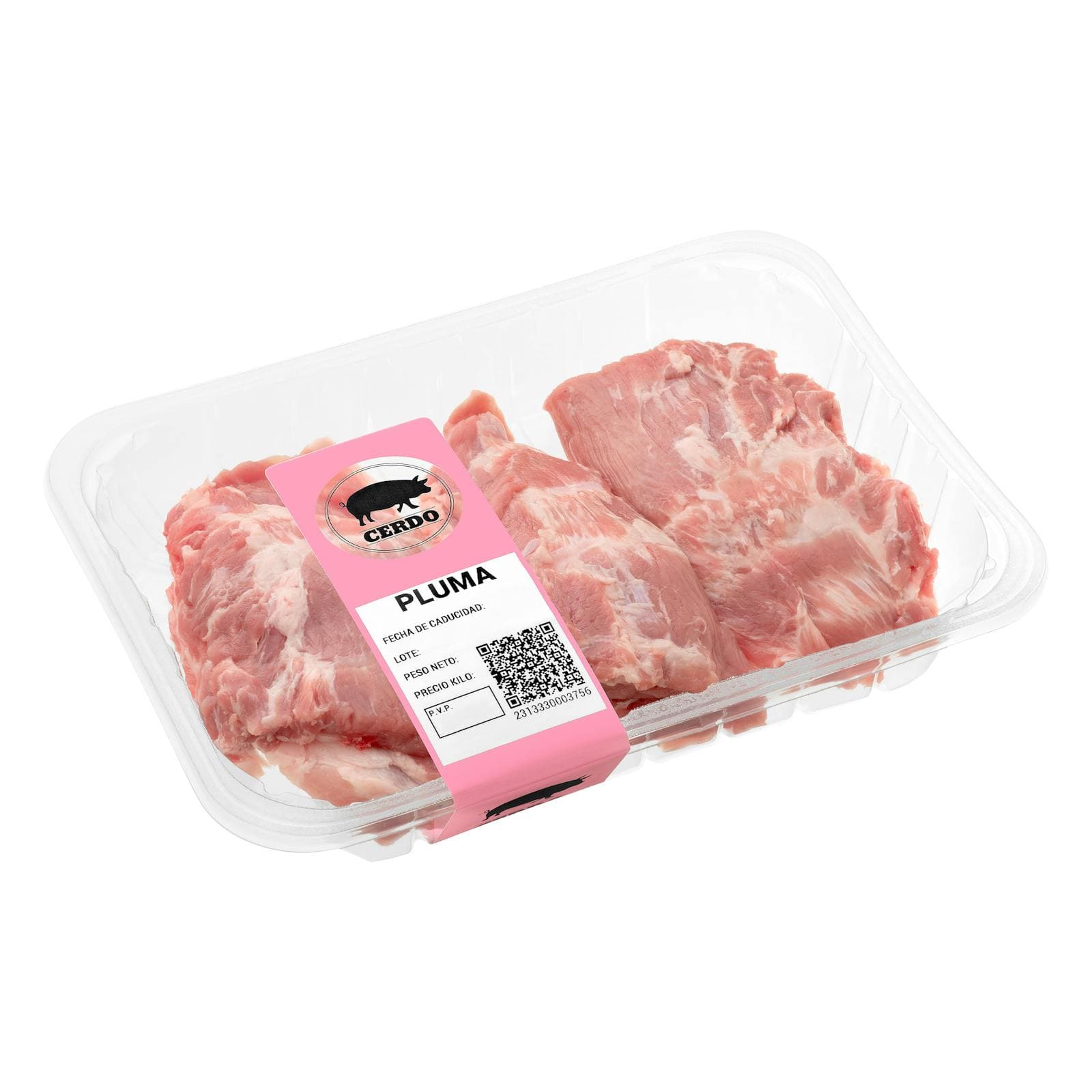 €3.75
€3.75Pork Pluma
300 g · Mercadona
Good to know
- Type
- Fresh or cured pork, hind leg portion
- Location on animal
- Hind leg, from the hock to the aitchbone
- Typical weight
- Whole leg: 10–20 lbs; roasts: 3–8 lbs; steaks: 3/4–1 in thick
- Bone
- Round thigh bone (femur), circular blade bone at the top
- Fat content
- Lean with a distinct fat cap; 4–10% fat depending on trimming
- Protein
- Approximately 20–22 g per 3-oz cooked serving
- Color
- Darker red than loin due to higher myoglobin content in the haunch muscles
- Skin
- Called pork rind; renders to produce crackling when scored and roasted
- Muscle structure
- Three primary muscles: top, bottom, and shank; the top (sirloin end) is most tender
- Internal temp (fresh)
- 145°F for medium-rare, 160°F for medium (USDA)
- Fresh storage
- Refrigerate at 34–38°F for up to 5 days; freeze at 0°F for up to 6 months
- Cured storage
- Whole country ham: cure and age in a temperature-controlled space; sliced ham: refrigerate 1–2 weeks
- Yield
- Approximately 65–70% cooked yield after roasting; bones add 15–20% weight
Substitutes
- Pork Shoulder — Fattier, more marbling; better for slow-cooked and braised preparations but less ideal for roasting
- Pork Loin — Leaner and more tender; lacks the robust flavor of leg; acceptable for quick-cooking steaks
- Turkey Leg — Similar texture and size; much leaner and milder; requires longer cooking
- Beef Round — Comparable leanness and size; much longer cooking required; different flavor profile
Pairs with
Also called
Ham Primal · Fresh Ham
Appears in these dishes
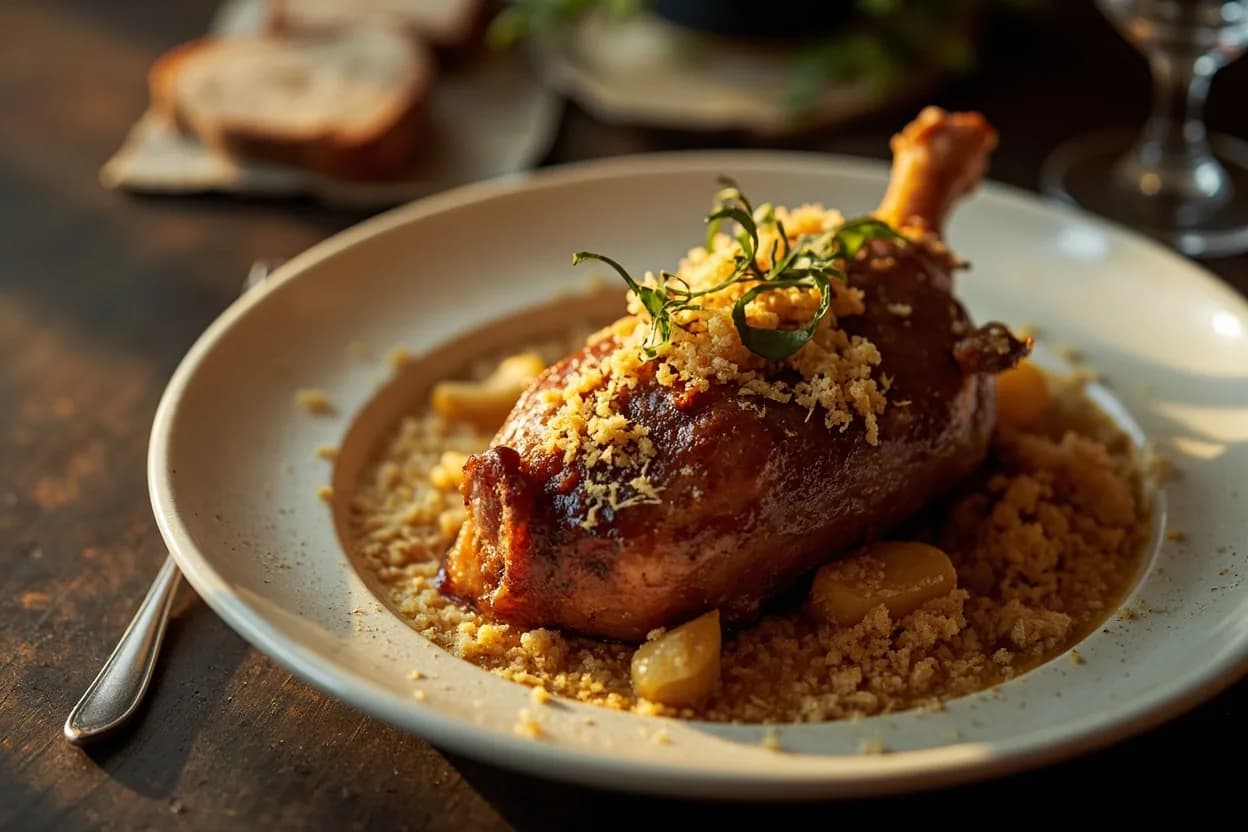
Related

Egg
The kitchen's everything ingredient — bind, leaven, enrich, or fry
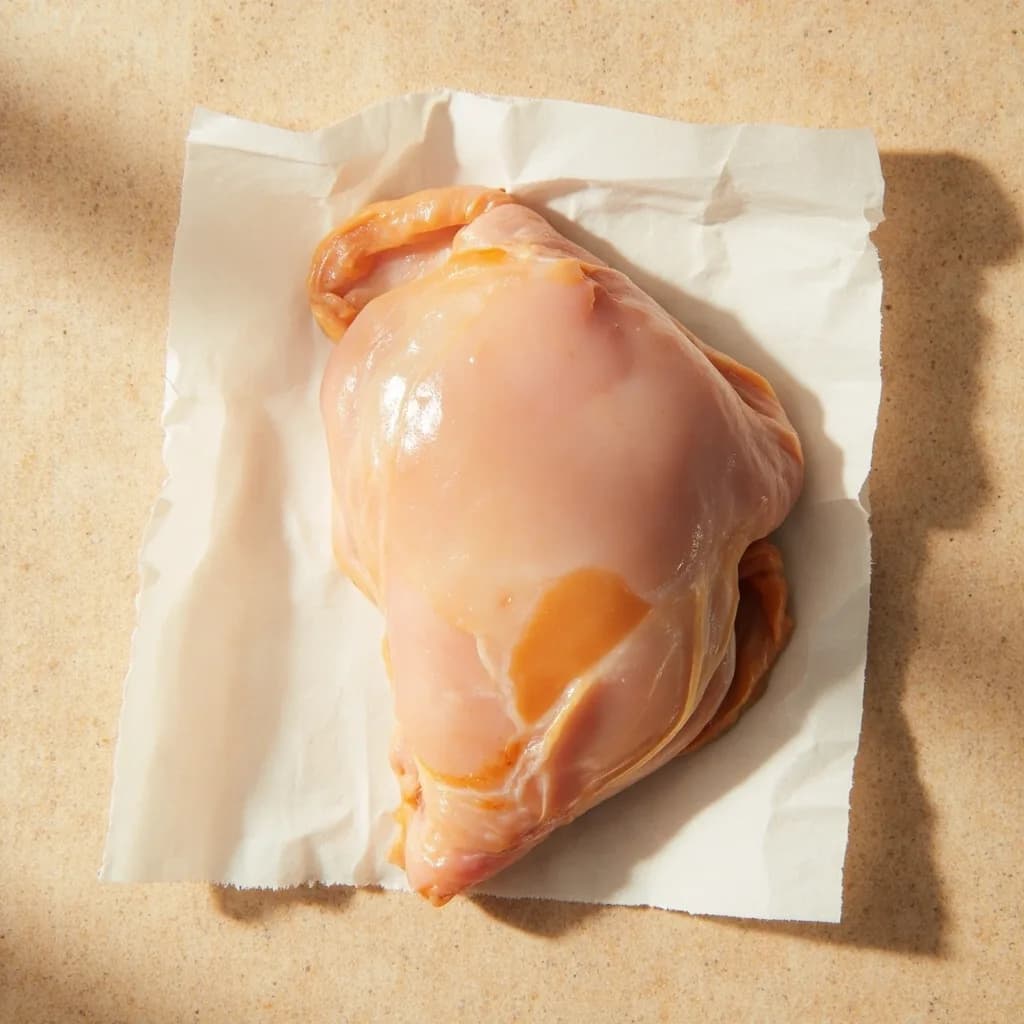
Chicken Breast
Lean, quick-cooking white meat for everyday dinners

Ground Beef
Versatile minced beef for burgers, ragù, tacos, and meatballs
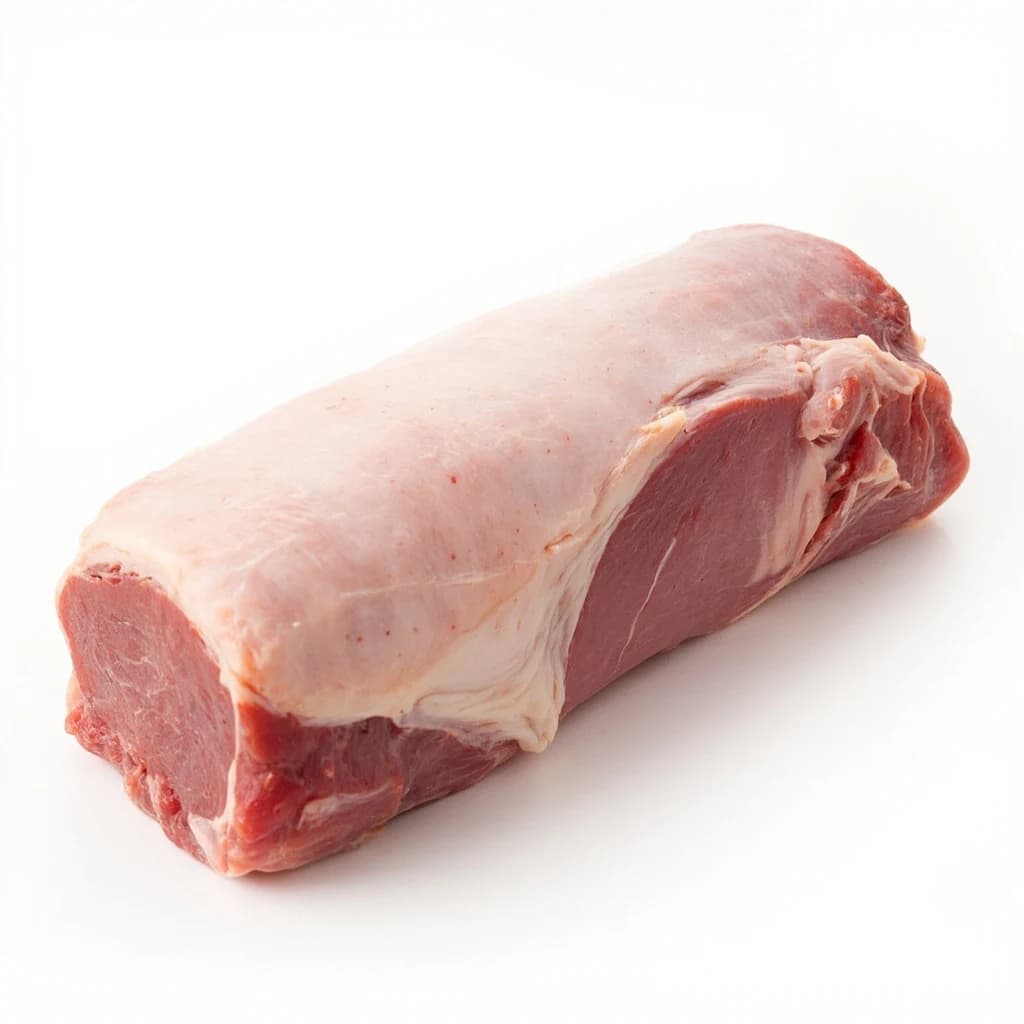
Pork Loin
Lean, tender roasting cut that stays juicy with care
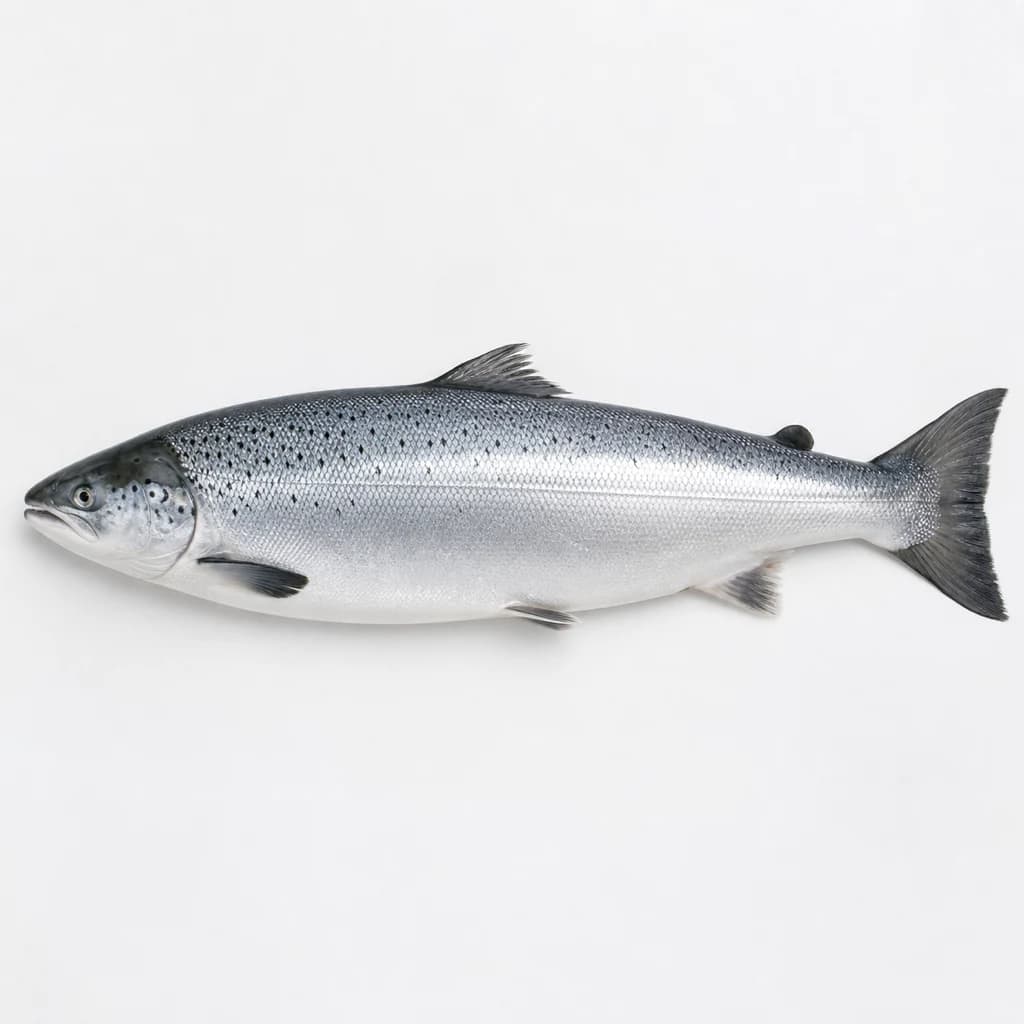
Salmon
Rich, rosy fish that roasts, grills, or cures beautifully

Egg White
Pure protein that whips to airy peaks for meringue and more

Egg Yolk
Rich, golden yolk for custards, mayonnaise, and pasta

Quail Egg
Tiny, speckled eggs for garnishing and elegant bites