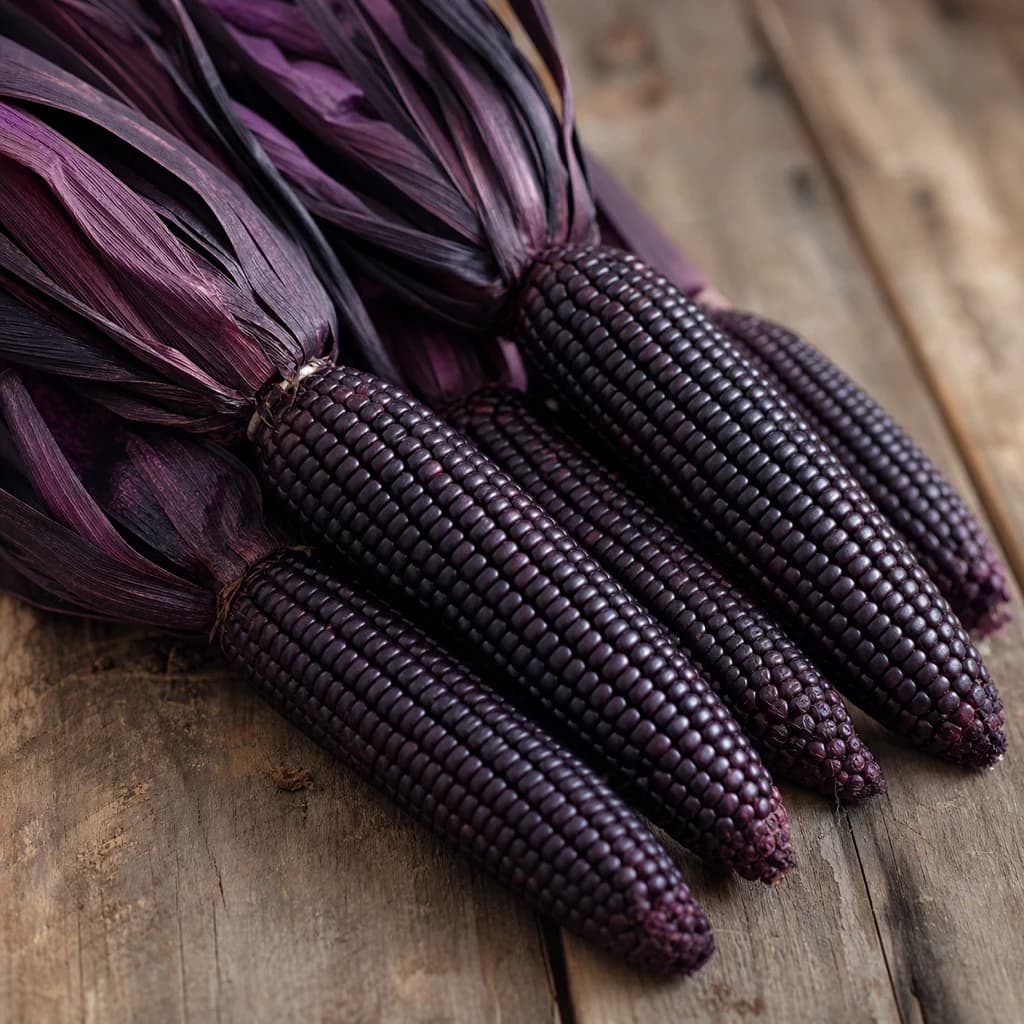
Natural form
Dried whole ears of Andean purple corn, showing deep-violet husks and kernels.
Shows the intact dried cob form as it is harvested and sold in Andean markets, teaching the reader to recognize the ingredient in its most common unprocessed state.
Produce
Purple Corn
Deep-purple Andean maize used to make chicha morada and natural colorant.
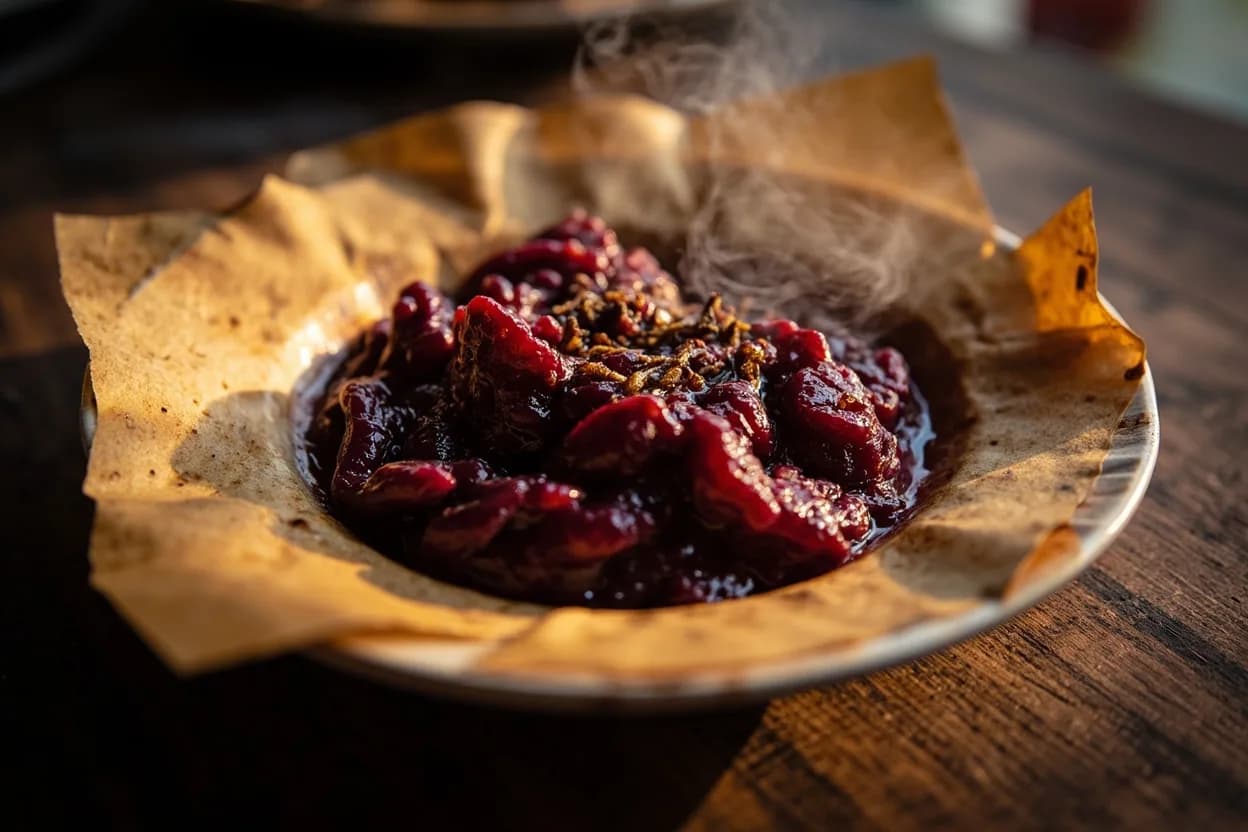
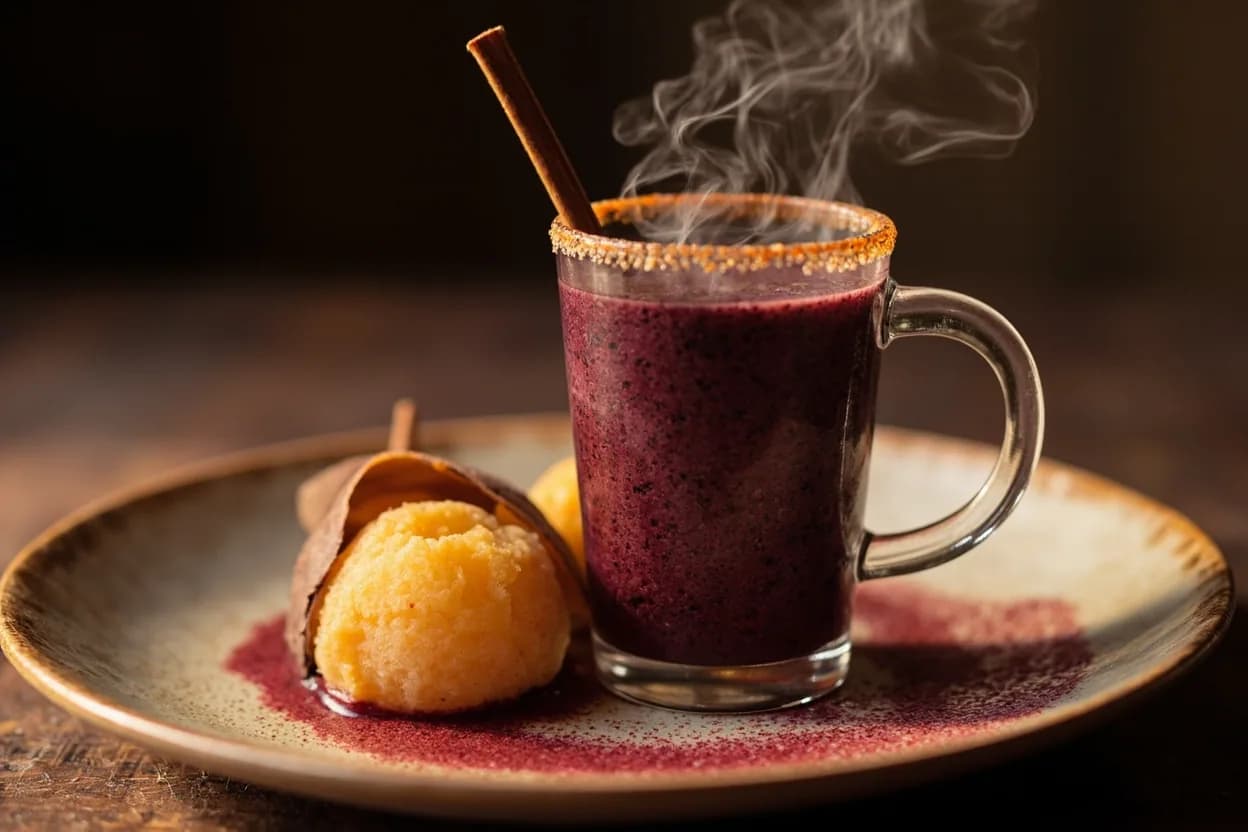
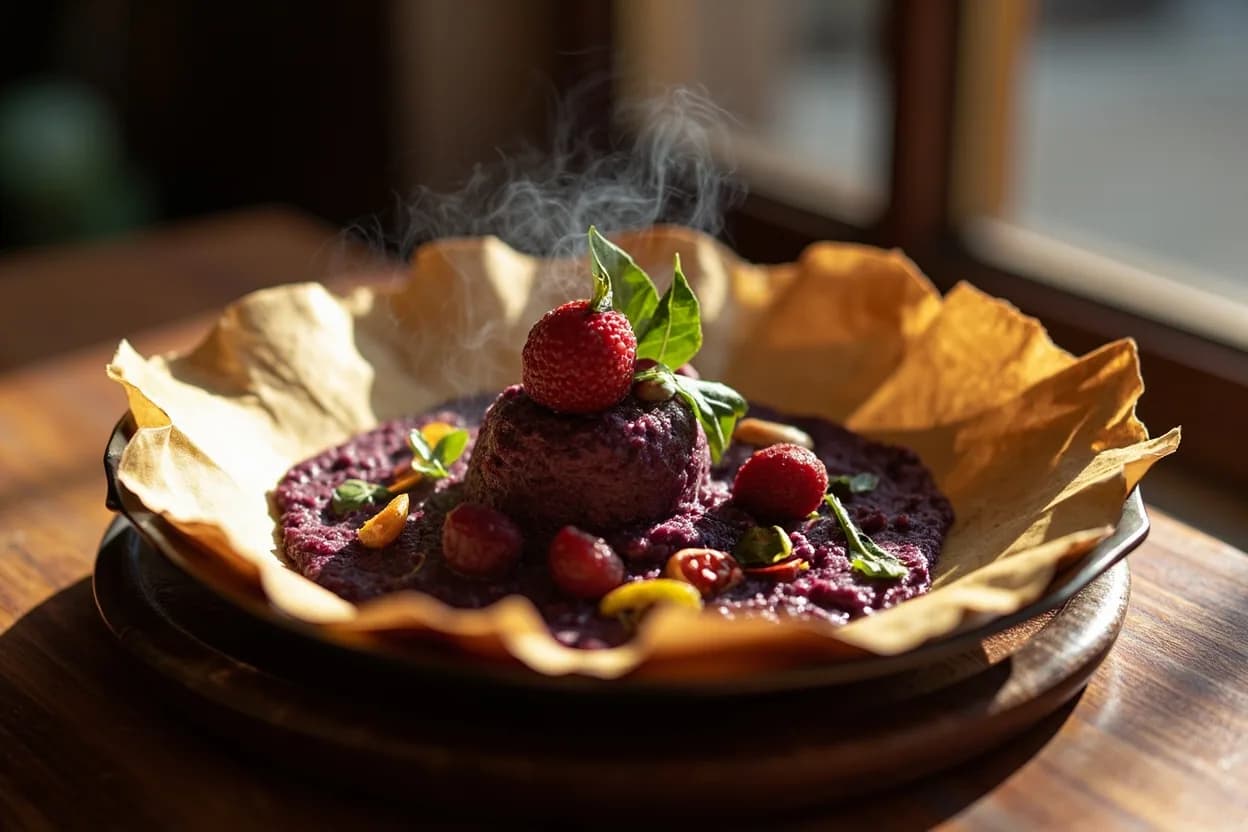
Purple corn is a deep-purple variety of maize native to the Andes, rich in anthocyanin pigments. In Peru it is boiled to make the spiced fruit drink chicha morada and the dessert mazamorra morada, and used as a natural food coloring. It has a mild, slightly sweet, earthy corn flavor.
Purple corn (Zea mays L. var. morada) is a distinct cultivar of maize cultivated in the Andean highlands of Peru and Bolivia for over 3,000 years. Unlike ornamental or decorative purple corn varieties found elsewhere, Andean purple corn is bred for culinary use—its kernels and cobs carry exceptionally high concentrations of anthocyanins, primarily cyanidin-3-glucoside, concentrated in the pericarp and cob tissue. This makes it both a powerful natural colorant and a functional ingredient with genuine flavor and textural contribution. The cobs themselves are often more deeply pigmented than the kernels and are routinely simmered alongside the grain to extract maximum color for traditional preparations like chicha morada.
The flavor profile is mildly sweet and starchy with a subtle earthy note—distinctly corn-like but less sugary than sweet corn. The anthocyanin pigment responds predictably to pH: it deepens and stabilizes in slightly acidic conditions, turning brownish-gray when exposed to alkalinity. This behavior is not merely academic—adjusting acidity is a practical technique Andean cooks use to achieve the characteristic deep violet hue in their preparations. The corn also contains resistant starch and minerals like iron and zinc, contributing to its traditional reputation as a nourishing food beyond its visual appeal.
In North American markets, purple corn appears as dried whole cobs, loose dried kernels, flour, meal, and increasingly as ready-to-use concentrate or puree. Quality indicators matter: look for cobs with uniformly deep purple coloration throughout, no pale or gray kernels, and a hard, dry feel. The distinction between cobs and kernels serves different purposes—cobs yield more pigment and are used for extracting beverages and colorants, while kernels are better suited for grinding into flour for baked goods and traditional dishes. The vast majority of culinary-grade purple corn originates from Peru's highlands, particularly the regions surrounding Cusco and Puno, where altitude (2,000–4,000 meters) and growing conditions concentrate the anthocyanin content.
- Measured in
- g
- Storage
- Pantry
Types & varieties
The principal culinary variety in Peru; deep purple throughout kernel and cob
Cone-shaped cob type adapted to high-altitude cultivation in the Cusco and Puno regions
Traditional Peruvian term for the deepest purple strains, used ceremonially and for chicha morada
Common uses
Tips & pitfalls
- Always simmer dried cobs for at least 45–60 minutes to fully extract color and flavor; quick boiling yields pale, weak results
- Add a squeeze of lime juice or a few chunks of pineapple during cooking — acidity deepens and stabilizes the purple anthocyanin color
- If the color turns brownish-gray, the pH is too alkaline; add acid and continue cooking
- The cob itself (after kernels are removed) is highly pigmented and often boiled separately or with the kernels to strengthen the color for chicha morada
- For a natural food coloring, reduce the cooked liquid by half and strain; one to two tablespoons of concentrate replaces synthetic color in most applications
- Do not over-reduce syrups or purées — high heat can degrade anthocyanins and dull the color; use medium-low heat
- When making mazamorra, use the cooking liquid from the corn as the base; the starch in the liquid (especially from cobs) provides natural thickening, though additional starch may be needed for a firm set
- Store dried cobs away from humidity; moisture causes mold and degrades both color and flavor
Nutrition
Energy
360 kJ · per 100 g
Where the calories come from
Protein
3.2g
6% DV
Carbs
19g
7% DV
Fat
1.2g
2% DV
Fiber
2.7g
10% DV
Sugars
3.2g
of which
Sodium
15mg
1% DV
Source · USDA FoodData Central · approx. Corn, sweet, white, raw
View on FDC →In the shops
Matched grocery products
 €1.55
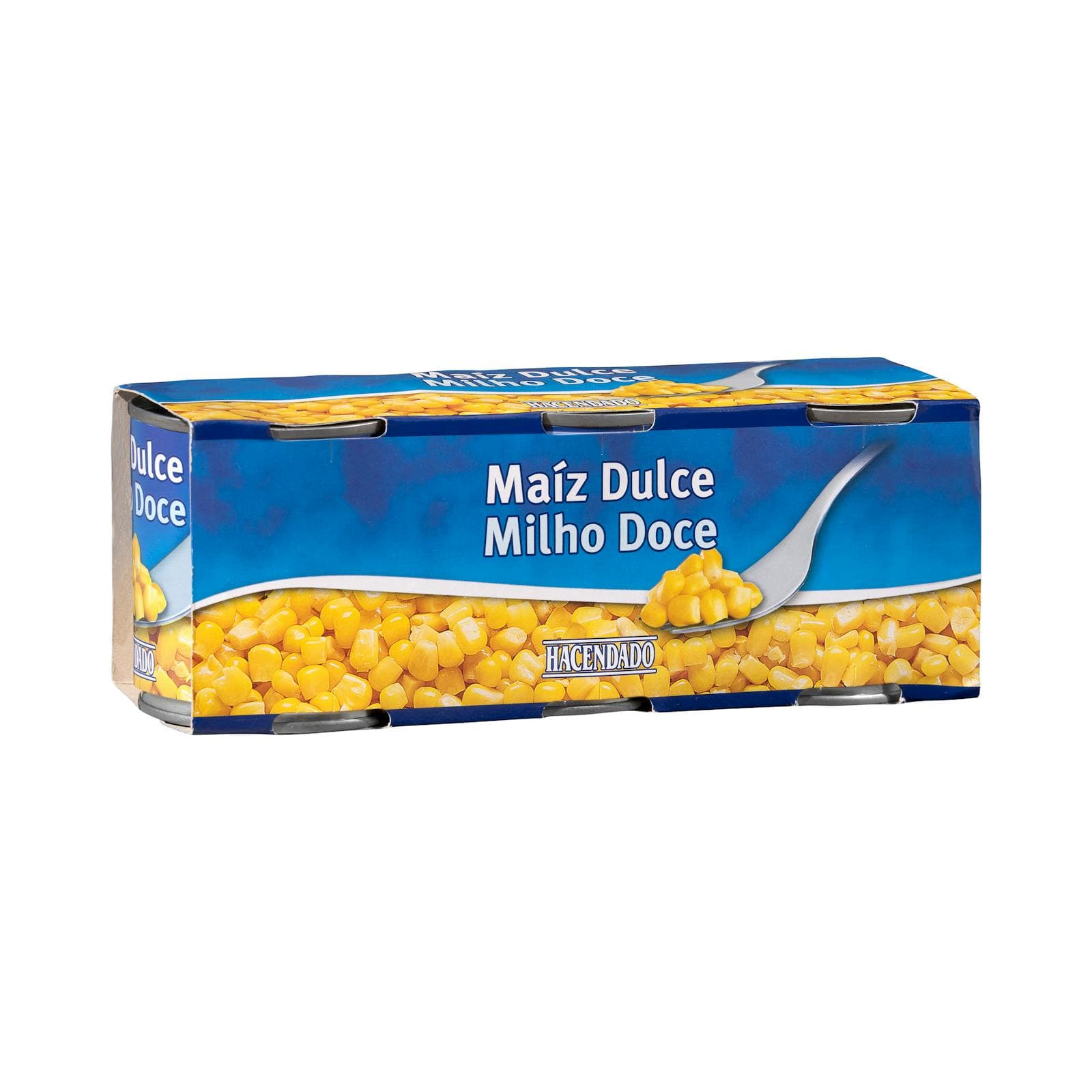
€1.55Sweet Corn
Hacendado · 450 g · Mercadona
 €1.59
€1.59Sweet Corn Bonpreu
BONPREU · kg · Bonpreu
 €2.49
€2.49Sweet Corn Bonpreu
BONPREU · kg · Bonpreu
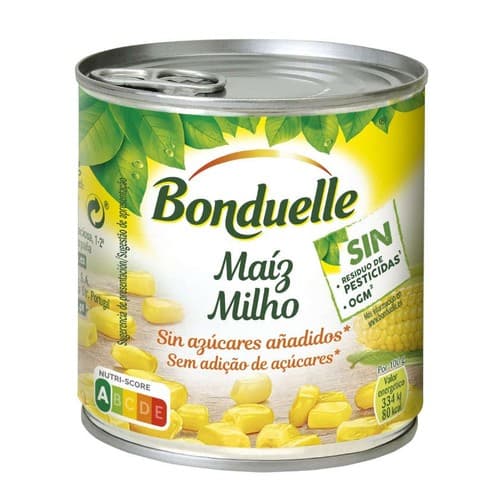 €1.99
€1.99Bonduelle Sweet Corn
BONDUELLE · kg · Bonpreu
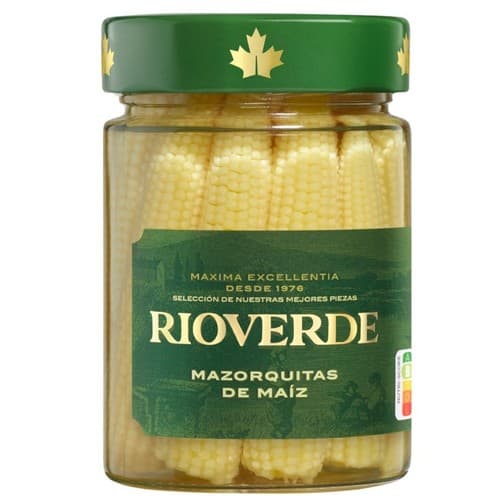 €2.99
€2.99Pickled Corn Kernels
RIOVERDE · kg · Bonpreu
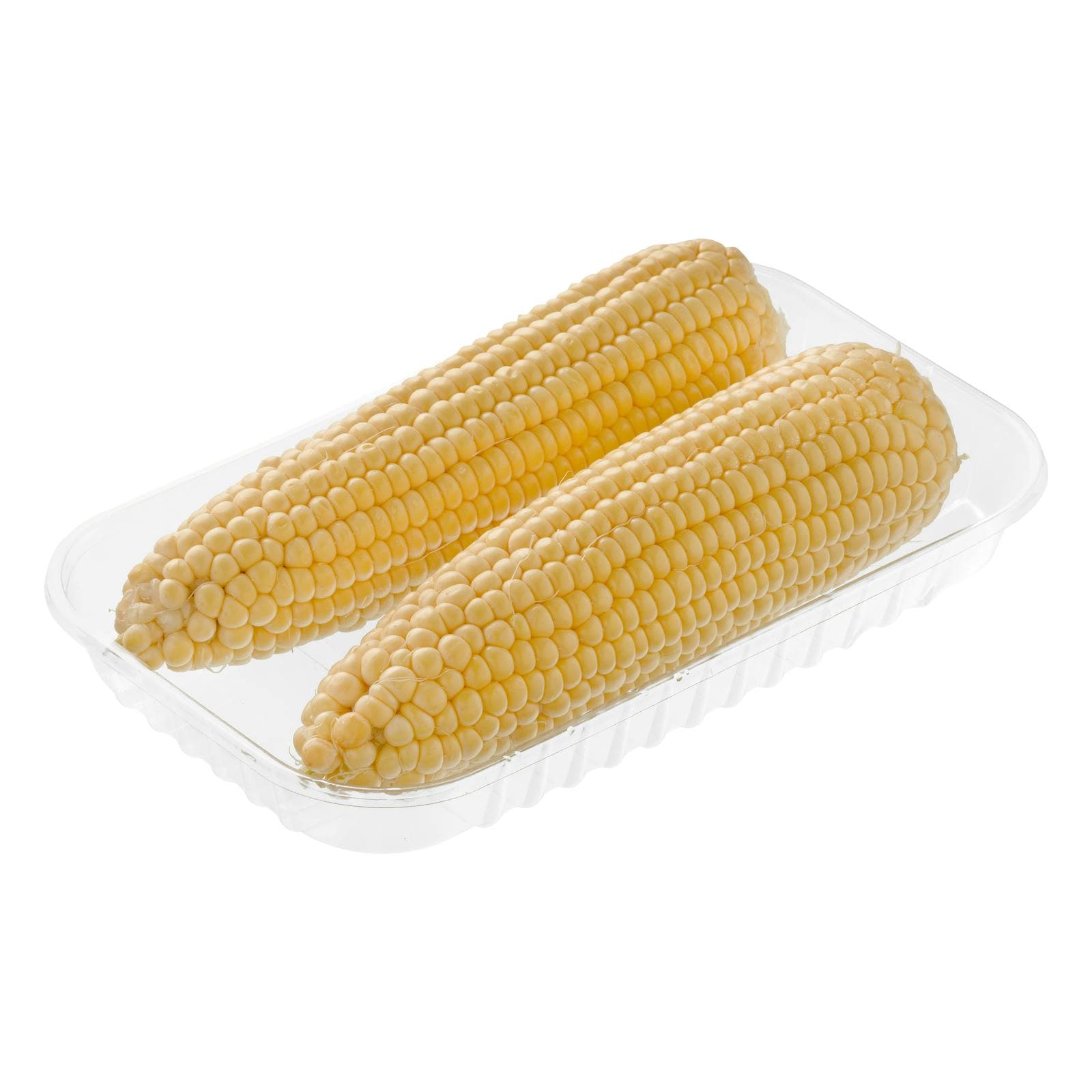 €3.15
€3.15Sweet Corn on the Cob
2 ud · Mercadona
Good to know
- Origin
- Andean region of Peru and Bolivia, cultivated for over 3,000 years
- Scientific name
- Zea mays L. var. morada
- Primary pigment
- Cyanidin-3-glucoside (an anthocyanin)
- Growing altitude
- 2,000–4,000 meters above sea level
- Form
- Dried whole cobs, dried kernels, flour, meal, or ready-to-use concentrate
- Flavor
- Mildly sweet and starchy with a subtle earthy note; distinctly corn-like but less sweet than sweet corn
- Shelf life
- Dried cobs: 12+ months in cool, dark, airtight container; puree: per manufacturer's date, refrigerate after opening
- pH sensitivity
- Color deepens and stabilizes in slightly acidic conditions; turns brownish-gray in alkaline environments
Substitutes
- Black rice extract — Provides a similar deep purple-blue color but lacks corn flavor; use in desserts and beverages where corn taste is not essential
- Açaí purée — Offers comparable anthocyanin color and fruity complexity; adjust sweetener; works in desserts, smoothies, and sauces but not in traditional Andean preparations
- Blue butterfly pea flower — Produces blue-to-purple hues depending on pH; no corn flavor; useful for cocktails and visually striking dishes but botanically and culturally unrelated
- Ube (purple yam) — Deep violet color with distinct sweet yam flavor; unsuitable as a flavor substitute but viable for color in desserts and baked goods
Also called
Maíz Morado · Andean Purple Corn
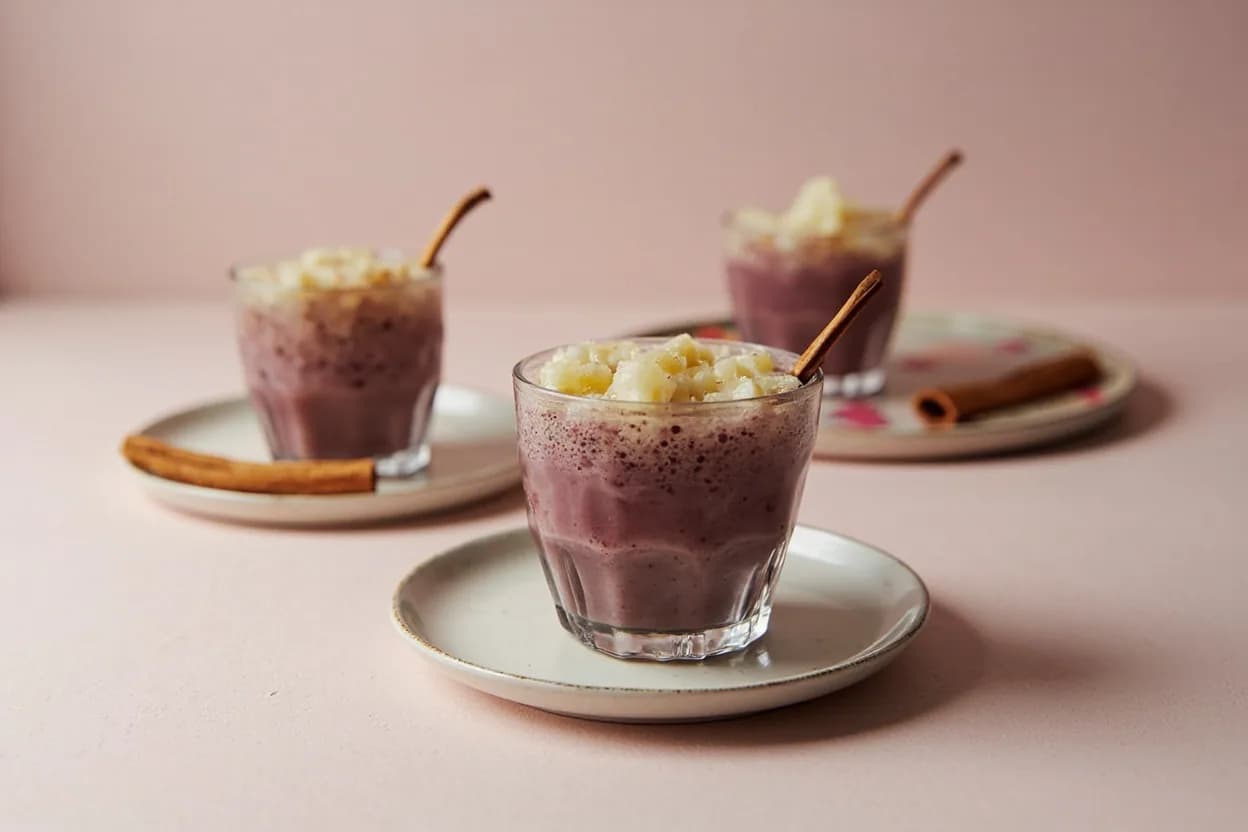
Appears in these dishes
Related
Tomato
Juicy, sun-sweet fruit for sauces, salads, and slow-cooked depth
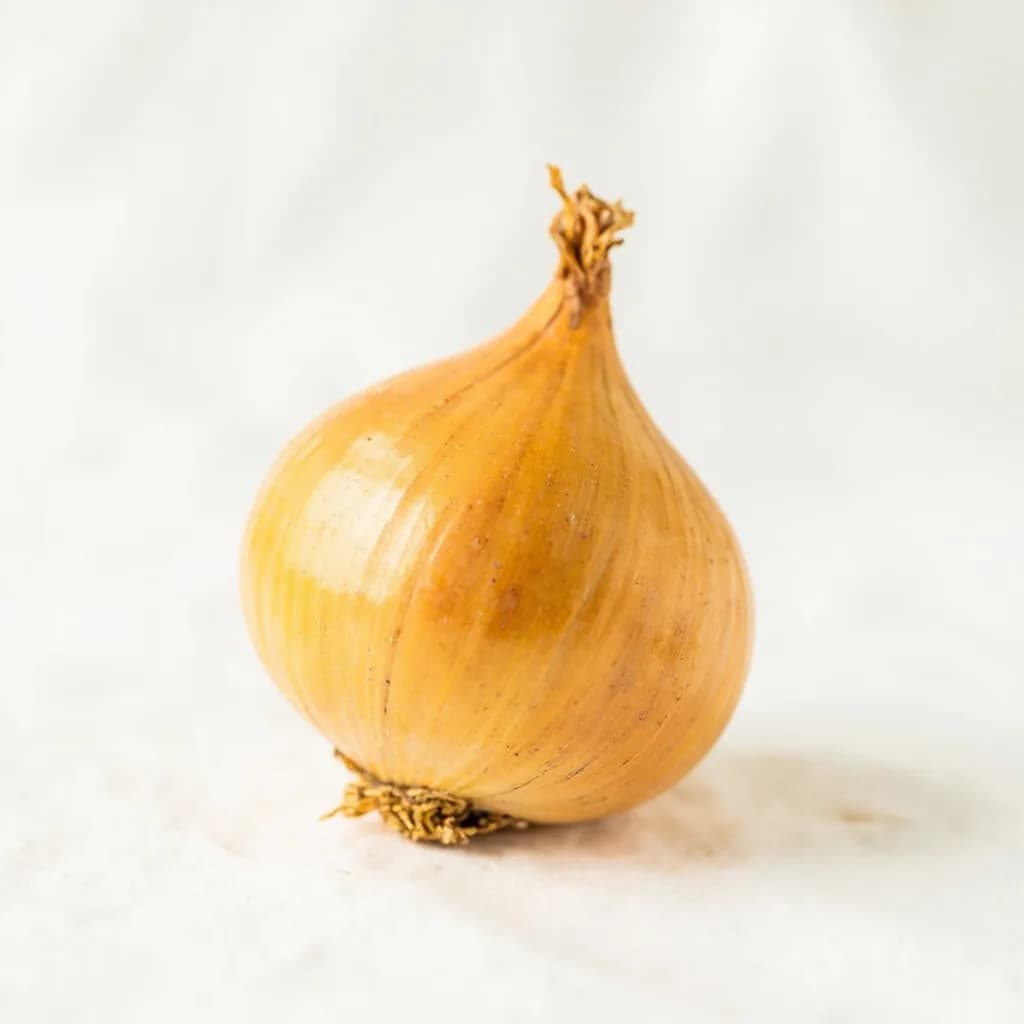
Yellow Onion
The aromatic backbone of soups, sofritos, and braises
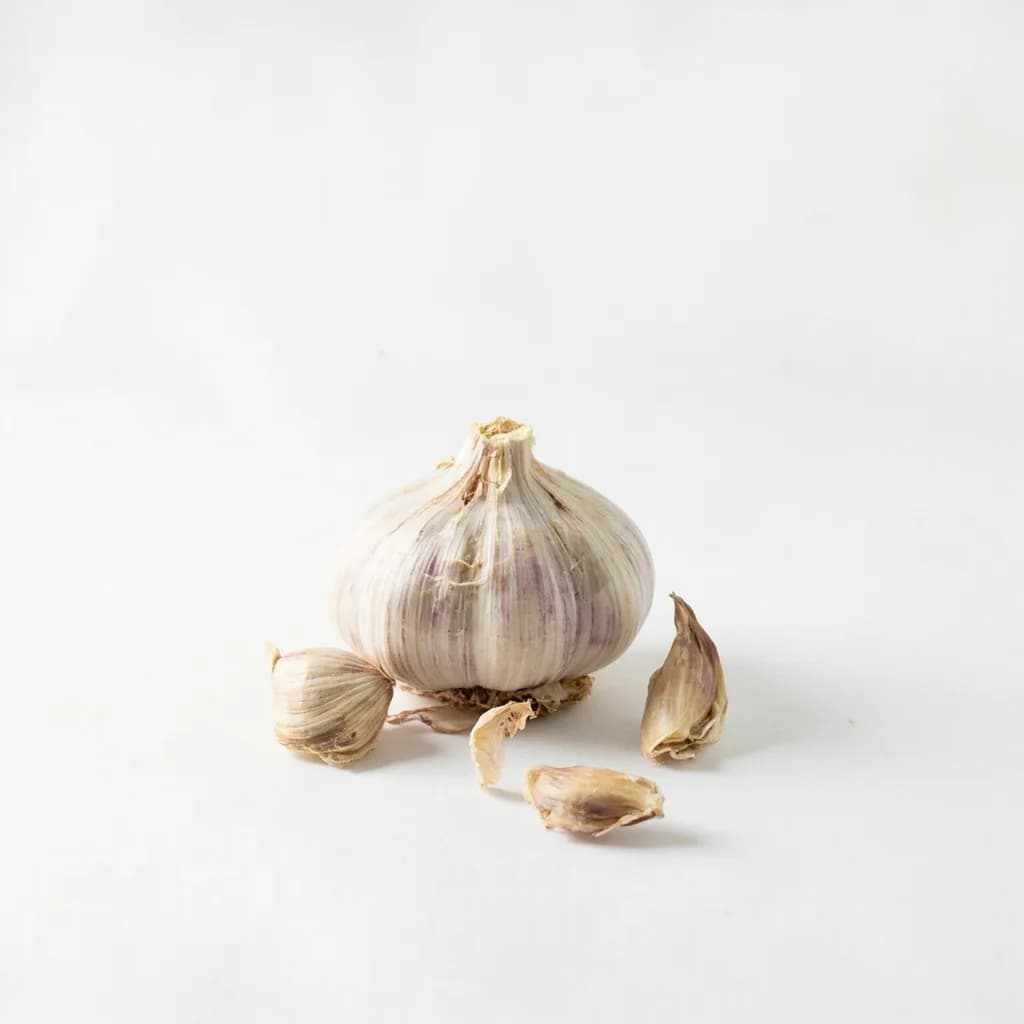
Garlic
Pungent cloves that perfume nearly every savory dish
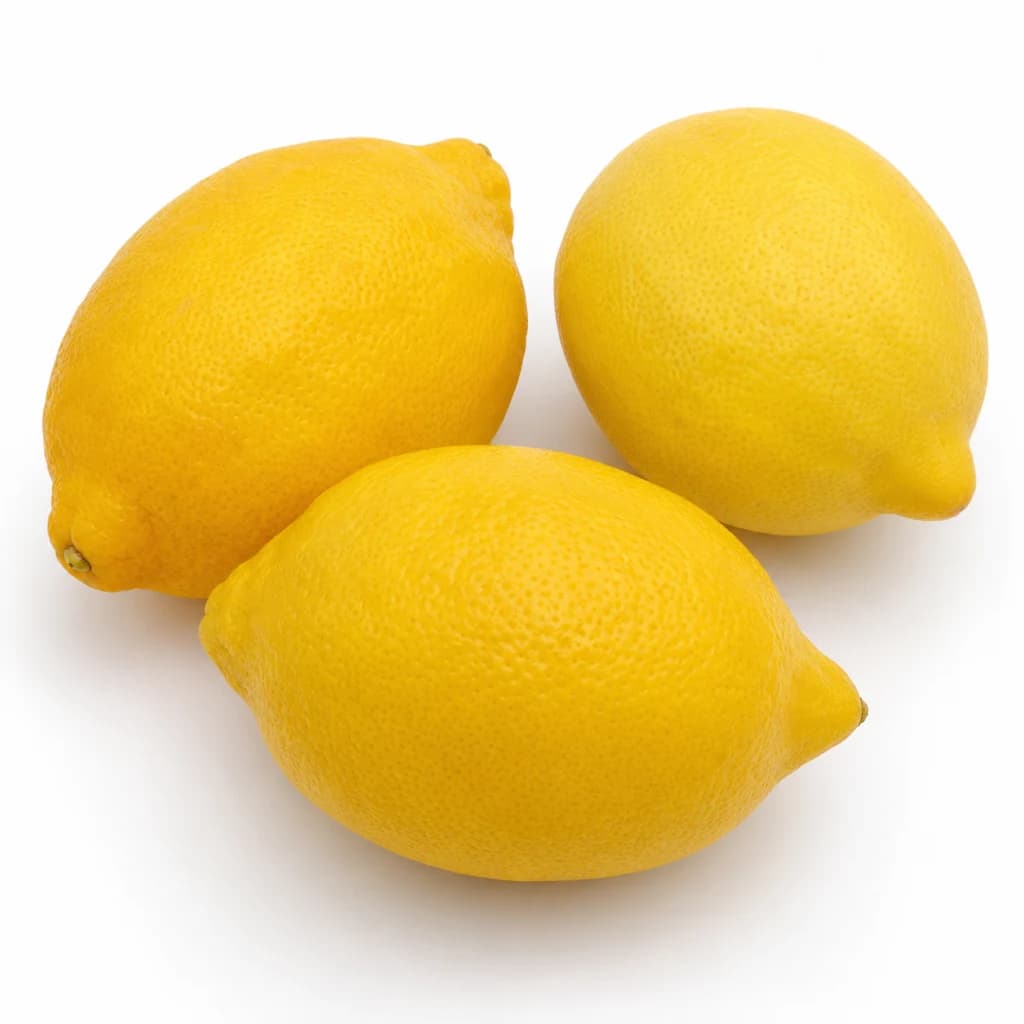
Lemon
Bright, acidic citrus that wakes up almost any dish
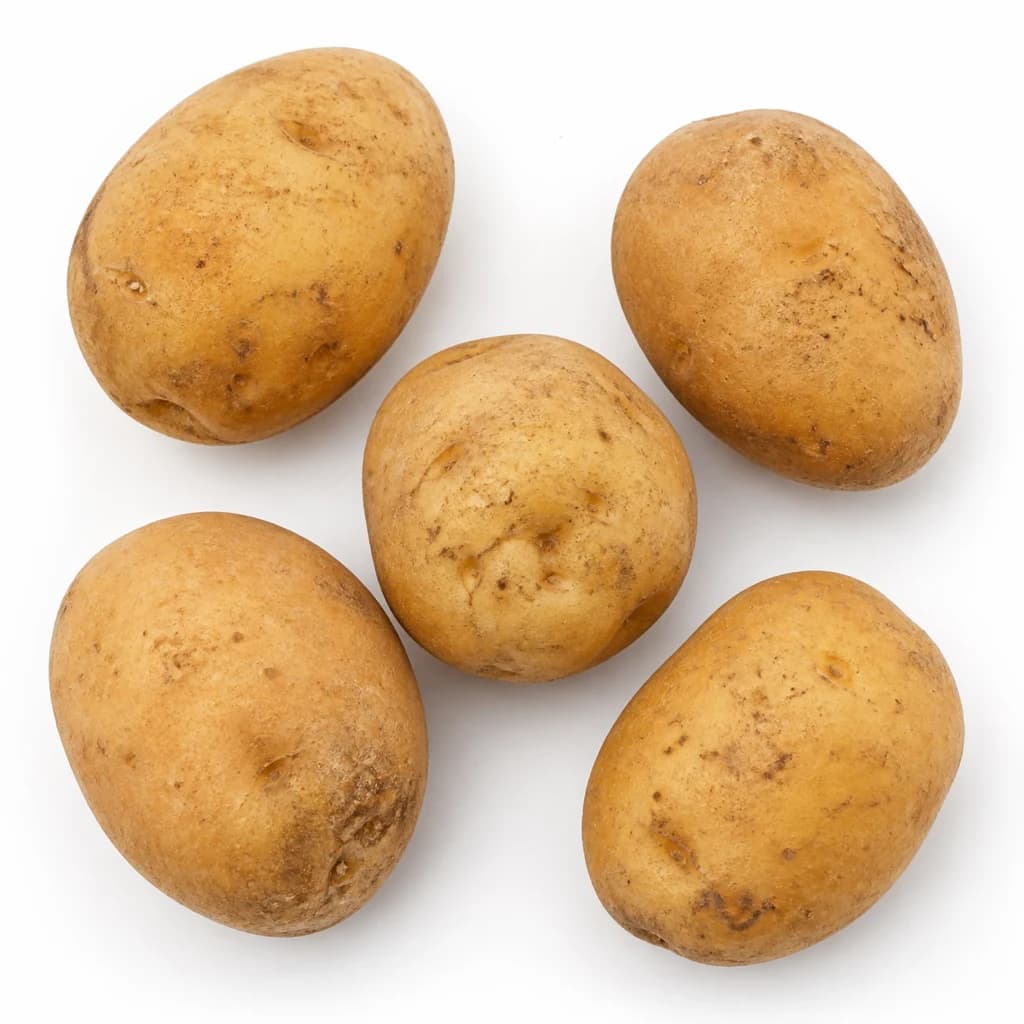
Potato
Humble, hearty staple — roast, mash, fry, or boil
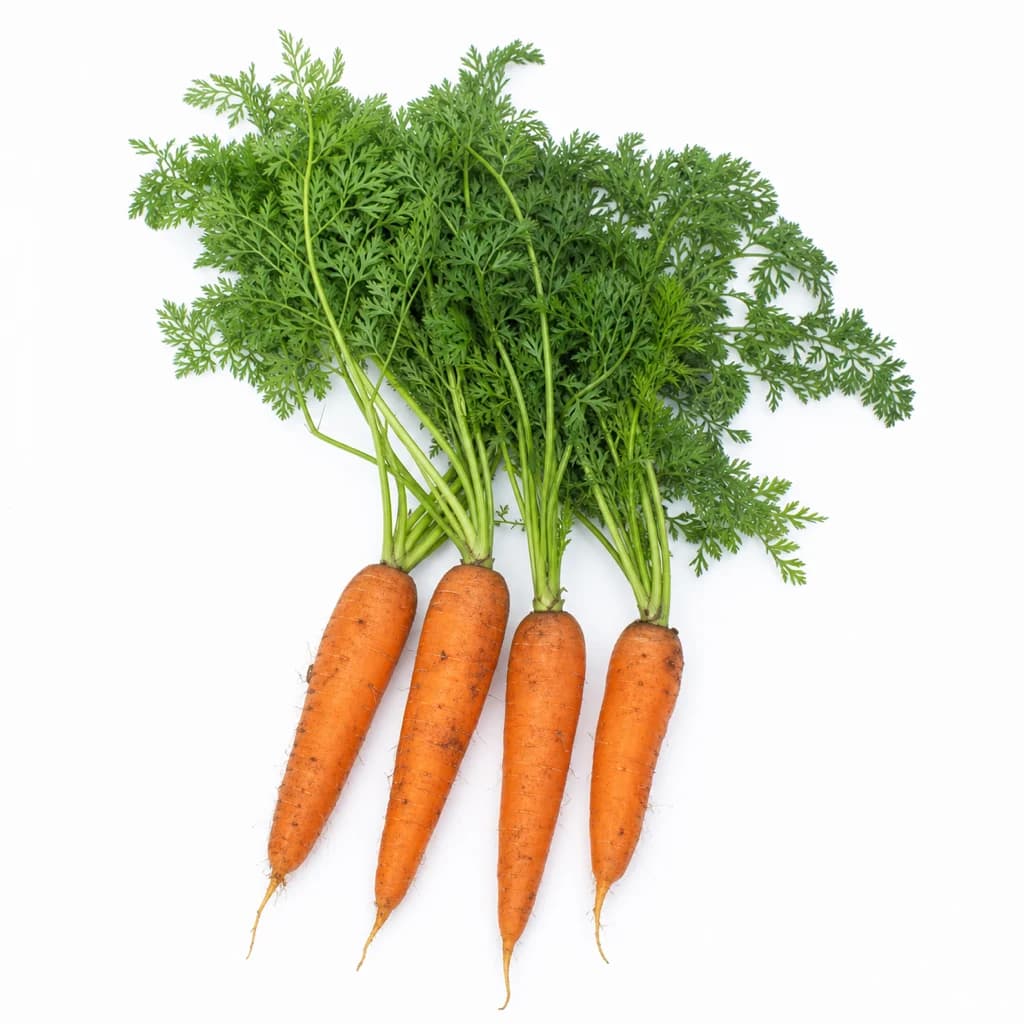
Carrot
Sweet, crunchy root — raw, roasted, or the base of a sofrito
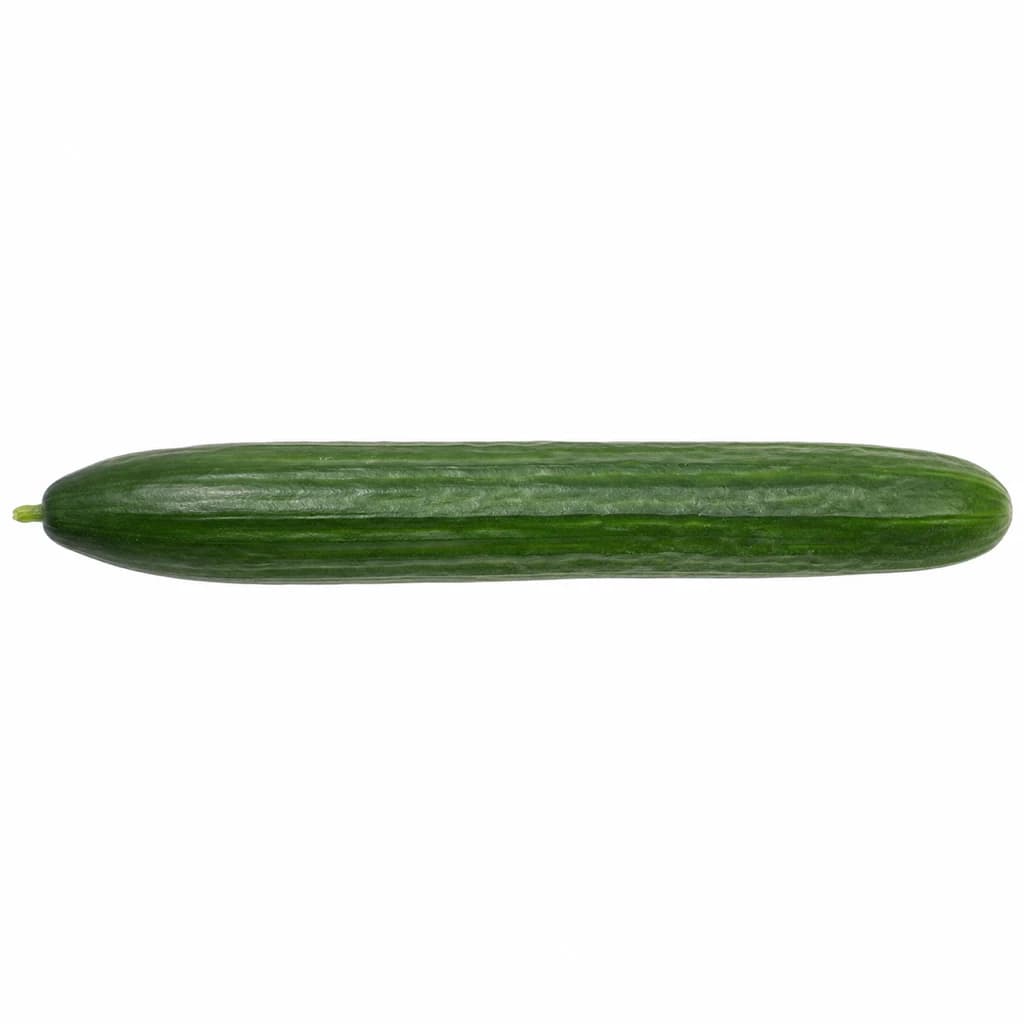
Cucumber
Cool, crisp, and watery — for salads, pickles, and tzatziki

Lettuce
Crisp leaves for salads, wraps, and a fresh crunch