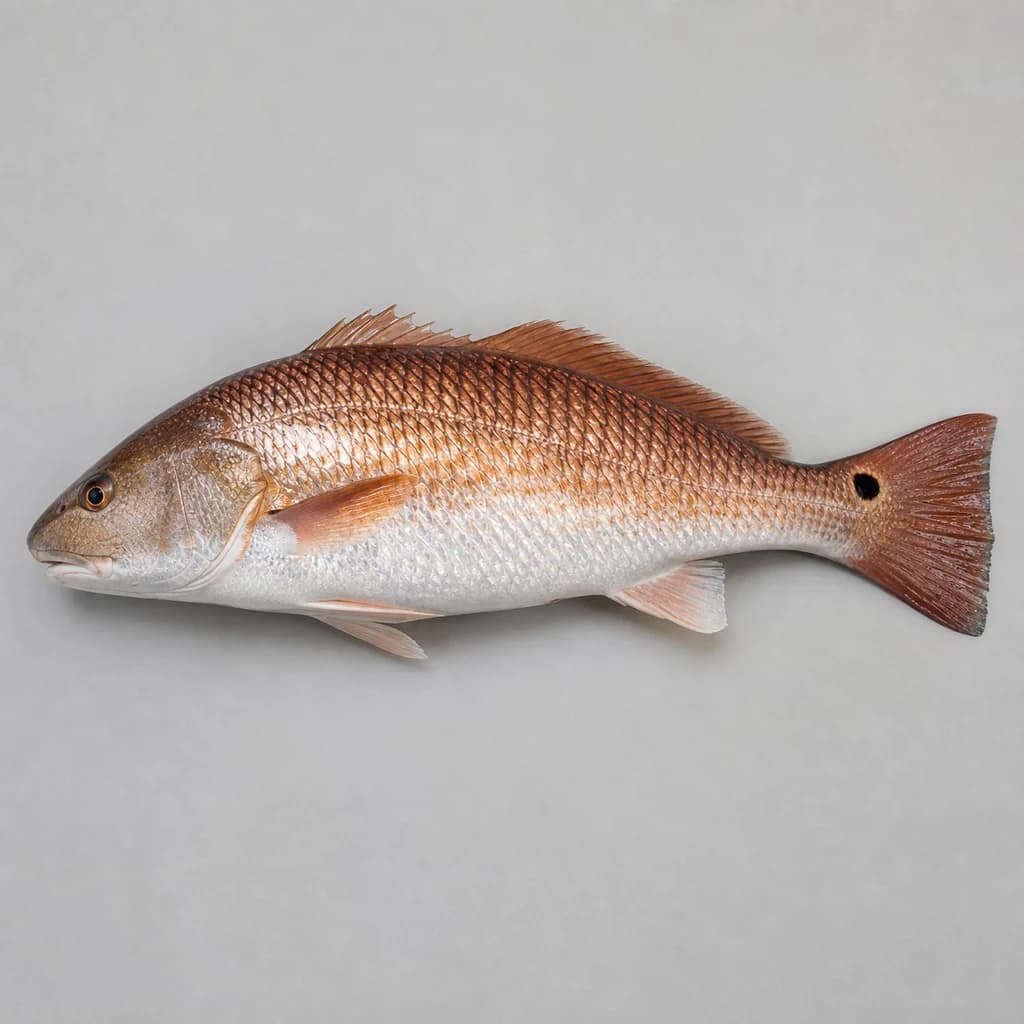
Natural form
Whole red drum showing the distinctive black spot near the tail and copper-red scales.
Teaches readers the fish's identifying features — the characteristic eyespot, body shape, and reddish coloration — so they can recognize it at market.
Proteins
Redfish
Firm, mild white-fleshed fish (red drum) popular blackened or grilled.
Redfish, also called red drum, is a saltwater fish with firm, mild, slightly sweet white flesh. It is a Gulf Coast favorite, famously prepared blackened in Cajun cooking, but also grilled, baked, or pan-seared. Its sturdy texture holds up well to high-heat cooking.
Redfish, also called red drum (Sciaenops ocellatus), is a large coastal game fish native to the Western Atlantic from Massachusetts to Florida and throughout the Gulf of Mexico. It is easily identified by the distinctive dark spot or spots at the base of the tail—a natural ocellus that tricks predators into attacking the wrong end—and by its bronze-to-copper body color that fades to a lighter belly. The fish ranges from small "pinfish" under three pounds to massive "bull reds" exceeding fifty pounds, though most market specimens fall between five and fifteen pounds.
In the kitchen, redfish is prized for its firm, dense flesh with a medium flake and a mild, slightly sweet flavor that is less pronouncedly oceanic than many coastal species. The meat ranges from white to light pink when raw and firms to an opaque finish when cooked. This substantial texture sets redfish apart from delicate flatfish—it can absorb bold seasonings and withstand aggressive cooking methods without falling apart, making it one of the most versatile Gulf Coast catches. A moderate fat content (5–12%, varying by season and diet) gives it enough richness to hold up to high heat while remaining approachable for everyday cooking.
Redfish was a culinary unknown outside the Gulf Coast until Paul Prudhomme's blackened redfish recipe exploded in popularity following his 1980 cookbook. Before that, redfish was considered a nuisance by commercial fishermen and a sportfish by anglers—it had no market value. Today, strict recreational slot limits (typically 18–27 inches) and bag limits have stabilized once-depleted populations, making redfish one of the great success stories of American fisheries management. When purchasing, select fish with clear, slightly milky eyes (not sunken), bright red gills (not brown), and flesh that springs back firmly when pressed. Avoid any fish with an ammonia-like odor, which signals decomposition.
- Measured in
- g
- Storage
- Fridge
Allergens
Types & varieties
Large adults (15–50+ lbs); best suited for steaks, charcoal grilling, or braising; flesh is coarser but deeply flavored
Mid-size (5–15 lbs); ideal for filleting; the preferred target for blackened, grilled, or pan-seared preparations
Small juveniles under 3 lbs; tender but bony; best for frying or as a base for fish stocks
More complex flavor and firmer texture; character varies with diet and season, most pronounced in fall (September–November)
Primarily from Latin America (Ecuador, Colombia); milder flavor, higher fat content, more consistent quality year-round
Buying and Storing Redfish
Redfish spoils faster than many firm-fleshed fish because of its moderate fat content. Keep whole fish on ice and use within two to three days for best quality. Frozen at 0°F, it holds for six to eight months. Fillets deteriorate more quickly than whole fish, so buy whole whenever possible—you'll get better flavor and can use the frames for stock. Look for clear eyes, bright red gills, and a mild scent. The flesh should feel dense and springy, not soft or yielding.
- Refrigerate whole fish on a bed of ice; do not seal in plastic wrap—let air circulate
- Cut fillets can be wrapped tightly in plastic, then foil, for freezing
- Thaw frozen redfish slowly in the refrigerator overnight; never thaw at room temperature
The Tail Spot and Its Significance
The ocellus (eye-like spot) at the base of the redfish's tail is not merely an identifying mark—it is a defensive adaptation. Research suggests the spot mimics the eye of a larger animal and tricks predators into attacking the tail instead of the head, allowing the fish to escape. It has nothing to do with the quality of the flesh and is completely removed during scaling and cleaning. The number of spots varies; some fish have one, others have several along the tail.
- The spot is purely cosmetic—it does not affect flavor, texture, or edibility
- Scale and clean the tail spot just as you would any other part of the fish
- Do not reject a fish based on the number or prominence of spots
Common uses
Tips & pitfalls
- Scale thoroughly before cooking—the small, firmly attached scales are easier to remove before heat sets them; use a spoon or dull blade held at a shallow angle against the skin
- Leave the skin on during cooking—it acts as a structural binder and crisps to a crackling texture when grilled or seared
- Season just before cooking, not ahead of time—unlike tuna or salmon, redfish does not benefit from dry-brining; salt draws moisture and dilutes its mild flavor
- Use high heat and cook quickly—overcooked redfish becomes dry and tough; pull from heat when the flesh just turns opaque throughout and still has a hint of translucency at the very center
- Check carefully for pin bones—redfish has significant pin bones in the loin; run a filleting tweezers or needlenose pliers along the flesh to locate and extract them before cooking
- Save bull reds (15+ lbs) for stocks, soups, and braising—their coarser flesh stands up to long, slow cooking; save school reds for quick-cook methods like blackening, searing, and grilling
- Watch the fat content—fall fish tend to be richer; adjust your cooking method accordingly; leaner summer fish tolerate slightly longer cooking
Nutrition
Nutrition
No USDA FoodData Central match for Redfish yet. We surface a per-100 g profile once a generic whole-food entry is matched and verified.
In the shops
Matched grocery products
No matched grocery products for Redfish yet.
Good to know
- Also known as
- Red drum, channel bass, spot tail bass, bull red
- Scientific name
- Sciaenops ocellatus
- Distribution
- Western Atlantic: Massachusetts to Florida; Gulf of Mexico
- Texture
- Firm, dense flesh with medium flake
- Flavor
- Mild, slightly sweet; clean oceanic taste; less fishy than many coastal species
- Flesh color
- White to light pink when raw; firms to opaque when cooked
- Fat content
- Moderate (5–12% depending on season and diet)
- Typical size
- School reds: 5–15 lbs; Bull reds: 15–50+ lbs; Pinfish under 3 lbs
- Identifying mark
- One or more dark spots at base of tail (ocellus); bronze/copper body color
- Edible yield
- Approximately 50% of whole weight
- Peak season
- Fall (September–November); year-round availability
- Shelf life
- 2–3 days refrigerated on ice; 6–8 months frozen at 0°F
- Regulations
- Heavily regulated; many states have size limits and bag limits for recreational catch
Substitutes
- Red snapper — Similar firm texture and mild, slightly sweet flavor; slightly more pronounced oceanic taste
- Striped bass — Comparable density and flake; works well with blackening, grilling, and pan-searing
- Black drum — Closely related drum species; nearly identical texture and flavor profile
- Cobia — Firm, thick-fleshed with mild flavor; best for grilling and blackening
- Chilean sea bass — Fattier and more buttery, but shares the firm texture needed for high-heat methods
- Mahi-mahi — Similar mild flavor and firm texture; slightly softer flake; good for grilling and sautéing
Pairs with
Also called
Red Drum
Related
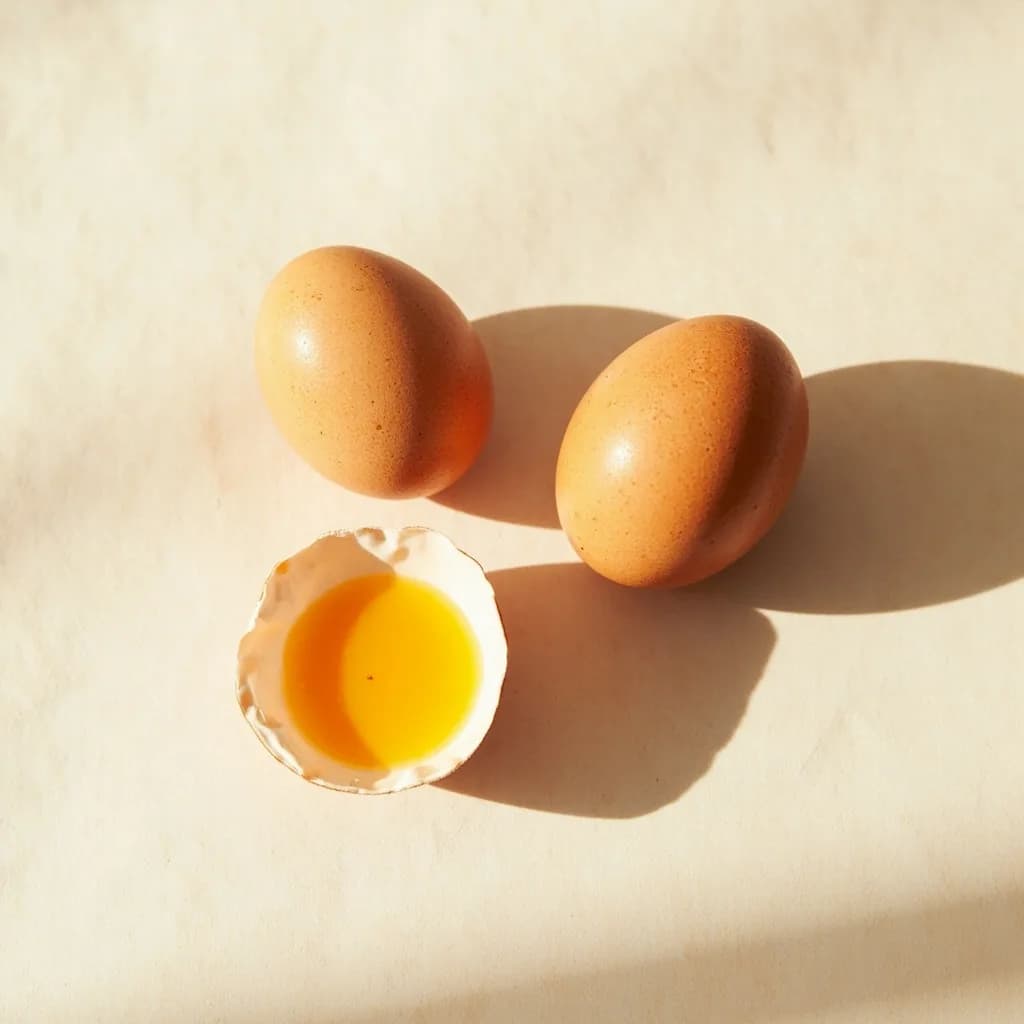
Egg
The kitchen's everything ingredient — bind, leaven, enrich, or fry
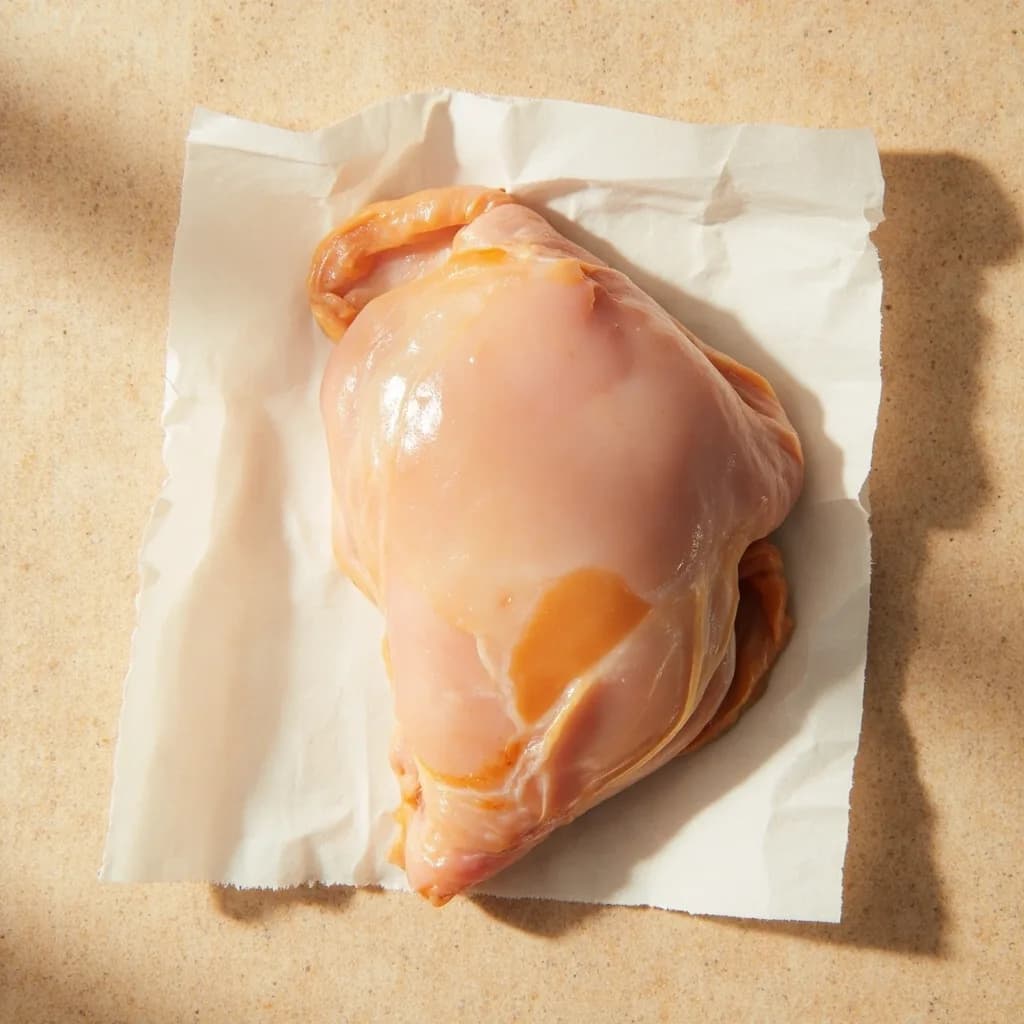
Chicken Breast
Lean, quick-cooking white meat for everyday dinners

Ground Beef
Versatile minced beef for burgers, ragù, tacos, and meatballs
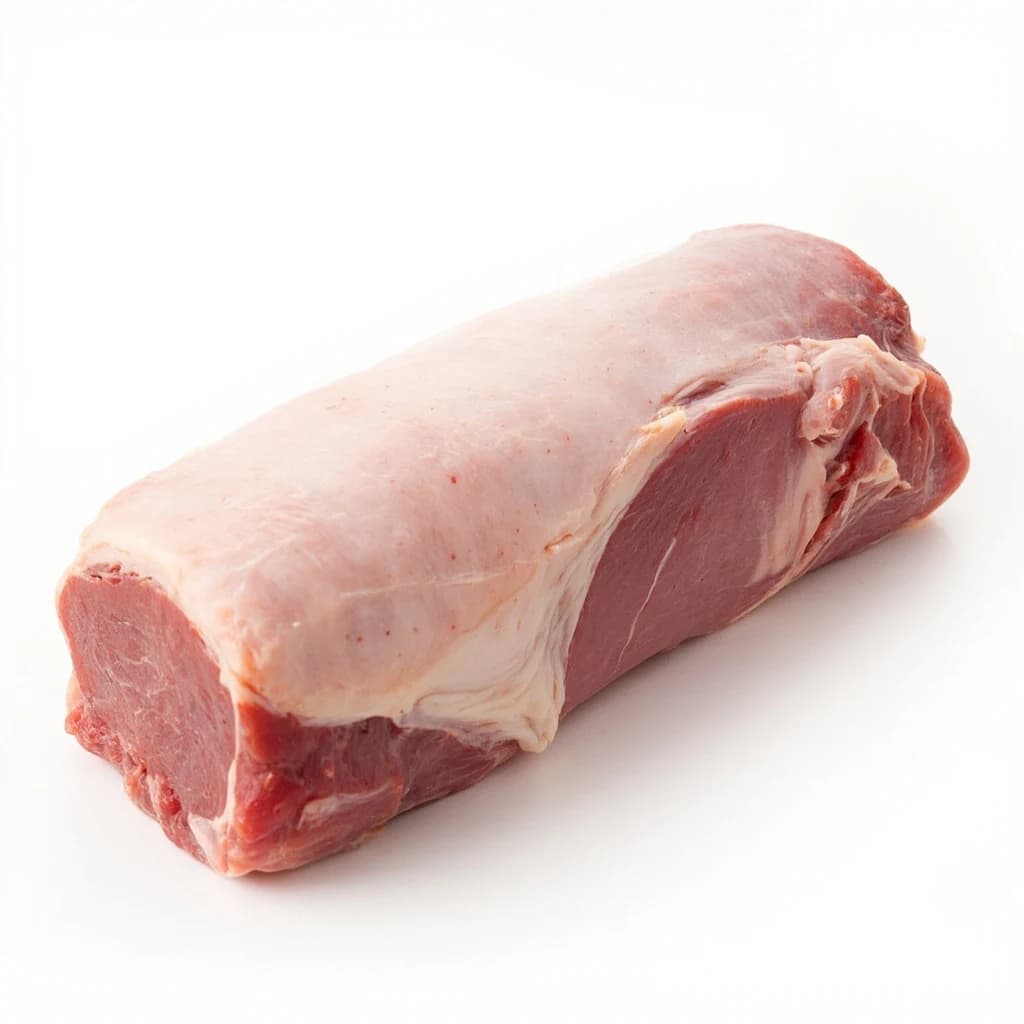
Pork Loin
Lean, tender roasting cut that stays juicy with care
Salmon
Rich, rosy fish that roasts, grills, or cures beautifully

Egg White
Pure protein that whips to airy peaks for meringue and more

Egg Yolk
Rich, golden yolk for custards, mayonnaise, and pasta

Quail Egg
Tiny, speckled eggs for garnishing and elegant bites