Baking
Rustic Sourdough Bread
A crusty naturally-leavened loaf with a tangy crumb, sliced for meals or toasted.
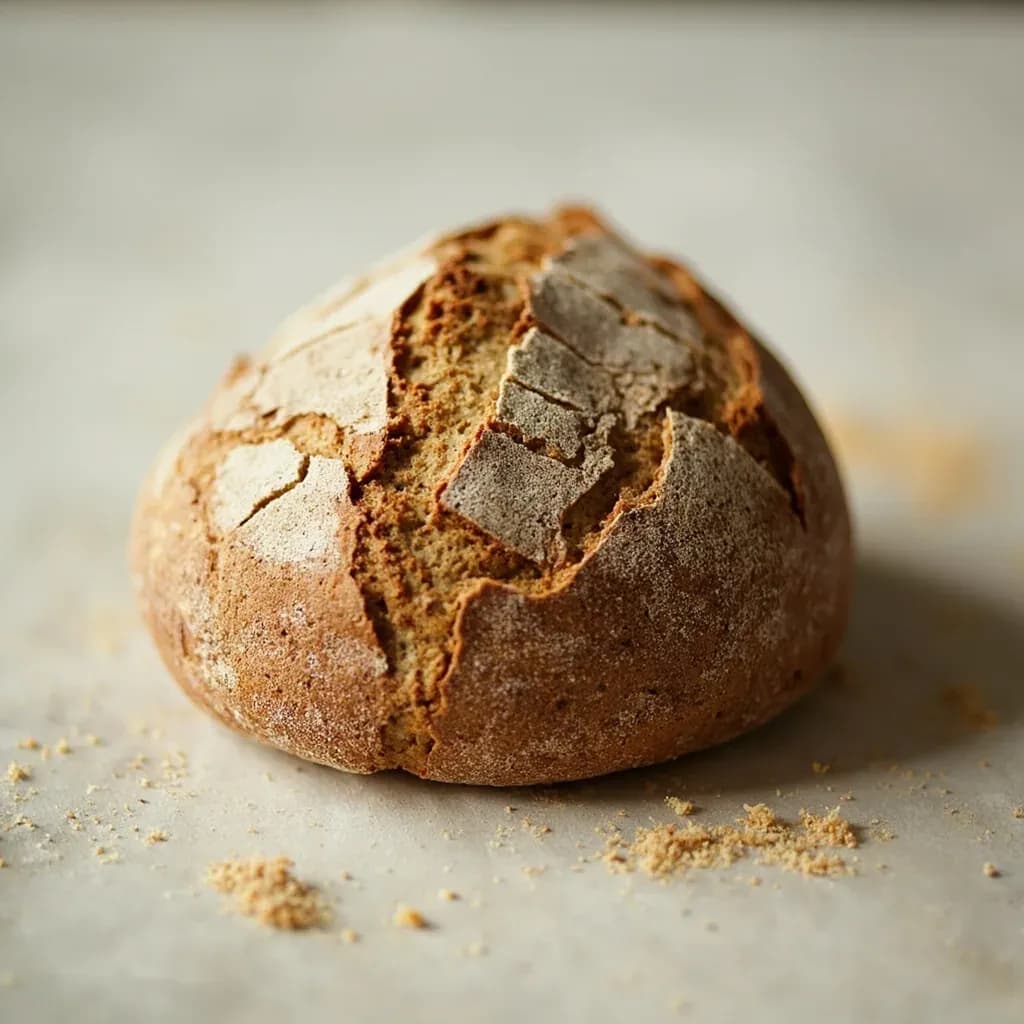
Rustic sourdough is a hearth-style bread leavened with a wild-yeast and lactic-acid starter rather than commercial yeast. The long fermentation gives it a chewy open crumb, a thick crackling crust, and a mild sour tang. It is sliced for sandwiches and toast, torn for dipping, or staled and used in panzanella and stuffings.
Rustic sourdough bread is a naturally leavened loaf defined by its thick, golden crust and open, airy crumb with irregular holes. Unlike bread made with commercial yeast, it relies entirely on a living starter—a symbiotic culture of wild yeasts and lactic acid bacteria—that ferments the dough over hours or days. This long, slow fermentation produces carbon dioxide for rise and organic acids (primarily lactic and acetic) that give the bread its distinctive tangy flavor. The term "rustic" refers to the hand-shaped, unpaned presentation that gives each loaf its individual character, not a specific recipe formula. High hydration (typically 70–85%) and proper fermentation timing are essential for achieving the open crumb and chewy interior that define a well-made rustic loaf. The crust forms via the Maillard reaction and caramelization; trapping steam in the oven's first minutes prevents premature crust formation that would restrict oven spring, allowing the scored loaf to expand fully before the crust sets and turns golden-brown.
- Measured in
- g
- Storage
- Pantry
Allergens
Types & varieties
Round rustic loaf, the most common shape
Oval-shaped loaf; slightly more oval than baguette proportions
French country loaf; often includes whole wheat or rye, slightly denser texture
Regional variety; intensely sour, thin crisp crust, chewy crumb
Large, round country loaf; typically 2–4 lbs; open crumb with rustic crust
Thin, elongated rustic loaf; similar to a thinner batard
The Science of Wild Fermentation
True rustic sourdough contains no commercial yeast, relying instead on the microbial ecosystem living in your starter. The wild yeasts produce carbon dioxide for rise, while lactic acid bacteria generate organic acids that create the characteristic tang. Longer fermentation periods at cooler temperatures produce more acetic acid, resulting in a sharper, more complex flavor. This is why many bakers cold-retard their shaped loaves overnight in the refrigerator—to deepen flavor while slowing the final rise.
- Sourdough starters contain both Saccharomyces cerevisiae and Kazachstania species of wild yeast
- Lactic and acetic acids develop during fermentation and contribute the signature sour taste
- Cool fermentation favors acetic acid production and a more pronounced tang
Baking Vessels and Steam
The crust's thickness and crispness depend largely on how you bake. A covered Dutch oven traps steam released by the dough during its first 20 minutes of baking, then the lid is removed for the remaining 20–25 minutes to allow the crust to color and set. Alternatively, baking on a preheated pizza stone or baking steel with steam introduced via a cast-iron skillet or spray bottle produces similar results. Without steam, the crust forms too quickly, blunting the score patterns and producing a pale, chewy exterior rather than a shattering crunch.
- Dutch oven method: cover 20 minutes, uncover 20–25 minutes at 450–500°F
- Steam injection: add steam for first 15–20 minutes, then vent
- The goal is a golden-brown crust that crackles when cooled
Common uses
Tips & pitfalls
- Feed your starter 4–8 hours before baking; it should double in size and pass the float test (a piece floats in water)
- Autolyse the flour and water for 20–60 minutes before adding salt; this develops gluten without kneading
- Use stretch-and-fold instead of kneading: grip the dough, stretch upward, fold over itself; repeat 4 times every 30 minutes for 2–3 hours during bulk ferment
- Generously flour your work surface and hands when shaping; rusticity means slightly rough, not perfectly smooth
- When scoring, hold the lame or sharp blade at a 30–45° angle; cut quickly and decisively across the surface
- For maximum crust: create steam in your oven for the first 20 minutes (spray water on oven walls, or bake in a covered Dutch oven)
- Do not cut the bread until it has cooled at least 30–60 minutes; cutting early causes gummy crumb
- If your starter smells harsh and alcohol-forward, it may be over-fermented; feed it and wait for it to peak before using
- Cold retarding (refrigerating the shaped dough 8–24 hours) improves flavor and makes scoring easier
- Common mistakes: under-proofed loaf (dense, tight crumb, minimal oven spring); over-proofed loaf (flat, collapsed, sour flavor); not enough steam (blunted scoring, pale crust); cold starter (slow rise, underdeveloped flavor)
Nutrition
Energy
1113 kJ · per 100 g
Where the calories come from
Protein
12.5g
25% DV
Carbs
47.1g
17% DV
Fat
3.1g
4% DV
Fiber
6.3g
23% DV
Sugars
9.4g
of which
Sodium
375mg
16% DV
Source · USDA FoodData Central · approx. Bread, potato
View on FDC →In the shops
Matched grocery products
No matched grocery products for Rustic Sourdough Bread yet.
Good to know
- Leavening
- Wild yeast from sourdough starter (no commercial yeast)
- Crust
- Thick, golden-brown, crispy when properly baked with steam
- Crumb
- Open, airy texture with irregular holes; chewy interior
- Flavor
- Tangy, mildly acidic; complex due to organic acids from long fermentation
- Hydration
- Typically 70–85% hydration; high hydration yields open crumb
- Shape
- Round boule or oval batard; hand-shaped, no pan required
- Flour
- Bread flour or high-protein all-purpose (10–12% protein); often 80–100% white with 0–20% whole wheat or rye
- Proofing
- Bulk ferment 4–6 hours at room temp, then cold retard 8–24 hours
- Baking Vessel
- Dutch oven (covered 20 min, uncovered 20–25 min) or preheated pizza stone/steel with steam
- Scoring
- Shallow cuts (1/4–1/2 inch) across the surface before baking
- Internal Temp
- 190–210°F (88–99°C) when fully baked
- Storage
- Paper bag at room temp 2–3 days; never plastic (soggies crust)
- Difficulty
- Intermediate; requires starter maintenance and fermentation timing
Substitutes
- Yeasted rustic bread — Uses commercial yeast; flavor is milder, less tangy, and lacks sourdough's complex organic acids
- No-knead bread — Also rustic in appearance but uses commercial yeast; very long fermentation mimics some sourdough flavor
- Ciabatta — Italian white bread with open crumb and crispy crust; similar texture, different flavor profile
- Focaccia — Flat, olive-oil-rich bread; not a substitute for the crusty structure but shares the rustic ethos
- English muffin bread — Sliced round loaf with chewy crumb; acceptable sandwich substitute, not a flavor match
Pairs with
Also called
dark-bread · Pain au Levain
Related

All-Purpose Flour
The do-anything flour for bread, cakes, sauces, and dredging

Bread Flour
High-protein flour for chewy, well-risen breads
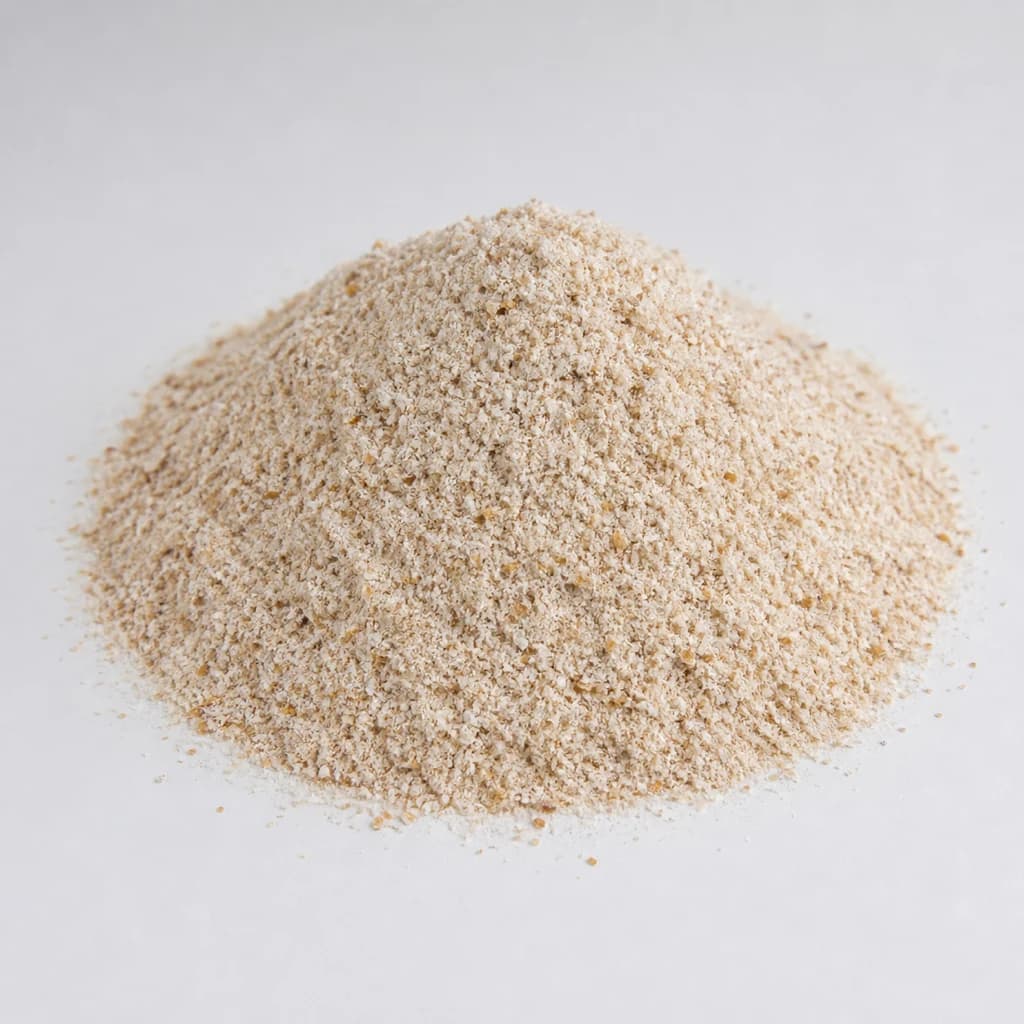
Whole Wheat Flour
Nutty, whole-grain flour for hearty breads and bakes
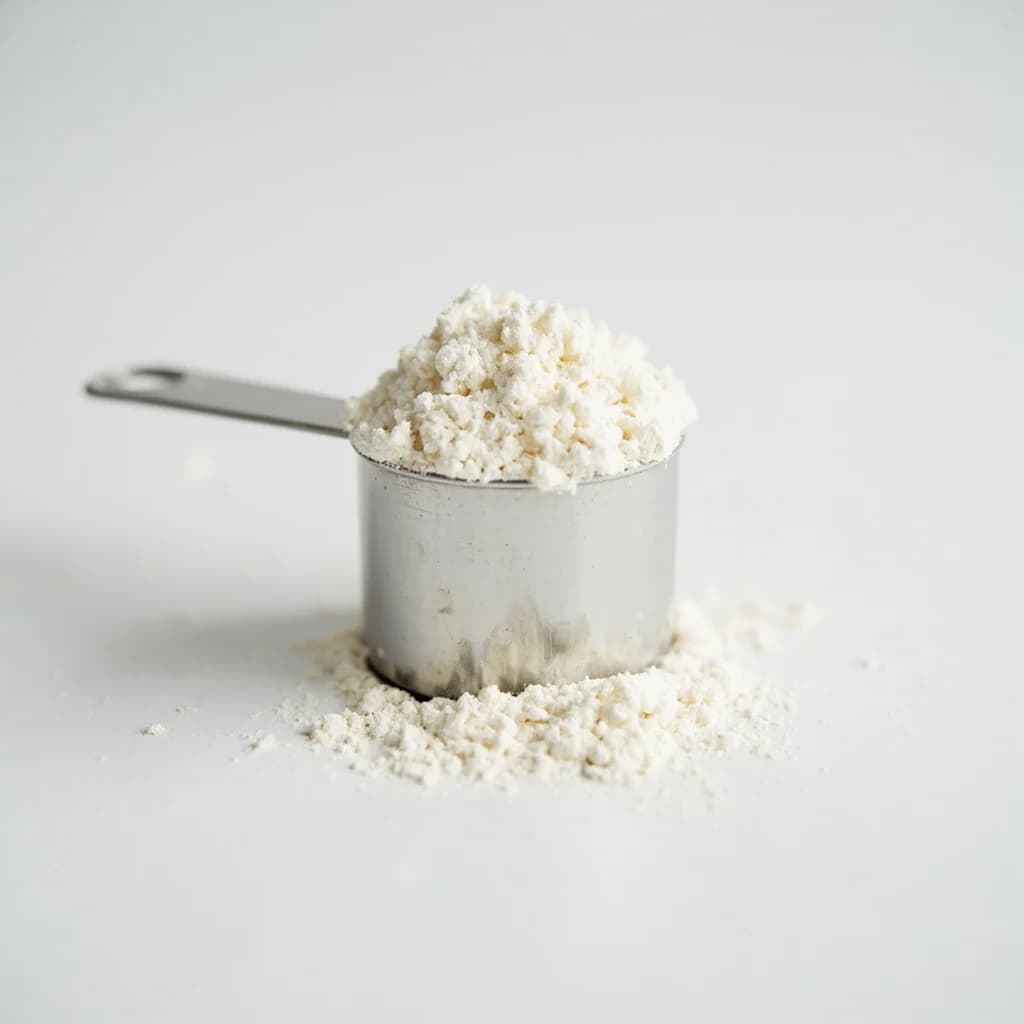
Cake Flour
Fine, low-protein flour for tender, delicate cakes
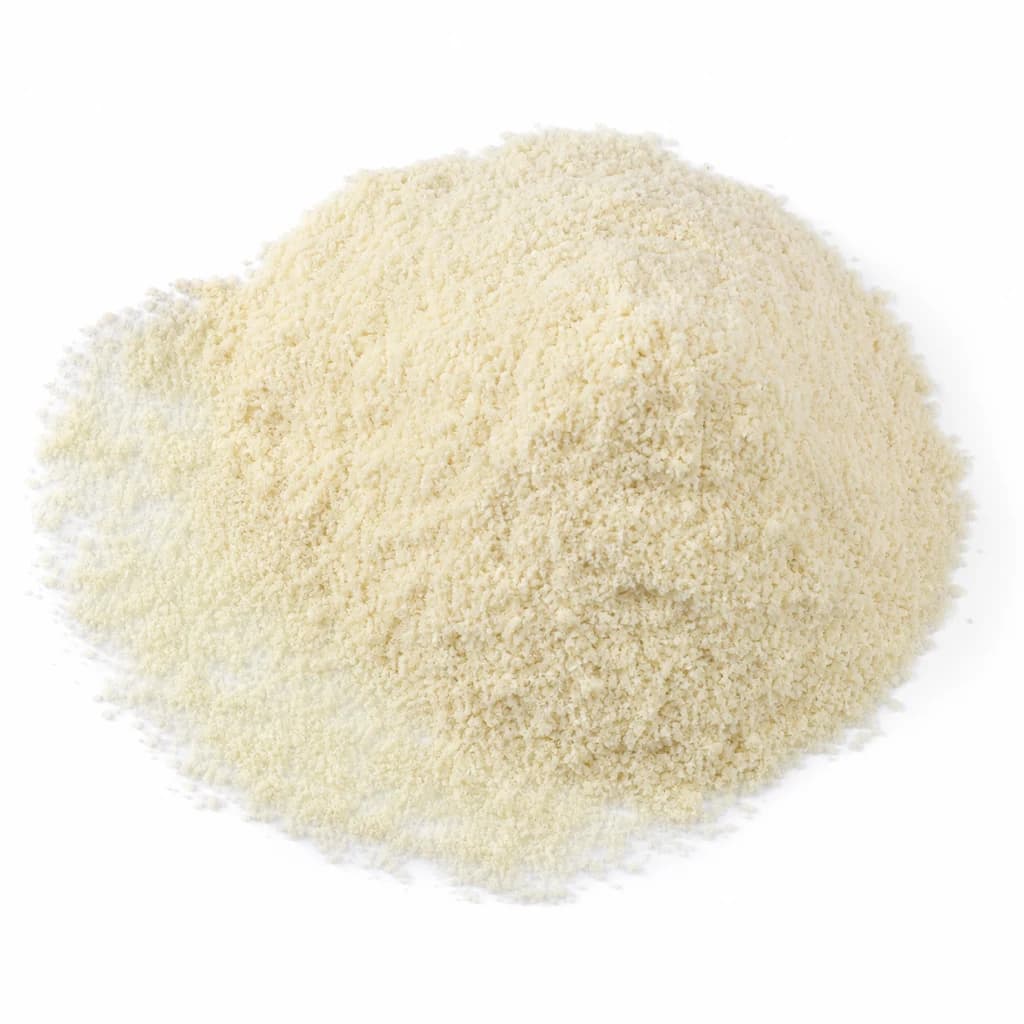
Almond Flour
Nutty, gluten-free flour for macarons and tender bakes

Baking Powder
All-in-one leavener for fluffy cakes, pancakes, and biscuits

Baking Soda
Pure leavener that needs acid to lift — and tenderize
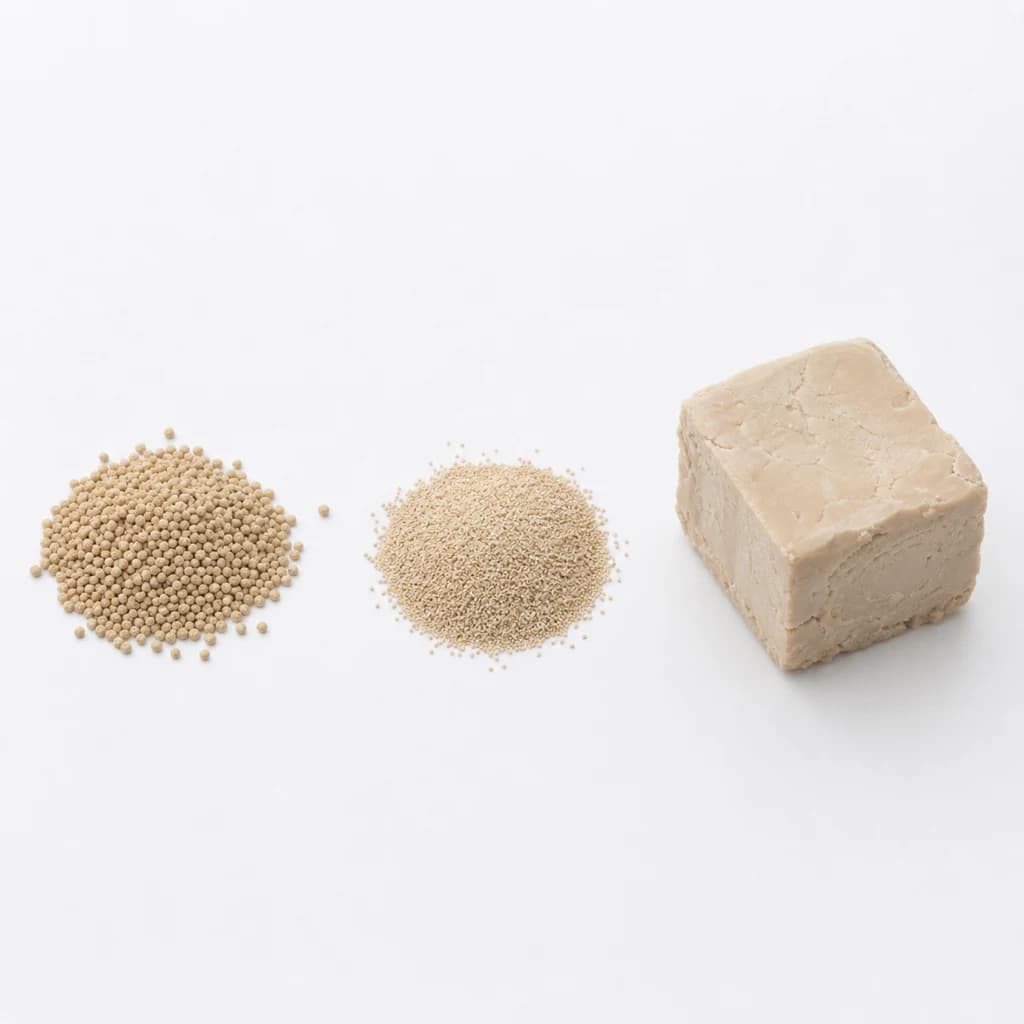
Yeast
Living leaven that makes bread rise and dough come alive