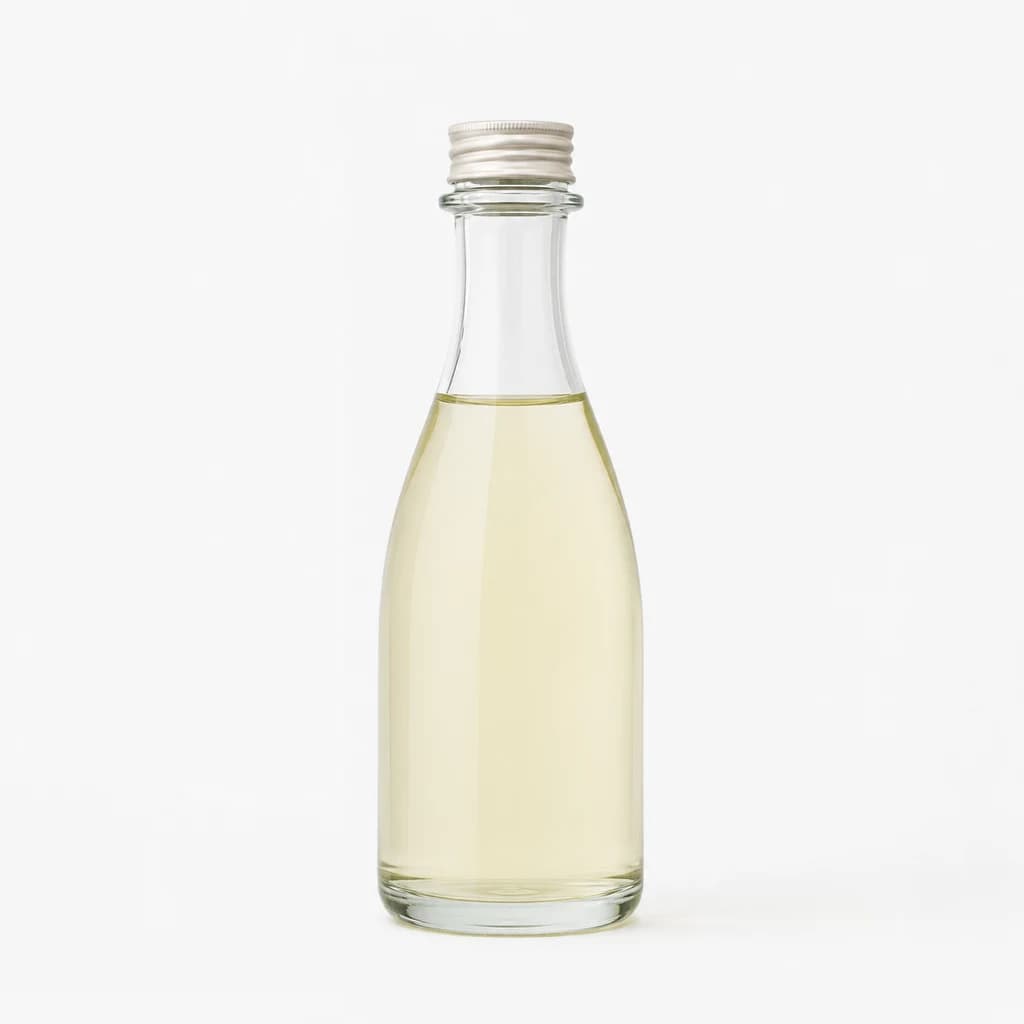
Natural form
A clear glass bottle of sake showing the pale straw-colored liquid inside.
Establishes the primary commercial form of sake — a bottled, pale liquid — so readers instantly recognize it at retail or in a kitchen.
Beverages
Sake
Smooth Japanese rice wine for sipping and cooking
Clean and subtly sweet, sake sips warm or chilled and lends mellow depth to marinades, glazes, and simmered dishes. Keep it cool, and refrigerate once opened.
Sake is a Japanese brewed beverage made from polished rice, water, koji mold, and yeast — closer in process to beer than wine, though it drinks like a delicate wine at roughly 15% alcohol. Its flavor ranges from clean and floral to rich, rice-sweet, and umami-laden, with notes of melon, banana, steamed rice, and a savory backbone. In Japanese cooking sake is fundamental: it tenderizes, removes fishy and gamey odors, adds umami and a subtle sweetness, and balances salty seasonings. It's one of the core seasoning liquids alongside mirin, soy, and dashi.
- Measured in
- ml
- Storage
- Room Temperature
Find it in
Types & varieties
Pure rice, full-bodied — great cooking sake
Highly polished, fragrant — for drinking
Salted cooking sake — convenient, adjust salt
How to use in cooking
Cooking sake adds umami and gentle sweetness while neutralizing strong odors in fish and meat. It's essential to teriyaki, nimono (simmered dishes), and many marinades, often paired with mirin and soy. Add it early so the alcohol cooks off and the savory depth remains. A splash also deglazes a pan into a clean, umami-rich sauce.
How to choose
Drinking sake (junmai, ginjo) cooks beautifully and tastes better than salted 'cooking sake' (ryorishu), which has added salt and additives — fine in a pinch but adjust your seasoning. For most cooking, an inexpensive junmai is the sweet spot. Refrigerate after opening; sake oxidizes faster than spirits.
Common uses
Tips & pitfalls
- Use real drinking sake over salted 'cooking sake' when you can.
- Add early to cook off alcohol and mellow odors.
- Pair with mirin and soy for the classic Japanese balance.
- Refrigerate after opening — it's brewed, not distilled.
Nutrition
Nutrition
No USDA FoodData Central match for Sake yet. We surface a per-100 g profile once a generic whole-food entry is matched and verified.
In the shops
Matched grocery products
No matched grocery products for Sake yet.
Good to know
- Flavor
- Rice-sweet, floral, umami, clean
- Use in cooking
- Simmered dishes, marinades, glazes, broths, deglazing
- Alcohol?
- Yes — ~14–16% ABV
- Substitute base
- Dry white wine, dry sherry, or rice vinegar + sugar + water
- How to store
- Cool and dark; refrigerate after opening
Substitutes
- Dry white wine — Closest in acidity and alcohol
- Dry sherry — Adds nuttiness but works in marinades
- Rice vinegar + water + sugar — Non-alcoholic: rough umami-sweet stand-in
Also called
sake · rice wine
Appears in these dishes

Related

White Rum
Light, clean rum for mojitos, daiquiris, and piña coladas

Dark Rum
Rich, molasses-deep rum for tiki drinks and sipping

Tequila
Bright agave spirit for margaritas, palomas, and shots
Mezcal
Smoky agave spirit for sipping and smoldering cocktails
Vodka
Clean, neutral spirit for mixing into almost any cocktail
Gin
Botanical, juniper-forward spirit for G&Ts and martinis
Whisky
Warm, oak-aged spirit for sipping and classic cocktails

Brandy
Rich, fruity grape spirit for sipping, sauces, and flambé