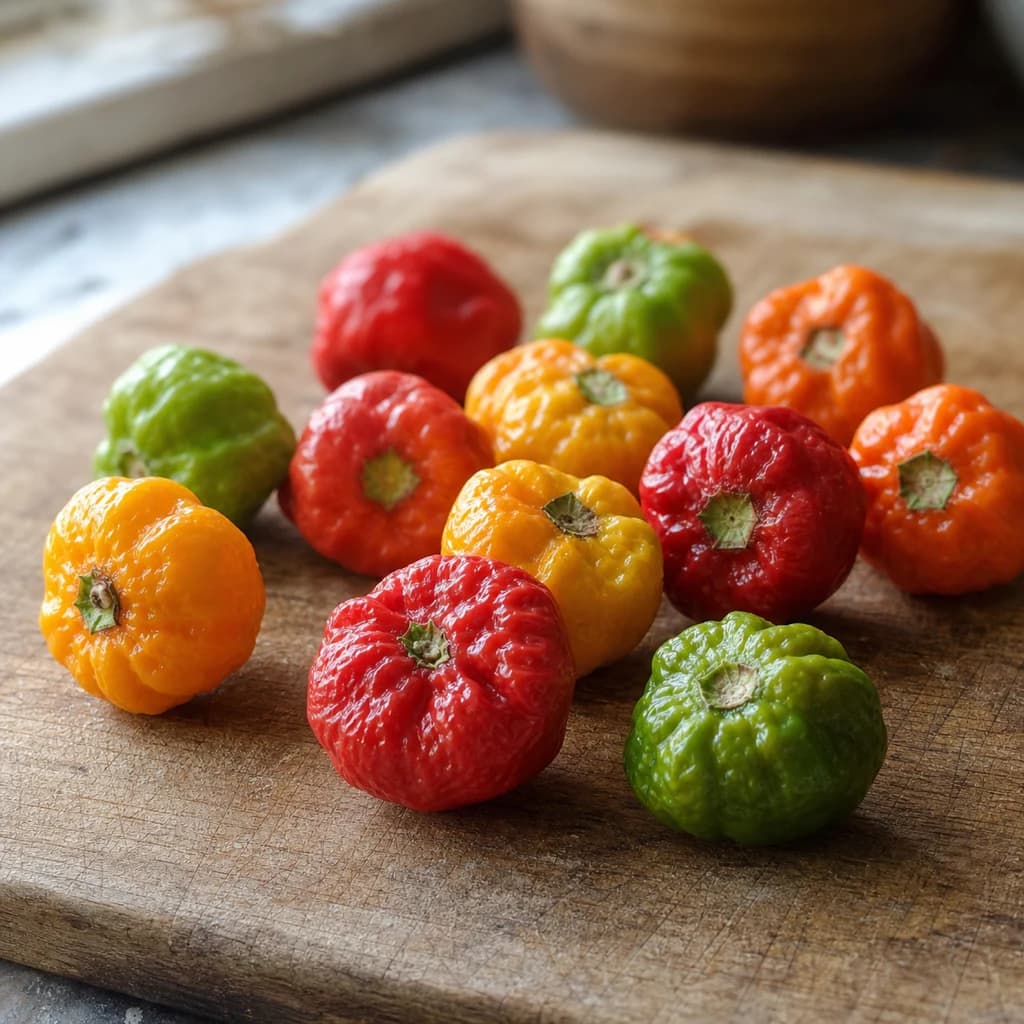
Natural form
Fresh seasoning peppers: small, wrinkled, and vividly colored in red, yellow, and green.
Shows readers the distinctive wrinkled skin, compact size, and color range that distinguish seasoning peppers from other Caribbean peppers.
Produce
Seasoning Pepper
Aromatic, mild Caribbean pepper used for flavor without the heat of its Scotch bonnet relative.
Seasoning peppers are small, wrinkled Caribbean peppers that share the fruity, floral aroma of the Scotch bonnet but carry little to no heat. They are blended into sofrito and green seasoning, the flavor base of countless Caribbean and Latin dishes. Prized for adding habanero-family fragrance to a pot without making it spicy.
The seasoning pepper is a cornerstone of Caribbean cooking, a small lantern-shaped pepper that delivers the aromatic essence of its fiery relatives—Scotch bonnet and habanero—without meaningful heat. Its thin flesh and higher sugar content give it a sweet-tart quality distinct from the neutral sweetness of bell peppers. In Jamaican and Trinidadian kitchens, it forms an aromatic base alongside scallion, garlic, and thyme (known collectively as "seasoning" or "alō"), perfuming everything from one-pot rice dishes to braised meats. The pepper's key characteristic is that it contributes capsaicin in trace amounts sufficient for aroma but not for heat, making it indispensable when a dish must taste Caribbean without the fire. Fresh, they have a faintly waxy skin and a mild pepper scent that intensifies with cooking; when simmered in liquid or fat, they perfume the entire dish. Their small size (2–4 cm) makes them easy to work with whole for gentle infusion or to mince finely for more direct flavor distribution.
- Measured in
- g
- Storage
- Fridge
Types & varieties
Most common commercial variety; bright yellow, slightly waxy skin, sweet-tart
Fully ripened yellow type; richer, deeper flavor
Unripe fruit; sharper, more vegetal flavor, slightly less sweet
Puerto Rican term for small sweet peppers used similarly
Distinguishing Seasoning Pepper from Scotch Bonnet
These two peppers look similar enough to cause confusion, but the difference matters enormously for your dish. Here is how to tell them apart.
- Size: Seasoning peppers are smaller, typically 2–3 cm; Scotch bonnets average 3–5 cm
- Skin texture: Scotch bonnet skin is smoother and glossier; seasoning pepper skin has a slightly duller, more matte finish
- Flesh thickness: Scotch bonnet has noticeably thicker, plumper walls; seasoning pepper flesh is thinner
- Aroma: Scotch bonnet has a distinct hot pepper pungency even when you cannot taste heat; seasoning pepper scent is milder and sweeter
- Heat test: If you have any doubt, touch the cut surface to your tongue tip—a Scotch bonnet will register immediate, unmistakable heat within seconds
Common uses
Tips & pitfalls
- Do not substitute Scotch bonnet if a recipe specifies seasoning pepper—the heat difference is dramatic and will overwhelm dishes meant to be mild
- Use 2–3 whole seasoning peppers per dish when you want gentle flavor infusion; remove before serving if guests cannot tolerate any heat whatsoever
- When frying whole peppers in oil, they will pop and splatter like any small chile—always cover the pan or use a splatter guard
- To maximize aromatic impact without texture, char the whole peppers directly over a gas flame or in a dry skillet, then add to simmering dishes
- Store unwashed in a paper bag in the refrigerator crisper drawer; moisture accelerates spoilage
- For long-term storage, freeze whole on a tray until solid, then transfer to freezer bags—frozen peppers work well for infusing stews and soups without needing to thaw first
- If using in place of a hot chile, add them early in cooking so their aromatic compounds have time to develop; they are not potent enough to throw in at the end like a Scotch bonnet
- When a recipe calls for "seasoning" in Caribbean cooking, expect a combination of seasoning peppers, scallions, garlic, and often thyme—this aromatic foundation is different from a single ingredient
Nutrition
Energy
121 kJ · per 100 g
Where the calories come from
Protein
0.9g
2% DV
Carbs
6.5g
2% DV
Fat
0.4g
0% DV
Fiber
2.8g
10% DV
Sugars
4.1g
of which
Sodium
3mg
0% DV
Source · USDA FoodData Central · approx. Peppers, jalapeno, raw
View on FDC →In the shops
Matched grocery products
No matched grocery products for Seasoning Pepper yet.
Good to know
- Origin
- Caribbean, primarily Jamaica and other West Indian islands
- Heat Level
- 0–500 Scoville units; essentially mild to negligible
- Typical Size
- 2–4 cm long, lantern-shaped similar to Scotch bonnet but smaller
- Colors
- Yellow, orange, red, and green (unripe)
- Season
- Year-round in tropical climates; peak late summer in temperate markets
- Storage
- Refrigerate in a paper bag 1–2 weeks; freeze whole up to 6 months
- Key Flavor Compounds
- Trace capsaicin (below threshold for heat); higher sugar content contributes to sweetness
Substitutes
- Bell pepper (any color) — Use ½ bell pepper per seasoning pepper; lacks the aromatic intensity but provides neutral sweetness
- Cubanelle pepper — Similar mild, slightly sweet flavor and comparable size; good 1:1 substitute in most applications
- Poblano — Milder and larger; cut into smaller pieces to approximate the quantity needed
- Banana pepper — Mild and slightly tangy; use similarly for raw applications
Also called
Pimento Pepper · Aji Cachucha · Ají Gustoso · Aji Gustoso · Aji Dulce
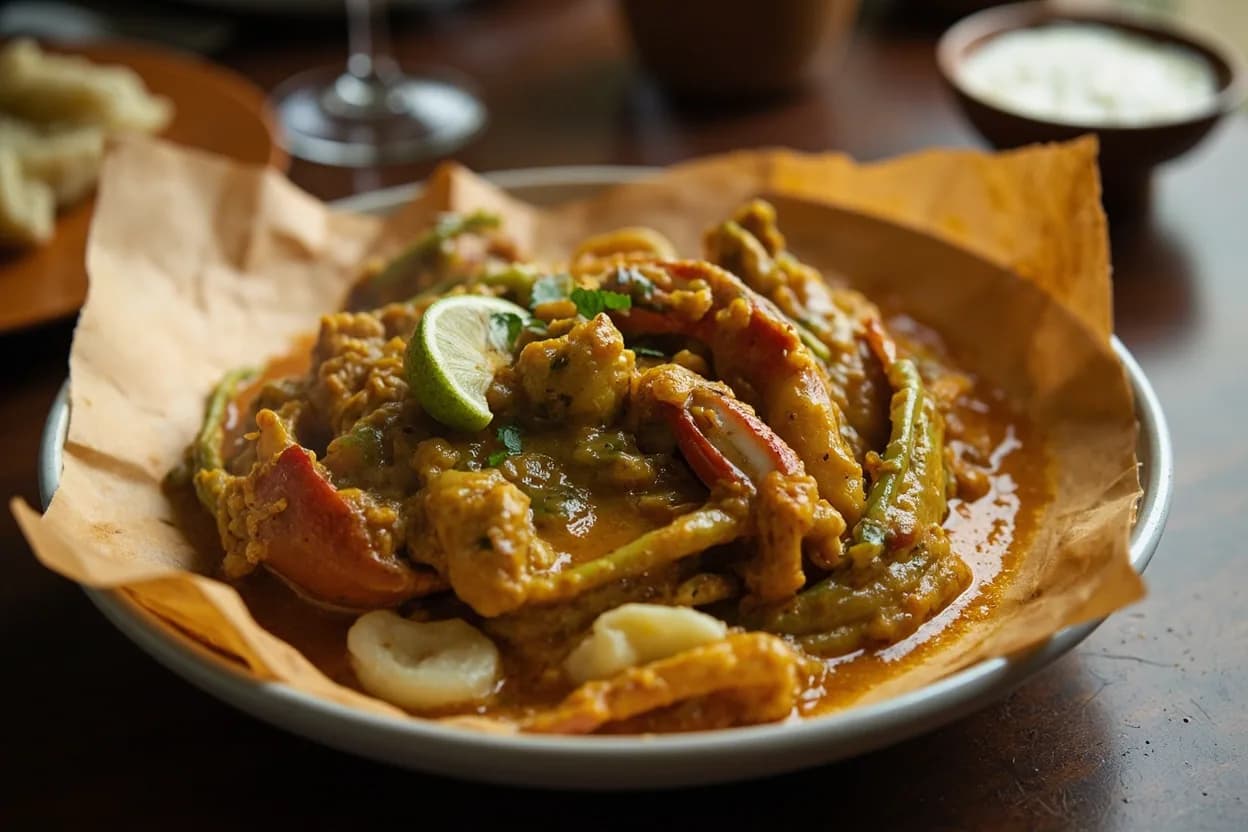
Appears in these dishes
Related
Tomato
Juicy, sun-sweet fruit for sauces, salads, and slow-cooked depth
Yellow Onion
The aromatic backbone of soups, sofritos, and braises
Garlic
Pungent cloves that perfume nearly every savory dish
Lemon
Bright, acidic citrus that wakes up almost any dish
Potato
Humble, hearty staple — roast, mash, fry, or boil
Carrot
Sweet, crunchy root — raw, roasted, or the base of a sofrito
Cucumber
Cool, crisp, and watery — for salads, pickles, and tzatziki

Lettuce
Crisp leaves for salads, wraps, and a fresh crunch