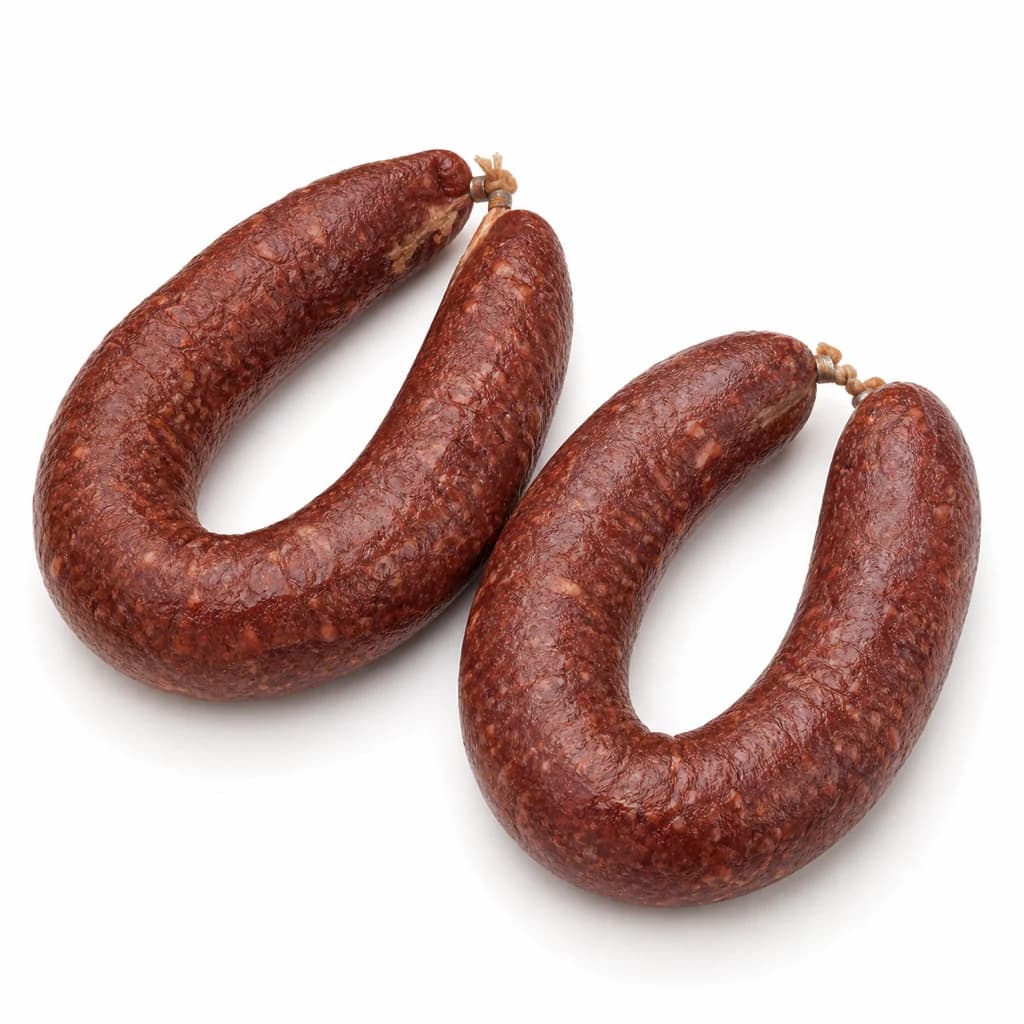
Natural form
Whole sucuk links showing the characteristic dark red casing and firm, dry texture.
Establishes the sausage's form factor — curved horseshoe link, dry surface, deep reddish-brown color — so readers can identify it at a market.
Proteins
Sucuk (Spiced Sausage)
Dry, garlicky Turkish beef sausage spiced with cumin and paprika; fried with eggs.
Sucuk is a dry, fermented Turkish and Middle Eastern sausage made from ground beef (sometimes with lamb) heavily seasoned with garlic, cumin, sumac, and red pepper. It is sliced and pan-fried, classically cooked with eggs (sucuklu yumurta), or grilled and tucked into bread. Its bold, spicy, garlicky flavor is unmistakable.
Sucuk is a dry-cured, spiced beef sausage that anchors Turkish and broader Anatolian cuisine. The making begins with coarse-ground lean beef mixed with a bold blend of garlic, cumin, paprika, sumac, fenugreek, and black pepper, stuffed into natural casings, then fermented and air-dried—sometimes with a light smoking. The result is an intensely savory, garlicky sausage with a deep reddish-orange color from generous paprika and a firm, dense texture that turns crisp-edged when heated. Unlike fresh sausages that cook from raw, sucuk arrives fully cured and seasoned; heat serves only to warm it through and develop its characteristic caramelized exterior. The fat content—typically 20–30%—renders into a rich, fragrant oil that carries the spice notes, making it a cooking medium as much as an ingredient. Found in Turkish markets nationwide, often sold loose from a case or in vacuum-sealed links, quality spans from mild commercial versions to aggressively garlicked village-style productions with regional character.
- Measured in
- g
- Storage
- Fridge
Types & varieties
From Şanlıurfa region; darker, less spicy, subtly smoky; uses Urfa isot pepper
From the Çukurova region; often spicier with different regional spice blends
Widely available commercial brands; moderately spiced, consistent quality
Handmade, traditionally spiced; variable heat and garlicky punch
Common uses
Tips & pitfalls
- Score the casing lengthwise with a knife before frying — it shrinks rapidly under heat and will burst, causing dangerous splattering
- If you want a crispier result without the casing, peel it off before cooking
- Use medium heat and let the sucuk render slowly — high heat burns the exterior while the interior stays cold
- Don't drain the rendered fat when frying eggs in the same pan — that garlicky oil is the point
- Add a pinch of pul biber or a few drops of lemon juice to the pan for brightness
- Leftover sucuk crisps beautifully in a dry skillet and makes an excellent sandwich topper or salad garnish
- Never eat it raw — even though cured, always cook until heated through before consuming
- When buying, choose firm sausages with consistent coloring and no off smells; specialty butcher versions will be more aggressively spiced than supermarket brands
Nutrition
Nutrition
No USDA FoodData Central match for Sucuk (Spiced Sausage) yet. We surface a per-100 g profile once a generic whole-food entry is matched and verified.
In the shops
Matched grocery products
No matched grocery products for Sucuk (Spiced Sausage) yet.
Good to know
- Origin
- Turkey (Anatolia)
- Primary Meat
- Beef (sometimes with lamb)
- Curing Method
- Fermented and air-dried, often partially smoked
- Key Spices
- Garlic, cumin, paprika, sumac, fenugreek, black pepper
- Texture
- Firm and dense when raw; crisps when fried
- Color
- Deep reddish-orange from paprika
- Form
- Stuffed into natural casings, sold in links or coiled loops
- Fat Content
- Moderate to high (typically 20–30%)
- Doneness
- Cured but not fully cooked; requires heat before eating
- Storage (refrigerated)
- 2–3 weeks in original packaging; 1 week once opened
- Storage (frozen)
- Up to 3 months in airtight wrapping
- Serving Temperature
- Almost always served hot, fried or grilled
Substitutes
- Spanish Chorizo (curado) — Cured, spiced pork sausage; similar texture and paprika color, though less garlicky; works in most cooked applications
- Algerian Merguez — North African lamb sausage spiced with cumin and harissa; comparable spice profile but distinctly lamb-based
Pairs with
Also called
Soudjouk · Sujuk
Related

Egg
The kitchen's everything ingredient — bind, leaven, enrich, or fry

Chicken Breast
Lean, quick-cooking white meat for everyday dinners

Ground Beef
Versatile minced beef for burgers, ragù, tacos, and meatballs

Pork Loin
Lean, tender roasting cut that stays juicy with care

Salmon
Rich, rosy fish that roasts, grills, or cures beautifully

Egg White
Pure protein that whips to airy peaks for meringue and more

Egg Yolk
Rich, golden yolk for custards, mayonnaise, and pasta

Quail Egg
Tiny, speckled eggs for garnishing and elegant bites