Proteins
Yellowfin (Ahi) Tuna
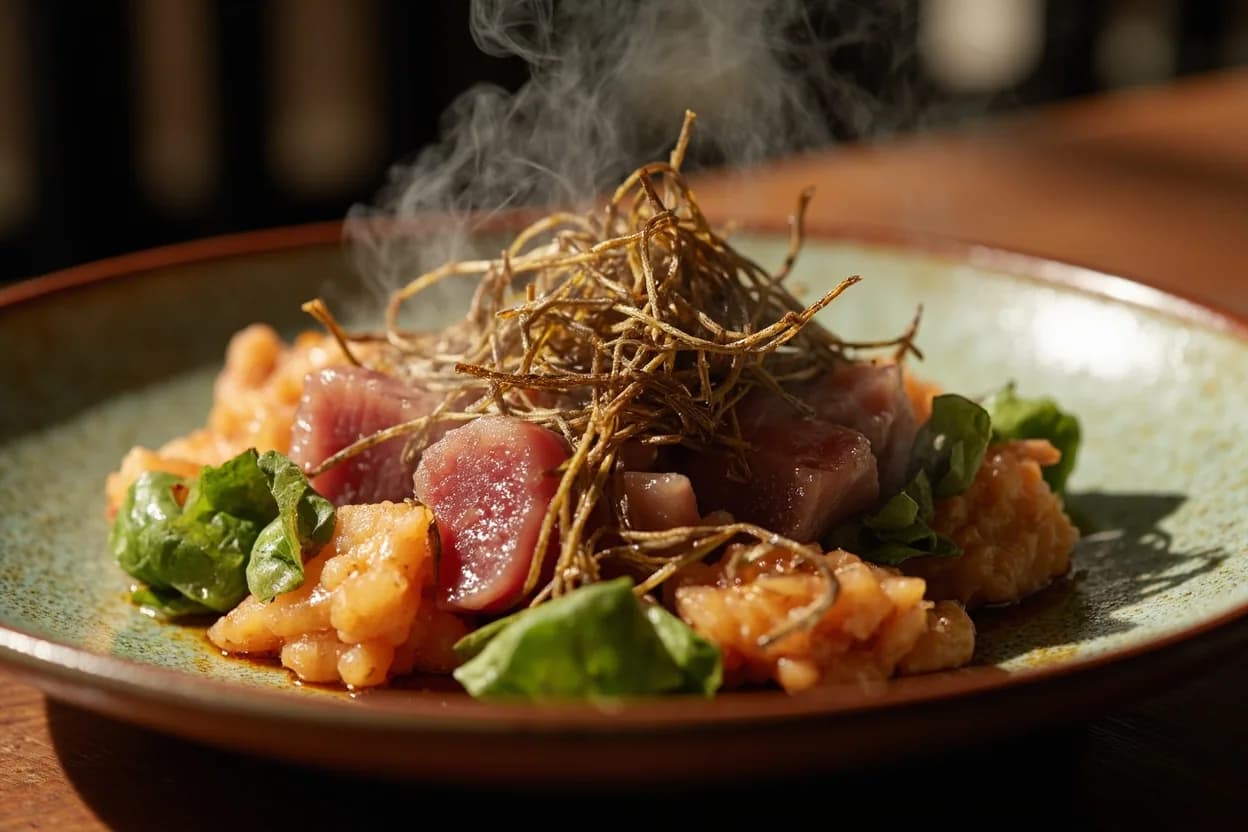
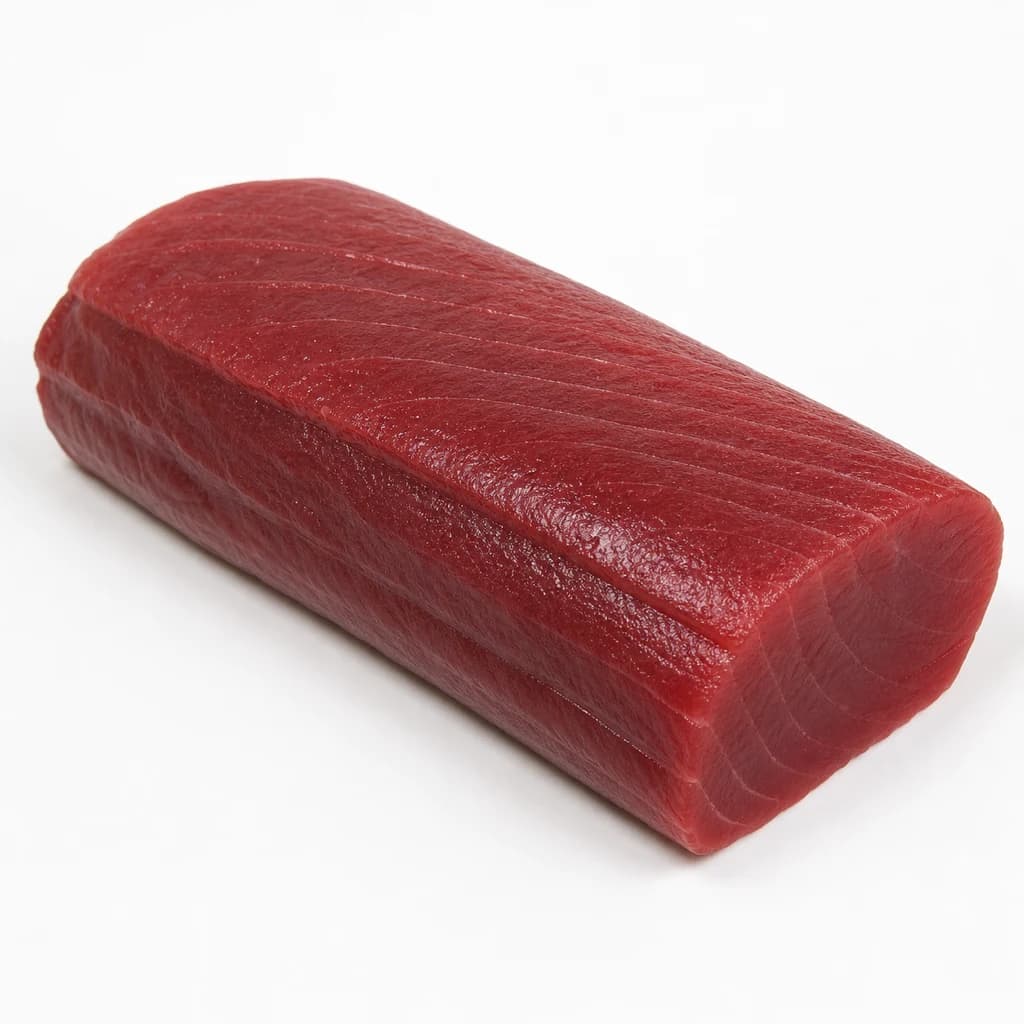
Lean, firm, mild tuna with pale rose flesh; prized for sashimi, poke and quick searing where the center stays raw. Overcooking turns it dry and chalky.
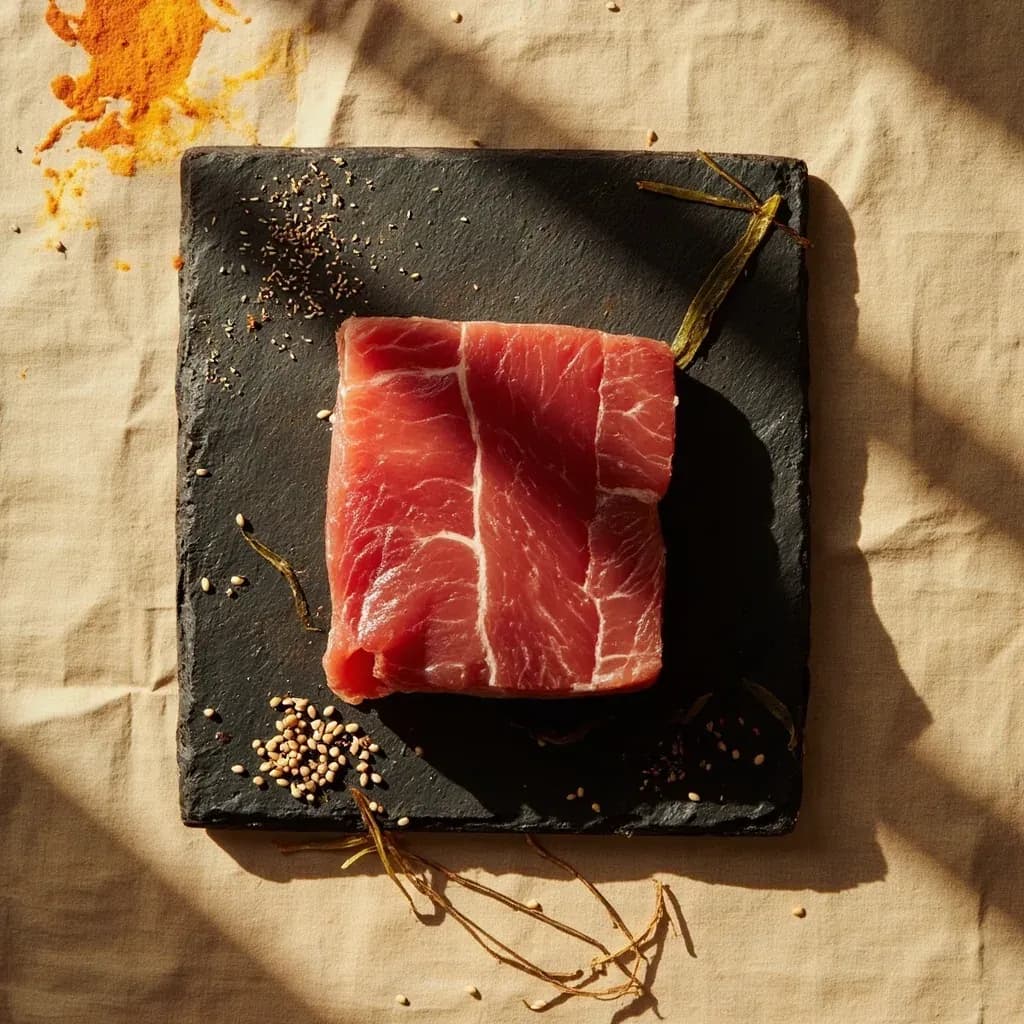
Yellowfin tuna, known in Hawaii as ʻahi, is a large pelagic fish of the mackerel family and one of the workhorses of the global tuna trade. Its flesh ranges from pale pink to ruby red raw, turning a clean beige when cooked, with a mild, slightly sweet flavor and a firm, meaty texture that holds its shape whether sliced thin for sashimi, cubed for poke, or seared hot and fast. Compared with its cousins, yellowfin sits in the middle of the fat spectrum — leaner than bigeye and bluefin, richer than albacore — which is exactly why cooks prize it: it carries flavor without going unctuous, and it responds beautifully to a hard sear that leaves a cool, raw center.
The fish behaves very differently raw versus cooked. In sashimi, poke, and tartare, the flesh is prized for its clean taste and the way it accepts acid, soy, and oil without turning mushy. Heat-treated, yellowfin is unforgiving — it has little collagen and not much intramuscular fat to keep it moist, so overcooking by even a few degrees pushes it from tender to chalky. That single fact drives nearly every technique around it: aggressive heat, brief contact, and an early pull from the pan.
- Measured in
- g
- Storage
- Refrigerate
Allergens
Find it in
Types & varieties
The classic Hawaiian ʻahi; bright clear flesh, the benchmark for poke and sashimi quality.
Tropical longline catch; comparable eating quality, more variable retail availability in the U.S.
Major canning source; also exported as fresh loins from Seychelles and Sri Lanka.
Rectangular, skinless, boneless loin cut for sushi chefs; uniform thickness for slicing into consistent portions.
Pre-cut chunks from trimmed loin and saku off-cuts; price reflects the cut, not necessarily a quality grade.
Often labeled or sold alongside yellowfin as ʻahi in Hawaii; a different species, fattier, darker flesh, and on average higher in mercury.
Buying for raw versus cooked service
‘Sashimi-grade’ and ‘sushi-grade’ are marketing terms, not regulatory ones. What matters is the supplier's handling: the fish should be bled at the boat, iced promptly, and held at 32–38°F. In the U.S., any fish intended to be served raw must be frozen to FDA parasite-control parameters (–35°F for 15+ hours, or –4°F for 7 days) at some point in the chain — most responsible retailers do this before sale and label it accordingly. For poke and tartare, buy from a fishmonger who turns ʻahi over daily and can tell you the boat, catch date, and method. For purely cooked applications — grilled steaks, seared tataki where the center will stay essentially raw — freshness still matters for flavor, but parasite-freezing is not required.
- Look for a clean, briny scent and a moist, translucent surface; avoid dull, browned, or weeping flesh.
- Dull brown edges, freezer burn, or a sour smell are signs to cook thoroughly rather than serve raw.
- Pole-and-line (‘troll’) caught Hawaiian ʻahi is the most sustainably managed option; longline Atlantic and Indian Ocean stocks are under heavier pressure.
- When in doubt, taste a paper-thin sliver before committing a whole dish of tartare or poke.
Searing technique notes
Because yellowfin has so little connective tissue, the goal of heat is crust, not tenderness. A screaming-hot pan or grate, dry surface, and minimal contact time produce the contrast that defines a good seared ʻahi steak: a thin, deeply browned band around a cool, sashimi-like center. Anything past that — pulled at 130°F or above, or rested too long on a hot board — will taste baked and chalky.
- Pat the loin dry and season with kosher salt only at the last moment; surface moisture is the main enemy of a good crust.
- For a 1-inch steak, 60–90 seconds per side on a ripping-hot cast iron, carbon steel, or grill gives a ¼-inch cooked band.
- Rest no more than 1–2 minutes — carryover heat finishes the center and the cutting board is where most steaks overcook.
- Slice across the grain at a slight bias with a long, very sharp knife wiped clean between cuts.
Common uses
Tips & pitfalls
- Source 'sashimi-grade' or 'sushi-grade' fish from a supplier who can name the boat, catch date, and icing protocol; FDA parasite-control for raw service requires freezing at –35°F for 15+ hours or –4°F for 7 days.
- Pat the loin bone-dry and salt only at the last moment before heat hits it — surface moisture is the single biggest obstacle to a good crust.
- Sear a 1-inch steak 60–90 seconds per side over ripping heat; pull at 115–125°F before carryover finishes the center.
- Rest seared steaks no more than 1–2 minutes — the cutting board is the most common overcook site, not the pan.
- Past 130°F internal, yellowfin turns chalky with no forgiveness — the lean flesh has no collagen or fat to fall back on.
- Brine the loin in a 5% salt solution for 10–15 minutes to firm the flesh, season evenly, and reduce weeping — especially helpful on previously frozen fish.
- Slice across the grain at a slight bias with a long, very sharp knife wiped clean between cuts to keep the slices neat.
- Taste a paper-thin sliver before committing a whole tartare or poke batch; reserve dull, browned, or freezer-burned pieces for cooked applications only.
Nutrition
Energy
456 kJ · per 100 g
Where the calories come from
Protein
24.4g
49% DV
Carbs
0g
0% DV
Fat
0.5g
1% DV
Fiber
0g
0% DV
Sugars
0g
of which
Sodium
45mg
2% DV
Source · USDA FoodData Central · approx. Fish, tuna, fresh, yellowfin, raw
View on FDC →In the shops
Matched grocery products
 €2.90
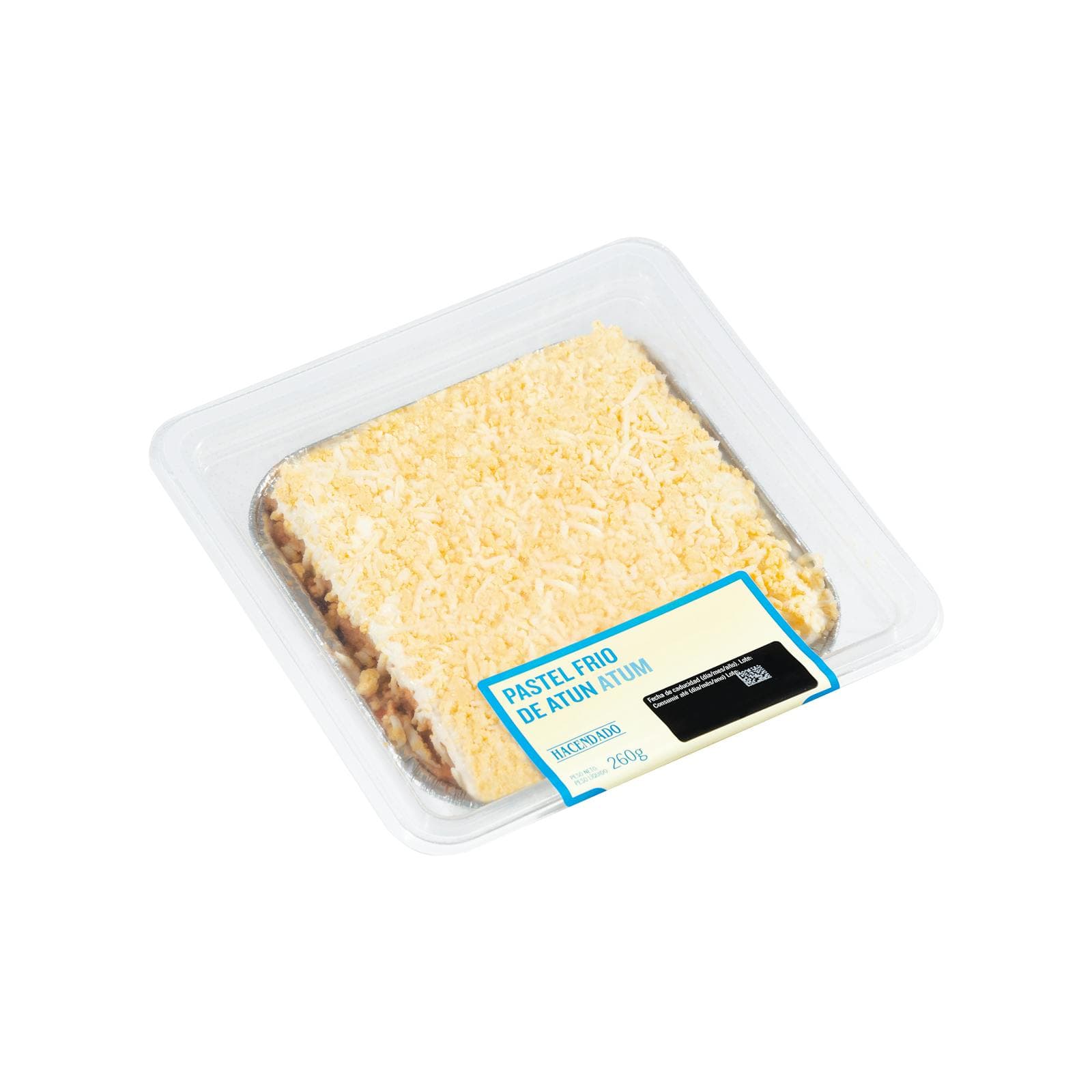
€2.90Tuna Pie
Hacendado · 260 g · Mercadona
 €4.99
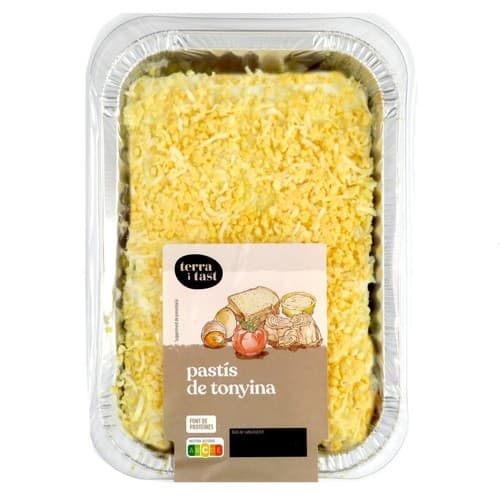
€4.99Tuna Pie
TERRA I TAST · kg · Bonpreu
 €2.30
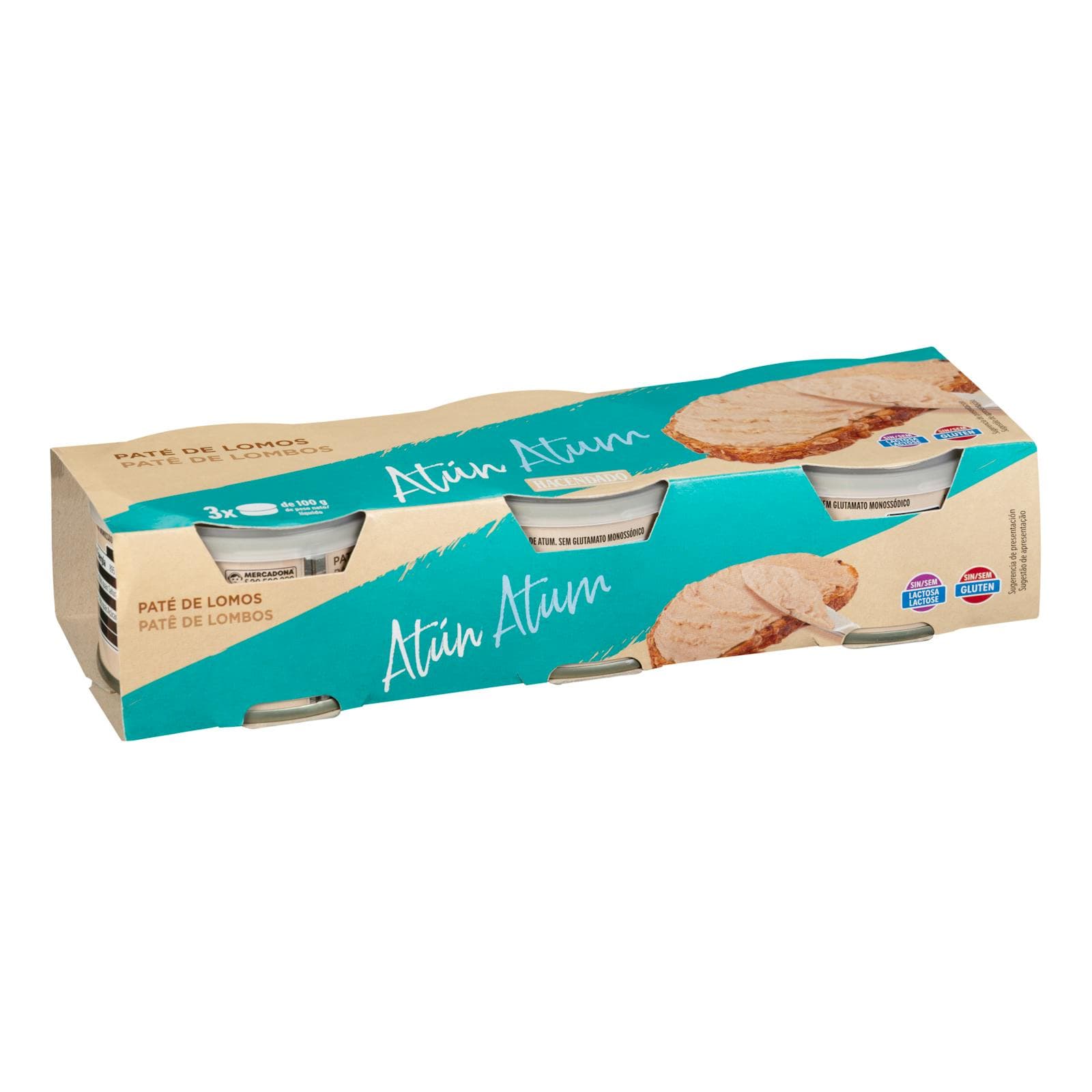
€2.30Tuna Loin Paté
Hacendado · 300 g · Mercadona
 €3.25
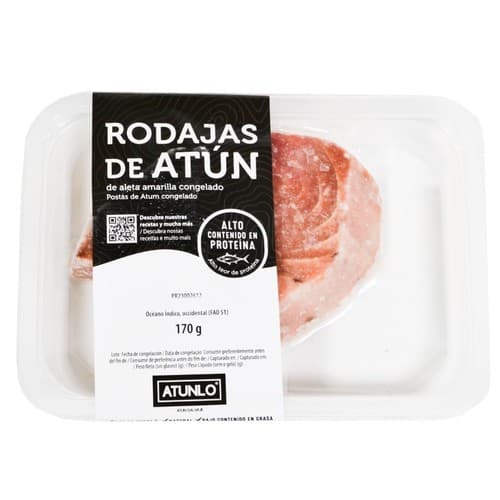
€3.25Natural Tuna Rondanxa
ATUNLO · kg · Bonpreu
 €5.37
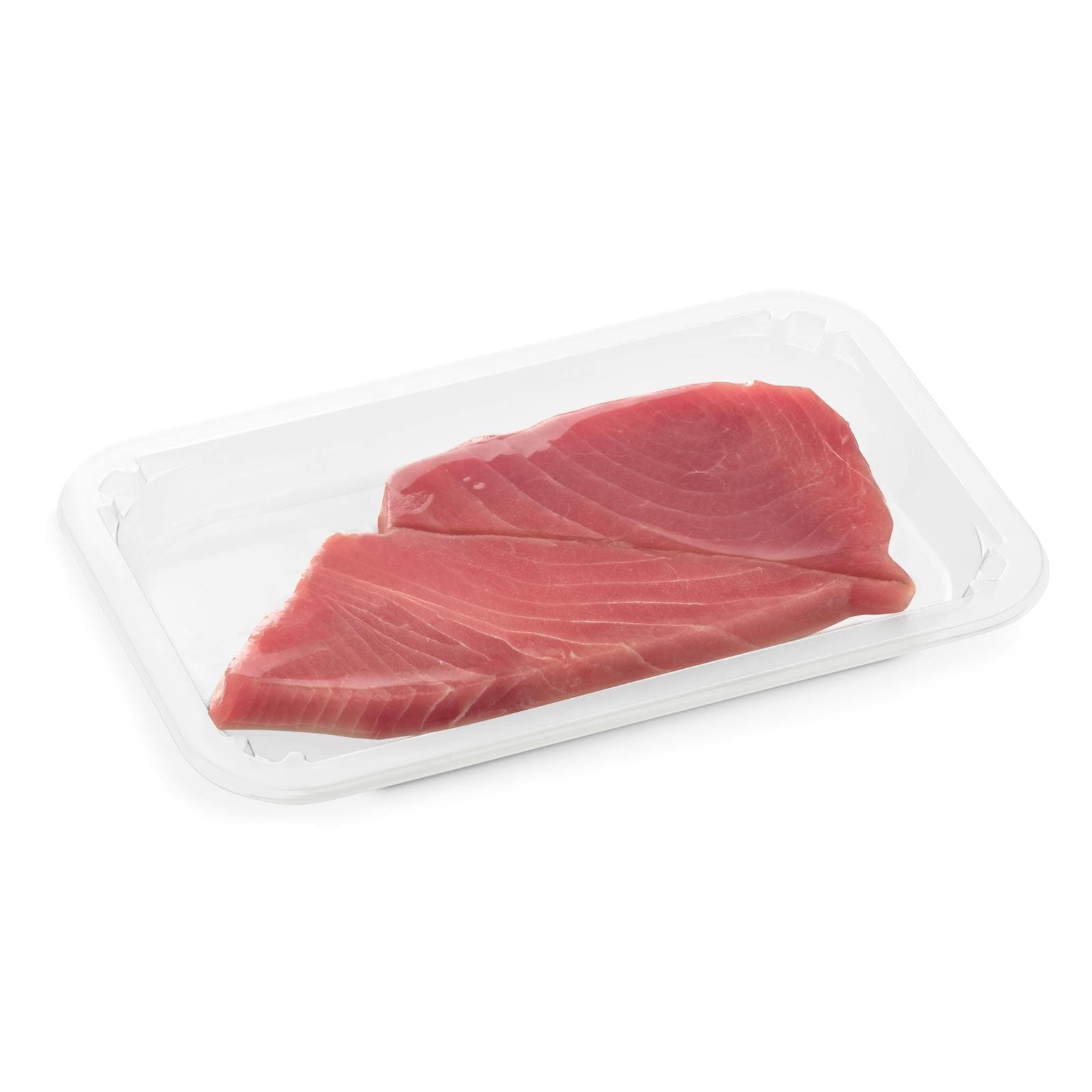
€5.37Yellowfin Tuna Slices
235 g · Mercadona
 €2.99
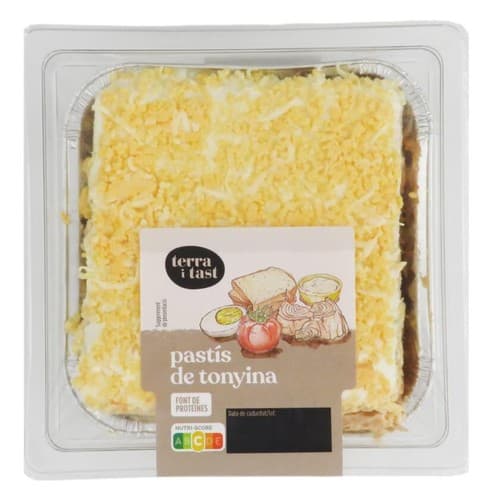
€2.99Terra i Tast Tuna Cake
TERRA I TAST · kg · Bonpreu
Good to know
- Species
- Thunnus albacares (family Scombridae)
- Other names
- Ahi (Hawaiian), yellowfin tuna
- Typical market size
- 20–100 lb whole; sashimi loins typically 2–8 lb
- Flesh color
- Pale pink to ruby red raw; opaque pale tan to beige when cooked
- Fat content
- Moderate — fattier than albacore, leaner than bigeye and bluefin
- Internal doneness targets
- 115°F (46°C) rare; 125°F (52°C) medium-rare; avoid past 130°F (54°C)
- Yield
- Roughly 50–55% skinless, boneless loin from a dressed fish
- Storage
- 32–38°F; use within 1–2 days for raw applications; freeze at –10°F or below for longer storage
Substitutes
- Bigeye tuna — Closest match; slightly fattier with deeper color, behaves identically in sashimi and seared applications.
- Bluefin tuna — Richer, fattier, and more flavorful; interchangeable in sushi or seared-rare dishes at a significant price premium.
- Albacore tuna — Lighter, milder, and paler; works for cooked seared applications but reads bland raw and is usually canned as ‘white tuna.’
- Yellowtail (hamachi) — A sushi-bar swap for raw applications; oilier, more buttery, with a softer, almost custardy texture.
- Swordfish — Best cooked-only substitute for grilled or seared steaks; meaty and firm, but unsuitable for raw service.
- Mahi-mahi — Lean, firm, and mild; works for grilled or seared presentations but lacks the characteristic tuna flavor.
Pairs with
Also called
ahi tuna · ahi · yellowfin · Thunnus albacares