 Chinese
Easy · Hot
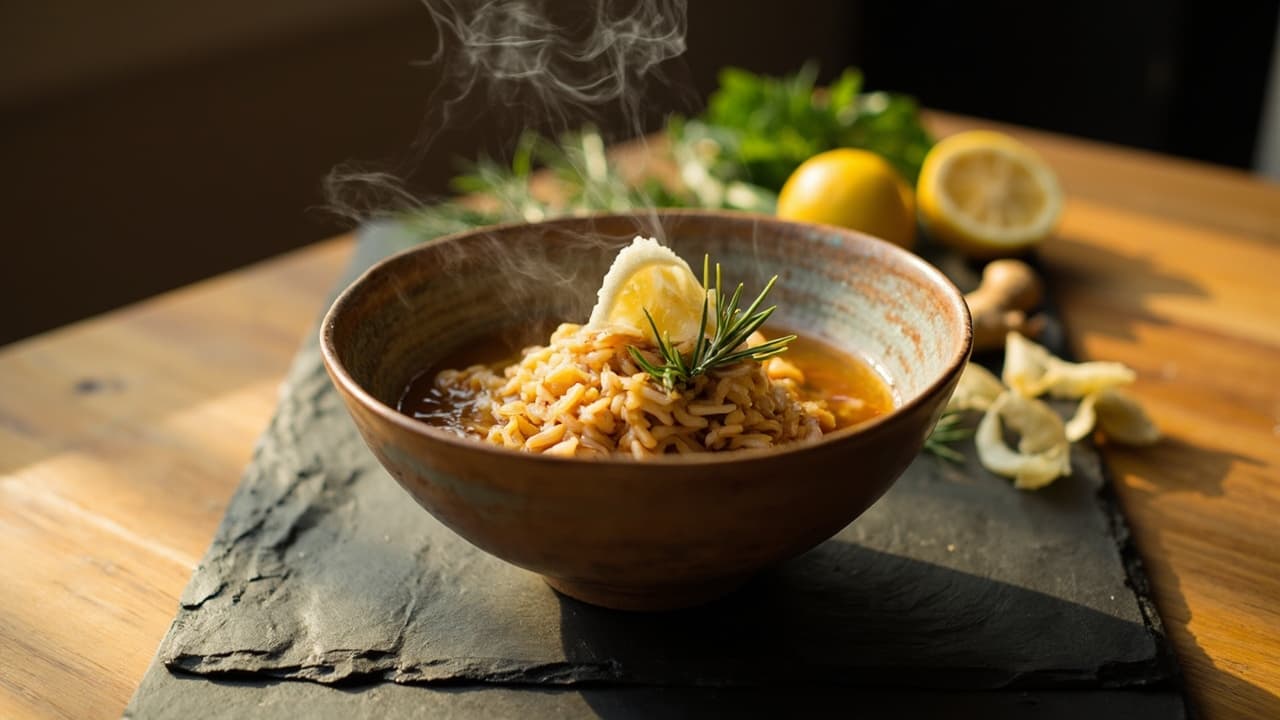
Misty Dawn Tea Bowl
A meditative rice bowl infused with deep-brewed black tea, fragrant rosemary, and a whisper of honey — a quiet morning ritual in a bowl, honoring the ancient tea roads.

Prep
10 min
Cook
25 min
Total
35 min
Method
1
Bring 2 cups of water to a rolling boil in a clay cooking pot over high heat. Remove from heat, add the black-tea leaves, and steep uncovered for exactly 5 minutes — this is the first infusion, meant to be clear and bright.
2
Strain the tea through a silk tea strainer into a heatproof vessel, reserving both the liquid and the spent leaves separately.
3
4
5
Cover the rice tightly and let it steam undisturbed for exactly 12 minutes. Do not lift the lid — trust the process.
6
Remove from heat and let the rice rest, covered, for 5 minutes. This is the second infusion of the meal, where the true character reveals itself. Fluff gently with a wooden fork.
7
Pour the fragrant tea broth through a fine strainer directly over the cooked rice, reserving the herbs. Use approximately ¾ cup of broth per serving, leaving the rice moist but not soupy.
8
Drizzle the honey over the warm rice and fold gently with the wooden fork, allowing the sweetness to weave through the earthy tea notes.
9
Zest half the lemon directly over the rice bowl — the citrus brightens the fermented depth. Slice the remaining half into thin rounds for those who desire more brightness.
10
Tear the fresh basil leaves with your fingertips (never cut — tearing honors the leaf's essence) and scatter over each bowl.
11
Serve in weathered clay bowls while the tea-scent still rises visibly. Garnish with a single lemon round and the reserved steeped herbs as a quiet reminder of the first infusion.
B
Nutri-Score
Good balance
A–E · lower is better · score 0
Calories
485
per serving
Low sugar · 10gLow saturated fat · 0gLow salt · 306mg
Protein
11g
Carbs
109g
Fat
1g
Sat. fat
0g
Fiber
4g
Sugar
10g
Sodium
306mg
Dairy FreeGluten FreeVeganVegetarianAnti InflammatoryDiabetesHeart HealthyLow FatPlant ForwardReduced SodiumWhole Grain
Nutri-Score is a general nutritional-balance guide, not medical or dietary advice.
B
Environmental impact
Low impact
A–E · lower is better · includes estimates
kg CO2e
0.6
per serving
BCarbon
Basmati Rice, rinsed drives 71% of this recipe’s estimated footprint.
Carbon from Poore & Nemecek 2018; water, land & runoff from Agribalyse — modelled averages for comparing recipes, not a measurement of your groceries.
Flavor Profile
4
Umami
4
Sweet
4
Salty
3
Sour
2
Bitter
4
Spicy
Textures
SilkyTender
Aromas
EarthyHerbal
Kitchen Equipment
Primary Tool
Clay PotClay PotFine Mesh StrainerHeatproof VesselPotChef KnifeCutting BoardMeasuring CupsMeasuring SpoonsMicroplane ZesterWooden Fork
Safety & Storage
High Risk Population
This recipe contains honey, which should not be served to infants under 12 months of age or immunocompromised individuals due to the risk of botulism.
Storage
Rice-based dishes must be refrigerated within 2 hours of cooking and consumed within 3-4 days. Reheat to at least 165°F before serving.
Cooking Temperature
Ensure tea broth reaches a rolling boil before adding herbs for steeping. Rice must be cooked to an internal temperature that ensures proper texture and food safety.
Handling
Use clean utensils and cutting boards when handling fresh ginger and lemon to prevent cross-contamination with raw proteins from previous preparations.
Pro Tips
Technique
The rice must steam undisturbed — do not lift the lid during those twelve minutes of transformation. The steam itself is doing sacred work, converting hard grains into something tender and alive. Patience is never passive in my kitchen; it is the most active ingredient you will ever add.
Substitution
Should aged pu-erh be within reach, substitute it for the black tea — its deeper fermented character aligns more closely with the earth tones this bowl was designed to honor.
From the chef
Rice is not boiled in water here — it absorbs a broth built from black tea steeped with ginger, rosemary, and thyme, so every grain carries the earth and herb of the infusion. The tea is brewed twice in a sense: first steeped clear and bright, then simmered with the herbs to deepen it before it meets the cooked rice. Honey folds through warm, weaving sweetness into the fermented depth. Lemon zest brightens the surface; torn basil leaves, never cut, scatter over the bowl last. It is a quiet morning dish — two cups of water becoming broth, becoming nourishment.
TagsTea InfusedHerbalMeditativeWeeknight DinnerOne Pot
Source: generated · June 13, 2026