 French
Medium · Hot
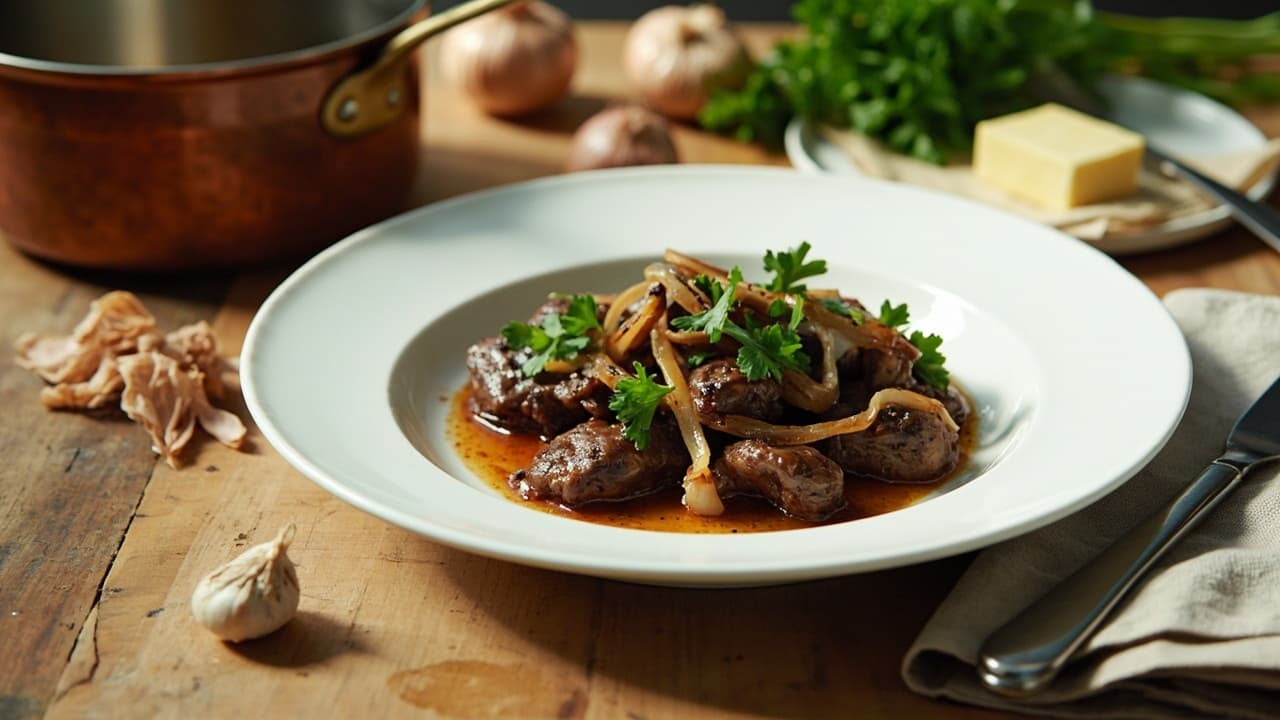
Sautéed Chicken Livers with Shallot and Parsley
Classic French bistro preparation of tender chicken livers quickly sautéed with sweet shallots and fresh parsley, finished with a knobs of butter for richness.
Prep
15 min
Cook
15 min
Rest
10 min
Total
40 min
Method
Preparation
1
Place trimmed livers on a dedicated plate. Do not place on surfaces that will contact other ingredients.
Sauté the Livers
2
Heat a large stainless steel sauté pan over medium-high heat until smoking slightly. Add the olive oil and swirl to coat.
3
Place the chicken livers in the pan in a single layer—listen for the sizzle. Do not move them for 2 minutes. This is where the fond develops, and fond is flavor.
4
Flip each liver and cook another 2 minutes until they are firm. Use an instant-read thermometer to verify internal temperature reaches 165°F (74°C) at the thickest part of the largest liver before removing from pan. Do not rely on color as a doneness indicator.
Build the Shallot Sauce
5
Monitor temperature to ensure sauce stays above 140°F (60°C) or below 40°F (40°C) during holding.
6
Add the minced garlic and cook for 30 seconds until fragrant but not browned.
Finish and Serve
7
Return the chicken livers to the pan along with any resting juices. Add the remaining 2 tablespoons cold butter and swirl the pan vigorously to create a glossy, emulsified sauce.
8
Remove from heat and fold in the chopped parsley. Taste and adjust seasoning. Serve immediately on warm plates.
B
Nutri-Score
Good balance
A–E · lower is better · score 1
Calories
412
per serving
High in protein · 41gLow sugar · 8g
Protein
41g
Carbs
15g
Fat
21g
Sat. fat
8g
Fiber
4g
Sugar
8g
Sodium
720mg
Nutri-Score is a general nutritional-balance guide, not medical or dietary advice.
C
Environmental impact
Moderate impact
A–E · lower is better · includes estimates
kg CO2e
1.4
per serving
CCarbonAEU all-round· carbon sets the grade
Water
0.5m³
Land
53Pt
Runoff
0.1g P
Chicken Livers drives 88% of this recipe’s estimated footprint.
Carbon from Poore & Nemecek 2018; water, land & runoff from Agribalyse — modelled averages for comparing recipes, not a measurement of your groceries.
Flavor Profile
7
Umami
4
Sweet
5
Salty
2
Sour
2
Bitter
4
Spicy
Textures
CrispyTenderSilky
Aromas
HerbalButterySavory
Kitchen Equipment
Primary Tool
Stainless Steel Saute PanCounter FootprintSmall
Techniques
Safety & Storage
Cooking Temperature
Chicken livers must reach internal temperature of 165°F (74°C) to eliminate harmful bacteria including Salmonella and Campylobacter. The recipe indicates cooking until firm but slightly pink inside—ensure probe thermometer verification.
Handling
Raw chicken livers present cross-contamination risk. Use separate cutting boards, utensils, and plates for raw and cooked products. Wash hands thoroughly with soap for 20 seconds after handling raw livers.
Storage
Refrigerate chicken livers at 40°F (4°C) or below. Use within 1-2 days of purchase. Do not leave at room temperature for more than 2 hours total during preparation and rest periods.
High Risk Population
Chicken livers are considered high-risk for pregnant women, young children, elderly, and immunocompromised individuals due to potential bacterial contamination. Ensure thorough cooking to safe temperature before serving to these populations.
Cross Contamination
Aromatics group (shallots, garlic, parsley) should be prepared and stored separately from raw chicken livers. Do not use same cutting board without sanitizing between tasks.
Shelf Life
Chicken livers spoil rapidly. Purchase on day of cooking when possible. Discard any livers with greenish discoloration, off-odor, or slimy texture even before cooking.
Pro Tips
Technique
Pat your livers absolutely dry before they touch the pan — moisture is the enemy of fond, and fond is everything. A single layer, no crowding, and do not touch them for two full minutes.
Substitution
{"classification":"substitution"}
From the chef
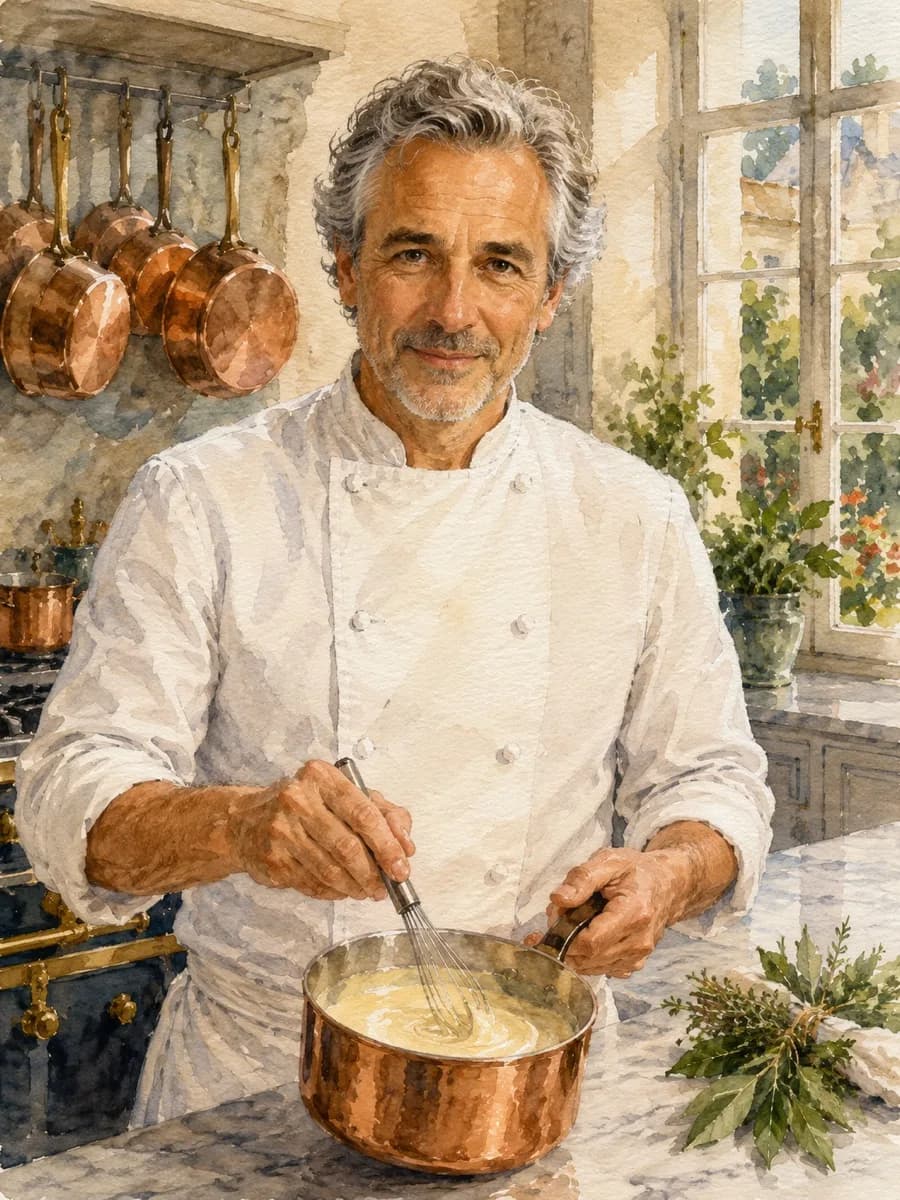
The chicken liver is the truest test of a bistro cook — no fancy knife work, no elaborate garnish, just the quality of your technique and your respect for humble ingredients. When I trained in Lyon, we learned that the fond developing in that pan was worth more than any expensive cut of meat, and this dish proves it: shallots softened in butter, a handful of parsley, and livers that are pink and yielding at their center. Serve this with crusty bread to catch every drop of that glossy sauce, and you will understand why the French have loved offal for centuries.
TagsFrench BistroClassicOrgan MeatButter RichHigh IronQuick CookOffalFond Based
AllergensMilk
Source: generated · June 10, 2026