 Filipino
Medium · Hot
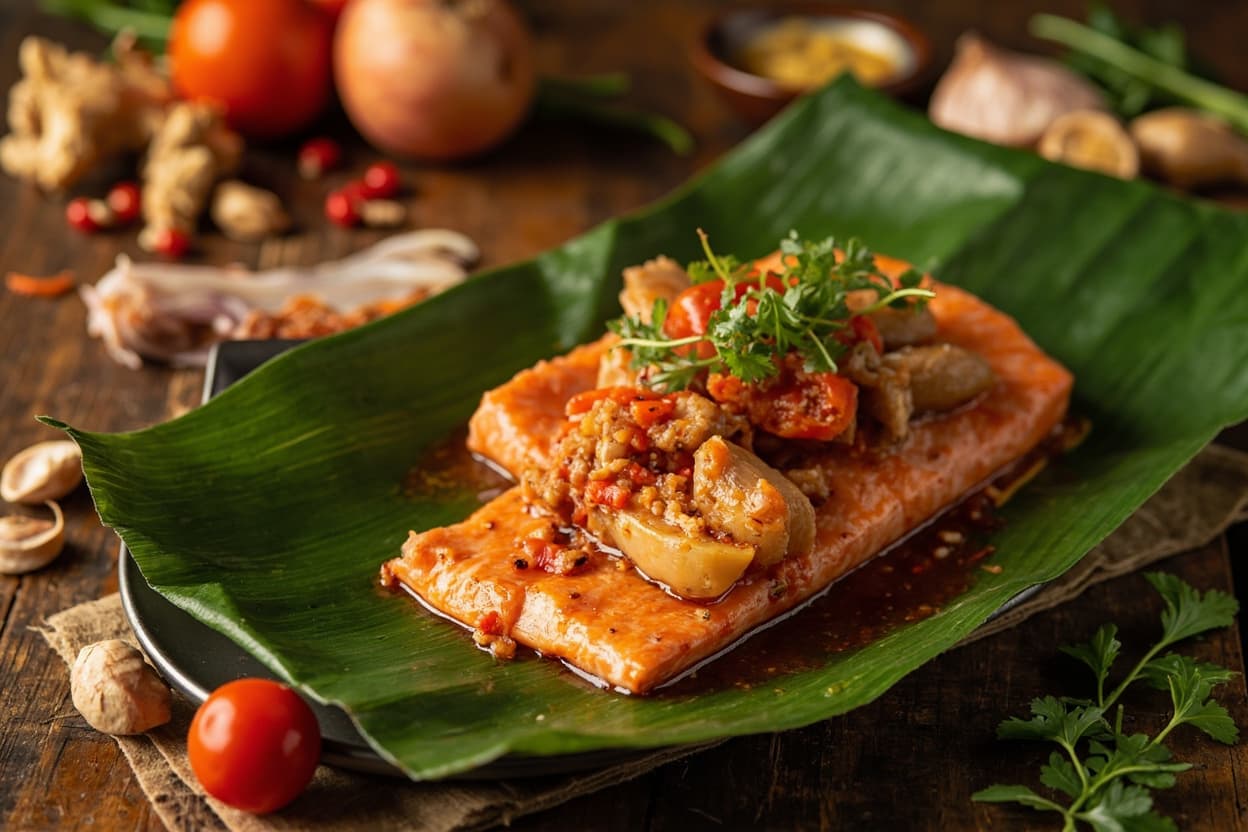
Sour Salmon Paksiw in Vinegar Ginger
Salmon steaks go straight into a shallow braise of white vinegar, sliced ginger, garlic, yellow onion, and cracked black pepper — no browning, no fuss, just a clean, sour steam that firms the fish beautifully while the broth turns silky and pungent. Paksiw is the old way of cooking, and it works because it trusts the acid to do the heavy lifting. Eat it over rice with every drop of that tangy pot liquor.

Prep
10 min
Cook
20 min
Rest
5 min
Total
35 min
Method
Build the Vinegar Broth
1
Add the smashed garlic, ginger rounds, yellow onion quarters, and tomato quarters to the vinegar broth. Let it simmer for 5 minutes to meld the flavors.
Cook the Salmon
2
Taste the broth and adjust seasoning with more salt or a splash of vinegar if you want it more sour.
Serve the Paksiw
3
Ladle the paksiw into a wide bowl, spooning plenty of the gingery vinegar broth over the top. Serve alongside steamed white rice.
B
Nutri-Score
Good balance
A–E · lower is better · score 1
Calories
393
per serving
High in protein · 33gLow sugar · 8gLow saturated fat · 3g
Protein
33g
Carbs
16g
Fat
20g
Sat. fat
3g
Fiber
2g
Sugar
8g
Sodium
1675mg
Gluten FreeDairy FreeEgg FreeLow CarbHeart HealthyDiabetes FriendlyOmega 3 RichHigh ProteinAnti Inflammatory
Nutri-Score is a general nutritional-balance guide, not medical or dietary advice.
D
Environmental impact
High impact
A–E · lower is better · includes estimates
kg CO2e
2.3
per serving
DCarbonAEU all-round· carbon sets the grade
Water
0.3m³
Land
42Pt
Runoff
0.2g P
Salmon fillets, cut into chunks drives 89% of this recipe’s estimated footprint.
Carbon from Poore & Nemecek 2018; water, land & runoff from Agribalyse — modelled averages for comparing recipes, not a measurement of your groceries.
Flavor Profile
7
Umami
3
Sweet
6
Salty
8
Sour
2
Bitter
2
Spicy
Textures
TenderFlakySilkySaucy
Aromas
VinegarGarlicGingerOnionTomato
Kitchen Equipment
Safety & Storage
Cooking Temperature
Cook salmon to an internal temperature of 145°F to eliminate parasites and bacteria. Use a calibrated food thermometer for accuracy.
High Risk Population
Immunocompromised individuals, pregnant women, young children, and elderly persons face elevated risk from consuming undercooked salmon.
Storage
Refrigerate leftovers within 2 hours at 40°F or below. Store in shallow airtight containers to cool rapidly.
Shelf Life
Consume salmon paksiw within 2-3 days when refrigerated. Discard if left at room temperature for more than 2 hours.
Cross Contamination
Use separate cutting boards and utensils for raw salmon. Avoid placing cooked fish on surfaces that contacted raw fish.
Allergen Warning
Verify soy sauce ingredients as some brands are wheat-free or low-sodium alternatives may use different allergen-containing additives.
Handling
Purchase salmon from reputable sources. Look for firm flesh, bright color, and mild odor. Avoid fish with signs of oxidation or slime.
The vinegar acidity (pH below 4.6) provides some antimicrobial protection but does not substitute for proper cooking temperatures.
Pro Tips
Technique
Don't rush the simmer! Let the garlic, ginger, onion, and tomato meld together for the full 5 minutes before adding the salmon — that quiet bubbling is building all the flavor.
Substitution
No fresh ginger on hand? Use about 2 tablespoons of minced candied ginger for a sweeter, more mellow ginger note that still plays beautifully with the vinegar.
Flavor Boost
Squeeze in a bit of calamansi juice at the table — it's how we do it at home and it brightens up every bite!
Reheating
Paksiw actually tastes better the next day! Store in a sealed container and gently reheat on the stovetop. The fish soaks up the sour broth overnight.
From the chef
Paksiw is the old way of doing fish, and once you taste it you understand why it never went anywhere. Salmon steaks go straight into a shallow braise of white vinegar, sliced ginger, garlic, and yellow onion — no browning, no fuss. The acid firms the flesh beautifully while the pot liquor turns silky, pungent, and deeply sour. A splash of soy sauce rounds the edges, a little sugar lifts it just enough. Eat every drop over rice. Nothing gets wasted, and nothing tastes like it came from a lazy Sunday.
TagsPoachedVinegar BraisedSeafoodFilipinoWeeknight DinnerGarlicky
AllergensFishSoyGluten
Source: generated · May 30, 2026