 Ethiopian
Medium · Warm
Tikil Gomen Cabbage Potato Sauté
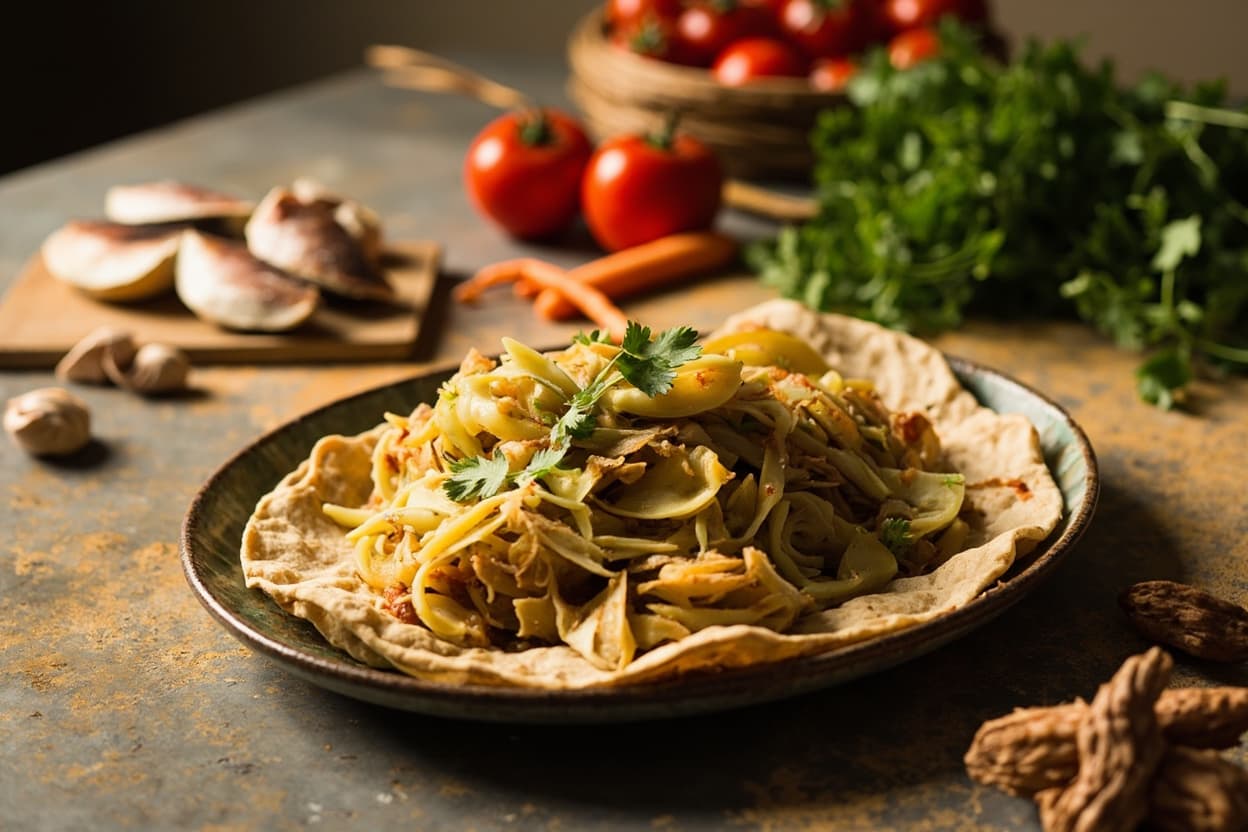
Wedges of cabbage and potato are sautéed low in turmeric and garlic until their edges caramelize and the whole pan smells of warmth and earth. Carrot adds a thread of sweetness through the golden-stained vegetables, making tikil gomen one of those deceptively simple dishes that every seasoned cook knows is harder to stop eating than it looks.

Prep
15 min
Cook
30 min
Total
45 min
Method
Prep
1
Peel and finely dice the yellow onion into small pieces. Set aside.
2
Cut the cabbage into quarters, remove the core, then shred into thin strips about ¼ inch wide. Set aside.
Build the Base
4
Heat sunflower oil in a large frying pan or sauté pan over medium heat. Add the diced onion and stir to coat in the oil.
5
Sauté the onion for 3-4 minutes until it begins to soften and become translucent at the edges.
6
Add turmeric, cumin, paprika, black pepper, and salt directly to the onions. Stir well to combine and let the spices bloom in the oil for 1 minute until fragrant.
Cook the Vegetables
7
Add the cubed potatoes to the pan and stir to coat them in the spiced oil. Spread in an even layer and let cook undisturbed for 2-3 minutes to develop golden color on the bottom before tossing.
8
Continue cooking the potatoes for 5-7 minutes, tossing occasionally, until they are fork-tender and have golden spots.
9
Continue cooking the potatoes for 8-10 minutes, tossing occasionally, until they are fork-tender and have golden spots.
Finish and Serve
11
Remove the lid and increase heat to medium-high. Cook uncovered for 2-3 minutes to allow any excess moisture to evaporate and the vegetables to lightly caramelize.
12
13
Serve warm as a side dish or as part of an Ethiopian platter spread alongside injera, misr wat, and other wot dishes.
A
Nutri-Score
Excellent balance
A–E · lower is better · score -4
Calories
193
per serving
Low sugar · 3gLow saturated fat · 1g
Protein
3g
Carbs
21g
Fat
12g
Sat. fat
1g
Fiber
4g
Sugar
3g
Sodium
600mg
VeganGluten FreeDairy FreeWhole30Heart HealthyDiabetes FriendlyLow SodiumHigh FiberPlant Based
Nutri-Score is a general nutritional-balance guide, not medical or dietary advice.
A
Environmental impact
Very low impact
A–E · lower is better · includes estimates
kg CO2e
0.2
per serving
ACarbonAEU all-round· both agree
Water
0.5m³
Land
14Pt
Runoff
0.06g P
Potato drives 31% of this recipe’s estimated footprint.
Carbon from Poore & Nemecek 2018; water, land & runoff from Agribalyse — modelled averages for comparing recipes, not a measurement of your groceries.
Flavor Profile
5
Umami
3
Sweet
4
Salty
3
Sour
1
Bitter
3
Spicy
Textures
TenderSoftSilky
Aromas
EarthyWarm SpiceHerbaceous
Kitchen Equipment
Techniques
Safety & Storage
Cooking Temperature
Cook potatoes until fork‑tender and reach an internal temperature of at least 210 °F (100 °C) to ensure safety.
Cross‑Contamination
{"classification":"cross‑contamination"}
Storage
Transfer cooked Tikil Gomen to a clean, airtight container and refrigerate within 2 hours of cooking.
Shelf‑Life
Consume leftovers within 3–4 days; discard if left at room temperature for more than 2 hours.
Handling
Allow the dish to cool slightly before refrigerating to help the refrigerator maintain a safe temperature.
Use a clean spoon for tasting and avoid double‑dipping to prevent contamination.
Pro Tips
Technique
Don't rush the final uncovered cooking step — letting the moisture evaporate and the vegetables lightly caramelize brings out the earthy sweetness that makes this dish truly memorable.
Substitution
For the most authentic flavor, swap the sunflower oil with niter kibbeh (Ethiopian spiced butter), which adds a subtle warmth that transforms the whole dish.
From the chef
Tikil Gomen is the dish my grandmother made when she wanted something simple yet deeply satisfying — the kind of recipe that fills your kitchen with warm turmeric and cumin while the cabbage softens into tender, golden layers. Every time I make it, I think of how she would place it at the center of the injera, letting everyone scoop together, because in Ethiopian cooking, no vegetable dish stands alone — it finds its home in community.
TagsEthiopianVegetarianPlant BasedCabbagePotatoSpicedComfort FoodOne Pan
Source: generated · May 30, 2026