 Asian Fusion
Medium · Hot
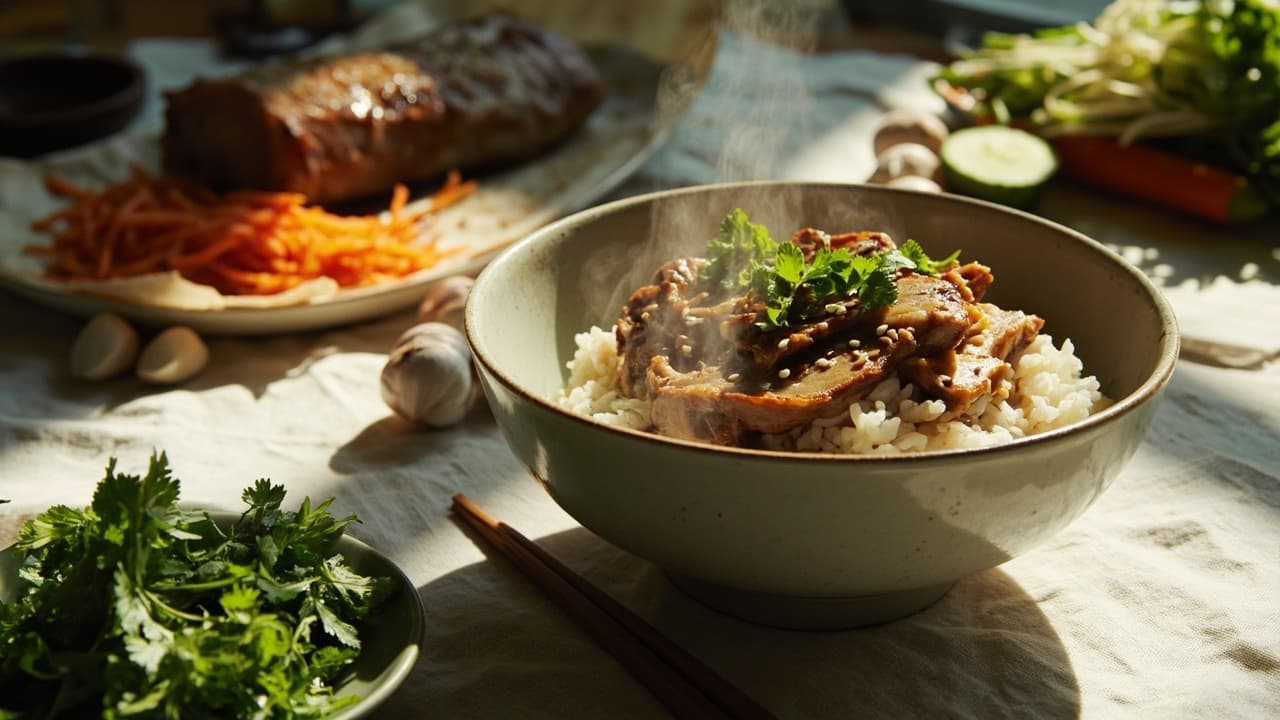
Herbed Pork Rice Bowl
A gentle bowl of tender pork over steamed white rice, finished at the table with crisp herbs and bright lime. The pork is quick-marinated in garlic and ginger, then seared until golden and fragrant.

Prep
20 min
Cook
25 min
Rest
10 min
Total
55 min
Method
Prepare the Rice
1
Rinse the white rice in cold water until the water runs clear. Combine with 4 cups fresh water in a pot and bring to a gentle boil.
2
Reduce heat to low, cover, and steam for 18 minutes until tender and fluffy. Remove from heat and keep covered for 5 minutes before serving.
Marinate and Sear the Pork
3
Slice the pork loin very thin against the grain. In a bowl, combine minced garlic, grated ginger, soy sauce, and sesame oil. Add pork slices and toss gently to coat. Let rest for 10 minutes.
4
Use a food thermometer to confirm internal temperature reaches 145°F (63°C).
Prepare the Fresh Elements
Assemble and Serve
6
Spoon steamed white rice into bowls over the lettuce bed. Arrange seared pork slices on top of the rice.
A
Nutri-Score
Excellent balance
A–E · lower is better · score -5
Calories
701
per serving
High in protein · 35gLow sugar · 5gLow saturated fat · 4gLow salt · 133mg
Protein
35g
Carbs
116g
Fat
12g
Sat. fat
4g
Fiber
9g
Sugar
5g
Sodium
133mg
Gluten FreeDairy FreeHigh ProteinBalanced Meal
Nutri-Score is a general nutritional-balance guide, not medical or dietary advice.
D
Environmental impact
High impact
A–E · lower is better · includes estimates
kg CO2e
2.0
per serving
DCarbonAEU all-round· carbon sets the grade
Water
2.5m³
Land
47Pt
Runoff
0.1g P
Pork Loin, thinly sliced drives 62% of this recipe’s estimated footprint.
Carbon from Poore & Nemecek 2018; water, land & runoff from Agribalyse — modelled averages for comparing recipes, not a measurement of your groceries.
Flavor Profile
6
Umami
3
Sweet
5
Salty
4
Sour
2
Bitter
3
Spicy
Textures
TenderCrispyFluffyCrunchy
Aromas
HerbalSmokyNuttyBright
Kitchen Equipment
Primary Tool
WokCounter FootprintMedium
Techniques
Safety & Storage
Cooking Temperature
Sear pork over high heat until golden on each side, approximately 2 minutes per side. Ensure pork reaches an internal temperature of at least 145°F (63°C) as measured with a food thermometer to destroy harmful bacteria. The pork should be just cooked through with no pink remaining.
Cross Contamination
Raw pork should be handled on a dedicated cutting board separate from ready-to-eat ingredients such as herbs and vegetables. Sanitize all utensils, knives, and surfaces that contact raw pork before using them for other ingredients. Use separate bowls and tongs for raw pork versus plated food.
High Risk Population
Fresh herbs (cilantro, mint, basil) are added at the table and may not reach temperatures that kill pathogens like Listeria monocytogenes. Warn pregnant women, elderly individuals, and immunocompromised persons that raw herbs in this dish may pose a listeria risk. Consider briefly blanching herbs for these individuals or informing them of the risk.
Storage
Refrigerate leftover pork and rice separately within 2 hours of cooking. Store pork in shallow airtight containers at 40°F (4°C) or below. Consume leftover pork within 3-4 days and reheat to 165°F (74°C) before serving. Fresh herbs should be used within 2-3 days if stored properly in the refrigerator.
Allergen Warning
Sesame is used in two forms (oil and seeds) and may not be visible in the dish. Clearly label this dish as containing sesame for guests. Ask guests about sesame allergies before serving, as reactions can be severe even from small amounts.
Handling
When slicing pork loin thinly, keep the meat cold and work quickly to maintain food safety. Do not leave sliced pork at room temperature for more than 30 minutes during the 10-minute marinade rest. If marinating longer than 30 minutes total, keep refrigerated.
Equipment Safety
When heating a wok or skillet to smoking point (approximately 400°F/204°C), use proper ventilation and be cautious of oil splatter. Use long-handled tongs or chopsticks to turn pork slices safely. Stand back from the pan when adding pork to prevent steam burns.
Pro Tips
Technique
Slice the pork against the grain as thin as you can — almost translucent. If the slices are too thick, they will steam rather than sear, and you lose that golden crust that holds the fragrance of garlic and ginger against the meat.
When squeezing lime over the bowl, do not stir — let the juice fall where it wishes. The acid will find its own paths through the sesame oil and soy sauce, creating bright pockets in every bite.
Substitution
If Thai basil is unavailable, use fresh purple basil instead, but add it at the very last moment — never let it sit in the bowl. Heat diminishes its perfume too quickly.
From the chef
In Saigon, we never served the herbs alongside the broth — we served them WITH it, so each person could wake the bowl with their own hands. This rice bowl follows that same spirit: the pork is tender and golden, but it is the raw herbs and lime that make it breathe. Every spoonful should carry the garden to the table.
TagsFresh HerbsTable Side AssemblyQuick MarinateWeeknight FriendlyOne BowlBright FlavorHerbaceous
AllergensSoySesameGluten
Source: generated · June 10, 2026