 Spain
SpainEasy · Hot
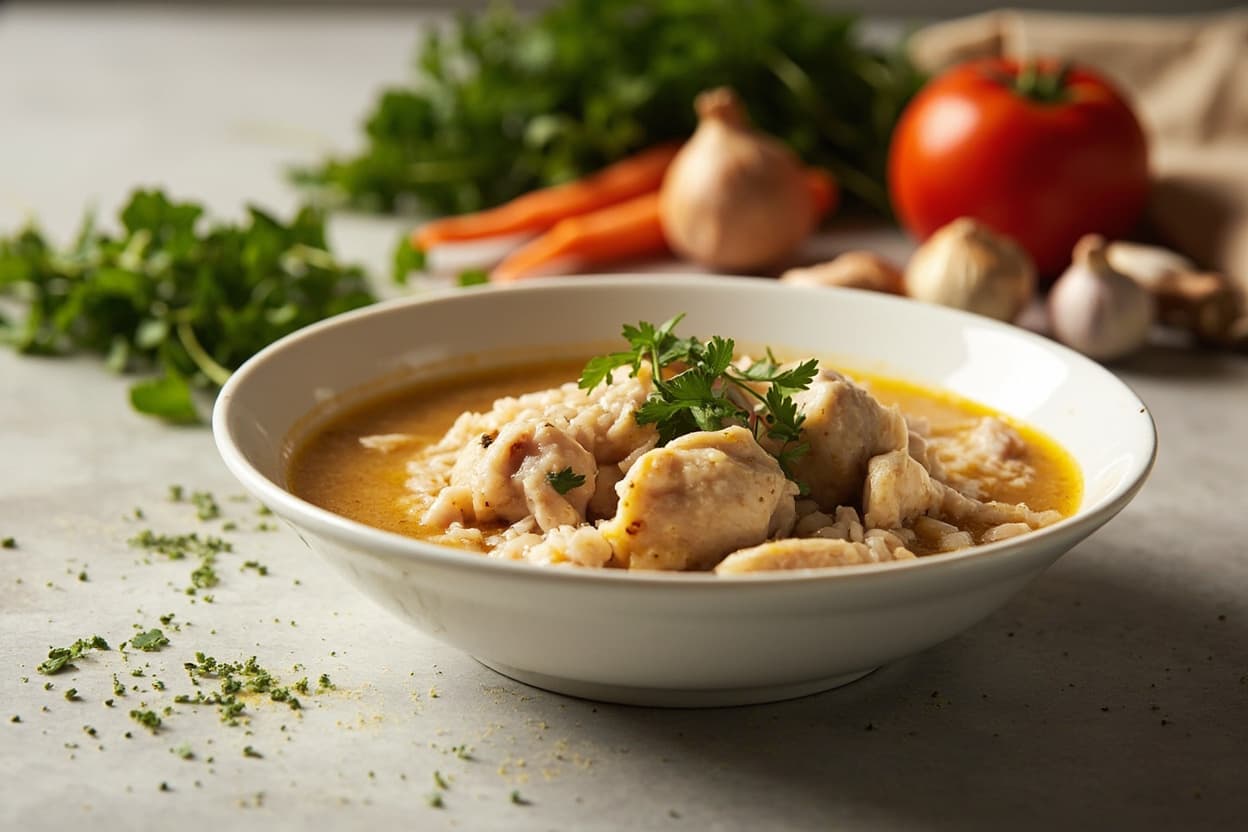
Soothing chicken and rice caldo
A single chicken breast simmers with carrot until the broth turns pale amber and fragrant, then the breast is lifted, shredded into soft strips, and returned to the pot with white rice to finish cooking in that same liquid. Parsley stirred in at the end brightens everything just so — a caldo that steadies rather than excites, which is precisely the point.
Prep
10 min
Cook
30 min
Total
40 min
Method
Prep
1
Peel and finely dice the yellow onion. Peel and grate the garlic. Peel and slice the carrot into thin rounds. Peel the potato and cut into small cubes.
2
Cut the chicken breast into small bite-sized pieces, about 2 cm.
Build the broth
3
4
Add the grated garlic and cook for another minute until fragrant.
5
Add the chicken pieces to the pan and stir to coat in the oil and aromatics. Let them cook for 2 minutes, turning once, until lightly colored on the outside.
6
Pour in the water and bring to a gentle simmer. Skim any foam that rises to the surface.
Simmer and finish
7
8
Stir in the white rice and continue simmering for another 12–15 minutes, until the rice is tender and the broth has a lovely silky consistency. Add a splash more water if the broth reduces too much.
9
Season with the salt and white pepper. Taste and adjust as needed.
Serve
10
Ladle the caldo into a shallow bowl. Sprinkle with the fresh parsley and serve while gently steaming, perfect for a quiet moment.
A
Nutri-Score
Excellent balance
A–E · lower is better · score -2
Calories
589
per serving
High in protein · 53gLow sugar · 5gLow saturated fat · 2g
Protein
53g
Carbs
66g
Fat
11g
Sat. fat
2g
Fiber
5g
Sugar
5g
Sodium
786mg
Gluten FreeDairy FreeLow FatSingle ServingHeart HealthyDiabetes FriendlyPost OperativeElderly NutritionSoft DietHigh ProteinModerate CarbLow Sodium Option
Nutri-Score is a general nutritional-balance guide, not medical or dietary advice.
D
Environmental impact
High impact
A–E · lower is better · includes estimates
kg CO2e
1.9
per serving
DCarbonAEU all-round· carbon sets the grade
Water
1.4m³
Land
62Pt
Runoff
0.2g P
Chicken breast drives 79% of this recipe’s estimated footprint.
Carbon from Poore & Nemecek 2018; water, land & runoff from Agribalyse — modelled averages for comparing recipes, not a measurement of your groceries.
Flavor Profile
6
Umami
4
Sweet
5
Salty
1
Sour
1
Bitter
1
Spicy
Textures
SilkyTenderSoftVelvety
Aromas
HerbalSavoryPoultryGarlicky
Kitchen Equipment
Primary Tool
SaucepanCounter FootprintSmall
Safety & Storage
Cooking Temperature
Chicken must reach an internal temperature of 165°F (74°C) to eliminate pathogens like Salmonella before consumption.
Cross Contamination
Use separate cutting boards and utensils for raw chicken. Wash all surfaces and tools with hot soapy water after handling raw poultry to prevent bacterial transfer.
Storage
Cool caldo to room temperature within 2 hours of cooking, then transfer to a clean airtight container and refrigerate at 40°F (4°C) or below.
High Risk Population
This recipe appears designed for elderly individuals who face increased vulnerability to foodborne illness due to weakened immune systems. Extra care in temperature control and food handling is essential.
Handling
Wash hands thoroughly with soap and water for at least 20 seconds before and after handling raw chicken. Avoid touching other foods or surfaces during preparation.
Shelf Life
Refrigerated leftover caldo should be consumed within 3-4 days. Freeze for longer storage up to 2 months and reheat to 165°F (74°C) before eating.
Pro Tips
Technique
For a clearer, more elegant broth, be patient with the first gentle simmer and skim any foam that rises in the first few minutes—this simple step separates a clean, soothing caldo from a murky one.
Substitution
If you have leftover cooked chicken from another meal, simply shred it and add it in the last five minutes of cooking the rice; the broth will warm it through without overcooking.
From the chef
When I first began cooking for just myself, I found that many soups made far too much and ended up forgotten in the refrigerator, slowly losing their soul. This caldo was my answer—a gentle, brothy soup that comforts without overwhelming, where tender chicken and soft vegetables swim in a silky rice broth. It is the kind of meal I wish someone had taught me to make years ago, when silence at the table felt so loud.
TagsComfort FoodOne PotEasyWeeknight DinnerSingle PortionBrothy
Source: generated · May 30, 2026