 Mediterranean
Easy · Hot
Trout poached with lemon and dill
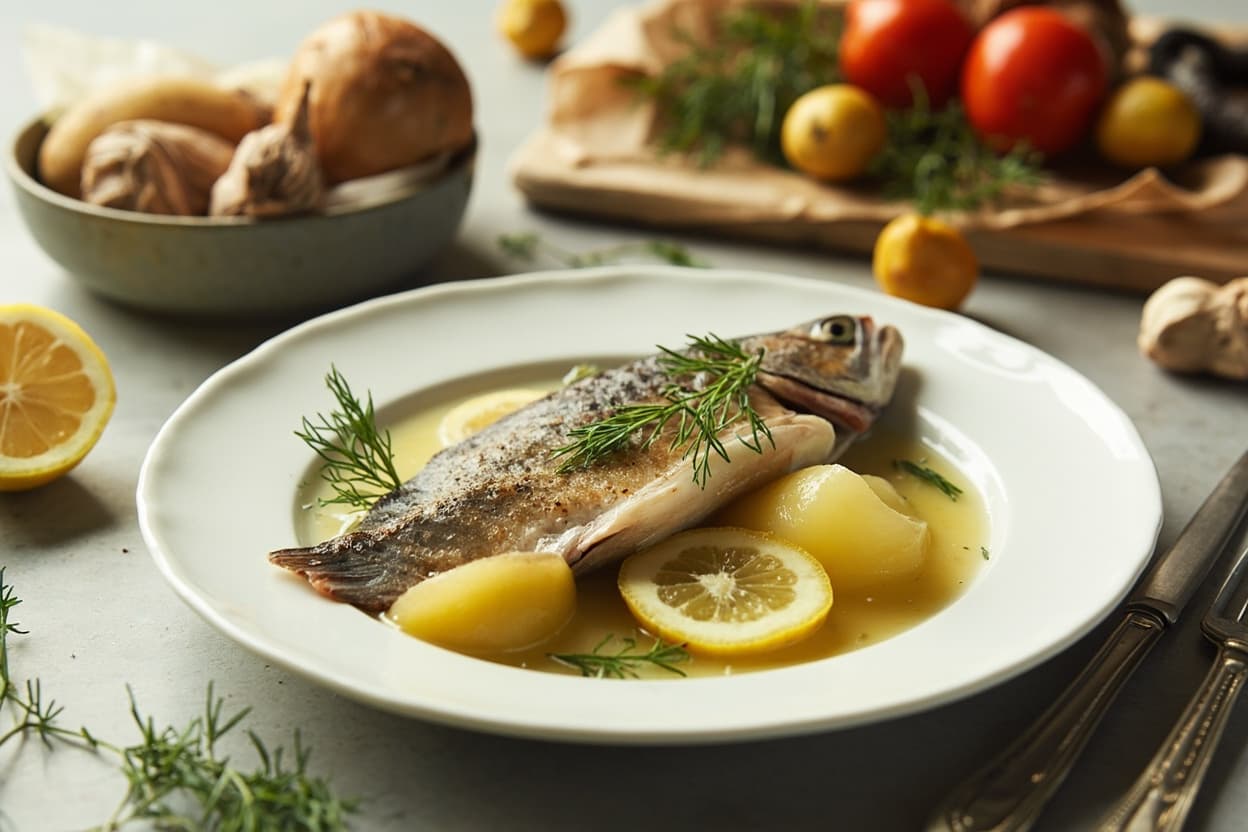
Potato slices cook first in lightly salted water with a few slices of lemon, and when they are tender the trout is lowered in for only a few minutes — just enough for the flesh to lose its translucency and flake at the touch of a fork. Dill goes over the top at the very end, its fragrance cool and clean against the warmth of the fish and potato underneath.

Prep
10 min
Cook
20 min
Total
30 min
Method
Prepare the fish and aromatics
1
Pat the trout fillets dry with kitchen paper and set aside.
2
Peel and halve the yellow onion. Slice one half thinly and set the other aside.
3
Peel the carrot and cut into thin rounds.
4
Cut the lemon in half. Squeeze the juice from one half and set aside. Slice the other half into rounds.
Build the poaching broth
5
6
Place over medium heat and bring to a gentle simmer. Let it cook softly for 5 minutes to draw out the flavours.
Poach the trout
7
Season the trout fillets lightly with salt and white pepper.
8
Gently slide the fillets into the simmering broth. They should float comfortably without crowding.
Plate and finish
10
Using a wide spatula, carefully lift each fillet onto warm serving plates.
12
Scatter a few fresh dill sprigs on top and serve immediately with a ladleful of the warm broth alongside.
A
Nutri-Score
Excellent balance
A–E · lower is better · score -1
Calories
307
per serving
High in protein · 32gLow sugar · 2gLow saturated fat · 3g
Protein
32g
Carbs
6g
Fat
18g
Sat. fat
3g
Fiber
2g
Sugar
2g
Sodium
668mg
Gluten FreePescatarianDairy FreeLow CarbHeart HealthyDiabetes FriendlyHigh ProteinLow Calorie Density
Nutri-Score is a general nutritional-balance guide, not medical or dietary advice.
E
Environmental impact
Very high impact
A–E · lower is better · includes estimates
kg CO2e
3.2
per serving
ECarbonBEU all-round· carbon sets the grade
Water
8.2m³
Land
28Pt
Runoff
4.5g P
Trout fillets drives 98% of this recipe’s estimated footprint.
Carbon from Poore & Nemecek 2018; water, land & runoff from Agribalyse — modelled averages for comparing recipes, not a measurement of your groceries.
Flavor Profile
6
Umami
3
Sweet
4
Salty
3
Sour
1
Bitter
Textures
TenderFlakySilky
Aromas
HerbalCitrusBrothy
Kitchen Equipment
Primary Tool
Wide SaucepanCounter FootprintSmall
Safety & Storage
Cooking Temperature
Poach trout until it reaches an internal temperature of 145°F (63°C). Fish is done when opaque throughout and flakes easily when pressed with a fork. Use a food thermometer to verify.
Cross Contamination
Prevent cross-contamination by using separate cutting boards and utensils for raw fish. Wash all surfaces, knives, and hands thoroughly with hot soapy water after handling raw trout.
High Risk Population
Elderly individuals, pregnant women, young children, and immunocompromised persons should only consume fish cooked to proper temperature. These populations are more susceptible to foodborne illness from undercooked fish.
Storage
If not cooking immediately, store fresh trout on ice or in the coldest part of the refrigerator at 40°F (4°C) or below. Use within 1-2 days for best quality. Leftover cooked trout must be refrigerated within 2 hours of cooking.
Handling
Pat trout fillets dry before cooking to ensure even heat distribution. Avoid crowding fillets in the poaching liquid as this lowers the temperature and can lead to uneven cooking. Use a wide spatula for gentle handling of delicate fish.
Pro Tips
Technique
Keep your poaching liquid at the barest simmer — a gentle shiver, not a rolling boil. If the broth moves too vigorously, the delicate trout will break apart before it cooks through.
Substitution
If fresh trout is not available, thin cod fillets work beautifully in the same broth. They have a similar mild flakiness and absorb the lemon-dill fragrance just as well.
Flavor Boost
Add a single bay leaf to the poaching broth while it simmers — it deepens the herbal note without overpowering the delicate fish.
From the chef
Trout poaches in water with lemon rounds, onion, and carrot — a pale, fragrant broth that never boils, only shimmers. The fish needs no more than eight minutes before it turns opaque and flakes at the lightest touch. Dill goes on at the very end, its cool, clean fragrance settling over the warmth of the fish and potato underneath. A drizzle of good olive oil and a squeeze of the reserved lemon finish the plate simply and completely. It is a quiet technique that asks for patience rather than skill, and what it produces is genuinely restorative.
TagsPoachedLightBrothyFishCitrus
AllergensFish
Source: generated · May 30, 2026